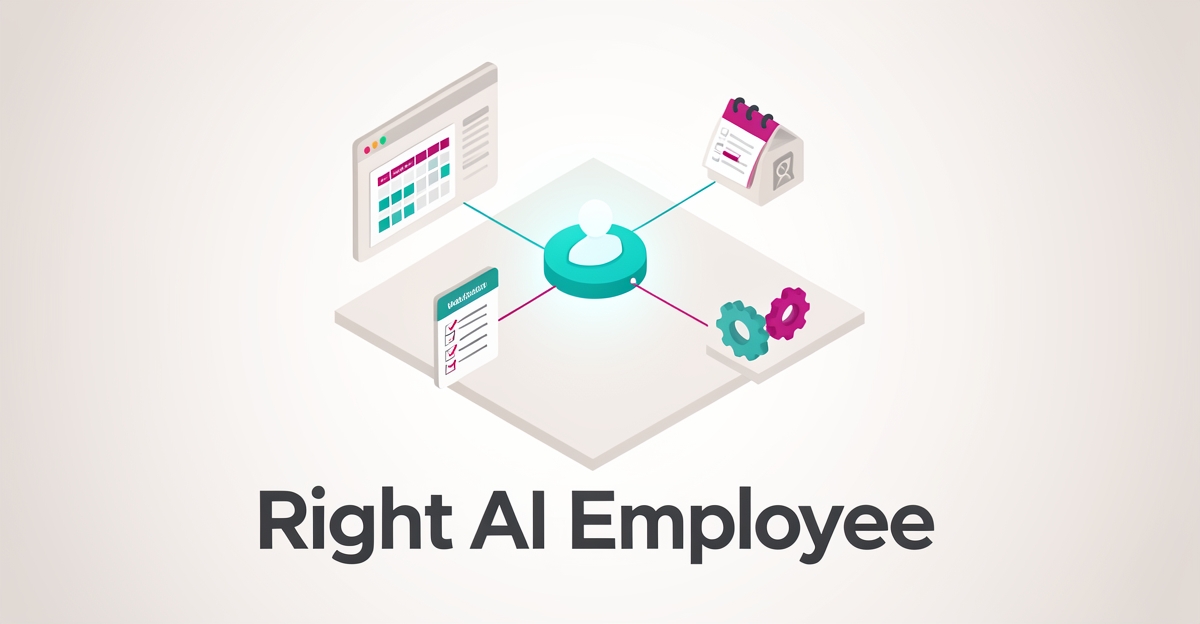
How to Choose the Right AI Employee for Your Trade Show Operations
Key Facts
- Industry surveys as of late 2026 suggest roughly half of exhibitors use AI for booth personalization, with adoption still climbing
- A large share of event organizers now deploy AI for attendee matchmaking, according to recent industry reporting
- Customer-service research has repeatedly found that a substantial minority of people dread chatbot interactions
- The same research streams report that most customers have had to explain their needs multiple times across disconnected touchpoints
- AIQ Labs AI Employees typically cost roughly 80% less than an equivalent human hire while working around the clock
- AIQ Labs has deployed 200+ multi-agent systems and runs four live SaaS products daily
Hire a team member that works 24/7 — for less than a part-time wage.
AI receptionists, SDRs, dispatchers and 99+ roles. Trained on your business, fully managed.
Not sure where to start? Ask our AI planner
Why Trade Show AI Fails Without the Right Operational Role
Trade show floors now hum with AI-driven personalization and matchmaking, yet attendees still leave booths frustrated. Recent exhibitor guides suggest roughly half of exhibitors use AI for booth personalization, and industry reporting indicates a large majority of organizers deploy some form of AI matchmaking. Despite this adoption, customer-service research has repeatedly found that a substantial share of people still dread chatbot interactions, a disconnect that reveals a fundamental flaw in how events deploy automation.
The problem isn't AI itself. It's generic automation dropped into workflows without a defined operational role. When a chatbot lacks the context of a booth manager or the authority of a schedule coordinator, it creates friction rather than flow. Attendees find themselves trapped in the repetition trap, the same research streams indicate most customers have had to explain their needs multiple times across disconnected touchpoints. At a trade show, this means re-stating badge information to a lead scanner, then re-explaining product interest to a follow-up email bot, then repeating availability to a separate scheduling tool.
This fragmentation happens because most event AI operates as a feature, not an employee. A feature answers questions; an AI employee owns outcomes. Without clear role definition, whether that's an AI booth manager qualifying leads or an AI vendor coordinator handling logistics, automation becomes another obstacle for attendees to navigate.
Customer-service leaders have made the same point: AI transforms experiences only when it maintains a human-first approach. Trade show operations demand the same standard. Consider the operational differences:
- Generic Chatbot: Answers FAQs but cannot access real-time inventory or schedule changes
- AI Booth Manager: Qualifies leads, checks meeting room availability, and escalates hot prospects to human reps instantly
- AI Schedule Planner: Coordinates between attendee calendars and booth staff without double-booking
- AI Vendor Coordinator: Tracks shipment statuses and setup timelines across contractors
When AI lacks these defined responsibilities, it cannot access the context needed to resolve issues end-to-end. The result is the friction attendees have come to expect, automation that deflects rather than resolves.
AIQ Labs approaches this through AI Employees that treat AI as a workforce, not a widget. Rather than deploying isolated chatbots, the focus shifts to integrating AI employees with specific operational mandates into existing event workflows. This ensures that when an attendee asks about a product demo, the AI schedule planner already knows booth staffing levels, available rooms, and the attendee's previous interactions, eliminating the repetition that erodes trust.
The difference between AI that frustrates and AI that converts lies in operational clarity. Trade shows succeed when technology handles the transactional so humans can handle the relational.
Mapping AI Employees to High-Impact Trade Show Functions
Trade show operations demand precision, especially when managing high volumes of visitor interactions, scheduling, and logistics. The sheer scale of inquiries at booths can overwhelm human teams, leading to delays and inconsistent experiences. Industry surveys suggest roughly half of exhibitors now use AI for booth personalization, reflecting a growing shift toward automation in attendee engagement. AI Booth Managers excel here, handling routine questions, guiding visitors to relevant products, and capturing lead data in real time, freeing staff to focus on meaningful conversations and relationship-building.
For complex coordination tasks like meeting scheduling and vendor synchronization, AI Schedule Planners and AI Vendor Coordinators reduce friction by automating repetitive workflows. With a large share of event organizers already using AI for matchmaking, these tools ensure timely updates and minimize scheduling conflicts. Crucially, AI works best when managing high-volume, repetitive tasks, while humans retain ownership of nuanced judgment, risk identification, and empathetic engagement, aligning with a human-first approach that improves service standards and reduces customer effort. AIQ Labs supports this balance by deploying AI Employees that integrate seamlessly into trade show workflows, enabling teams to operate with greater speed, clarity, and humanity.
The Human-First Evaluation Framework
The most expensive mistake in trade show AI isn't choosing the wrong tool, it's deploying AI where a human should be. While roughly half of exhibitors now use AI for booth personalization, the emotional calculus of your workflows matters more than the technical one, and getting it wrong creates the exact friction AI was supposed to remove.
The evidence for caution is stark. Customer-service research has repeatedly found that a substantial share of people dread talking to a chatbot, and that most customers have had to explain the same issue more than once. The consistent conclusion from that body of work: AI can transform customer experiences when it lives up to its promise, but it requires a human-first approach to ensure seamless interactions. AI-enabled tools must sit alongside human support, never replace it.
That principle translates directly into a two-axis decision matrix for your trade show operations. Score every workflow on interaction complexity and emotional intelligence requirements, then place it in one of three zones:
- AI autonomy zone: Low complexity, low emotion. Think schedule planning, vendor coordination, lead data capture, and post-show follow-up sequencing. These tasks reward speed and consistency, not empathy.
- Human-AI collaboration zone: Moderate complexity or moderate emotion. Booth management, attendee matchmaking, and initial lead qualification work best when AI handles volume and a human owns judgment calls.
- Human-led zone: High emotion or high complexity. Live complaint resolution, high-value prospect conversations, and anything involving a frustrated stakeholder belong with your people, supported by AI behind the scenes.
The collaboration zone is where most trade show teams should focus first. The same research shows AI can help staff manage the sheer volume of daily enquiries while improving conversation quality, and with most large organizers already using AI for matchmaking, the question isn't whether to adopt, but how to keep humans in the loop. One human expert owning an issue start to finish, with AI surfacing risks before they escalate, is the model that works.
To prevent the empathy gap that plagues over-automated experiences, build guardrails before deployment: define which conversation triggers require immediate human handoff, cap how long AI can hold a dialogue before escalating, and audit transcripts weekly for moments where the AI sounded tone-deaf. Businesses need to invest in technology and people to serve customers with greater speed, clarity, and humanity, the two investments are inseparable.
This is the evaluation framework we use at AIQ Labs when matching AI employees to real event workflows: the role definition comes first, the technology second. If a workflow can't clearly state where the human stays in the loop, it isn't ready for automation.
Implementing Your AI Trade Show Team Without the Pilot Trap
The most common failure mode in AI adoption isn't a bad tool, it's the perpetual pilot. Recent exhibitor guides suggest roughly half of exhibitors now use AI for booth personalization, yet many stall at the trial stage, running limited experiments that never graduate into real operations. The way out is a structured deployment plan with a defined end date.
The safest path is the Start Monthly approach: deploy one AI employee in a single, well-defined role, say, an AI booth manager handling visitor questions or a schedule planner coordinating vendor meetings, and evaluate it against real event conditions rather than lab assumptions. Because the model runs on a flat monthly plan that costs roughly 80% less than an equivalent human hire, you can pause or adjust anytime without sunk-cost pressure. This turns your pilot from a science project into a working decision. You can see the full set of payment models, Start Monthly, Build in Milestones, Own It Outright, on the AIQ Labs pricing page.
Integration is the second pillar. Your AI employee should connect directly to the tools your team already runs, CRM, calendars, scheduling software, and any platform with an API, so data flows both ways instead of living in a silo. An AI that can't hand off context is just another system your staff has to babysit.
That's why handoff protocols matter. Customer-service research has repeatedly found that a substantial share of people dread talking to a chatbot, and that most customers have had to explain the same issue more than once. Design the escalation path before launch: define exactly which situations the AI resolves independently, which trigger a warm transfer to a human staffer, and what context gets passed along so visitors never repeat themselves.
Finally, build a feedback loop that catches problems early. The right AI tools can help businesses identify risks before they escalate and provide timely updates. Review transcripts weekly during your first event cycle, flag failure patterns, and retrain the AI on real conversations, not hypotheticals.
- Weeks 1–2: Define the role, job description, and escalation rules
- Weeks 3–4: Integrate with your event tech stack and test against live data
- First event: Run in production with daily transcript reviews
- Post-event: Score performance, retrain, and decide, scale or stop
The goal is to move up the maturity curve from exploration to transformation, where AI becomes embedded in how your events actually run. This is where a partner like AIQ Labs adds value, not just building the AI employee, but matching it to your real event workflows and training your team to work alongside it. For teams whose event operations outgrow a single role, AI Workflow Builds rebuild the one workflow that costs the most, at a fixed price and in phases, so you're never stuck in pilot mode.
If you want a clear-eyed read on where to start, AIQ Labs offers a free 30-minute strategy call, take the two-minute Fit Check at aiqlabs.ai/apply to begin.
Still paying for 10+ subscriptions that don’t talk to each other?
We build custom AI systems you own outright. No vendor lock-in. Full control.
Not sure where to start? Ask our AI planner
Frequently Asked Questions
What's the difference between a generic chatbot and an AI employee for trade show operations?
Why do attendees still dread chatbot interactions at trade shows despite widespread AI adoption?
How can I avoid the 'pilot trap' when implementing AI for my trade show team?
What tasks should I automate with AI versus keep human-led at trade shows?
How does AIQ Labs ensure AI employees integrate smoothly with my existing trade show workflows?
What kind of ROI or efficiency gains can I expect from using an AI employee at trade shows?
From AI Features to True Team Members: Your Next Step in Trade Show Success
The most successful trade show operations don't just use AI, they treat it as a valued team member with a defined role, clear responsibilities, and seamless integration into human workflows. By mapping AI employees to high-impact functions like booth management, scheduling, and vendor coordination, and applying a human-first evaluation framework, organizers can eliminate the repetition trap that frustrates attendees and instead deliver experiences that are fast, clear, and genuinely helpful. The path forward starts with specificity: define the role, integrate with your existing tools, and build in feedback loops that catch issues early. If you're ready to move beyond pilots and see how an AI employee could work in your real event workflow, take the two-minute Fit Check at aiqlabs.ai/apply to begin a free, no-obligation strategy call.
Make AI your competitive advantage — not just another tool.
Strategy, implementation and ongoing optimization. One partner, end to end.
Not sure where to start? Ask our AI planner