# How to Choose the Right AI Partner for Junk Removal Operations
**Quick Answer:** Tired of AI that doesn't get your junk removal workflow? Generic tools fail on messy, real-world jobs, leading to costly errors. Choose a partner with industry-specific context, human-in-the-loop controls, and true ownership of what gets built. Start with a [free 2-minute Fit Check](/apply) or [book a free 30-minute strategy call](/book).
## Key Facts
- Generic AI models can be highly accurate in controlled settings yet fail badly on inputs outside their training data, which is why human-in-the-loop controls matter for service businesses
- Usage-based AI pricing (per-token, per-minute, per-seat) can scale unpredictably as call and booking volume grows
- AI support agents can typically handle a large share of routine customer inquiries instantly, freeing staff for complex or emotional conversations
- The most reliable AI wins in service businesses come from practical use cases: document parsing, scheduling and routing, and follow-up automation, not moonshots
- Ownership terms vary widely between vendors; many platforms create long-term dependency with non-transferable systems
## Table of Contents
- [The Junk Removal Bottleneck: Why Generic AI Fails Service Businesses](#the-junk-removal-bottleneck-why-generic-ai-fails-service-businesses)
- [The High-ROI Framework: Prioritizing Practical AI Wins](#the-high-roi-framework-prioritizing-practical-ai-wins)
- [The 5-Step Evaluation Checklist for Vetting AI Vendors](#the-5-step-evaluation-checklist-for-vetting-ai-vendors)
- [Beyond the Sale: Scrutinizing Ownership, Pricing, and Support](#beyond-the-sale-scrutinizing-ownership-pricing-and-support)
## The Junk Removal Bottleneck: Why Generic AI Fails Service Businesses
Junk removal runs on tight margins, tight schedules, and real-world judgment. Generic AI tools promise automation, but service businesses pay the price when those tools meet messy, on-the-ground workflows.
Off-the-shelf models are built for generic patterns, not for dispatch routing, job-site photos, pricing exceptions, or driver notes. That mismatch creates risk. Research on AI pattern matching has repeatedly shown that models which perform well in controlled environments can be fooled consistently once inputs nudge them outside their comfort zone. The lesson for operators is simple: there needs to be a human in the loop.
The same vulnerability shows up in service operations. AI can see a pattern and completely misclassify it. Generic solutions lack industry context, so they misread out-of-context data, hallucinate job details, and escalate small errors into costly truck rolls.
Fraud and deception risks are growing too. As agentic AI tools have become widely available, businesses that rely on unguarded automation face a larger attack surface, fabricated photos, doctored evidence, and scripted low-value claims are all easier to produce than they were a few years ago.
For junk removal, the danger is not theoretical. A generic chatbot can book a pickup with the wrong truck size, misinterpret a photo of hazardous material, or approve a discount based on a suspicious email. The challenge is no longer just detection, but judgment in real time. Without service-specific training and guardrails, automation becomes a liability.
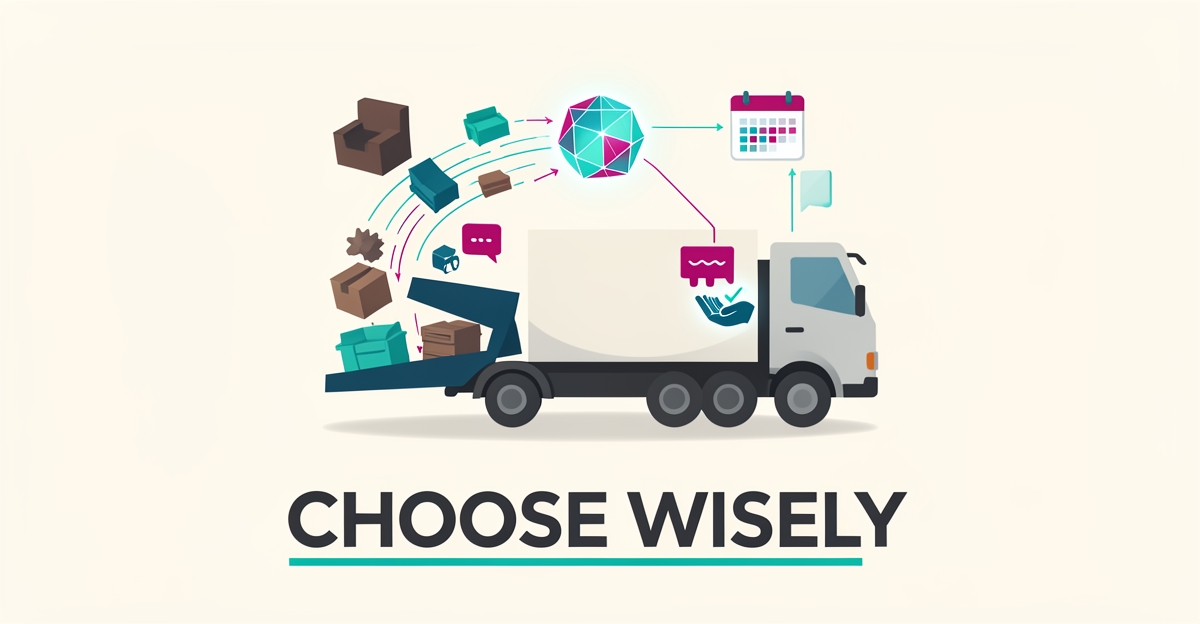
Practical wins come from workflow-aware systems, not moonshots. The biggest gains come from use cases that remove bottlenecks, eliminate manual work, and create cleaner, more predictable workflows. That means solutions built around real operations:
- Document extraction and parsing for invoices, contracts, and job sheets
- Workflow automation that combines AI reasoning with scheduling, routing, and follow-ups
- Knowledge agents trained on SOPs, pricing guides, and safety manuals
- Customer support automation that handles routine inquiries instantly and escalates the rest
Generic AI fails because it does not understand these flows. A partner worth hiring will bring industry context, integration depth, and a support model that prioritizes ownership over subscription chaos. AIQ Labs approaches this with three entry points: [AI Employees](/ai-employees) for managed staff like receptionists, SDRs, and dispatchers; [Workflow Builds](/workflow-builds) to rebuild the one workflow that costs you the most; and [AI Operating Systems](/ai-operating-systems) when you want one connected operating layer.
Choosing a generic tool is a risky bet for a service business. **Industry-specific context and human-in-the-loop controls** are not extras; they are the difference between automation that saves time and automation that creates rework.
## The High-ROI Framework: Prioritizing Practical AI Wins
Forget chasing futuristic AI dreams; the real power lies in solving today's tangible operational headaches. The most successful AI implementations aren't about building sentient robots, they're about targeting specific, repetitive tasks that drain time and resources.
For a junk removal business, this means prioritizing AI
AI Employees
Hire a team member that works 24/7 — for less than a part-time wage.
AI receptionists, SDRs, dispatchers and 99+ roles. Trained on your business, fully managed.
See If You’re a Fit — AI Employees from $700/mo
Not sure where to start? Ask our AI planner
that automates the grind: intelligently processing invoices and job sheets pulled from emails or scans, dynamically optimizing scheduling and routing based on real-time availability and location data, and instantly answering common customer queries about pricing, service areas, or pickup times. These aren't speculative projects; they're high-probability wins with fast payback.
Practical AI also tackles the hidden cost of administrative drag. Automating document extraction eliminates hours of manual data entry, a task that quietly consumes significant weekly effort in most service businesses. The same principle applies to job confirmation emails, review requests, and follow-up communications: once they're automated, the hours compound back into your week.
By starting with focused, measurable applications, like reducing scheduling time by a target percentage or cutting invoice processing delays, you build confidence, prove value, and lay a grounded foundation for scaling AI intelligently, avoiding the pitfalls of overly ambitious, high-risk moonshots. AIQ Labs helps businesses identify and implement these precise, high-ROI starting points, typically beginning with a single workflow rebuild at a fixed price.
## The 5-Step Evaluation Checklist for Vetting AI Vendors
Choosing the right AI partner starts with a clear, structured evaluation process that moves beyond vendor promises to proven capabilities. For junk removal operations, this means focusing on practical solutions that address specific workflow bottlenecks while ensuring long-term control and compliance. The most successful implementations begin with identifying repetitive, time-consuming tasks, like manual data entry from job sheets or scheduling phone calls, that AI can automate to create cleaner, more predictable operations.
A critical first step is assessing a vendor's integration depth. Ask how their system connects with your existing tools, CRM, accounting software, or scheduling platforms, to push data directly into your operational ecosystem without manual handoffs. Vendors should demonstrate experience embedding AI into real service-industry workflows, not just offering generic APIs. This ensures the solution enhances, rather than disrupts, your current processes and delivers measurable efficiency gains from day one.
Equally important is evaluating the vendor's approach to human oversight. Because AI can be fooled by data outside its training set, even when it performs well in controlled environments, a human-in-the-loop model is essential for high-stakes decisions. Look for partners who clearly define when AI handles routine tasks and when complex or emotional scenarios escalate to human judgment. This balances automation with accountability, reducing risk while maintaining service quality.
Finally, scrutinize the pricing and ownership model to avoid subscription chaos. Prioritize vendors who offer transparent costs and true ownership of the built system, no lock-in, no usage-based fees that spiral unpredictably. AIQ Labs, for example, structures engagements around client-owned assets with flexible payment models like Start Monthly, Build in Milestones, or Own It Outright, so businesses retain full control over their AI investments. Demand a pilot tied to measurable P&L outcomes, such as reducing scheduling time by a target percentage or improving inquiry response rates, to validate value before scaling. This disciplined approach turns AI evaluation into a strategic advantage, not a leap of faith.
## Beyond the Sale: Scrutinizing Ownership, Pricing, and Support
The demo goes well, the contract looks clean, and then, twelve months in, you realize your "AI system" is actually five overlapping subscriptions, usage fees you can't predict, and a vendor who owns everything. This is the trap of subscription chaos, and it's entirely avoidable if you scrutinize the business terms before you sign anything.
Start with pricing transparency. Usage-based fees can spiral quietly as your volume grows, so ask every vendor to show you exactly how costs scale with call volume, bookings, and data processing. A trustworthy partner will track AI cost, usage, and value creation openly, not bury it in a dashboard you can't audit. Insist on real numbers in writing, not vague ranges or inflated "anchors" designed to make the eventual quote look reasonable. AIQ Labs publishes its payment models plainly on its [pricing page](/pricing): Start Monthly, Build in Milestones, Own It Outright, no fake prices, no invented case-study numbers.
Next, scrutinize who actually owns the system. Many vendors deliver proprietary, non-transferable platforms that create long-term dependency: if the relationship ends, your workflows, data, and trained agents walk out the door with them. Before signing, ask directly:
- Do we own the code, the agents, and the data when the build is complete?
- What happens to our system if we stop paying or end the contract?
- Are there per-seat, per-token, or per-minute fees that grow as we scale?
-
AI Development
Still paying for 10+ subscriptions that don’t talk to each other?
We build custom AI systems you own outright. No vendor lock-in. Full control.
See If You’re a Fit — AI Employees from $700/mo
Not sure where to start? Ask our AI planner
Can we customize and extend the system without going back through the vendor?
This matters because AI costs are only half the risk, the other half is fragility. AI systems can be fooled by inputs slightly outside their training data, which is why researchers in the field keep coming back to the same conclusion: there needs to be a human in the loop. Your contract should therefore guarantee configurability: escalation paths, human oversight for high-stakes decisions, and the ability to adjust guardrails as edge cases emerge. A system you own but can't modify is barely better than one you rent.
Finally, evaluate the support model beyond the sale. AI pilots rarely fail because the technology is weak, they fail because the business case is. That means your partner should be measuring success in P&L outcomes, not feature checklists, and should stay engaged through optimization, retraining, and scaling. Vendors who disappear after deployment leave you holding a system nobody maintains.
This ownership-first approach is exactly why some providers operate differently. AIQ Labs builds production-ready systems that clients own outright, no vendor lock-in, no platform dependencies, and structures engagements so businesses can start with a single workflow, pay in milestones, or own the full operating layer, with real numbers provided in writing after a free strategy call. Whatever partner you choose, hold them to the same standard: transparent pricing, true ownership, and support that treats your go-live as the beginning, not the end.
## Frequently Asked Questions
**How can AI actually help my junk removal business without creating more problems?**
AI can remove bottlenecks by automating document extraction, scheduling, and routine customer inquiries, so staff can focus on complex tasks. The key is choosing a partner who builds workflow-aware systems with human-in-the-loop controls, not generic tools that hallucinate job details or misread photos.
**What's the biggest risk of using off-the-shelf AI for junk removal operations?**
Generic AI lacks industry context and can fail badly on data outside its training set, leading to misclassified hazardous materials, wrong truck sizes, or inappropriate discounts, turning automation into a liability. Research consistently shows AI can be easily misled when nudged out of its comfort zone, even with high accuracy in controlled settings. This is why human oversight is essential for high-stakes decisions in service workflows.
**How do I avoid subscription chaos and hidden costs when investing in AI?**
Demand transparent pricing and true ownership, ask if you'll own the code, agents, and data after the build, and whether there are unpredictable per-token or per-minute fees that scale with usage. AIQ Labs avoids this by offering Start Monthly, Build in Milestones, and Own It Outright models with no lock-in, so you retain full control.
**Can AI really handle customer support for my junk removal business, or will it frustrate clients?**
AI support agents can handle a large share of routine inquiries instantly, pricing, availability, pickup times, freeing your team for complex or emotional situations that need human judgment. The best systems escalate edge cases to humans, ensuring accuracy without sacrificing speed. AIQ Labs' [AI Employees](/ai-employees) cover receptionist, SDR, and dispatcher roles at a fraction of the cost of a human hire.
**What practical AI use cases should I start with to see fast ROI in junk removal?**
Start with high-impact, low-risk automation like invoice and job sheet parsing, scheduling and routing optimization, or AI-powered follow-ups, these eliminate manual work and create predictable workflows. Focus on measurable outcomes, like reducing scheduling time by a target percentage, before scaling further.
**How do I know if an AI vendor truly understands service-based workflows like junk removal?**
Ask for proof of embedding AI into real service-industry workflows, CRM, scheduling, or accounting integrations, not just generic APIs. A vendor should demonstrate experience with dispatch routing, job-site photos, pricing exceptions, and driver notes, which generic models often miss. AIQ Labs has deployed 200+ multi-agent systems and runs four live SaaS products daily, proof of operational depth, not just slideware.
## Key Takeaways
Your AI partner should work like a trusted employee, not a risky experiment. Choosing the right AI partner for junk removal isn't about chasing futuristic promises; it's about solving real, daily bottlenecks with tools that understand your workflows, integrate with your existing software, and keep a human in the loop for high-stakes calls. Vet for industry context, integration depth, transparent pricing, and true ownership of the finished system. Start with one measurable workflow, prove the ROI, then scale. Ready to see where AI fits your operation? Take the [2-minute Fit Check](/apply) or [book a free 30-minute strategy call](/book), or reach the team at [email protected].
AI Transformation Partner
Make AI your competitive advantage — not just another tool.
Strategy, implementation and ongoing optimization. One partner, end to end.
See If You’re a Fit — AI Employees from $700/mo
Not sure where to start? Ask our AI planner