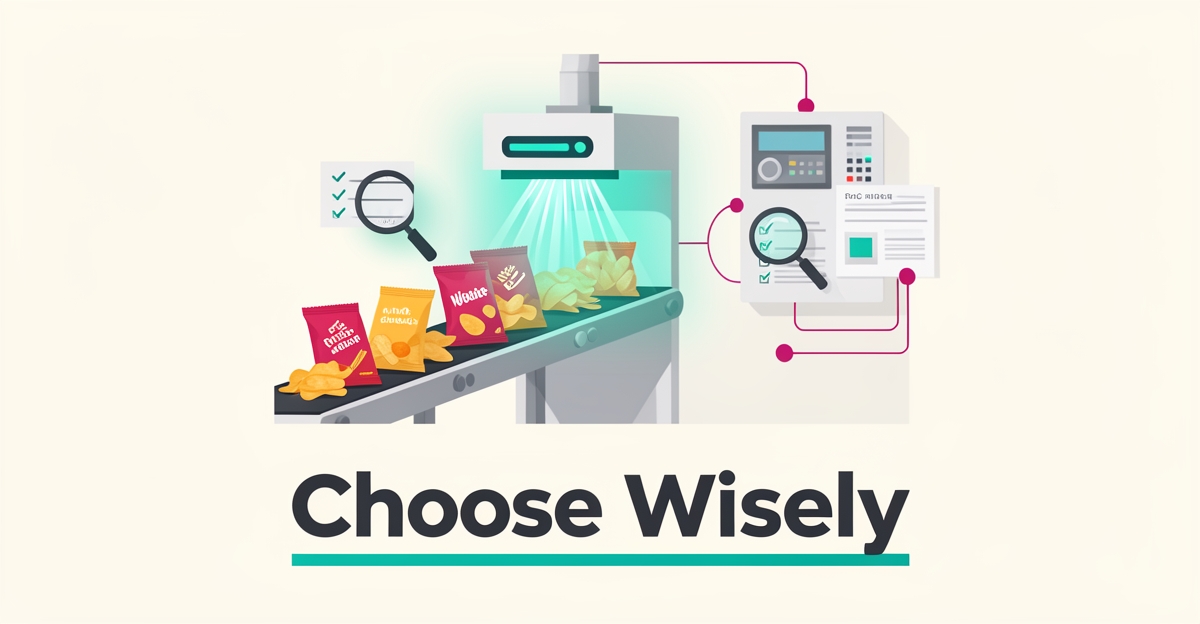
How to Choose the Right AI Partner for Snack Food Manufacturing: A Buyer’s Guide
Key Facts
- AI vision systems typically achieve higher defect detection accuracy than manual visual inspection, though exact rates vary by line and product
- High-SKU lines generally see faster payback than stable single-SKU operations, where ROI can stretch out for years
- Fully integrated PLC/SCADA systems typically deliver meaningfully better payback than standalone dashboards
- Computer vision can materially reduce quality control labor costs in snack manufacturing
- Ownership models matter: subscription point solutions create lock-in risk that full-ownership builds avoid
Hire a team member that works 24/7 — for less than a part-time wage.
AI receptionists, SDRs, dispatchers and 99+ roles. Trained on your business, fully managed.
Not sure where to start? Ask our AI planner
Why Most Snack Manufacturers Pick the Wrong AI Partner
Most snack plants don’t fail at AI because the models are weak. They fail because vendors sell to a plant that doesn’t exist on the floor.
Vendor demos showcase high accuracy on vision tasks and rapid deployment timelines, while the plant is still fighting Cpk variability, frequent changeovers, and manual logging. That mismatch is why many organizations get stuck at the pilot stage, with payback stretching out for years on stable single-SKU operations while high-SKU lines typically see returns much sooner.
A vendor promise of unified data means little if the line lacks PLC/SCADA integration. Fully integrated systems typically achieve meaningfully better payback than standalone dashboards because they move from detect and reject to predict and prevent. Without that depth, AI stays a dashboard.
Readiness is measurable before any vendor conversation. Plants with Cpk variability below 1.33 on key processes, frequent changeovers, or recurring quality complaints tend to see the strongest returns. The gap between Cp and Cpk tells the story: extruders and fryers are often capable of consistent batches, but real-world variation pushes Cpk down to the 1.0–1.2 range while Cp sits far higher. That gap is lost yield, rework, and complaints.
Vendor selection often ignores the operational profile that determines ROI. High-SKU lines with many changeovers per shift and low Cpk see the fastest payback, while high-speed continuous lines with strong process capability may struggle to justify the investment at all.
Diagnose readiness with these signals:
- Cpk baseline below 1.33 for key processes with batch-to-batch variation
- 5+ SKU changes per shift with measurable drift between batches
- Quality failure costs quantified, including complaint investigation time and rework
- Existing PLC/SCADA integration capability and sensor coverage
Ownership models compound the risk. Cloud-based point solutions deploy fast but create subscription lock-in and data portability issues. In vendor selection and evaluation, AIQ Labs emphasizes matching capability with plant realities and true ownership of AI systems to avoid lock-in.
Operator adoption is the final filter. Poor change management typically causes utilization to drop sharply within months, while strong training drives high alert response rates. A pilot that never reaches the line is a cost, not an investment.
A practical guide to vendor evaluation should start with your own metrics, not the vendor’s slide deck.
The Three Types of AI Solutions, and Which One Fits Your Plant
Not all AI solutions are created equal, and choosing the wrong one can leave you with an expensive system that doesn't solve your actual problem.
The AI landscape for snack food manufacturing falls into three distinct categories, each with different deployment timelines, accuracy trade-offs, and integration requirements. Understanding which fits your operation isn't just important, it's often the difference between a reasonable payback and a write-off.
Point solutions target one specific pain point with surgical precision. Vision inspection systems from established vendors detect defects with accuracy well beyond manual inspection, and typically deploy in weeks rather than months.
The trade-off? Each solution operates independently. If you need vision inspection, predictive maintenance, and demand forecasting, you're managing three separate systems with three separate integrations, three separate vendor relationships, and three separate data silos.
AI-extended manufacturing execution systems integrate intelligence into platforms you already use. Wonderware MES with AI extensions or SAP Food & Beverage with embedded machine learning offer unified data management within familiar operational frameworks.
Deployment stretches to several months, and accuracy typically runs slightly lower than dedicated point solutions. But you gain a single source of truth and avoid the integration complexity of managing multiple disconnected systems.
Comprehensive AI operating systems attempt to unify quality control, production scheduling, supply chain management, and compliance documentation in one intelligent platform. These are the most ambitious, and require the longest runway.
Full implementation typically takes a year or more and demands significant organizational change management. The payoff is unified data models and simplified system management, but only if your organization can sustain the transformation journey. This is the approach behind AI Operating Systems, one connected operating layer, built in phases, owned outright.
Your operational profile determines the right choice:
- High-SKU operations (5+ changeovers per shift) with Cpk below 1.33 see the fastest ROI from point solutions targeting quality control
- Plants with mature PLC/SCADA infrastructure benefit from AI-extended MES platforms that leverage existing data flows
- Operations lacking automation infrastructure face significant retrofit costs before any AI solution delivers value
- Single-SKU lines with Cpk above 1.33 may never achieve positive ROI regardless of solution type
The critical factor isn't the technology, it's the integration depth. Fully integrated systems with closed-loop PLC/SCADA control typically achieve meaningfully better payback than standalone dashboards that only alert operators to problems.
When evaluating vendors, ask about ownership models upfront. Solutions that lock you into proprietary platforms limit your flexibility as your needs evolve. AIQ Labs builds custom systems you own outright, no vendor lock-in, no subscription dependencies, just production-ready AI tailored to your plant's specific operational reality. If you want to start smaller, a Workflow Build rebuilds the one workflow that costs you the most, at a fixed price, in phases.
Five Non-Negotiable Criteria for Evaluating AI Vendors
Most AI vendor evaluations fail because they focus on flashy demos rather than operational fit. The difference between a system that pays for itself and one that never breaks even comes down to five non-negotiable criteria.
Food manufacturing deployment history tops the list. Vendors who understand the difference between a high-SKU fryer line and a stable single-SKU operation can accurately predict whether you'll see payback in a couple of years or half a decade. Ask for documented cases with specific process capability improvements, and be wary of vendors who can only offer generic benchmarks.
PLC/SCADA integration depth determines whether AI actually controls your process or just observes it. Fully integrated systems typically achieve meaningfully better payback than standalone dashboards because they enable closed-loop control, moving from "detect and reject" to "predict and prevent." Verify the vendor supports your specific PLC brands and can integrate in weeks, not months.
Ownership model flexibility matters more than most buyers realize. Consider these three approaches:
- Cloud subscriptions: Fast deployment but ongoing fees and potential data lock-in
- On-premise ownership: Higher upfront cost but complete control and no recurring subscriptions
- Hybrid models: Balance flexibility with cost, but require careful integration planning
AIQ Labs structures engagements around full ownership, clients own the code, agents, and data outright, eliminating vendor lock-in while maintaining enterprise-grade support. Payment models are built to match: start monthly, build in milestones, or own it outright.
Model maintenance commitments separate serious vendors from those selling vaporware. AI models require periodic retraining as equipment wears and recipes change, and that ongoing cost is real. Vendors who downplay it are setting you up for degraded performance and diminished ROI within the first year.
Finally, operator adoption support determines whether your investment delivers value or collects dust. Poor change management causes utilization to fall off sharply within months, while comprehensive training programs drive high alert response rates. The vendor should provide role-specific training, clear escalation procedures, and measurable adoption metrics, not just a user manual and a help desk number.
These criteria separate vendors who understand snack food manufacturing from those selling generic AI solutions. The right partner will demonstrate experience with your specific operational profile, whether that's tightening seasoning variance or reducing breakage on high-speed lines.
How to Structure a Pilot That Proves Value Before You Scale
A structured pilot validates AI impact before committing to broader deployment, ensuring resources target high-value opportunities. Start by quantifying your quality failure costs, including customer complaint investigations and potential recall expenses, to establish a baseline for measuring improvement. This financial context helps justify pilot scope and sets clear success thresholds.
Run a short, focused point-solution pilot on your highest-variability production line, focusing on metrics that directly tie to operational pain points. Prioritize lines with Cpk below 1.33 and frequent SKU changeovers, as these environments show the strongest ROI potential. Measure Cpk improvement and false-reject rate reduction, AI vision systems typically lower false rejects substantially compared to manual inspection while maintaining high defect detection accuracy.
Track operator adoption rates and closed-loop integration results as leading indicators of scalability. Strong training programs drive high alert response rates, whereas poor change management causes utilization to drop within months, directly impacting realized value. Expand only after confirming measurable improvements in both technical performance and human-AI collaboration, ensuring the solution delivers sustained benefits before scaling to additional lines or functions. AIQ Labs supports this phased approach through Workflow Builds, helping manufacturers design pilots that isolate variables, validate assumptions, and build internal readiness for broader implementation.
The Ownership Trap: Avoiding Vendor Lock-In in Food Manufacturing
When your AI vendor controls your production data, your compliance audit trails, and the models trained on your proprietary recipes, switching providers isn't just inconvenient, it can jeopardize your FDA 21 CFR Part 11 validation and HACCP documentation. In regulated food environments, that dependency creates risk that extends far beyond subscription costs.
Subscription-based cloud models dominate the market because they deploy quickly, often in weeks for point solutions like vision inspection systems. But that speed comes with a hidden price: your process data, quality records, and trained models live on someone else's infrastructure. When a vendor updates their platform, changes pricing, or sunsets a feature, your compliance workflows break on their timeline, not yours.
Full-ownership approaches flip this dynamic. You retain the code, the training data, and the integration logic, whether that's PLC/SCADA connections to Allen-Bradley or Siemens systems, or the multivariate models that predict fryer drift minutes before it happens. Plants that achieve durable Cpk improvements do so with systems they can audit, modify, and validate independently.
- Negotiate contractual data portability: raw sensor feeds, model weights, and audit logs must export in open formats
- Require source code escrow or direct IP transfer for any custom AI agents or vision pipelines
- Define exit SLAs: 90-day transition support, full database handoff, and integration map documentation
- Validate that your quality system (QMS) can re-verify models without vendor re-certification
AIQ Labs structures engagements around this principle: clients own every agent, workflow, and integration we build, whether deployed through a milestone build or a monthly partnership. No platform dependencies. No recurring license fees for your own IP. The compliance trail stays yours, auditable on your terms, long after the initial project closes.
Still paying for 10+ subscriptions that don’t talk to each other?
We build custom AI systems you own outright. No vendor lock-in. Full control.
Not sure where to start? Ask our AI planner
Frequently Asked Questions
How do I know if my snack manufacturing plant is ready for AI implementation?
What’s the difference between point solutions and AI-extended MES platforms for snack food manufacturing?
Why do most AI pilots fail to scale in snack food manufacturing?
What should I look for in an AI vendor’s ownership model to avoid lock-in?
How long does it typically take to see payback from AI in high-SKU snack lines?
What ongoing costs should I budget for after implementing AI in my snack plant?
Your Next Shift Starts With the Right Partner
The difference between AI that transforms your line and AI that collects dust comes down to operational fit. You now know how to match solution types to your Cpk reality, evaluate vendors on food manufacturing experience and PLC/SCADA integration depth, and structure pilots that prove value before scaling. Most importantly, you understand why ownership matters, because when your quality data, compliance trails, and process models live on someone else's platform, you're renting your competitive advantage. AIQ Labs builds custom systems you own outright, eliminating subscription dependencies while ensuring your FDA validation stays under your control. If your plant runs high-SKU lines with Cpk below 1.33, the ROI window is open. Ready to find out if your operation qualifies? Start with the two-minute Fit Check, then book a free 30-minute strategy call to map your highest-ROI opportunity. No sales pitch, just clarity on whether AI makes sense for your floor. Questions first? Reach us at [email protected].
Make AI your competitive advantage — not just another tool.
Strategy, implementation and ongoing optimization. One partner, end to end.
Not sure where to start? Ask our AI planner