How to Choose the Right AI Partner for Your Coding Bootcamp
Key Facts
- AI coding tools can be customized to fit the specific needs of coding bootcamps, according to industry resources
- GitHub Copilot integrates directly with VS Code to provide AI-powered coding assistance, as shown in practical guides
- AI-powered coding tools can create customized learning experiences for students, per program overviews
- Microsoft Learn for Educators AI Bootcamps run 3-6 hours per day over 1-4 days, according to Microsoft Learn
- AI coding tools must ensure data privacy and security to protect student information, as emphasized in program standards
- AI coding tools must comply with existing regulations and standards like FERPA and GDPR, according to compliance guidelines
Hire a team member that works 24/7 — for less than a part-time wage.
AI receptionists, SDRs, dispatchers and 99+ roles. Trained on your business, fully managed.
Not sure where to start? Ask our AI planner
The High-Stakes Decision: Why AI Vendor Selection Makes or Breaks Your Bootcamp
Choosing an AI partner for your coding bootcamp isn't just about selecting a tool, it's a strategic decision that shapes student outcomes, operational resilience, and long-term viability. The wrong vendor can undermine learning experiences, create compliance risks, and lock your program into inflexible systems that drain resources without delivering measurable value. As AI coding tools become central to modern education, their effectiveness hinges entirely on how well they align with your bootcamp's unique context, making vendor selection a critical inflection point rather than a routine procurement task.
AI coding tools can be customized to fit specific bootcamp needs, integrated with existing development environments like VS Code, and used to create personalized learning experiences, yet these benefits only materialize when implementation is thoughtful and context-aware. Without proper alignment, even powerful tools like GitHub Copilot may fail to enhance student engagement or skill development, instead becoming distractions that hinder rather than help. This reality underscores why evaluation must go beyond feature checklists to examine how a vendor supports your educational goals, technical infrastructure, regulatory obligations, and ongoing user needs.
The stakes are particularly high for coding bootcamps, where student success directly impacts reputation, enrollment, and job placement rates. A misaligned AI partner can lead to inconsistent learning outcomes, frustrate both instructors and learners, and create administrative burdens that divert focus from core teaching missions. Worse, inadequate compliance safeguards could expose student data or violate educational standards, resulting in legal repercussions and loss of trust. These risks compound when vendors offer rigid, one-size-fits-all solutions that don't adapt to evolving curricula or diverse learner backgrounds.
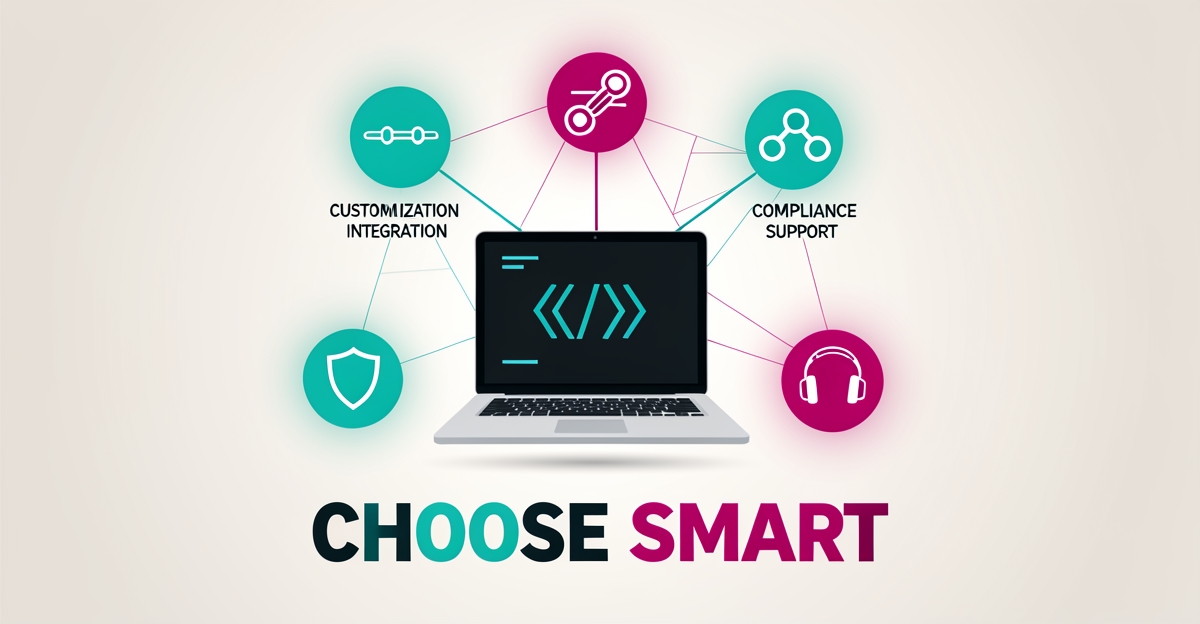
To avoid these pitfalls, bootcamps must evaluate AI vendors through four interconnected dimensions: customization, integration, compliance, and support. Each dimension plays a vital role in ensuring the AI tool enhances rather than disrupts the learning ecosystem. Customization ensures the tool adapts to your teaching methodology and student skill levels. Integration guarantees seamless workflow with IDEs, LMS platforms, and assessment systems. Compliance protects student privacy and meets educational data standards. Support provides the guidance needed for effective adoption and troubleshooting. Together, these factors determine whether an AI investment drives meaningful educational transformation or becomes a costly misstep.
- AI coding tools can be customized to fit the needs of the coding bootcamp
- GitHub Copilot can be integrated with VS Code to provide AI-powered coding assistance
- AI-powered coding tools can be used to create customized learning experiences for students
Customization and Integration: Building AI That Fits Your Curriculum, Not the Other Way Around
When evaluating AI partners for your coding bootcamp, customization and integration form the foundation of a successful implementation. The goal isn't to force your curriculum into a rigid AI platform but to adapt the technology to your teaching philosophy, student skill levels, and learning objectives. Leading bootcamps recognize that effective AI tools must mold themselves around pedagogical needs, not the reverse, creating personalized experiences that evolve with student progress rather than imposing one-size-fits-all solutions.
True customization goes beyond superficial settings; it involves aligning AI behavior with specific course modules, adjusting suggestion complexity for beginner versus advanced learners, and ensuring feedback matches your instructional methodology. As noted in industry resources, AI coding tools can be customized to fit the unique needs of coding bootcamps, allowing instructors to tailor assistance based on individual student trajectories. This adaptability enables educators to maintain curriculum integrity while leveraging AI to reinforce concepts at the right moment, whether guiding a novice through syntax basics or challenging an advanced student with architectural patterns. Vendors offering only surface-level configuration often fail to support this depth, resulting in tools that feel generic or misaligned with classroom goals.
Equally critical is seamless integration with existing development environments. Tools that disrupt workflow by requiring students to switch contexts or learn unfamiliar interfaces create friction that undermines learning efficiency. GitHub Copilot's integration with VS Code exemplifies the standard bootcamps should expect, providing AI-powered coding assistance directly within the editor students already use daily. For bootcamps teaching full-stack development, this means AI suggestions appear inline during HTML, CSS, JavaScript, or backend coding without interrupting the learner's focus. Any vendor whose solution demands significant workflow changes or external plugins risks adding cognitive load that detracts from core skill development.
Together, robust customization and deep integration ensure AI becomes an invisible accelerator, amplifying instruction without distorting it. Bootcamps that prioritize these pillars avoid the pitfall of adopting technology for its own sake, instead selecting partners who enable educators to teach more effectively while students learn at their own pace. When evaluating vendors, demand evidence of both capabilities: ask how their AI adapts to different learning stages and request demonstrations of native IDE integration. The right partner won't just sell you a tool, they'll help you build a learning environment where AI feels like a natural extension of your teaching.
Compliance and Support: The Overlooked Factors That Protect Your Students and Your Program
Bootcamps often focus on features when selecting AI coding tools, overlooking the compliance and support structures that protect both students and program integrity. These factors become critical when tools handle sensitive data like student code, personal information, and learning progress. Inadequate vendor support is a common cause of failed implementations in educational settings, often leading to abandoned pilots or security gaps.
Data privacy and security requirements must be non-negotiable. AI tools processing student work and identifiers need to comply with regulations like FERPA or GDPR, depending on the bootcamp's location and student demographics. Providers should offer clear data handling policies, encryption standards, and audit trails. Transparency in how student data is stored, used, and deleted builds trust with instructors and safeguards against reputational risk. Without these safeguards, even the most powerful AI assistant can become a liability.
Explainability is equally vital for instructional trust. Instructors need to understand why an AI suggests a particular code snippet or debugging step to guide student learning effectively. Tools that function as "black boxes" hinder teachable moments and make it difficult to assess whether AI output aligns with curriculum goals. Platforms offering explainable AI, such as those showing reasoning steps or confidence scores, help educators validate suggestions and turn AI interactions into learning opportunities.
Support infrastructure determines long-term success beyond initial setup. Bootcamps need vendors who provide customization assistance to tailor tools to specific languages or frameworks used in courses. Integration troubleshooting is essential when connecting AI tools to existing LMS platforms, IDEs, or version control systems. Ongoing compliance guidance ensures the tool remains aligned with evolving educational data protection standards as the program scales.
AIQ Labs helps bootcamps work through these often-overlooked criteria. Through AI Workflow Builds, we can rebuild the one workflow that costs your program the most, fixed price, delivered in phases, while assessing data security, explainability, and support responsiveness along the way. For bootcamps that want AI woven through everything from admissions to assessment, AI Operating Systems delivers one connected layer you own outright. Prioritizing compliance and support isn't just about risk mitigation; it's about creating a sustainable foundation where AI empowers both instructors and students without compromising safety or pedagogical integrity.
Your Step-by-Step Evaluation Framework: From Vendor Shortlist to Confident Decision
Choosing the right AI partner for your coding bootcamp starts with a clear evaluation process. A structured approach helps you avoid costly misalignments and ensures the solution fits your teaching model and technical environment. Begin by defining your bootcamp's specific customization needs, whether that's tailoring AI feedback to different skill levels or integrating with your curriculum's programming languages. According to industry resources, AI coding tools can be customized to fit the unique demands of educational programs, making this step critical for student engagement and learning outcomes.
Next, test how well potential vendors integrate with your existing tech stack. Seamless compatibility with tools like VS Code, GitHub, or your learning management system reduces friction for both instructors and students. As noted in practical guides, GitHub Copilot's integration with VS Code enables real-time AI-assisted coding, a benchmark for what seamless integration should look like in an educational setting. Involve your instructors early in this phase to surface usability concerns that might not appear in technical demos.
Then, audit the vendor's compliance certifications and data handling practices, especially if your bootcamp serves minors or handles sensitive student data. Look for transparency in how data is stored, used, and protected, key concerns highlighted in program overviews emphasizing privacy in AI-powered learning environments. Assess support responsiveness by checking response times, availability of technical resources, and whether the vendor offers dedicated educational support. Finally, run a pilot test with a real student cohort to observe how the tool performs under actual classroom conditions, gathering feedback on both functionality and user experience before making a final decision.
AIQ Labs supports bootcamps through this entire evaluation journey. Start with the two-minute Fit Check, then book a free 30-minute strategy call to map where AI can deliver the highest return for your program. You can start monthly, build in milestones, or own your system outright, no inflated promises, just a clear path to long-term value from your AI investment.
Still paying for 10+ subscriptions that don’t talk to each other?
We build custom AI systems you own outright. No vendor lock-in. Full control.
Not sure where to start? Ask our AI planner
Frequently Asked Questions
How do I know if an AI coding partner will actually fit my bootcamp curriculum?
Will the AI tool work with the IDEs and platforms my students already use?
Is compliance and data privacy really a big deal for coding bootcamps?
Why does vendor support matter after the initial setup?
Can AI create personalized learning experiences for students at different levels?
What's the first step to evaluating AI vendors for my bootcamp?
From Evaluation to Empowerment: Turning AI Selection into Educational Advantage
Selecting the right AI partner for your coding bootcamp isn't just about avoiding pitfalls, it's about unlocking measurable improvements in student engagement, learning consistency, and operational resilience. As we've explored, success hinges on four interconnected pillars: customization that adapts to your curriculum, seamless integration with tools like VS Code, rigorous compliance to protect student data, and responsive support that ensures long-term adoption. When these elements align, AI becomes a force multiplier for your teaching mission rather than a distraction. The framework outlined here gives you a clear path forward: define your unique needs, test integrations early, audit compliance practices, and validate with a real student pilot. This approach transforms vendor evaluation from a procurement task into a strategic opportunity to strengthen your bootcamp's core value proposition. To begin building that advantage with a partner who understands the nuances of educational AI implementation, take the two-minute Fit Check, then we'll map your specific challenges on a free strategy call and identify where AI can deliver the highest return on your investment.
Make AI your competitive advantage — not just another tool.
Strategy, implementation and ongoing optimization. One partner, end to end.
Not sure where to start? Ask our AI planner