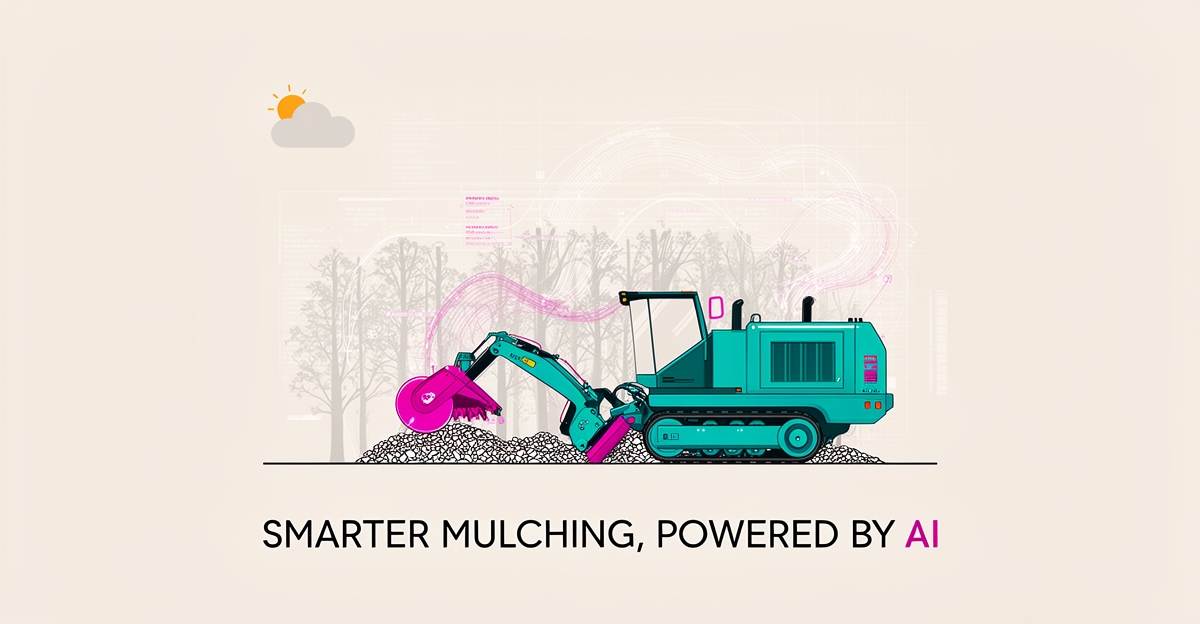
How to Choose the Right AI Partner for Your Mulching Service Operations
Key Facts
- Generic office AI tools lack the field context, real-time weather, dispatch logic, equipment telemetry, that mulching operations depend on
- AIQ Labs has deployed 200+ multi-agent systems across field-service and operations-heavy businesses
- AI Employees typically cost roughly 80% less than an equivalent human hire while working around the clock
- AIQ Labs delivers custom-built systems that clients own outright, with no vendor lock-in or platform dependencies
- Three payment models, Start Monthly, Build in Milestones, Own It Outright, let you match commitment to your risk tolerance
- The entry point is a two-minute Fit Check at aiqlabs.ai/apply, followed by a free 30-minute strategy call
Hire a team member that works 24/7 — for less than a part-time wage.
AI receptionists, SDRs, dispatchers and 99+ roles. Trained on your business, fully managed.
Not sure where to start? Ask our AI planner
Why Mulching Services Need AI Beyond Basic Automation
Mulching services face operational hurdles that generic automation doesn't touch. Manual scheduling struggles to adapt to sudden weather changes, leaving crews idle and projects delayed. Equipment tracking often lives in spreadsheets or paper logs, causing miscommunication and underused machines. These pain points create bottlenecks that off-the-shelf AI tools, designed for office workflows, can't resolve, because they lack industry-specific context like real-time weather integration or field-service dispatch logic.
The pattern is consistent across field-service businesses: when automation is built around actual working conditions rather than generic templates, teams stop fighting the system and start trusting it. Off-the-shelf tools treat scheduling as a static calendar function, ignoring how one storm can invalidate an entire week's plan. They also can't distinguish between a skid steer idling due to rain versus sitting down from mechanical failure, critical context for cost control and client communication. When the system doesn't understand the field, crews override it manually, and the "automation" becomes another chore.
For mulching operations, effective AI has to address three core challenges: weather-dependent scheduling that shifts jobs in real time, equipment tracking that prevents downtime, and seasonal demand forecasting that aligns staffing with peak periods. That means the system needs to learn from local microclimates, soil conditions, and the municipal rules that affect job feasibility, not just process calendar entries faster.
This is why the partner you choose matters more than the tool. AI built around forestry mulching's rhythms doesn't just automate tasks, it turns weather from a weekly disruption into a predictable variable in operational planning. If you're weighing where to start, AI Workflow Builds target exactly this kind of single, high-cost workflow rebuild.
What to Look for in an AI Partner: Industry Fit and Ownership
When selecting an AI partner for mulching operations, industry-specific experience and true ownership are non-negotiable. A vendor must understand the demands of field-based services, weather-dependent scheduling, equipment tracking, seasonal workload swings, or the system will fight your daily reality instead of fitting into it. Generic platforms miss these nuances, and adoption suffers. Ask any prospective partner directly: how does your system handle a two-day rain delay? What happens when a crew calls in a breakdown mid-route? Vague answers are a red flag.
Ownership is equally critical. Many point-solution vendors retain control over your data, models, or infrastructure, creating dependency that limits your flexibility year over year. If the vendor raises prices, changes their platform, or shuts down, your operation is exposed. The safer structure is a partner who builds the system and hands it to you outright, no vendor lock-in, no platform dependencies. AIQ Labs works this way: every custom-built system is owned by the client, and the company runs four live SaaS products of its own daily, so the builds are proven in real operations, not just demos.
Look for three more things: transparent integration with the tools you already use, evidence of success in similar field-service contexts (AIQ Labs has deployed 200+ multi-agent systems), and a support model that includes ongoing optimization rather than deployment-then-disappear. The ability to scale from a single workflow fix to a full operating layer, while you keep full IP and data ownership, ensures the solution evolves with your business instead of boxing it in.
How to Evaluate and Implement AI in Your Mulching Operations
Evaluating and implementing AI requires a structured approach matched to your actual workflow. Start by mapping your pain points: manual dispatching, weather-dependent scheduling delays, equipment tracking inefficiencies. This assessment surfaces the highest-impact automation opportunities, usually the one workflow that costs you the most every month. Don't try to automate everything at once; pick the bottleneck that hurts most.
Next, assess partners on their ability to deliver custom solutions tailored to mulching use cases, end to end, build, deployment, and ongoing management, while keeping you as the owner of the system. AIQ Labs offers three entry points: AI Employees for managed roles like dispatchers, receptionists, and SDRs at roughly 80% less cost than a human hire; AI Workflow Builds to rebuild your single most expensive workflow at a fixed price; and AI Operating Systems for a connected operating layer built in phases and owned outright. That maps to the three payment models: Start Monthly, Build in Milestones, or Own It Outright.
Once you've chosen a partner and model, proceed in phases. Begin with a pilot, AI-driven dispatching or weather-based scheduling is a common starting point, and validate results before scaling. During deployment, train field teams on the new workflows, establish feedback loops, and track performance metrics so adoption sticks. Continuous optimization is what separates a system that compounds in value from a one-time project that decays.
To start your evaluation, take the two-minute Fit Check at aiqlabs.ai/apply, then book a free 30-minute strategy call at aiqlabs.ai/book. You'll map your biggest bottlenecks and identify where automation pays back fastest. No sales pitch, just a real working session about your operation.
Still paying for 10+ subscriptions that don’t talk to each other?
We build custom AI systems you own outright. No vendor lock-in. Full control.
Not sure where to start? Ask our AI planner
Frequently Asked Questions
Will generic AI tools actually work for mulching scheduling and equipment tracking?
How much manual work can AI really take off my crew?
Do I own the AI system or am I locked into a vendor?
What's the fastest way to test AI without a big commitment?
How do I know if my mulching operation is a good fit for custom AI?
What does an AI partner cost?
From Weather Woes to Workflow Wins: Your AI-Powered Mulching Advantage
Choosing the right AI partner for your mulching service isn't about chasing trends, it's about solving real field challenges: weather-disrupted schedules, equipment blind spots, and seasonal staffing gaps. The right partner builds around how your jobs actually move, proves the work in real deployments, and hands you a system you own outright, no vendor lock-in, no generic templates that create more friction than flow. Start with the two-minute Fit Check at aiqlabs.ai/apply to map your biggest bottlenecks, then book a free 30-minute strategy call at aiqlabs.ai/book. No pitch, just a working session on where AI pays back fastest in your operation.
Make AI your competitive advantage — not just another tool.
Strategy, implementation and ongoing optimization. One partner, end to end.
Not sure where to start? Ask our AI planner