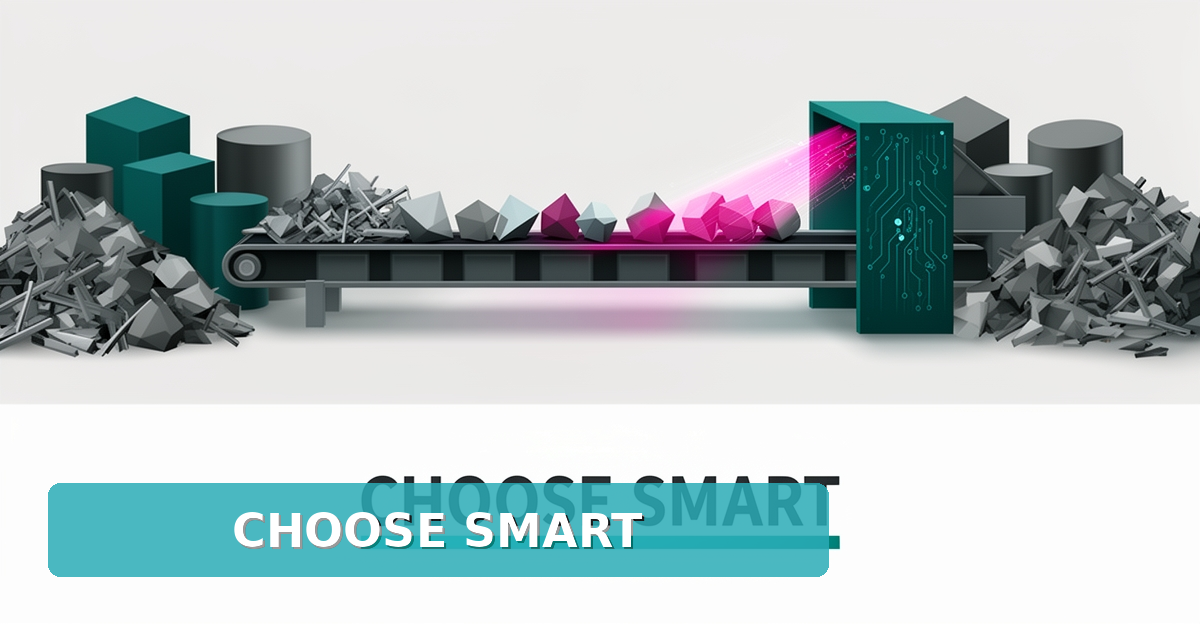
How to Choose the Right AI Partner for Your Scrap Metal Business
Key Facts
- AI-powered sorting systems achieve over 95% classification accuracy in scrap metal recycling according to industry research
- Robotic AI systems process 4,000–6,000 picks per minute versus 1,000–2,000 by human workers per TDC Ventures analysis
- Facilities report ROI within 12–18 months for modular AI sorting systems per Super Recycling data
- AI-driven bots achieve 92%+ ferrous vs. non-ferrous separation accuracy confirmed by TDC Ventures
- Predictive maintenance reduces unplanned downtime by 15% and increases equipment uptime by up to 20% per Super Recycling findings
- Contamination rates fall by as much as 25% through AI-powered optical classification per Super Recycling research
- Operations see up to 30% cost reductions after deploying intelligent robotic handlers per TDC Ventures
Hire a team member that works 24/7 — for less than a part-time wage.
AI receptionists, SDRs, dispatchers and 99+ roles. Trained on your business, fully managed.
Not sure where to start? Ask our AI planner
Why Scrap Yards Can't Afford to Stay Manual
Scrap metal recyclers face mounting pressure from high labor costs, safety hazards, and workforce churn exceeding 40% annually, making manual operations increasingly unsustainable. These challenges directly impact profitability and scalability in a competitive market where efficiency determines survival.
AI-powered solutions deliver measurable relief: sorting accuracy surpasses 95%, robotic systems process 4,000–6,000 picks per minute versus 1,000–2,000 by humans, and operational costs drop by up to 30% after implementation. These gains translate to faster throughput, fewer errors, and safer working conditions without relying on shrinking labor pools.
- Predictive maintenance reduces unplanned downtime by 15% and increases equipment uptime by up to 20%
- Contamination rates fall by as much as 25% through AI-powered optical classification
- Facilities report ROI within 12–18 months for modular AI sorting systems
The shift isn’t optional, it’s a strategic necessity. Yards clinging to manual processes risk falling behind competitors who leverage AI to cut costs, improve safety, and recover more value from every ton processed. For scrap metal businesses, the real question isn’t whether to adopt AI, but how quickly they can implement it before inefficiencies erode their bottom line. AIQ Labs supports this transition by building custom AI systems that scrap yards own outright, eliminating subscription lock-in while ensuring solutions fit their unique workflows from day one.
The Three Criteria That Separate Real AI Partners from Vendors
AIQ Labs believes the difference between a true AI partner and a vendor lies in three non-negotiable criteria: deep industry knowledge of scrap workflows, proven implementation and support capability, and clear system ownership structure. Many vendors offer point solutions that promise quick wins but fail to integrate with the complex, multi-step realities of scrap metal recycling, from inbound sorting to downstream processing and asset tracking. Without understanding how contamination rates impact material purity or how predictive maintenance can reduce unplanned downtime by 15%, even the most advanced AI tools will underperform in real-world yards. True partners don’t just sell software; they engineer systems around your specific workflow challenges, whether that’s improving ferrous vs. non-ferrous separation accuracy beyond 92% or enabling robotic handlers to achieve 4,000–6,000 picks per minute compared to human baselines.
Implementation and support capability separates theoretical AI from operational impact. Vendors who white-label tools or rely on no-code platforms often lack the engineering depth to handle legacy system integration, data security requirements, or the need for human-in-the-loop controls during high-stakes decisions like payment processing or hazardous material identification. AIQ Labs builds production-ready systems using enterprise-grade frameworks like LangGraph and ReAct, ensuring seamless two-way API connections with CRM, accounting, and operations tools, critical for maintaining audit trails and compliance in regulated environments. Our approach includes ongoing monitoring, retraining, and optimization, not just deployment, because scrap facilities evolve with market shifts in material composition and global demand for premium-grade metals.
Finally, system ownership structure determines long-term flexibility and total cost of ownership. Subscription lock-in creates dependency that limits customization and inflates costs over time, especially when vendors retain control of your data and model improvements. AIQ Labs delivers full ownership of custom-built AI systems, no platform fees, no vendor lock-in, so you control intellectual property, future development, and integration with emerging tools like RFID asset trackers or smart scales. This model aligns with the industry’s shift toward data-driven facilities where real-time workflow tracking eliminates yard checks and maximizes margins. When you own the system, you own the advantage: the ability to adapt AI to new material streams, optimize for overseas market premiums of 10–15%, and scale automation without recurring platform penalties. The right partner doesn’t just provide technology, they transfer capability, ensuring your business leads the transformation, not follows it.
What Full Ownership Means for Your Yard's Bottom Line
The choice between renting and owning your AI infrastructure fundamentally reshapes your yard's economics over a five-to-seven-year horizon. Subscription models from providers like ZenRobotics, AMP Robotics, and Wastetide typically bundle hardware, software, and support into recurring fees that compound annually, while full-ownership custom builds shift the cost curve toward a one-time capital investment with predictable maintenance.
When you own the system, you control the integration layer that connects scales, tracking hardware, and yard management software. A recent analysis of AIoT-enabled facilities notes that predictive maintenance powered by sensor data can reduce unplanned downtime by 15% and increase equipment uptime by up to 20%, but only when the AI can read and write to every operational system without vendor-imposed API limits. Proprietary platforms often restrict data exports or charge per-seat fees for dashboard access, forcing yards to maintain duplicate workflows.
Full ownership also secures your intellectual property. The sorting logic trained on your specific material streams, your grade definitions, contamination thresholds, and regional buyer specs, becomes a trade asset rather than a vendor's training data. Industry data shows that AI-driven bots achieve 4,000–6,000 picks per minute with 92%+ ferrous versus non-ferrous separation accuracy, and those performance gains compound when the model evolves with your yard's unique feedstock instead of a generic global dataset.
- Eliminate recurring per-seat and per-module license fees that scale with headcount
- Integrate directly with legacy weighbridge software, RFID readers, and ERP systems without middleware
- Retain full rights to sorting models, operational data, and process improvements
- Modify workflows instantly when buyer specs or regulations change, no vendor change-request queue
AIQ Labs structures every engagement around this ownership principle, delivering custom-built systems that transfer code, agents, and data to the client at completion. The result is an AI operating system that appreciates in value as your yard's processes mature, rather than a subscription that depreciates with every renewal cycle.
Your Step-by-Step Path to AI Implementation
A phased rollout protects cash flow while proving value at each stage. Scrap operations that move step-by-step from visibility to automation see faster adoption and clearer ROI than those that attempt a full transformation at once.
Start with an honest audit of manual and data-poor processes. Map where labor is repetitive, where downtime is hidden, and where material loss occurs. This baseline identifies the highest-impact targets for sensors and AI and prevents investment in low-value workflows.
Install IoT sensors on critical machinery first. Industry research shows predictive maintenance can cut unplanned downtime by 15% and lift equipment uptime by up to 20%. Vibration, temperature, energy use and throughput sensors create total operational transparency and feed the models that follow.
Pilot AI sorting on a single line before scaling. AI-powered sorting systems achieve over 95% classification accuracy with contamination reductions up to 25%. A contained pilot proves accuracy on your specific mix and builds operator trust.
Roll out dashboards and training in parallel with the pilot. Operators need real-time visibility into picks per minute, purity rates and machine health to act on insights. Training shifts roles from manual picking to system oversight and maintenance.
Integrate robotics only after data and sorting are stable. AI-driven bots process 4,000–6,000 picks per minute versus 1,000–2,000 tasks per hour by human workers, with reported cost reductions up to 30% after deployment. Starting with risky, repetitive tasks limits disruption and accelerates payback.
A practical implementation sequence looks like this:
- Audit manual, data-poor and wasteful steps across intake, sorting and dispatch
- Fit IoT sensors to critical equipment and activate predictive maintenance software
- Run an AI sorting pilot, measure accuracy and contamination, then scale
- Deploy operator dashboards and role-specific training for adoption
- Add robotic handlers for high-volume, high-risk tasks once ROI is proven
Ownership structure matters as much as technology choice. Subscription models create long-term vendor dependency, while full ownership of AI systems gives scrap businesses control over customization, data and future development. AIQ Labs builds solutions designed specifically for scrap metal recycling workflows with no subscription lock-in.
Phased implementation lets ROI appear before full-scale investment. Each stage funds the next through recovered labor hours, higher material purity and reduced downtime, turning AI from a capital risk into a compounding operational advantage.
Choosing Your Partner and Getting Started
Selecting the right AI partner requires matching their capabilities to your scrap metal operation’s specific needs, workflows, and long-term goals. Start by evaluating their industry knowledge, do they understand the nuances of metal sorting, contamination risks, and throughput demands? Next, assess their implementation support: can they integrate with your existing scales, conveyors, and management systems without disrupting daily operations? Finally, consider ownership structure, will you retain full control of the AI system, or will you face ongoing subscription fees and vendor lock-in? Industry research shows that AI-powered sorting achieves over 95% classification accuracy, while studies confirm robotic systems process 4,000–6,000 picks per minute, far surpassing human capabilities. These gains only materialize when the solution is built for your environment, not forced into a generic template.
Use this checklist to guide your evaluation:
- Does the provider demonstrate deep expertise in scrap metal recycling workflows?
- Can they show proven results in similar facilities, such as reduced downtime or increased material purity?
- Is implementation support included, training, integration, and ongoing optimization?
- Do you retain full ownership of the AI system, code, and data?
- Are payment models flexible enough to match your cash flow and scalability plans?
Still paying for 10+ subscriptions that don’t talk to each other?
We build custom AI systems you own outright. No vendor lock-in. Full control.
Not sure where to start? Ask our AI planner
Frequently Asked Questions
How much can AI actually improve sorting accuracy in a scrap yard?
Is AI sorting really faster than human workers, or is that just marketing hype?
What's the difference between an AI vendor and a true AI partner?
Should I rent AI through a subscription or own the system outright?
How should a scrap yard start implementing AI without disrupting operations?
What results have other companies actually seen from AI in recycling operations?
Turn AI From Cost to Competitive Edge
Choosing the right AI partner for your scrap metal business isn’t about chasing trends, it’s about securing lasting operational advantage. As we’ve covered, the real differentiators lie in deep industry knowledge, proven implementation support, and most critically, full system ownership. Vendors lock you into recurring fees and limit your control, but owning your AI system means you retain intellectual property, avoid per-seat fees, and can evolve the technology as your material streams and buyer specs change. This translates to predictable costs, higher material purity, and the freedom to integrate with RFID trackers, smart scales, or ERP systems without middleware. The phased implementation approach, starting with IoT sensors, piloting AI sorting, then adding robotics only after proving ROI, lets you fund each stage with gains from the last, turning automation into a compounding benefit rather than a capital risk. If you’re ready to see where AI can deliver measurable impact in your yard, whether that’s reducing downtime by 15%, boosting sorting accuracy past 95%, or cutting operational costs by up to 30%, the next step is a clear, data-backed plan. Start with a free strategy call to map your highest-ROI opportunity and discover how full ownership puts you in control of your AI transformation.
Make AI your competitive advantage — not just another tool.
Strategy, implementation and ongoing optimization. One partner, end to end.
Not sure where to start? Ask our AI planner