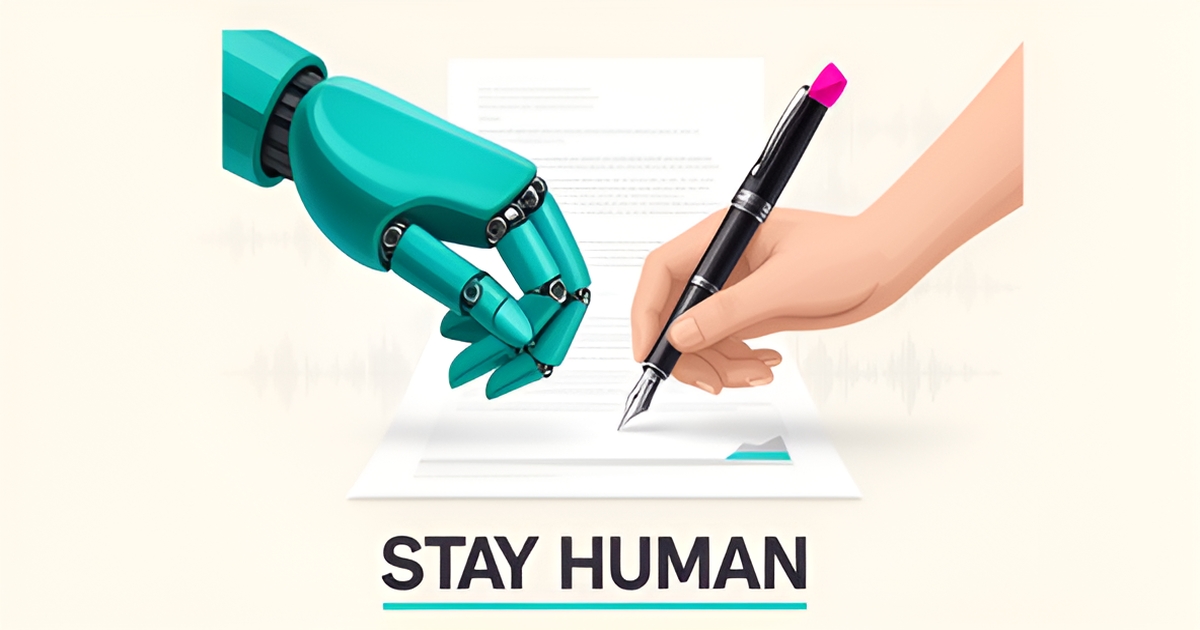
How to Humanize AI Text: A Practical Guide for Content Authenticity
Key Facts
- "The AI-powered content creation market was valued at USD 2.2 billion in 2024 and is projected to reach USD 10.6 billion by 2033 at a 19.4% CAGR according to Grand View Research",
- "All 11 commercial AI humanizers tested altered or dropped checkable facts in 35-65% of documents containing such units according to a rigorous academic audit",
- "A general-purpose detection model separated humanized text from human originals with an AUROC of 0.864, meaning humanized text can still be detected according to academic research",
- "Top AI humanizer tools dropped detection scores from 90-100% down to under 10% in standardized tests according to Jotform testing",
- "Privacy was the #1 decision factor for 64% of buyer interviews, with some tools retaining user data post-account-closure according to buyer research",
- "Humaniser reported a 24% increase in reader engagement (scroll depth) on humanized AI-assisted marketing pages vs. baseline paraphrasing according to vendor benchmark data",
- "Lorka AI Humanizer reduced detection from 92% to 3% while Undetectable AI reduced it from 95% to 6% according to Lorka's testing data"
One AI employee doing one job, 24/7, for less than a part-time wage.
Receptionist, lead follow-up, intake or dispatch. Trained on your business and fully managed. From $700/mo.
The Detection Problem: Why Raw AI Text Gets You Flagged
Paste a raw ChatGPT draft into an AI detector and watch it light up. The problem isn't just that the text is machine-generated. It's that AI writing has a statistical fingerprint, and detectors are built to find it.
According to research on how detection works, detectors flag machine-written text by identifying uniform sentence lengths, consistent rhythm and vocabulary, and a flat, neutral tone. Add the telltale lexical habits, like predictable stock words and overused em dashes, and raw AI output is easy to spot. That's why so many writers now humanize AI text before publishing: the goal isn't deception, it's removing the mechanical patterns that make content feel impersonal.
Here's what typically gets raw AI drafts flagged:
- Uniform sentence lengths and a consistent, predictable rhythm throughout the piece
- A neutral, hedging tone with no personality, opinion, or variation
- Signature vocabulary choices plus heavy em dash use
The scale of this problem explains the market around it. The AI-powered content creation market was valued at USD 2.2 billion in 2024 and is projected to reach USD 10.6 billion by 2033, growing at a 19.4% CAGR. Text is the largest content type by revenue share. Where there's that much machine-assisted writing, there's a parallel industry trying to detect it, and another trying to humanize it. One industry analysis describes an ongoing arms race: every time detectors improve, humanizers adapt, and the cycle repeats.
The detection paradox fuels demand. Advanced models like GPT-4.5, Claude 3.5, and Gemini Advanced make raw drafts easier than ever to generate, but also more detectable by institutions, which drives writers toward humanizing tools.
Here's the part most guides won't tell you: detectors aren't reliable judges even of human writing. One writer with a decade of experience reported writing content entirely from scratch, running it through a detector, and getting flagged as AI-generated. A rigorous academic audit backs this up from the other direction: a general-purpose detection model separated humanized text from human originals with an AUROC of 0.864, meaning humanized text can still be detected, while perplexity-based detectors performed below chance on modern rewrites.
So set honest expectations. No tool or technique makes content truly "undetectable," and no detector's verdict proves anything definitive. What matters is writing quality and authenticity, not beating a score. At AIQ Labs, we've seen the same pattern in our own content pipelines: the pieces that engage readers are the ones where a human shaped the final draft, regardless of what any detector said. That's the standard this guide will help you hit.
What Humanizing AI Text Actually Means (And What It Can't Do)
Ask ten marketers what "humanizing AI text" means and you'll get ten different answers, most of them wrong. It isn't a magic button that makes machine writing undetectable. It's a set of text transformations that change how writing reads, with real limits that most tool marketing conveniently skips.
At its core, humanizing AI text means rewriting machine-generated content to break the statistical patterns that detectors (and readers) pick up on. The industry report on this space identifies four core techniques:
- Lexical substitution: swapping predictable word choices for more varied vocabulary, including removing AI "tells" and overused em dashes.
- Sentence restructuring: varying sentence length and rhythm, since detectors flag uniform sentence lengths and consistent structure.
- Controlled imperfection: introducing slight variation that simulates human idiosyncrasy, the small inconsistencies that naturally appear in human writing.
- Tone adjustment: shifting neutral, machine-flat tone toward a specific voice, which is why brand voice training has become a commercialized feature in tools like Jasper.
The tool market has split into two categories. "AI Bypassers" rewrite text specifically to evade detection, sometimes at the cost of tone and quality. "AI Paraphrasers" improve clarity and style but often don't beat detectors at all. Knowing which type you're using matters, because the two do fundamentally different jobs.
The performance data is genuinely impressive on the surface. In standardized testing, top tools dropped detection scores from 90-100% down to under 10%: Lorka's own testing showed its humanizer going from 92% to 3%, Undetectable AI from 95% to 6%, and Humanize AI from 92% to 7%. Separate testing found five tools took content from 100% AI-detected to 0% via Copyleaks. One vendor even reported a 24% increase in reader engagement on humanized marketing pages compared to baseline paraphrasing.
But here's what the vendor benchmarks don't tell you. A rigorous academic audit with pre-registered protocols tested 11 commercial humanizers and found that every single one altered or dropped factual details (numbers, dates, names, quotes) in 35-65% of documents containing checkable facts. Ten of the eleven changed numbers or names in at least 20% of documents. A reworded quotation or a shifted statistic can leave the overall meaning intact while making the text false, and public leaderboard metrics don't measure this at all.
There's another limit: humanized text can still be detected. The same audit found a general-purpose detection model separated humanized text from human originals with an AUROC of 0.864, which is far from perfect but well above chance. The "undetectable" framing is marketing, not math. Results are probabilistic, and they depend on the tool, the input text, and the detector being tested against. Even fully human-written content sometimes gets flagged.
So what does humanizing actually accomplish? It improves readability, authenticity, and reader engagement, and it reduces (sometimes dramatically) the risk of AI detection. That's valuable. At AIQ Labs, we treat it the same way we treat any AI-generated output in our content systems: as a draft that still needs human editorial review, fact-checking against the source, and a final read for voice. The tools work. They just don't work alone, and they never guarantee an outcome.
How to Humanize AI Text: A Step-by-Step Workflow
Knowing how detectors flag machine text tells you exactly what to fix. Detectors look for uniform sentence lengths, consistent rhythm, and neutral tone, so your first manual pass should break those patterns before any tool touches the draft.
Start by varying your sentence structure deliberately: a long sentence, then a short one. Cut the AI-tell words and trim the em dashes, which testing at Jotform identified as common giveaways. This manual pass matters because detectors score text on statistical predictability, and a few minutes of restructuring shifts those numbers.
Second, run an AI text humanizer, but choose based on output quality and fact preservation, not detection scores alone. In Jotform's testing, GPTHuman took content from 100% AI-detected to 0%, but produced poorly written text that needed comprehensive editing. Phrasly hit the same 0% with the least editorial intervention required. A 0% score means nothing if the rewrite mangles your prose.
Here's how the main tools compared in testing:
| Tool | Detection Before | Detection After | Price/mo |
|---|---|---|---|
| Phrasly | 100% | 0% | from $8.25 range |
| GPTHuman | 100% | 0% | $8.25 (billed annually) |
| Lorka AI | 92% | 3% | $29.99 |
| Undetectable AI | 95% | 6% | $19.00 |
| Humanize AI | 92% | 7% | $9.99 |
| QuillBot | 75% | 40% | varies |
Third, verify every fact against your source draft. An academic audit of 11 commercial humanizers found all of them altered or dropped checkable facts, meaning numbers, dates, names, and quotes, in 35–65% of fact-containing documents. Ten of the eleven tools still changed numbers or names in over 20% of documents. A changed digit can leave the meaning intact while making the text false.
- Cross-check every statistic, name, and quotation against the original draft
- Confirm dates and figures survived the rewrite intact
- Re-read for dropped context that changes a claim's meaning
Fourth, apply human editing and your brand voice. This is the standard approach in professional newsrooms: Der Spiegel uses AI to automate routine verification tasks while keeping human editorial judgment in the loop. The same principle applies here. Brand voice training has become a commercialized feature in tools like Jasper for exactly this reason, per market research on the AI content space.
Finally, vet the privacy policy before you commit to any tool. Privacy was the top decision factor for 64% of buyers interviewed, and some tools retain user data even after account closure, according to buyer research. If you're pasting client drafts or proprietary content into a web tool, data retention terms are a business risk, not fine print.
The takeaway from the research is consistent: humanization works best combined with human editorial review, never as a replacement for it. At AIQ Labs, we apply the same discipline to our own content systems: multi-layer fact-checking and brand voice consistency run inside our production pipelines before anything publishes. Treat the tool as a first pass, keep the human as the final editor, and your content stays both undetectable and true.
Humanizing as a System: Making Authentic Content Repeatable
Humanizing AI text isn't a one-off editing trick. It's a repeatable system, and the businesses that treat it that way see the difference in their metrics. One vendor reported a 24% increase in scroll depth on humanized AI-assisted marketing pages compared with pages processed through basic paraphrasing tools, which suggests readers actually stay longer when content reads like a person wrote it (Humaniser's benchmark data). That kind of engagement is commercial, not cosmetic.
The commercial case comes down to two things. First, reader engagement: audiences reward authenticity over efficiency, and content that sounds machine-generated gets skimmed and abandoned. Second, search performance: Google has stated it rewards high-quality content no matter how it's produced, so humanized AI content can rank well if the quality holds up (Jotform's testing). But quality is exactly where automation fails without oversight. An academic audit found that all 11 commercial humanizers tested altered or dropped checkable facts, like numbers, dates, names, and quotes, in 35–65% of documents containing them (the audit on arXiv). A changed statistic can leave the meaning intact and still make the text false.
That's why the workflow we recommend throughout this guide ends with a loop: humanize, verify, edit. Run your draft through an ai text humanizer, then fact-check every claim against the source, then do a human editing pass for voice and flow. Skip the verification step and you're publishing at the mercy of a tool that rewrites numbers without telling you.
This is the same loop we run daily at AIQ Labs. Our own marketing suite operates more than 70 production content agents, each one paired with multi-layer fact-checking and brand voice consistency checks before anything ships. We're not describing a theory here. The humanize-verify-edit process in this guide is the process our own systems go through every day, at scale, across blogs, social platforms, and email.
If you want to make that system repeatable in your own workflow, a few habits matter more than any single tool:
- Verify every statistic, name, and quotation against your source draft after humanizing, every time.
- Vary sentence length and structure manually, since detectors flag uniform rhythm and neutral tone.
- Strip AI tells and excessive em dashes before publishing.
- Keep a human editor as the final gate, the way newsrooms like Der Spiegel keep people in the loop for editorial judgment.
Ready to put this into practice? Try our AI humanizer tool to make your content undetectable and engaging, or start the two-minute Fit Check at aiqlabs.ai/apply. We'll tell you honestly whether there's a clear win for your content operation, because that's how we'd want to be treated too.
Still paying for 10+ subscriptions that don’t talk to each other?
We build connected AI systems you own. Pay upfront or on a payment plan; the code is yours once it’s paid off.
Frequently Asked Questions
See what AI would actually do in your business, in 60 seconds.
The planner shows which step fits, the agents we’d build and the published price. No email needed.