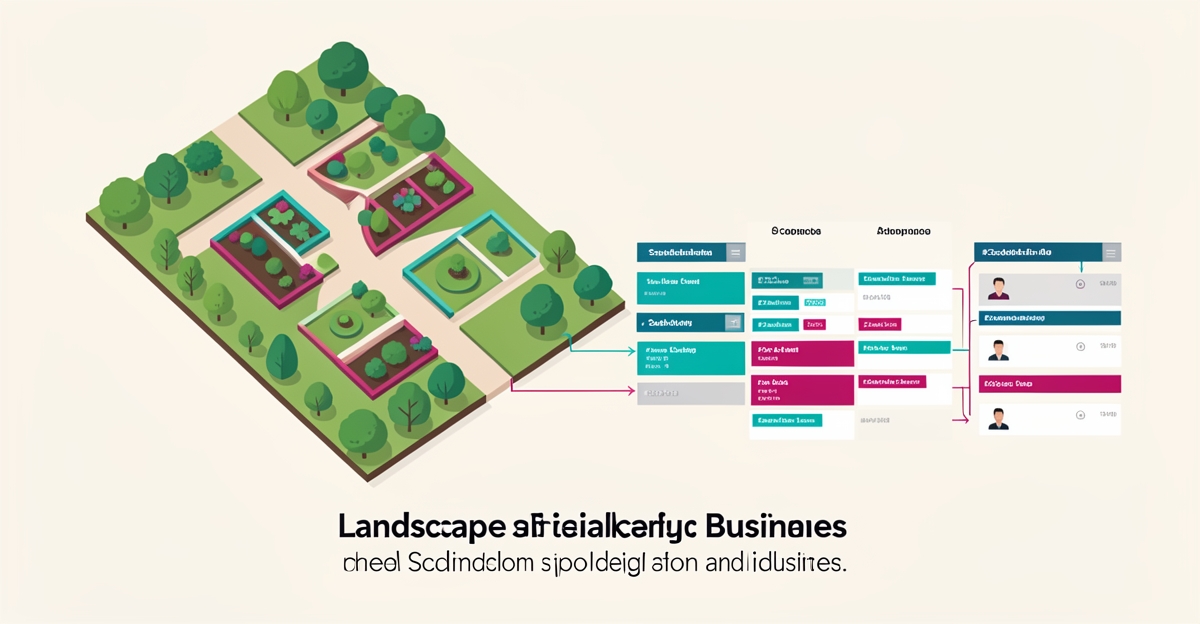
How to Scale Your Landscape Design Business with AI-Powered Project Management
Key Facts
- Roughly 41% of Granum customers report being fully digitized across core workflows, according to Granum research
- A significant share of the largest landscape businesses run on integrated software platforms like Aspire
- Industry benchmarks suggest firms using integrated platforms grow faster year over year than spreadsheet-based competitors
- Owners commonly spend 15-20 hours weekly on scheduling conflicts and manual data entry
- Automated scheduling can cut planning time substantially, often by around half, for landscape firms
Hire a team member that works 24/7 — for less than a part-time wage.
AI receptionists, SDRs, dispatchers and 99+ roles. Trained on your business, fully managed.
Not sure where to start? Ask our AI planner
Why Most Landscape Firms Hit a Growth Ceiling
Landscape design firms often find themselves turning away profitable work not because of insufficient demand, but because their operational systems buckle under complexity. Manual scheduling across multiple job sites creates constant conflicts, while resource allocation becomes a guessing game that leads to crew idle time or overtime costs. These bottlenecks force owners to spend excessive hours on administrative tasks instead of business development, directly limiting growth potential.
According to industry research, only about 41% of landscape businesses have fully digitized their core workflows, leaving the majority reliant on spreadsheets, paper schedules, and disjointed communication tools. This fragmentation results in frequent double-booking of equipment, misaligned crew assignments, and missed follow-ups with clients. As project volume increases, these small inefficiencies compound into significant operational drag, making it impossible to take on new work without hiring additional administrative staff, even when field crews have capacity.
The hidden cost of administrative overhead further exacerbates the scaling challenge. Owners and managers commonly report spending 15-20 hours weekly on scheduling conflicts, change order tracking, and manual data entry between systems, time that could be spent estimating new projects or nurturing client relationships. When combined with resource allocation inefficiencies, these operational drains create a hard ceiling on growth that has nothing to do with market demand. Firms hit this wall not because they lack skilled designers or installation teams, but because their project management infrastructure cannot scale complexity without proportional headcount increases. AIQ Labs addresses this exact challenge through AI Workflow Builds that rebuild the one workflow costing you the most, often scheduling and dispatch, so complexity stops demanding new hires.
The AI Advantage: How Top Landscape Companies Are Scaling Smarter
Leading landscape companies are using AI-powered project management to scale operations without adding headcount, turning scheduling chaos into streamlined workflows. By automating crew assignments and eliminating conflicts, these firms achieve measurable growth, industry benchmarks from platforms like Aspire suggest integrated-software users consistently outgrow spreadsheet-based competitors, with many reporting stronger profitability as well.
The operational impact is clear: AI-driven scheduling reduces idle time, prevents double-booking, and ensures the right crew is assigned to the right job based on skill, location, and availability. Top performers integrate these tools with existing systems to create a single source of truth across projects, enabling real-time adjustments when weather or client changes occur. This level of coordination allows landscape businesses to take on more clients without proportional increases in overhead, a critical lever for sustainable scaling.
- Automated scheduling can cut planning time substantially, often by around half
- Conflict-free crew assignments increase on-time project completion
- Real-time resource optimization reduces fuel and equipment waste
- Predictive workload balancing prevents crew burnout and turnover
- Centralized dashboards improve client communication and transparency
AIQ Labs supports this transformation by connecting scheduling, invoicing, and client management into one unified ecosystem, either as a single rebuilt workflow or as a full AI Operating System that ties your whole operation together, built in phases and owned outright. Firms that adopt this approach aren't just keeping pace; they're building the operational foundation to grow smarter, not harder.
What AI-Powered Project Management Actually Does for Landscape Operations
Landscape design firms face unique operational challenges when managing multiple concurrent projects, from unpredictable weather delays to specialized equipment scheduling. AI-powered project management systems address these complexities by intelligently coordinating scheduling, resources, and real-time adjustments, without requiring firms to abandon their existing tools.
These systems analyze historical weather patterns, crew certifications, and equipment maintenance schedules to generate optimized work plans that minimize idle time and prevent conflicts. For example, they can automatically reschedule outdoor hardscaping work when rain is forecasted while shifting indoor design consultations to those same time slots, ensuring continuous productivity. This level of intelligent scheduling helps firms maintain project timelines despite environmental variables that traditionally disrupt workflows.
Resource allocation becomes dynamic rather than static, with AI continuously assessing project priorities, crew availability, and material deliveries across all active jobs. When a large installation finishes ahead of schedule, the system can instantly reassign that crew and equipment to another project experiencing delays, maximizing utilization without manual intervention. Research suggests roughly 41% of Granum customers are already fully digitized across their core workflows, demonstrating the industry's readiness for intelligent automation.
When unexpected changes occur, such as client-requested design modifications or supplier delays, AI systems trigger real-time adjustments that propagate through all connected tools. They update task dependencies, notify affected team members, and recalculate downstream impacts without requiring project managers to manually replan entire schedules. This responsiveness is what allows scalable operations to directly support business expansion rather than constrain it.
Critically, these capabilities integrate with platforms landscape firms already use, like Aspire, QuickBooks, or specialized design software, through API connections that synchronize data rather than replace existing workflows. AIQ Labs develops these integrations as part of its workflow build projects, ensuring seamless operation between intelligent scheduling tools and established business systems. By enhancing rather than overhauling current processes, firms gain the efficiency benefits of AI while maintaining familiarity with their trusted platforms, ultimately enabling them to take on more projects without proportional increases in administrative overhead.
From Manual Chaos to Automated Growth: Your Implementation Roadmap
Most landscape design businesses hit a growth ceiling when project coordination becomes overwhelming, scheduling conflicts pile up, resource allocation turns into guesswork, and client communication fragments across spreadsheets and sticky notes. Breaking through requires a systematic approach to AI implementation that starts with clear-eyed assessment.
Begin by mapping your current workflow bottlenecks: track where projects stall, which tasks consume disproportionate staff time, and where errors most frequently occur. Research suggests roughly 41% of Granum customers have already achieved full digitization across core workflows, giving them a significant advantage in identifying automation opportunities. This baseline assessment reveals whether your pain points lie in estimating accuracy, crew dispatch efficiency, or client follow-up consistency, each requiring different AI solutions.
Next, evaluate whether point solutions or integrated systems better serve your scaling goals. Point tools might solve isolated problems like AI-powered estimating, but they often create new integration headaches. Integrated platforms, meanwhile, connect scheduling, resource allocation, and client management into a unified system where AI optimizes decisions across the entire project lifecycle. The adoption of integrated platforms among the largest landscape businesses suggests this integrated approach is what supports scaling without proportional headcount.
Launch your implementation with a tightly scoped pilot targeting one high-impact workflow, such as automated crew scheduling based on real-time weather data and skill matching. This minimizes risk while proving value quickly. Critical success factors emerge during this phase: ensure your historical project data is clean and structured (garbage in, garbage out), invest in role-specific training that focuses on interpreting AI recommendations rather than just button-clicking, and choose partners who transfer full system ownership, avoiding vendor lock-in that prevents future customization as your business evolves. AIQ Labs builds in milestones with fixed pricing and hands over full ownership, so the system you end up with is genuinely yours; current payment models include Start Monthly, Build in Milestones, or Own It Outright.
Scale gradually by adding connected modules, perhaps moving from scheduling to AI-enhanced estimating that learns from past project profitability, then to client communication automation that personalizes follow-ups based on project type and client history. Each phase should include clear metrics: reduced scheduling conflicts, decreased estimating time per project, or increased client retention rates. Remember that AI project management isn't about replacing your team's expertise, it's about freeing them from manual coordination so they can focus on design innovation and client relationships that drive sustainable growth. The most successful implementations treat AI as a force multiplier for existing talent, not a substitute for it.
Still paying for 10+ subscriptions that don’t talk to each other?
We build custom AI systems you own outright. No vendor lock-in. Full control.
Not sure where to start? Ask our AI planner
Frequently Asked Questions
How can AI-powered project management help landscape businesses scale without hiring more staff?
What percentage of landscape businesses have fully digitized their core workflows according to industry research?
Do firms using integrated AI-powered tools actually grow faster?
How does AI handle unexpected changes like weather delays or client requests in landscape projects?
Is it necessary to replace existing software when implementing AI-powered project management?
What is a recommended first step for landscape businesses looking to implement AI in their operations?
Build the Operational Backbone Your Growth Demands
Scaling a landscape design business isn't about winning more bids, it's about building the operational infrastructure to deliver them profitably. When scheduling conflicts vanish, crews deploy based on real-time priorities, and administrative overhead shrinks from 20 hours to minutes, growth becomes a function of ambition rather than headcount. The firms pulling ahead aren't working harder; they're leveraging integrated systems that turn operational complexity into competitive advantage. The path forward starts with honest assessment: map where projects stall, quantify the hours lost to manual coordination, and pilot intelligent automation on your highest-friction workflow. AIQ Labs builds these systems with fixed pricing, phased delivery, and full ownership transferred to you, no vendor lock-in, no invented numbers. With 200+ multi-agent systems deployed and four live SaaS products run daily, the team knows what works in the field. Ready to identify your biggest bottleneck? Start with the two-minute Fit Check, then book a free 30-minute strategy call. We'll map your highest-ROI automation opportunity, if there's a clear win, we'll show you exactly how to capture it.
Make AI your competitive advantage — not just another tool.
Strategy, implementation and ongoing optimization. One partner, end to end.
Not sure where to start? Ask our AI planner