How Trenchless Sewer Repair Specialists Can Cut Response Times with AI-Powered Work Order Management
Key Facts
- Trenchless technology is a rapidly growing sector of the construction and civil engineering industry according to industry references
- Trenchless methods like pipe bursting and CIPP repair underground pipes without digging long open trenches per technical overviews
- AI dispatch systems prioritize urgent jobs by analyzing symptoms like backups or odors in real time per AIQ Labs' work order automation features
- Manual work order management causes crew idle time as technicians wait for assignments, a structural bottleneck in field service operations
- AI-powered scheduling reduces idle travel and prevents low-priority jobs from blocking critical emergencies
- AIQ Labs has deployed 200+ multi-agent systems and runs four live SaaS products daily as of late 2026
Hire a team member that works 24/7 — for less than a part-time wage.
AI receptionists, SDRs, dispatchers and 99+ roles. Trained on your business, fully managed.
Not sure where to start? Ask our AI planner
The Hidden Cost of Manual Work Order Delays in Trenchless Sewer Repair
When a sewer line fails, the clock starts immediately, and the technology on the truck is rarely the bottleneck. Trenchless methods like pipe bursting and pipe lining repair underground pipes without digging long open trenches, and many residential jobs are completed within a single day. Yet many trenchless specialists still lose hours before a crew ever rolls, because the intake and dispatch process runs on spreadsheets, phone tag, and manual triage.
The irony is sharp: the repair itself is fast, but the workflow around it is slow. A homeowner calls with a backup or foul odor, the message lands in someone's voicemail or inbox, and it waits, alongside quote requests, follow-ups, and routine maintenance bookings, until someone manually sorts priorities. In an emergency, that sorting delay is the difference between a same-day mobilization and a frustrated customer calling a competitor.
Manual work order management creates predictable failure points:
- Delayed dispatch: emergency calls sit in a queue behind routine jobs because no system flags urgency automatically.
- Missed service commitments: without real-time routing, promised response windows slip, damaging trust and referral business.
- Lost or duplicated requests: details captured on paper or in voicemails get misentered, forcing callbacks that add another day.
- Crew idle time: technicians wait for assignments while the office manually matches jobs to availability.
The stakes are high because trenchless repair is a premium, trust-driven service. Many providers back their work with long-term parts and labor warranties and satisfaction guarantees, and trenchless methods are typically less disruptive and less costly than traditional excavation once landscaping restoration is factored in. Customers choosing this approach expect responsiveness to match the quality, when response times lag, dissatisfaction lands on the business, not the technique.
The bottleneck is structural, not personal. Office staff juggle calls, camera inspection scheduling, and job documentation at once, and human triage simply cannot re-prioritize the moment conditions change. A crew cancellation, a new emergency, or a weather delay requires someone to mentally reshuffle the entire day, every time.
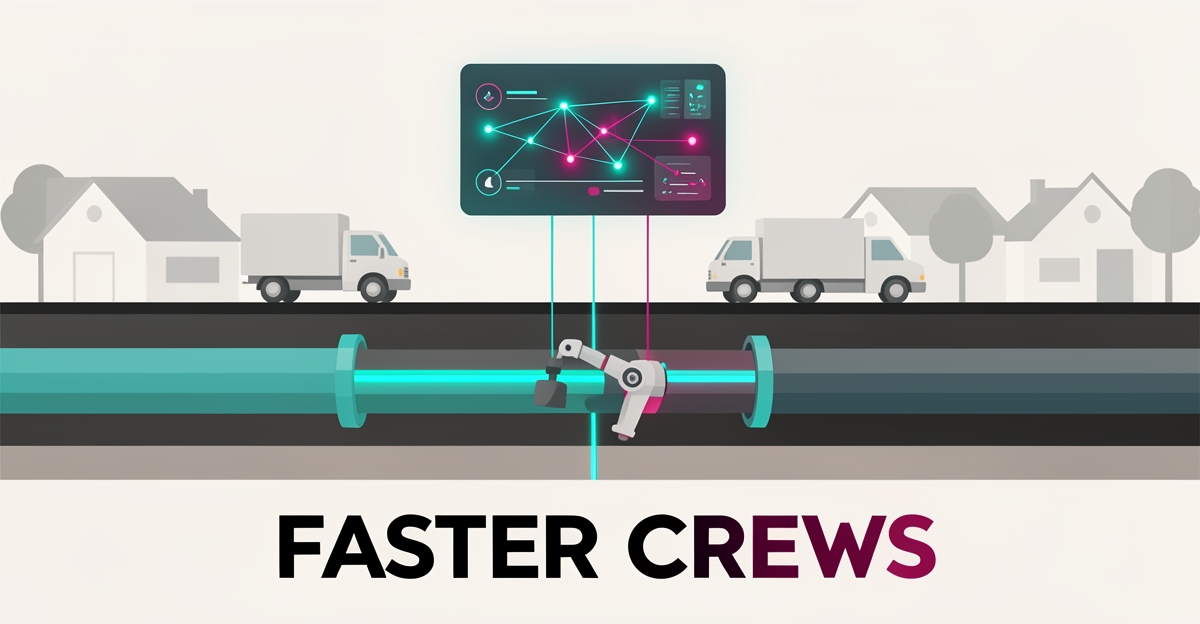
This is where AI-powered work order management changes the equation. An AI system can capture incoming requests across phone, email, and chat, score them by urgency, assign crews based on location and availability, and update schedules in real time, no spreadsheet reconciliation required. AIQ Labs builds these custom dispatch and work order automation systems for field service businesses, including dedicated AI dispatcher and work order manager roles that handle intake, routing, and scheduling end-to-end, so the speed of trenchless repair finally matches the speed of the response.
For specialists competing on emergency response, eliminating manual triage is not an operational nicety. It is the difference between a fast repair that arrives late and a fast repair that arrives on time.
How AI Work Order Automation Eliminates Dispatch Lag and Prioritizes Urgent Jobs
Emergency sewer line failures demand immediate response, yet traditional dispatch systems often create dangerous delays through manual triage and inefficient routing. AI-powered work order automation transforms this process by analyzing incoming requests in real time, instantly assessing severity based on symptoms like backups or odors, and prioritizing urgent jobs that risk property damage or health hazards. The system cross-references technician location, skill set, and current workload to auto-route the nearest available specialist, eliminating the lag caused by dispatcher judgment calls or spreadsheet tracking.
This intelligent prioritization and routing directly compresses response times, reducing idle travel and preventing low-priority jobs from blocking critical emergencies. For trenchless sewer repair specialists, this means arriving faster at sites with active leaks or sewage exposure, minimizing environmental contamination and customer distress. The AI continuously learns from historical data, such as which pipe-bursting techniques resolve specific collapse patterns fastest, to refine future routing decisions and improve first-time fix rates.
By integrating with existing CRM and scheduling tools, the AI dispatcher maintains real-time visibility across all active jobs while updating customers with accurate ETAs without manual follow-up. When a high-severity request enters the system, such as a mainline blockage causing indoor flooding, it immediately flags for urgent routing, suppresses non-essential notifications, and allocates the closest certified technician with the right equipment. This end-to-end automation ensures that trenchless repair teams spend less time managing logistics and more time executing precise, minimally invasive fixes that preserve landscapes and restore flow within a single day. To explore how AI-driven dispatch automation can be tailored to your sewer repair operations, start the 2-minute Fit Check and schedule a free 30-minute strategy call.
Implementation: Deploying Custom AI Work Order Management Without Disrupting Operations
Trenchless sewer repair specialists face mounting pressure to respond faster as urban infrastructure ages and customer expectations rise. Traditional dispatch methods relying on spreadsheets or manual triage create delays that erode trust and increase emergency call volumes. By adopting AI-powered work order management, specialists can automate intake, prioritize urgent issues, and mobilize crews in real time, turning reactive repairs into proactive service.
AIQ Labs' Start Monthly model enables low-risk deployment of an AI Employee dedicated to work order triage, handling initial assessments, routing requests based on severity, and integrating with existing scheduling tools without disrupting field operations. Faster mobilization directly translates to fewer property damages and higher customer retention, critical in a trade where timely intervention prevents escalation, since most common residential sewer problems can be addressed with trenchless methods when crews arrive promptly.
The Build in Milestones model allows specialists to phase implementation, beginning with camera intake data integration before expanding to predictive routing based on soil composition or pipe age, factors that influence method selection and repair complexity. Early phases focus on automating the first two steps of the trenchless process: camera issue identification and options explanation, ensuring AI augments rather than replaces technician expertise. Subsequent milestones layer in intelligent scheduling that accounts for warranty-covered work and seasonal demand spikes, optimizing crew utilization without overtime costs. For teams ready to go further, an AI Operating System connects dispatch, intake, and scheduling into one operating layer the business owns outright.
Piloting the AI Employee for a single month provides measurable insights into dispatch accuracy and crew readiness, with the flexibility to pause or adjust based on real-world performance data. Specialists retain full ownership of workflows built during the pilot, allowing seamless scaling if results meet ROI thresholds. This incremental strategy avoids the pitfalls of large-scale software overhauls while delivering immediate relief from manual bottlenecks, proving that AI adoption in trenchless repair isn't about replacing humans, but empowering them to fix more pipes, faster. Start the Fit Check then schedule a free 30-minute strategy call to map your specific dispatch challenges and see how an AI Employee for work order triage fits your operation.
Still paying for 10+ subscriptions that don’t talk to each other?
We build custom AI systems you own outright. No vendor lock-in. Full control.
Not sure where to start? Ask our AI planner
Frequently Asked Questions
How does AI-powered dispatch reduce response times for trenchless sewer repair emergencies?
What is trenchless technology?
Is trenchless sewer repair more expensive than traditional excavation when you factor in landscaping restoration?
What kind of warranty do trenchless sewer repair specialists typically offer on parts and labor?
Can AI work order management be implemented without disrupting current trenchless repair operations?
Does using AI for dispatch mean replacing human technicians or dispatchers?
Make Your Fast Repair Arrive Just as Fast
Trenchless repair can often be completed in a single day, but that speed is lost when intake and dispatch rely on spreadsheets, voicemail and manual triage. AI-powered work order management closes the gap by capturing requests across phone, email and chat, scoring urgency in real time, and auto-routing the nearest qualified crew with the right equipment. The result is fewer idle technicians, fewer missed commitments, and faster mobilization for emergencies that risk property damage and health hazards. AIQ Labs builds custom dispatch and work order automation systems for field service teams, with deployment options like Start Monthly for low-risk piloting, Build in Milestones for phased rollout, and Own It Outright for teams that want to hold the system long-term, all without disrupting operations. For specialists competing on emergency response, aligning the speed of the workflow with the speed of the repair protects reputation and revenue. Start the Fit Check and schedule a free 30-minute strategy call to map your dispatch bottlenecks. When most common sewer problems can be solved with trenchless methods, timely intervention is the difference between a quick fix and an escalated loss.
Make AI your competitive advantage — not just another tool.
Strategy, implementation and ongoing optimization. One partner, end to end.
Not sure where to start? Ask our AI planner