How TV Mounting Businesses Can Use AI to Optimize Technician Dispatch
Key Facts
- Field service business owners typically lose well over an hour a day to wasted coordination time, according to industry operations research.
- The large majority of homeowners now expect text updates during active jobs, per industry data.
- Many homeowners feel reassured by receiving a technician photo and name before a visit.
- Siloed systems and fragmented data are repeatedly cited as the top barriers to AI adoption in field service businesses.
- The dominant workforce trend is AI augmenting roles rather than replacing them, with dispatchers shifting toward oversight and exception handling.
- AIQ Labs has deployed 200+ multi-agent systems and runs 4 live SaaS products daily, dispatch automation is proven territory, not theory.
Hire a team member that works 24/7 — for less than a part-time wage.
AI receptionists, SDRs, dispatchers and 99+ roles. Trained on your business, fully managed.
Not sure where to start? Ask our AI planner
The Dispatch Bottleneck Costing TV Mounting Teams Time and Customers
Every morning, dispatchers at TV mounting businesses face the same puzzle: which technician goes where, in what order, and how do you avoid sending someone across town when a closer tech just freed up? Get it wrong, and the day unravels fast, technicians zigzag across the service area burning fuel, customers wait hours beyond their appointment windows, and jobs that should take two days stretch into three.
The hidden cost isn't just operational chaos. Field service operations research consistently finds that business owners lose well over an hour per day to wasted time, much of it spent repeating the same messages across multiple platforms and searching for information in the wrong places. For a dispatcher juggling phone calls, texts, and spreadsheets to coordinate five technicians, that's a meaningful chunk of productive time evaporating daily.
The customer experience suffers in parallel. Today's homeowners expect transparency throughout the service journey, industry data shows the large majority of homeowners expect text updates during active jobs, and many feel reassured when they receive a technician photo and name before the visit. Manual dispatch makes this nearly impossible to deliver consistently.
Here's where the bottleneck compounds:
- Wasted drive time: Without route optimization, technicians crisscross territories inefficiently, often adding 30-45 minutes of unnecessary drive time per job
- Fuel cost inflation: Every inefficient route directly increases fuel expenses, costs that multiply across a fleet over weeks and months
- Delayed job starts: Manual coordination means slower response times, pushing morning appointments into afternoon slots and creating cascading delays
- Communication gaps: Customers left in the dark about arrival times generate anxiety, complaints, and last-minute cancellations
The financial impact extends beyond immediate costs. When a technician spends an extra 20 minutes driving between jobs because dispatch didn't account for real-time locations, that's 20 minutes not spent on revenue-generating work. Multiply that across six jobs per day, five days per week, and a team of four technicians, and you're looking at dozens of hours of lost productivity every month, the equivalent of a full-time employee doing nothing but driving in circles.
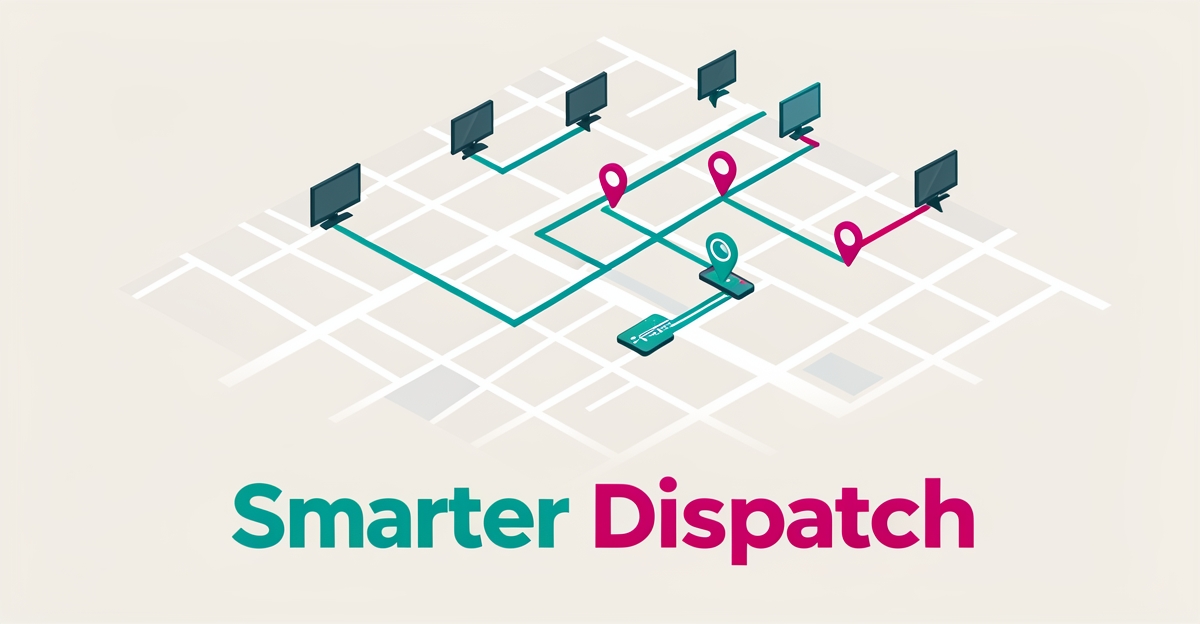
AI-powered dispatch systems address this by analyzing job locations, technician availability, skill sets, and real-time traffic patterns to generate optimal routes automatically. Instead of a dispatcher manually piecing together the day's schedule, the system continuously recalculates the most efficient assignments as new bookings arrive or jobs run long.
At AIQ Labs, we've seen field service businesses transform their operations by treating dispatch as a data problem rather than a coordination problem. When AI handles the routing logic, dispatchers shift from reactive firefighting to proactive customer communication, sending the text updates and technician details homeowners now expect as standard.
The result isn't just efficiency. It's the difference between a business that feels chaotic and one that feels reliable.
How AI Balances Location, Availability, and Travel Time in Real Time
TV mounting jobs live or die on the minutes between “we're on the way” and the door opening. Dispatchers juggle live locations, technician skills, traffic, and customer expectations while business owners lose over an hour a day to wasted time, much of it repeating messages across platforms and hunting for information in the wrong places.
AI balances location, availability, and travel time by continuously reading the field instead of relying on static spreadsheets. It ingests job addresses, technician certifications, current status, and real-time traffic, then matches the right person to the right job at the right moment. The result is tighter routes, fewer dead miles, and shorter customer wait times without adding headcount.
Customer communication is part of the optimization. Most homeowners expect text updates during active jobs, and many are reassured by seeing a technician photo and name before a visit. An AI-managed dispatch layer can push those updates automatically as assignments change, reducing inbound calls and protecting the dispatcher's focus.
The shift is augmentation, not elimination. Workforce analysis consistently points to AI augmenting rather than replacing human roles, with the pace of change mirroring past shifts from PCs and the internet. No wholesale replacement of field technicians is on the horizon, someone still has to drill the studs and level the mount.
In practice, AI handles the repetitive matching and routing while humans retain judgment for exceptions, customer relationships, and quality control. AIQ Labs designs this as an AI Employee acting as a Dispatcher that books, reassigns, and notifies in real time while the human team oversees priorities and complex calls.
Real-time balancing works through a few core inputs:
- Live job locations and service windows pulled from CRM and scheduling tools
- Technician availability, skill sets, and current job progress
- Travel time and traffic with dynamic re-routing on delays
- Customer preferences for updates, windows, and technician visibility
This approach reduces delivery times and fuel costs while improving the experience homeowners value. It also aligns with the broader trend where AI is being absorbed into OPEX rather than solely viewed as a cost-cutting measure, and where organizations recognize AI is best utilized to enhance human capabilities rather than entirely replace them.
Dispatchers stay in control of strategy and exceptions. AI executes the high-volume, data-heavy matching, freeing them for the nuanced decisions that keep field teams productive and customers satisfied.
From Manual Boards to Owned AI Dispatch Systems
Moving beyond manual dispatch boards requires a fundamental shift in how field service businesses operate. Traditional methods relying on spreadsheets and phone trees create inefficiencies that compound daily, wasted travel time, overlapping appointments, and frustrated customers waiting without updates. AI-powered dispatch systems eliminate these friction points by continuously analyzing job locations, technician skills, real-time availability, and traffic patterns to generate optimal schedules in seconds. This automation directly attacks the hour-plus per day business owners lose to wasted time spent repeating messages across platforms and searching for information in the wrong places.
AIQ Labs implements this transformation through three entry points designed for trades and field services businesses. AI Employees deploys a managed AI Dispatcher that integrates with your existing scheduling tools and CRM systems, handling route optimization and technician assignments at roughly 80% less cost than a human hire. For businesses seeking deeper integration, Workflow Builds rebuilds the one workflow that costs you the most, dispatch, at a fixed price and in phases, starting with core dispatch logic, then adding CRM synchronization, and finally enabling predictive scheduling triggers. For teams ready to go further, AI Operating Systems delivers one connected operating layer built in phases and owned outright, where the business retains full control of code, data, and future development, eliminating vendor lock-in while creating a durable competitive advantage. Each path includes integration with industry-specific tools like ServiceTitan or Jobber, ensuring AI enhances rather than disrupts established workflows.
The impact of intelligent dispatch extends far beyond scheduling efficiency. By reducing unnecessary travel through optimized routing, businesses simultaneously lower fuel costs and carbon footprint while increasing the number of jobs completed per technician per day. Real-time ETAs and technician photos, expected by most homeowners and reassuring to many, can be automatically generated and sent via SMS, directly addressing customer experience gaps. Furthermore, AI dispatch systems continuously learn from historical data, improving accuracy over time by accounting for regional traffic patterns, seasonal demand fluctuations, and individual technician performance metrics. This creates a self-optimizing operation where dispatch decisions become more precise with every completed job, turning what was once a reactive chore into a proactive strategic advantage.
Making AI Dispatch Work Without Disrupting Your Crew
Technicians don't resist better dispatch because they dislike technology. They resist change that feels imposed, opaque, or unreliable in the field.
Making AI dispatch work starts with organizational readiness, not just algorithms. Industry research repeatedly finds that siloed systems, fragmented data, and compliance constraints hinder AI integration. For TV mounting businesses, that often means job data lives in texts, spreadsheets, and legacy dispatch tools that never talk to each other.
Data quality is the first adoption lever. AI that analyzes job locations, technician availability, and travel time needs clean, accessible data to avoid bad routes and missed updates. Siloed systems and poor data management are consistently cited as barriers to AI adoption, and field teams feel the impact immediately when suggestions don't match reality.
Integration with existing dispatch systems protects crew trust. Rather than rip-and-replace, successful teams map AI recommendations onto tools technicians already use daily. That reduces friction and preserves the human judgment that remains essential for on-site problem solving. Workforce analysis emphasizes that AI is best utilized to enhance human capabilities rather than entirely replace them.
Governance and human-in-the-loop controls make the system credible. Technicians need clear escalation paths when AI suggests an unrealistic route or a customer request changes mid-day. Configurable oversight, audit trails, and role-based permissions give crews confidence the system supports them.
Reskilling shifts focus from task execution to oversight. The dominant trend is not replacement but reshaping of roles toward AI oversight and governance, complex problem-solving, and strategic planning. In dispatch, that means technicians learn to review AI proposals, flag exceptions, and handle nuanced customer interactions.
Adoption considerations for field teams include:
- Data readiness and system integration before go-live
- Human-in-the-loop controls for critical dispatch decisions
- Transparent communication about how recommendations are made
- Training on AI oversight and exception handling
Customer expectations reinforce the need for reliability. Field service data finds most homeowners expect text updates during active jobs, and many are reassured by seeing a technician photo and name before a visit. AI dispatch can support those expectations only when the crew trusts the schedule it creates.
AIQ Labs approaches this as workflow automation that augments field teams, not replaces them. The practical value comes from reducing delivery times, fuel costs, and customer wait times while keeping technicians in control of final decisions.
Still paying for 10+ subscriptions that don’t talk to each other?
We build custom AI systems you own outright. No vendor lock-in. Full control.
Not sure where to start? Ask our AI planner
Frequently Asked Questions
How much time do TV mounting businesses actually lose each day due to inefficient dispatch?
Will AI replace human technicians in TV mounting businesses?
What do homeowners expect during TV mounting jobs, and how can AI help meet those expectations?
How does AI-powered dispatch reduce fuel costs and wasted drive time for field technicians?
What are the main barriers to implementing AI dispatch in TV mounting businesses?
Can AI dispatch systems work with the tools TV mounting businesses already use?
From Chaotic Routes to Confident Dispatch
Manual dispatch turns TV mounting into a daily puzzle of wasted drive time, missed updates, and frustrated customers. AI changes the equation by continuously balancing live job locations, technician skills, availability, and traffic to create optimal routes and automatic customer communications, freeing dispatchers from reactive firefighting and reclaiming the hour-plus per day lost to repetition and searching. The shift is augmentation, not replacement: AI handles high-volume matching and real-time re-routing while crews retain control over exceptions, quality, and relationships. The business value is clear in fewer dead miles, lower fuel costs, more jobs per technician, and the transparency homeowners now expect. With most homeowners expecting text updates during active jobs, consistent ETAs and technician visibility become a competitive advantage, not a nice-to-have. If you're ready to move from spreadsheets to an owned, workflow-driven dispatch system, start with a clear assessment of your data, tools, and crew readiness. Take the 2-minute Fit Check at https://aiqlabs.ai/apply, then book a free 30-minute strategy call at https://aiqlabs.ai/book to map your biggest bottleneck and identify a high-ROI AI automation path, with no obligation, just clarity on what's possible. Prefer email? Reach the team at [email protected].
Make AI your competitive advantage — not just another tool.
Strategy, implementation and ongoing optimization. One partner, end to end.
Not sure where to start? Ask our AI planner