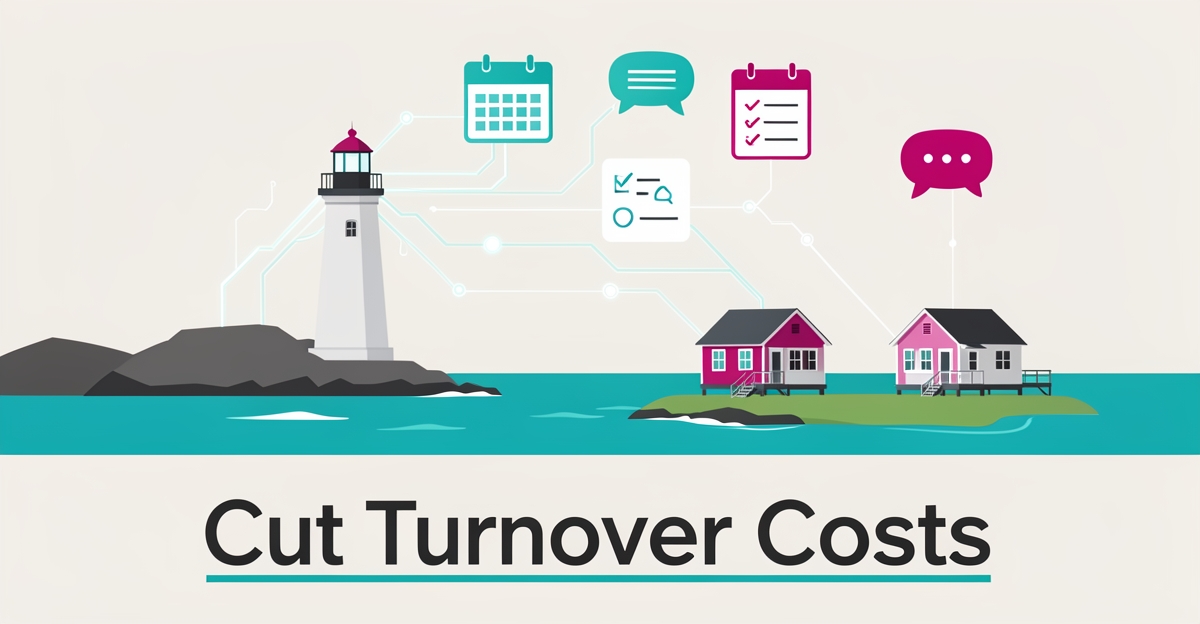
How Nova Scotia Vacation Rental Operators Can Cut Turnover Costs with AI
Key Facts
- AI is reshaping travel discovery, with operators needing to adapt to guest expectations for instant responses (TechRadar).
- Operators managing seasonal demand and dispersed properties face pressure to adopt AI for competitive advantage.
- AI-referred users show higher engagement and lower bounce rates, indicating the importance of optimizing for AI discovery.
- Nova Scotia's geographic dispersion and seasonality make remote, scalable operations essential for vacation rental operators.
Hire a team member that works 24/7 — for less than a part-time wage.
AI receptionists, SDRs, dispatchers and 99+ roles. Trained on your business, fully managed.
Not sure where to start? Ask our AI planner
The Turnover Cost Problem: Why Nova Scotia Operators Are Stretched Thin
Nova Scotia vacation rental operators are caught between soaring guest expectations and a cost structure that punishes seasonality. Dispersed properties from Cape Breton to the South Shore force owners to juggle remote turnovers, last-minute maintenance, and constant guest messaging with a lean, seasonal crew.
Seasonal demand spikes compress turnover windows into a few high-pressure weeks. TechRadar reports that AI is reshaping travel discovery, with guests expecting instant responses. Operators who cannot respond quickly lose visibility and revenue.
Geographic dispersion multiplies labor hours. A single change request can trigger phone calls, messages, and drive time between properties. Routine tasks like guest communication, scheduling, and maintenance coordination consume staff time that should be spent on high-value experience work. The result is higher staffing costs and stretched teams during peak season.
AI-referred users also behave differently. They spend more time on websites and show higher engagement, according to TechRadar research. That engagement only converts if operators can deliver fast, consistent operational responses across a portfolio.
The squeeze shows up in three persistent pressure points:
- Seasonal demand surges that require rapid scaling of cleaning and support staff
- Remote property management across dispersed locations with limited local coverage
- Labor-intensive turnover tasks including guest messaging, scheduling, and maintenance coordination
These tasks are repetitive and time-sensitive, yet they drive up turnover costs when handled manually. With 86% of travellers believing AI has improved their travel planning experience, travelers now expect AI-level responsiveness from operators too.
The operational model is also changing. AI is moving from research to end-to-end planning, packing and budgeting, which raises the bar for how listings are presented and how quickly questions are answered. Operators who rely on manual follow-up risk missed bookings and costly delays during peak turnover windows.
This is where industry-tuned AI support becomes relevant for service businesses. AIQ Labs builds industry-specific solutions for seasonal demand and remote operations, helping vacation rental cleaning companies reduce labor and time costs without overextending staffing. The focus is on automating tedious, repetitive workflows so human teams can focus on quality, local judgment, and guest experience.
Without automation, Nova Scotia operators remain stretched thin: chasing messages, coordinating crews across long distances, and absorbing overtime during summer peaks.
The AI Shift in Travel: What the Data Tells Operators
AI is no longer a future scenario for vacation rentals in Nova Scotia, it is already reshaping how guests find and book stays.
TechRadar reports that AI is reshaping travel discovery, with guests expecting instant responses. For operators managing seasonal demand and dispersed properties, the shift is a competitive necessity.
Travelers are voting with their behavior. 86% of travellers believe that AI has improved their travel planning experience, according to TechRadar research. The data implies AI is being used for much more than research, as its use cases span planning, recommendations, packing and even budgeting. Guests now expect AI-readable listings and instant, intelligent responses.
The engagement gap is widening in AI’s favor. AI-referred users spend more time on websites and show higher engagement, per TechRadar analysis. For Nova Scotia operators, that translates to more qualified traffic and fewer wasted ad dollars during peak booking windows.
Conversion is catching up too. AI traffic converts around 28% worse than traditional traffic, though this gap is narrowing. As brands ensure their digital presence is not only engaging for humans, but fully accessible to machines as well, the gap will close further.
This is where operational cost pressure meets market demand. Seasonal staffing, remote property checks, and repetitive guest messaging drive turnover costs for cleaning teams and managers. AI can automate the tedious, repetitive tasks that consume time, freeing teams for high-value guest care.
Operators who respond early can protect visibility and margins. Practical signals to watch include:
- AI-referred traffic share rising in your analytics and booking sources
- Guests asking for instant answers on check-in, parking, and local recommendations
- Longer site sessions paired with higher inquiry volume from AI-driven searches
The regional context matters. Nova Scotia’s dispersed geography and seasonal tourism make remote, scalable operations essential. AI adoption is now a competitive necessity, not a luxury for capturing and serving guests who plan with AI.
AIQ Labs works with service businesses in this environment, designing industry-tuned AI solutions for seasonal demand, remote operations, and property diversity. The focus is reducing labor and time costs without overextending staffing.
As consumer adoption of AI tools accelerates, operators who optimize for AI discovery and automate routine workflows will be best positioned to cut turnover costs and scale efficiently.
Where AI Cuts Costs: Guest Communication, Scheduling, and Predictive Operations
Nova Scotia operators are fighting seasonal swings and dispersed properties with thin margins. AI now shifts the cost equation from headcount to intelligent automation that handles the repetitive work between stays.
Guest messaging is the first high-ROI target. Routine inquiries, booking confirmations, and check-in/check-out instructions consume hours each week across a portfolio. AI-powered messaging handles these automatically while escalating complex or sensitive requests to human staff, preserving the personal touch that defines Nova Scotia rentals. With 86% of travelers believing AI has improved their travel planning experience, guests expect instant, accurate responses.
Scheduling and turnover coordination gain efficiency when AI centralizes operations. Dispersed properties require precise cleaner dispatch, supply restocking, and maintenance windows. Predictive analytics reduce manual oversight by forecasting demand and aligning crews to occupancy, which matters when seasonality drives staffing needs up and down.
Predictive operations turn booking data into cost control. AI models analyze historical patterns, local events, and market signals to forecast demand and optimize pricing. This reduces empty nights and overstaffing during shoulder seasons. AI-referred users spend more time on websites and show higher engagement with lower bounce rates, signaling that AI-optimized listings and booking flows improve conversion.
Human-in-the-loop protocols keep service personal. Automation handles the repetitive, AI assists with the complex.
- AI guest messaging for routine FAQs, check-in links, and late-arrival instructions
- Centralized scheduling for cleaning, maintenance, and restocking across remote properties
- Predictive demand and pricing analytics tuned to Nova Scotia seasonality
- Escalation rules that route complaints, special requests, and high-value guests to humans
The market shift is measurable. AI traffic to travel sites has surged, meaning operators who are not AI discoverable lose visibility. For service businesses managing seasonal demand and remote operations, intelligent assistance beats autopilot. AIQ Labs designs industry-tuned AI solutions for seasonal demand and property diversity, helping teams scale without overextending staffing. The result is lower turnover costs, faster response times, and consistent guest experience across the province.
Making AI Work in Nova Scotia: Seasonality, Remote Management, and Property Diversity
Nova Scotia’s vacation rental market doesn’t behave like a year-round city market. Operators are managing Cape Breton summer peaks, South Shore shoulder seasons, and winter lulls from a home base in Halifax, often across dozens of different property types.
That regional reality makes flexible AI design essential. Systems need to scale staffing up and down with demand, coordinate turnover and maintenance across dispersed locations, and adapt to a portfolio that ranges from waterfront cottages to downtown apartments. TechRadar research shows AI traffic to travel sites has surged, meaning guests are arriving via AI with higher expectations for speed and accuracy.
Seasonality requires AI that flexes, not freezes. During peak months the system handles high message volume, automates check-in instructions, and triggers rapid cleaning dispatch. In off-season it shifts to lead nurturing, dynamic pricing support, and preventive maintenance scheduling. TechRadar analysis finds AI-referred users spend more time on websites and show lower bounce rates, so properties optimized for AI discovery convert better when demand is tight.
Remote management from Halifax depends on reliable integrations. AI works best when it connects to property management software, calendars, and messaging channels so one dashboard reflects all locations. Data quality becomes the bottleneck: accurate inventory, pricing, and amenity data are required for the AI to route guests correctly and avoid costly errors.
Property diversity also demands tailored workflows. A three-bedroom family home needs different turnover checklists, linen counts, and guest communications than a one-bedroom city loft. A practical rollout starts with:
- Audit current turnover and guest messaging workflows to identify repetitive tasks
- Standardize data in the property management system before connecting AI
- Pilot AI for routine guest communication and scheduling on a limited portfolio
- Define clear human-in-the-loop escalation rules for complex requests
Phased implementation reduces risk. Operators can begin with an AI employee for guest intake and check-in, then add predictive demand forecasting and automated maintenance coordination as data improves. AIQ Labs builds industry-tuned solutions designed for seasonal demand, remote operations, and property diversity, helping businesses scale without overextending staffing.
With 86% of travellers believing AI has improved their travel planning experience, the guest expectation is already set. Balancing automation with personalization is what protects brand reputation while cutting turnover costs.
Your Implementation Roadmap: From Assessment to Measured ROI
Moving from AI curiosity to measurable cost savings requires a structured approach, not random tool adoption. For Nova Scotia vacation rental operators facing seasonal demand swings and geographically dispersed properties, a disciplined implementation roadmap separates successful deployments from expensive experiments.
Begin by auditing your current operations to identify repetitive, high-cost tasks consuming disproportionate labor hours, typically guest messaging, cleaner scheduling, and turnover coordination. This assessment reveals where AI automation delivers immediate ROI. Next, select industry-tuned tools that integrate with your existing property management systems rather than forcing disruptive platform changes. Generic solutions often fail against the specific demands of seasonal tourism and remote property oversight.
Automating guest communication represents the third critical step. AI systems can handle routine inquiries, booking confirmations, and check-in instructions while escalating complex issues to your team. According to TechRadar research, AI-referred users spend more time on websites and show higher engagement, making optimized digital touchpoints essential for conversion.
Fourth, optimize your listings for AI discovery. As TechRadar notes, brands must ensure their digital presence remains accessible to machines, not just humans. Structure property descriptions with rich, detailed data that AI search tools can parse and recommend.
Fifth, integrate predictive analytics to forecast demand fluctuations and optimize pricing across your portfolio. This proves particularly valuable in Nova Scotia's compressed summer season, where missing a booking window directly impacts annual revenue.
Sixth, establish clear human-AI collaboration protocols. Define which decisions require human judgment, such as handling guest complaints or property damage assessments, while allowing AI to manage scheduling and routine coordination. Balance automation with personalization to maintain the distinctive guest experiences that drive five-star reviews.
Finally, track specific KPIs to measure impact:
- Conversion rates from inquiry to booking
- Turnover time between guest checkout and check-in
- Labor hours spent per property turnover
- Guest satisfaction scores and response times
- Operational cost per reservation
The conversion gap between AI and traditional traffic has narrowed, indicating that early adopters who implement these systems correctly gain significant competitive advantages. AIQ Labs helps Nova Scotia operators navigate this exact roadmap, building custom AI systems that handle guest communication and operational coordination while you maintain control over the guest experience. Start with a two-minute Fit Check to identify your highest-ROI automation opportunity, then schedule a free strategy call to map your specific implementation timeline.
Still paying for 10+ subscriptions that don’t talk to each other?
We build custom AI systems you own outright. No vendor lock-in. Full control.
Not sure where to start? Ask our AI planner
Frequently Asked Questions
How can AI actually reduce turnover costs for my Nova Scotia vacation rental business?
Will using AI make my guest experience feel less personal or automated?
What specific tasks should I automate first with AI in my vacation rental operation?
Is AI traffic to travel sites really growing fast enough to matter for my Nova Scotia business?
Do AI-referred guests actually engage more and convert better than traditional traffic?
How do I know if my vacation rental business is ready for AI implementation?
Turn the Tide on Turnover Costs with Purpose-Built AI
Nova Scotia vacation rental operators face a clear reality: seasonal demand swings, dispersed properties, and rising guest expectations are driving up turnover costs through manual guest communication, scheduling, and coordination. AI isn’t just a trend, it’s a practical lever to automate repetitive tasks, free up staff for high-value guest experiences, and scale operations without overextending teams. By starting with an audit of workflows, piloting AI for routine inquiries and cleaner dispatch, and tracking KPIs like turnover time and labor hours per property, operators can measure real impact. The data shows AI-referred guests engage more, signaling that early adopters capture better visibility and conversion. To see where AI fits your specific operation, start with a two-minute Fit Check to identify your highest-ROI automation opportunity, then schedule a free strategy call to map your implementation path.
Make AI your competitive advantage — not just another tool.
Strategy, implementation and ongoing optimization. One partner, end to end.
Not sure where to start? Ask our AI planner