How Vocational Rehabilitation Programs Can Reduce Staff Burnout with AI Support
Key Facts
- Industry research as of late 2026 suggests a large share of high-performing AI users report burnout when systems add complexity rather than relief
- Most AI pilots stall after the pilot stage, commonly cited analyses put the failure rate near 95% when evaluated for lasting ROI
- Research from Deloitte and others indicates the vast majority of AI spend goes to technology rather than workforce development, a key driver of failed adoption
- A majority of employees reportedly use unapproved "Shadow AI" tools without training or governance, a serious risk where sensitive client data is handled
- Automated intake form processing eliminates manual data entry, directly reducing counselor workload
- AI-powered appointment reminders typically reduce no-shows without requiring staff follow-up
Hire a team member that works 24/7 — for less than a part-time wage.
AI receptionists, SDRs, dispatchers and 99+ roles. Trained on your business, fully managed.
Not sure where to start? Ask our AI planner
The Hidden Burnout Crisis in Vocational Rehabilitation
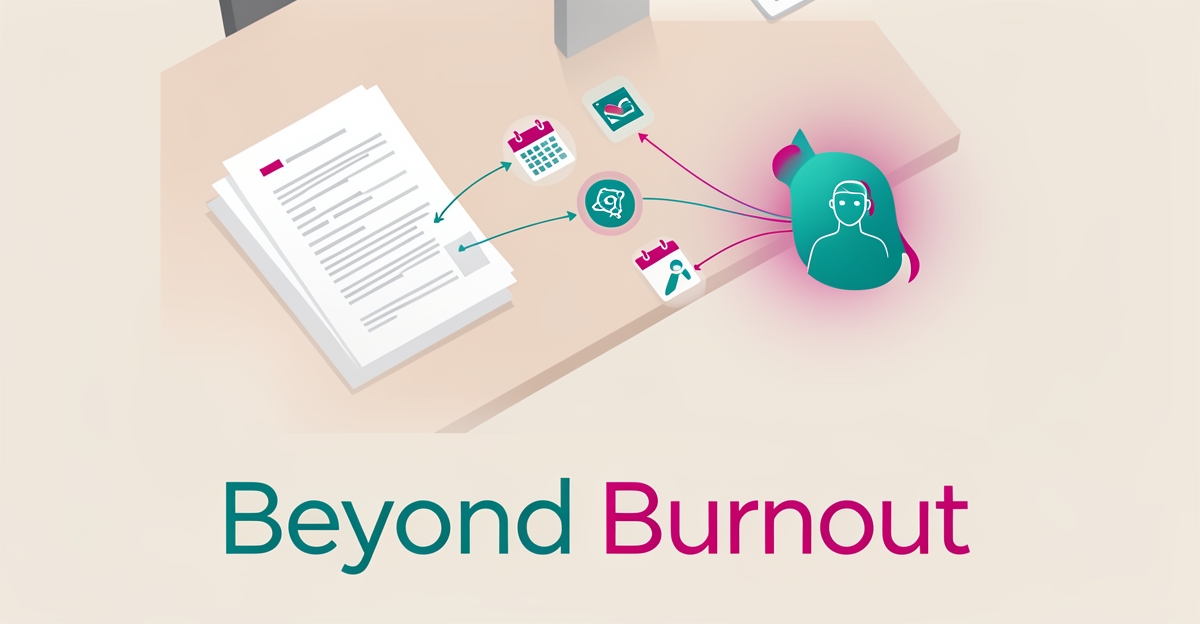
Ask any vocational rehabilitation counselor what drains them most, and the answer is rarely the clients. It's the paperwork: intake forms, appointment reminders, case notes, status updates, a relentless cycle of administrative tasks that follows them home at night. The result is a workforce quietly running on empty.
The pattern shows up in broader workforce research too. Studies on AI adoption and burnout as of late 2026 consistently find that even the most capable, tech-forward employees, the ones who master new tools and take on the heaviest caseloads, report high burnout rates and are significantly more likely to leave their jobs because of it. The people most committed to client outcomes are often the first to walk out the door.
For vocational rehabilitation programs, this creates a dangerous paradox. Every departure costs the program institutional knowledge, client relationships, and momentum at a time when demand for services continues to grow.
Part of the problem lies in how organizations approach AI adoption. Widely cited industry analyses suggest that the large majority of AI pilots, often pegged near 95%, show no measurable ROI when evaluated beyond the pilot stage. Technology gets purchased; people get left behind. Research from Deloitte and others reinforces this imbalance, indicating that only a small fraction of AI spend goes to the workforce while the rest goes to technology itself.
Meanwhile, staff are improvising without support. Surveys from major technology firms suggest that a majority of employees use "Shadow AI", unapproved tools and workarounds, without training or governance. In a field like vocational rehabilitation, where sensitive client data is the norm, that's a risk no program can afford.
The way out isn't more technology for its own sake. It's purposeful automation of the tasks that actually cause burnout:
- Repetitive client intake and data entry that consumes hours each week
- Appointment scheduling, reminders, and follow-up coordination
- Routine status updates and case documentation
- Fragmented workflows that force staff to bounce between disconnected systems
This is where thoughtful AI implementation changes the equation. When AI systems handle intake forms, scheduling, and client updates automatically, counselors reclaim their time for the work that drew them to the field in the first place: helping people rebuild careers and lives. AIQ Labs' AI Employees are designed to support human counselors, automating the administrative load so staff can focus on judgment, empathy, and client relationships rather than replacing them.
For vocational rehabilitation programs facing a burnout crisis, that quiet fix, automating the gaps staff see every day, may be the most urgent investment they can make.
How AI Automation Targets the Root Causes of Staff Exhaustion
Staff burnout in vocational rehabilitation settings often stems from repetitive administrative tasks that drain mental energy and limit time for meaningful client engagement. AI automation directly addresses these pain points by handling intake forms, appointment reminders, and client updates, reducing cognitive load and freeing staff to focus on higher-value work. Industry research on workflow automation consistently points to the same conclusion: streamlining administrative burden creates space for clinicians to reclaim focus and reduce exhaustion.
When AI manages routine processes, rehabilitation teams experience relief from the constant context-switching that contributes to burnout. Automated intake forms eliminate manual data entry, while intelligent reminder systems reduce no-shows without requiring staff follow-up. Client update automation ensures consistent communication without adding to counselors' daily task lists. These shifts allow professionals to redirect energy toward therapeutic interactions rather than paperwork.
AIQ Labs supports this transition with managed AI Employees that handle repetitive workflows while keeping human counselors in control. By automating form processing, scheduling, and status updates, these systems reduce the mental fatigue tied to tracking details across multiple platforms. Staff get fewer interruptions and greater ability to maintain deep focus during client sessions, critical for preventing emotional exhaustion in high-touch roles.
- Automated intake form processing eliminates manual data entry and validation
- Intelligent appointment reminders reduce no-shows without staff follow-up
- Client update automation ensures consistent communication with zero manual effort
- Workflow integration connects scheduling, documentation, and follow-up in one system
- Real-time status tracking reduces the need for staff to chase information across departments
This approach doesn't replace human judgment, it removes the administrative friction that obscures it. When vocational rehabilitation programs implement AI to own repetitive tasks, they create conditions where staff can sustain engagement, empathy, and effectiveness over time. The result is a healthier workforce and more consistent care delivery, rooted in systems designed to support, not supplant, human expertise.
Implementing AI Support Without Adding Complexity: A Practical Framework
Vocational rehabilitation teams are drowning in intake forms, appointment reminders and client updates, while the mental load pushes staff toward burnout. Staff need relief that does not add another system to learn or monitor.
AI support succeeds when it is bounded, owned and built for the work clinicians actually do. Programs that set clear boundaries avoid the pilot trap that stalls most AI initiatives. Sustainable adoption starts with workforce capability, not just technology.
Start with AI zones that match the daily workflow. Map where repetitive, rules-based tasks create friction and define where an AI employee can own the end-to-end process. Intake forms, eligibility checks, appointment reminders and client status updates are ideal first zones because they are high-volume, repeatable and directly reduce administrative burden.
Define task ownership in advance to protect clinicians and prevent over-monitoring. With the Start Monthly model, you deploy one AI employee with a defined role, training on your program, tool integrations and ongoing monitoring included. The AI handles the zone; humans retain clinical judgment and relationship work. As zones prove out, programs can graduate to AI Workflow Builds to rebuild the one workflow that costs the most, at a fixed price and in phases, or eventually a full AI Operating System owned outright.
A practical framework for vocational rehabilitation programs looks like this:
- Set clear 'AI zones' in your workflow and document the inputs, outputs and escalation paths.
- Decide in advance which tasks AI fully owns and which ones staff own, with human-in-the-loop controls for critical decisions.
- Stop checking every AI output like a nervous parent and review performance by exception and weekly metrics.
- Track staff energy levels and give permission to rest or shift tasks when mental load rises.
This approach aligns with how AI helps organizations turn knowledge into practical utility and embed automation into core workflows. AIQ Labs designs tailored AI systems that empower, not replace, human counselors by automating the administrative layer around care.
The risk is not AI itself. Burnout gets worse when systems add complexity instead of removing it, and your best people are the ones most likely to walk when that happens. Programs that invest in workforce capability and align training to maturity reduce that risk.
Implementation stays practical. Build the first AI employee for a single zone, measure time saved on intake and reminders, and expand only after staff report reduced mental load. Pause or adjust anytime with a monthly plan that costs far less than a part-time hire.
Still paying for 10+ subscriptions that don’t talk to each other?
We build custom AI systems you own outright. No vendor lock-in. Full control.
Not sure where to start? Ask our AI planner
Frequently Asked Questions
How much of AI spending typically goes toward workforce training and support versus technology itself?
Why is unapproved "Shadow AI" tool use risky in vocational rehabilitation?
Are top performers more likely to experience burnout when AI adoption is handled poorly?
What specific administrative tasks in vocational rehabilitation can AI automate to reduce counselor burnout?
Why do most AI pilots fail to deliver measurable ROI beyond the initial testing phase?
How can vocational rehabilitation programs implement AI support without adding complexity or overwhelming staff?
Protect the People Who Rebuild Careers
Vocational rehabilitation counselors didn't enter the field to chase forms, reminders, and status updates home at night, yet administrative overload is the quiet driver of burnout, turnover, and lost institutional knowledge. The relief isn't more technology for its own sake, but purposeful automation of the repetitive, rules-based work that drains mental energy: intake and data entry, scheduling and follow-up, routine documentation and fragmented workflows. When those tasks are owned by AI, teams reclaim focus for judgment, empathy, and client relationships, and programs build a healthier, more sustainable workforce. Sustainable adoption starts with clear AI zones, defined ownership, and workforce capability, not pilots that stall. AIQ Labs designs AI systems to support human counselors by automating the administrative layer around care, not replacing them. If you're ready to map where burnout is costing your program, take the 2-minute Fit Check at https://aiqlabs.ai/apply, then book a free 30-minute strategy call to identify high-ROI automation opportunities, and if there isn't a clear win, we'll tell you that too. The risk of adding complexity instead of removing it is real, and your best people are the ones who pay the price.
Make AI your competitive advantage — not just another tool.
Strategy, implementation and ongoing optimization. One partner, end to end.
Not sure where to start? Ask our AI planner