How Vocational Rehabilitation Services Can Automate Progress Reports with AI
Key Facts
- AI adoption is now mainstream across industries, with most large organizations using AI in at least one business function as of late 2026
- Automated reporting reduces errors by enforcing data completeness and alignment across sources
- Clean, standardized intake and therapy documentation is the foundation of reliable AI-generated reports
- Client data in vocational rehabilitation is highly sensitive and requires encryption, role-based access, and audit trails
- Owning your automation system outright avoids vendor lock-in and per-seat subscription costs
Hire a team member that works 24/7 — for less than a part-time wage.
AI receptionists, SDRs, dispatchers and 99+ roles. Trained on your business, fully managed.
Not sure where to start? Ask our AI planner
The Reporting Burden Slowing Down Client Care
Vocational rehabilitation teams often find themselves buried under a mountain of paperwork when it comes to generating progress reports. Manual reporting consumes valuable time that could otherwise be spent directly supporting clients, creating delays in feedback loops and inconsistencies in documentation. As rehabilitation professionals juggle intake forms, therapy logs, and appointment schedules, the administrative burden mounts, slowing down the entire care process. This inefficiency not only affects team productivity but also impacts the timeliness and accuracy of information shared with clients, families, and stakeholders.
The urgency to address this challenge is underscored by widespread AI adoption across industries. As of late 2026, most large organizations use AI regularly in at least one business function, and the shift toward intelligent automation has made reliance on manual processes increasingly hard to justify. For vocational rehabilitation services, embracing AI-driven reporting isn't just about keeping pace, it's about reclaiming focus on what matters most: client progress and outcomes.
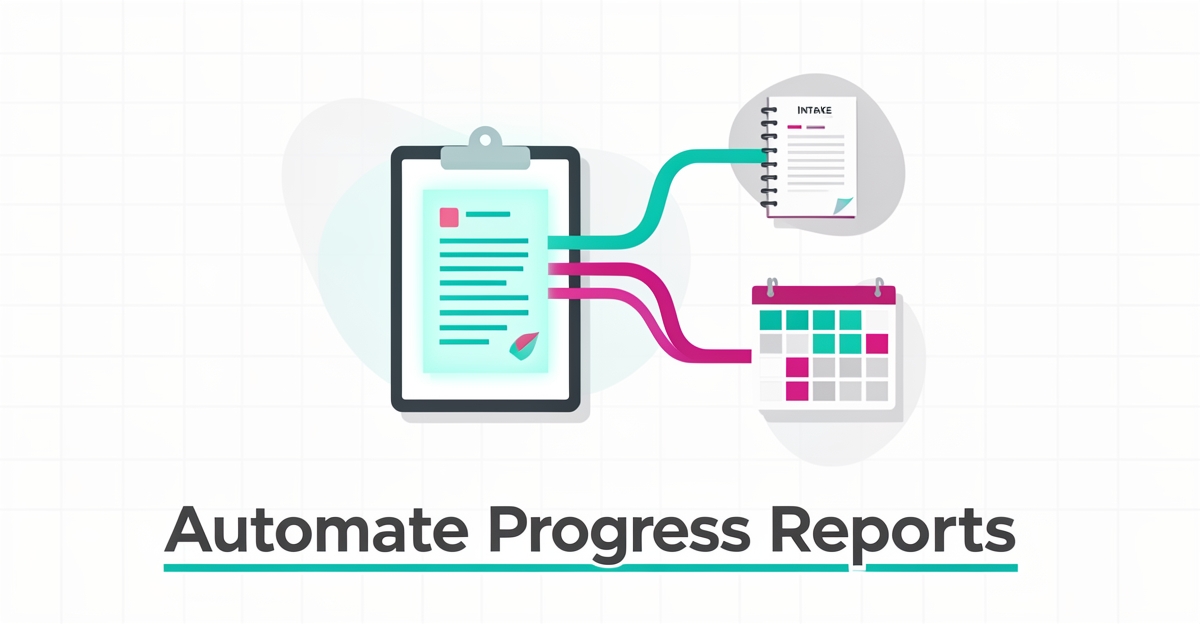
AIQ Labs helps vocational rehabilitation teams overcome this reporting burden by building automated systems that pull data from existing sources like intake forms, therapy notes, and scheduling tools to generate consistent, accurate progress reports. By reducing manual data entry and standardizing documentation, these AI-powered solutions free up clinicians to spend more time in direct client engagement. The result is faster reporting cycles, fewer errors, and greater transparency across the care journey, without adding to the team's workload.
- Eliminates repetitive manual report generation
- Ensures consistency in progress tracking across clients
- Frees up clinical time for direct client interaction
- Provides timely, accurate updates to stakeholders
- Reduces administrative delays in care planning
By automating progress reporting, vocational rehabilitation providers can shift from paperwork overload to proactive, data-informed care, aligning their operations with the AI-powered standards now expected across healthcare and human services sectors.
How AI Pulls Data Into Consistent Progress Reports
Vocational rehabilitation services are turning to AI to transform how progress reports are created, moving beyond manual data entry toward intelligent automation. By ingesting intake forms, therapy logs, and appointment data, AI systems extract and structure client information into consistent, standardized reports without human intervention. This approach ensures that every report reflects the same criteria and timelines, reducing variability that can occur with manual processing.
AI-powered automation delivers measurable improvements in efficiency, with organizations reporting significant time savings when routine documentation is handled by intelligent systems. In vocational rehabilitation, this translates to less time spent on administrative tasks and more focus on direct client support.
Accuracy and transparency are further enhanced through AI's ability to cross-reference data points and flag inconsistencies in real time. Automated validation helps ensure data completeness and alignment across sources, which reduces errors in progress reporting. This leads to reports that stakeholders can trust, with clear audit trails showing how conclusions were reached.
- Automated data extraction from intake forms, therapy notes, and scheduling systems
- Real-time validation of client progress indicators against predefined goals
- Consistent formatting and delivery schedules for all stakeholder reports
- Reduced manual effort in compiling and verifying progress data
- Improved readiness for compliance reviews and funding audits
AIQ Labs builds these automated reporting systems, whether as a workflow build that rebuilds your single most expensive reporting process, or as part of a broader AI operating system, by integrating document processing with workflow automation, ensuring that data flows seamlessly from collection to report generation. The result is a transparent, reliable process that supports both client outcomes and organizational accountability.
Data Quality, Training, and Security Considerations
Even the most advanced AI reporting system will fail if the data feeding it is incomplete, outdated, or insecure. Vocational rehabilitation agencies face three critical hurdles when implementing AI-powered progress reports: ensuring data quality, training staff effectively, and protecting sensitive client information.
The stakes are high. AI adoption is now mainstream, but success depends entirely on the quality of underlying data. For rehabilitation services, this means intake forms, therapy logs, and appointment records must be accurate, standardized, and consistently updated before automation can deliver reliable reports.
AI systems generate progress reports by pulling from multiple data sources. If those sources contain gaps or inconsistencies, the output becomes unreliable. Rehabilitation agencies must audit their existing documentation practices, standardize data entry protocols, and establish validation checkpoints before automation begins.
Clean data isn't a one-time project. It requires ongoing governance, clear ownership, and regular quality checks. Agencies that invest in data hygiene upfront see dramatically better results from their AI systems.
Technology adoption fails without proper training. Staff need to understand not just how to use AI tools, but why they matter and how to interpret AI-generated insights. The goal is an AI system that supports staff by handling routine tasks so professionals can prioritize strategy, coaching, and client relationships.
Training programs should focus on building confidence, addressing concerns about job displacement, and demonstrating how automation enhances rather than replaces professional judgment.
Client data in vocational rehabilitation is highly sensitive, often including medical histories, employment records, and personal identifiers. Protecting this information requires robust cybersecurity measures, including:
- End-to-end encryption for data transmission and storage
- Role-based access controls limiting who can view or edit client records
- Regular security audits and vulnerability assessments
- Compliance with privacy regulations and industry standards
- Audit trails documenting every system interaction
AIQ Labs builds compliance-first architecture into every system, ensuring that automated reporting platforms meet strict regulatory requirements while maintaining full transparency. Our approach includes human-in-the-loop controls, complete audit trails, and validation layers that catch errors before reports reach stakeholders.
Organizations across regulated industries, from financial services to education, are already proving that security and automation can coexist when systems are designed properly from the start.
The path forward requires commitment to data governance, staff development, and security infrastructure. Agencies that address these three pillars position themselves to unlock the full potential of AI-powered progress reporting while maintaining the trust of clients and stakeholders.
Building an Owned Automation System for Rehab Teams
Most vocational rehabilitation teams already know AI adoption is mainstream. The harder question is how to adopt it without trading paperwork chaos for subscription chaos. An owned automation system solves both problems at once.
The alternative to renting disconnected tools is a custom-built reporting system that your organization owns outright. AIQ Labs builds these systems to pull data directly from intake forms, therapy logs, and appointment records, then generate consistent progress reports automatically, no middleware subscriptions, no per-seat licensing, no vendor lock-in. As AI adoption accelerates across sectors, the window to build durable, owned infrastructure, rather than renting temporary fixes, is now.
For rehab teams that need working automation without a large upfront commitment, the AI Employee model offers a practical entry point. An AI Employee functions like a dedicated reporting coordinator: it gathers case data, drafts progress summaries, and flags missing documentation around the clock, at a fraction of the cost of a human hire. It's the same shift rehabilitation counselors need: freeing professionals to focus on strategy and people rather than paperwork.
Three payment structures make this accessible for lean teams:
- Start Monthly, one AI Employee on a flat monthly plan, with build, training, integrations, and monitoring included; pause or adjust anytime.
- Build in Milestones, automate the reporting workflow in phases, approving and paying for each stage as it ships, keeping everything built so far if you stop.
- Own It Outright, a complete reporting system with full ownership of the code, agents, and data on completion.
Each path avoids the trap that stalls most organizations at the pilot stage: investing in tools they never truly own. With AI adoption now the norm, the competitive edge no longer comes from having AI, it comes from owning the system that runs it.
For a vocational rehabilitation provider, that means progress reports that stay accurate, timely, and fully under your control as caseloads grow. The right first step is mapping your current reporting workflow to find where automation delivers the fastest return, a two-minute Fit Check and a free strategy call can identify that bottleneck before you commit to anything.
Still paying for 10+ subscriptions that don’t talk to each other?
We build custom AI systems you own outright. No vendor lock-in. Full control.
Not sure where to start? Ask our AI planner
Frequently Asked Questions
How does AI automate progress reports in vocational rehabilitation without replacing staff?
What are the main benefits of using AI for progress reporting in vocational rehabilitation services?
Is our client data secure when using AI for automated progress reporting?
Do we need perfect data quality before implementing AI-powered progress reports?
Can we own our AI reporting system outright instead of relying on subscriptions?
How widespread is AI adoption in industries similar to vocational rehabilitation?
From Paperwork Overload to Proactive Care
Vocational rehabilitation teams can reclaim time for direct client support by moving progress reporting from manual assembly to intelligent automation. AI can pull data from intake forms, therapy logs and scheduling tools to generate consistent, accurate reports, reduce errors, and deliver timely updates to clients and stakeholders without adding workload. That shift requires attention to data quality, staff training, and security, with compliance-first architecture and human-in-the-loop controls ensuring sensitive client information stays protected. With AI adoption now the norm across industries, owned automation is becoming the standard for care delivery. AIQ Labs builds custom reporting systems and managed AI Employees that rehab teams can own outright, so progress tracking stays accurate and under your control as caseloads grow. Start with a workflow map to find the fastest return, then take the two-minute Fit Check at https://aiqlabs.ai/apply and book a free 30-minute strategy call at https://aiqlabs.ai/book to map your bottleneck with an AI engineer. Prefer email? Reach the team at [email protected].
Make AI your competitive advantage — not just another tool.
Strategy, implementation and ongoing optimization. One partner, end to end.
Not sure where to start? Ask our AI planner