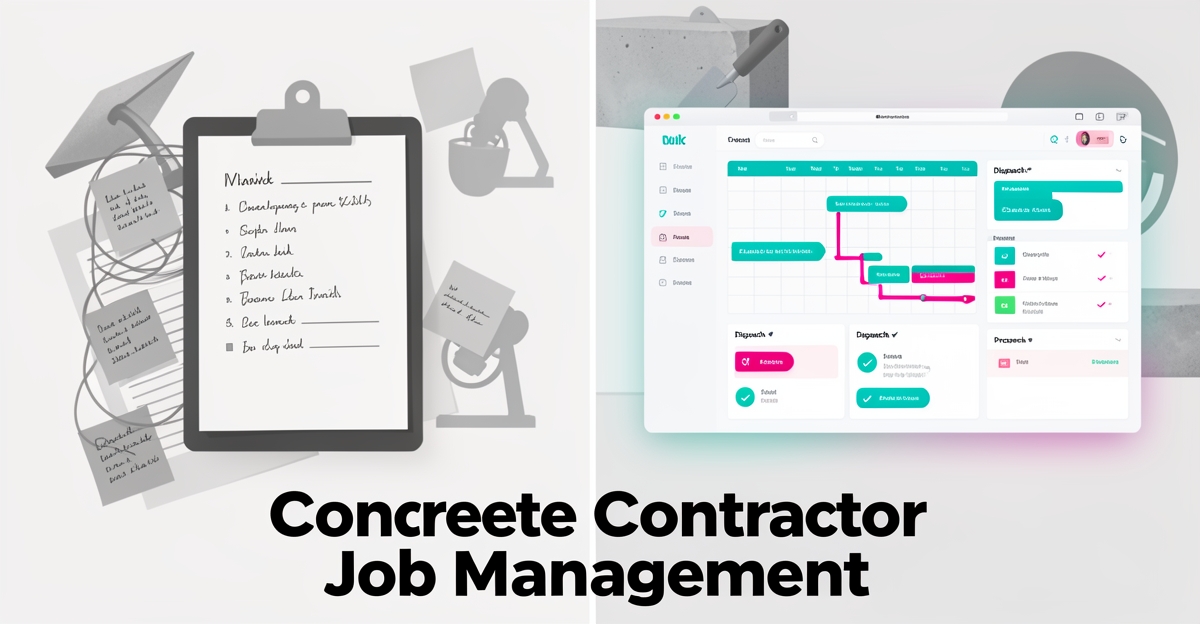
In-House vs AI: Which Is Better for Concrete Contractor Job Management?
Key Facts
- Manual job management forces contractors to choose between growth and service quality
- AI adoption among small and mid-sized businesses has grown steadily through 2026, with operations and scheduling among the most common use cases
- AI-powered communication typically improves response times and consistency, which directly affects repeat business and referrals
- A hybrid model, AI for routine tasks, humans for judgment calls, captures efficiency gains without sacrificing client relationships
- AIQ Labs has deployed 200+ multi-agent systems and runs 4 live SaaS products daily
Hire a team member that works 24/7 — for less than a part-time wage.
AI receptionists, SDRs, dispatchers and 99+ roles. Trained on your business, fully managed.
Not sure where to start? Ask our AI planner
The Hidden Cost of Manual Job Management in Concrete Contracting
The gap between winning a concrete bid and completing it profitably often comes down to one thing: how well you manage the chaos in between. For many contractors, that management still happens on whiteboards, spreadsheets, and memory.
Manual job management creates invisible drains on your operation. Scheduling conflicts emerge when dispatchers juggle multiple crews across job sites without real-time visibility. Customer calls go unanswered during pour days. Change orders get scribbled on napkins and forgotten. These manual processes introduce error and rework that a well-built AI system can largely eliminate from routine workflows.
The productivity toll compounds quickly. Office staff spend hours each week on data entry, phone tag, and schedule coordination instead of revenue-generating work. Industry research on AI adoption among small and mid-sized businesses consistently points to meaningful productivity gains, precisely because automation removes these repetitive administrative bottlenecks.
Here's where manual job management typically breaks down for concrete contractors:
- Dispatchers rely on phone calls and text messages to coordinate crew movements, leading to miscommunication and downtime
- Customer inquiries about project status require someone to stop what they're doing and track down information
- Scheduling changes cascade poorly, one delayed pour throws off the entire week's plan with no systematic way to reoptimize
- Critical job details live in individual inboxes and notebooks rather than a centralized system accessible to the whole team
The scalability ceiling arrives faster than most contractors expect. You can manage five active jobs with manual processes. At ten jobs, cracks appear. At fifteen, you're either hiring more office staff or watching customer satisfaction decline. This is the hidden cost: manual systems force you to choose between growth and service quality.
Customer communication suffers most visibly. When homeowners or general contractors call for updates, they expect immediate answers. Manual systems put those answers in someone's truck, on a jobsite whiteboard, or in a voicemail box. Faster, more consistent communication directly improves satisfaction, advantages that show up in repeat business and referrals.
The real expense isn't just errors or inefficiency. It's the opportunity cost of staying small because your back office can't handle growth. While AI adoption among SMBs has become mainstream as of late 2026, many concrete contractors still run dispatch like it's 1995.
This doesn't mean ripping out your entire operation tomorrow. AIQ Labs works with contractors to identify which manual process creates the biggest bottleneck, then rebuilds that one workflow at a fixed price through AI Workflow Builds, keeping your team in control of complex decisions. The goal isn't replacing human judgment, it's removing the administrative quicksand that prevents your crew from doing their best work.
How AI Transforms Concrete Job Management: Productivity, Accuracy, and Scalability
Concrete contractors face constant pressure to deliver projects on time and within budget while managing complex workflows. Traditional job management often relies on manual scheduling, paper-based tracking, and reactive problem-solving, which can lead to costly delays and errors. AI-powered systems are changing this dynamic by automating routine tasks and providing real-time insights that improve decision-making across the project lifecycle.
The gains are particularly valuable in concrete contracting, where precise timing for pours, accurate material calculations, and seamless crew coordination directly impact profitability. AI-driven scheduling tools analyze weather patterns, site readiness, and resource availability to optimize pour sequences, minimizing downtime and preventing costly rework.
- AI-powered dispatch systems automatically assign the right crew and equipment to each job based on skill sets, location, and availability.
- Real-time progress tracking uses site photos and job data to monitor pour quality and curing progress without manual inspections.
- Automated customer service handles routine inquiries about project status, scheduling changes, and billing, freeing up staff for complex client interactions.
- Predictive analytics forecast potential delays by analyzing historical data, weather forecasts, and supply chain factors.
- AI-enhanced estimating improves bid accuracy by learning from past projects to refine material and labor calculations.
For concrete contractors considering AI adoption, a hybrid approach often delivers the best results, using AI for repetitive, data-intensive tasks while retaining human oversight for nuanced decisions like client negotiations or unexpected site challenges. AIQ Labs supports this balanced implementation by building custom AI systems that integrate with existing tools and workflows, ensuring contractors maintain control over their operations while gaining the efficiency and scalability AI provides. You can start monthly, build in milestones, or own the system outright, so you can begin small, measure impact, and scale confidently as you see results.
The Hybrid Approach: AI for Routine Tasks, Humans for Complex Decisions
The concrete contractors seeing the strongest results from AI aren't the ones replacing their office managers, they're the ones pairing smart automation with experienced human judgment. This hybrid model captures the efficiency gains of AI while protecting the decision-making that keeps jobs profitable and clients happy.
The logic is straightforward. AI adoption among SMBs is now mainstream, and those businesses consistently report meaningful productivity gains. For concrete contractors, those gains come from offloading the repetitive work, scheduling, dispatch, appointment confirmations, invoice follow-ups, to AI systems that handle them around the clock without fatigue.
Error reduction alone makes the case. A single scheduling mistake can idle a crew and delay a pour, and AI systems don't forget, lose paperwork, or misread a whiteboard. But human oversight remains essential for the decisions AI shouldn't make alone, change orders, pricing negotiations, crew assignments on complex pours, and the judgment calls that define client relationships.
The most effective hybrid implementations follow a consistent pattern:
- AI handles routine scheduling, dispatch confirmations, and customer status updates
- Humans approve estimates, manage exceptions, and own client relationships
- Clear escalation rules define exactly when AI hands off to a person
- Ongoing monitoring ensures the AI improves rather than drifts
This structure reflects what successful AI adoptions consistently emphasize: clear policies, employee training, and continuous evaluation, not just plugging in a tool and hoping for the best. The contractors who struggle are usually the ones who skipped the planning phase.
At AIQ Labs, this hybrid model is exactly how we deploy AI Employees for trades and field service businesses. An AI Dispatcher or AI Service Coordinator handles the high-volume routine work at a fraction of the cost of an additional hire, while your team keeps control of the decisions that require experience and context. The result is scalable operations without sacrificing the judgment that built your reputation.
The customer experience benefits compound over time. Faster, more accurate communication directly improves satisfaction, something every concrete contractor knows translates into referrals and repeat business. When AI handles the follow-ups instantly and humans handle the conversations that matter, clients notice the difference.
Getting there starts with a clear-eyed look at where your current workflow actually breaks down, which is why a structured assessment beats guessing every time.
Still paying for 10+ subscriptions that don’t talk to each other?
We build custom AI systems you own outright. No vendor lock-in. Full control.
Not sure where to start? Ask our AI planner
Frequently Asked Questions
What are the main problems with manual job management for concrete contractors?
How much can AI improve productivity in concrete contractor job management?
Will adopting AI mean replacing my office staff or losing control over important decisions?
What does a hybrid AI approach look like for concrete contractors?
How does AI improve customer satisfaction for concrete contracting businesses?
Is AI adoption only for large construction companies, or can small concrete contractors benefit too?
The Bottom Line: Building Smarter Concrete Operations
The choice between in-house manual job management and AI-powered systems isn't really a choice at all, it's a question of when you'll make the switch. Manual processes might work for five jobs, but they crack under the weight of growth, introducing errors and forcing you to choose between scaling and service quality. The hybrid approach offers the smartest path forward: let AI handle routine scheduling, dispatch, and customer updates while your team focuses on the complex decisions that require experience and judgment. If you're ready to identify which workflows are holding your operation back, start with AIQ Labs' 2-minute Fit Check, then book a free 30-minute strategy call to map your biggest bottlenecks and pinpoint high-ROI automation opportunities. No obligation, just clarity on your next move.
Make AI your competitive advantage — not just another tool.
Strategy, implementation and ongoing optimization. One partner, end to end.
Not sure where to start? Ask our AI planner