In-House vs. AI: Which Is Better for Managing Aquarium Exhibits and Animal Care Logs?
Key Facts
- Aquarium technicians commonly spend a significant portion of their shifts—often cited at around a third—on administrative tasks like logbook completion and report generation
- Modern AI monitoring platforms track a wide range of water parameters, including pH, ammonia, nitrite, calcium, and alkalinity, in a single continuous stream
- Machine learning models in animal care research have shown promising accuracy in detecting pain and distress signals, though these tools are designed to augment—not replace—veterinary judgment
- Real-time monitoring is strongest when tracking temperature, pH, salinity, turbidity, and dissolved oxygen simultaneously, as aquaculture research consistently notes
- AI-powered systems can process thousands of data points daily, flagging trends and predicting parameter drift after feeding or lighting changes
- Natural language processing lets staff log observations like "pH 7.2, ammonia 0, did a 25% water change" in plain English—no forms, no dropdowns
- AI Employees from AIQ Labs typically run at roughly 80% less cost than an equivalent human hire, working 24/7 without missed shifts
Hire a team member that works 24/7 — for less than a part-time wage.
AI receptionists, SDRs, dispatchers and 99+ roles. Trained on your business, fully managed.
Not sure where to start? Ask our AI planner
The Hidden Costs of Manual Aquarium Log Management
The daily reality of managing aquarium exhibits through manual log systems creates significant operational strain on staff and increases the risk of critical errors. Relying solely on in-house teams to track water parameters, feeding schedules, and animal health observations through traditional methods consumes valuable time that could be spent on direct animal care and exhibit enrichment. This approach becomes increasingly unsustainable as facilities grow or face staffing limitations.
Manual data entry in animal care environments is prone to human error. Even experienced staff can misrecord critical parameters like pH, ammonia, or nitrate levels due to fatigue, distraction, or inconsistent documentation practices. In aquatic settings where small fluctuations can rapidly impact animal health, these inaccuracies compound over time, potentially leading to missed warning signs of stress or disease. The cognitive load of maintaining detailed logs across multiple exhibits diverts attention from proactive monitoring and responsive care.
Staff time is the biggest hidden cost. Aquarium technicians commonly spend a substantial share of their shifts—industry estimates often put it near a third—on administrative tasks such as logbook completion, schedule tracking, and report generation. That is time that directly reduces hands-on engagement with animals and exhibit maintenance. When logging requires switching between paper forms, spreadsheets, or disconnected digital tools, inefficiencies multiply through context switching and duplicate effort. This fragmentation makes it difficult to maintain a unified, real-time view of exhibit conditions across shifts or departments.
Scalability presents another challenge, as manual systems struggle to keep pace with expanding collections or complex multi-parameter monitoring needs. Aquaculture research consistently emphasizes that effective water quality management requires tracking interconnected factors like temperature, pH, salinity, turbidity, and dissolved oxygen simultaneously—yet traditional logs often capture these as isolated, infrequent spot checks rather than continuous data streams. Without automated correlation and trend analysis, subtle but harmful parameter drifts may go unnoticed until visible symptoms appear in aquatic life.
For facilities considering modernization, integrating intelligent systems that work alongside human expertise offers a path to reduce manual burden while enhancing accuracy and responsiveness. AIQ Labs supports this transition through AI Workflow Builds that rebuild the one workflow costing you the most—here, exhibit logging—at a fixed price and in clear phases. These builds automate routine logging, extract actionable insights from observational notes, and flag anomalies before they escalate, allowing staff to focus on interpretation, intervention, and the nuanced aspects of animal care that technology cannot replicate.
- Eliminates time-consuming manual data entry through voice and text logging
- Provides real-time, multi-parameter monitoring with trend analysis
- Automatically extracts tasks and reminders from observational notes
- Scales across unlimited tanks and exhibit types without added labor
- Reduces cognitive load on staff, freeing time for direct animal care
How AI Transforms Aquarium Care Through Real-Time Monitoring and Predictive Analytics
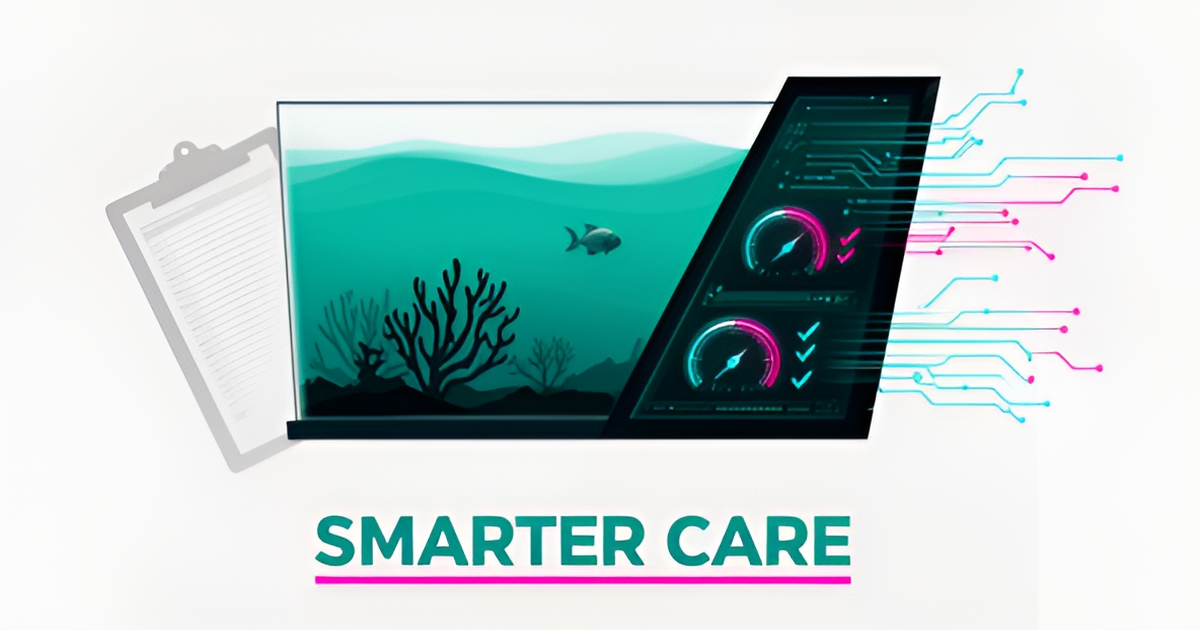
AI is transforming aquarium care by moving beyond manual logging to intelligent, real-time systems that anticipate needs before they become problems. Modern platforms use multi-parameter sensing to track interconnected water chemistry shifts, recognizing that fish stress often results from combined changes in temperature, pH, salinity, and dissolved oxygen rather than isolated failures. This holistic monitoring enables predictive adjustments that warn operators before parameters drift outside safe ranges, shifting management from reactive alarms to proactive stabilization.
These systems eliminate traditional data entry through natural language processing, allowing staff to log observations like "pH 7.2, ammonia 0, did a 25% water change" in plain English, which the AI automatically extracts and categorizes. By retaining context about tank size, inhabitant list, and historical trends, the AI delivers personalized insights tailored to each exhibit's unique ecosystem. Task extraction further reduces manual burden by identifying reminders from logged interactions—such as scheduling retests or water changes—ensuring critical actions aren't overlooked.
- Tracks a full range of water parameters—including pH, ammonia, nitrite, calcium, and alkalinity—in one continuous monitoring stream
- Flags early signs of distress through behavioral and chemical trend analysis, enabling intervention before visible symptoms appear
- Supports voice logging and smart plug integration for dynamic automation of lighting and aeration systems
By analyzing subtle behavioral cues—abnormal swimming, gasping, or feeding hesitation—AI can surface potential health issues before visible symptoms appear, reducing suffering and intervention costs. For aquarium operations seeking to enhance accuracy while reducing manual labor, AIQ Labs builds unified monitoring systems that synchronize sensor data, automate task extraction, and deliver context-aware alerts—transforming exhibit logs from static records into living care intelligence. Facilities that want to go further can connect logging, scheduling, ticketing, and reporting into one AI operating layer, built in phases and owned outright.
Balancing Human Expertise with AI Automation: The Hybrid Approach for Sustainable Operations
The most resilient aquarium operations don't choose between human expertise and artificial intelligence—they architect a symbiotic relationship where each handles what it does best. By deploying AI to manage the relentless data streams while empowering in-house staff to focus on complex animal care decisions, facilities achieve both operational efficiency and superior animal welfare.
Modern AI systems excel at continuous, multi-parameter monitoring that would overwhelm human capacity. Aquaculture research consistently shows that real-time monitoring proves most effective when tracking temperature, pH, salinity, turbidity, and dissolved oxygen simultaneously, identifying subtle interactions before they escalate into crises. These systems can process thousands of data points daily, flagging trends and predicting parameter drift after feeding or lighting changes with a precision that manual spot-checks cannot match.
This technological capability creates space for staff to exercise irreplaceable human judgment. While AI handles routine logging and alerting, aquarists concentrate on behavioral observation, complex medical assessments, and nuanced animal interactions that require emotional intelligence and contextual understanding. Animal health research on machine learning—such as models that detect pain levels in companion animals through facial analysis—shows real promise, yet these tools serve to augment rather than replace the veterinarian's diagnostic expertise and treatment decisions.
Implementing this hybrid model requires deliberate operational design:
- Automated data collection: AI handles water parameter logging, feeding schedules, and maintenance reminders using natural language processing that extracts data from voice or text entries without manual forms
- Predictive alerting: Systems flag potential health issues before visible symptoms appear, enabling proactive intervention rather than reactive crisis management
- Human oversight protocols: Staff retain authority over treatment decisions, animal handling, and system overrides, ensuring ethical care standards remain paramount
- Continuous learning loops: AI analyzes historical patterns to refine recommendations while staff provide contextual feedback that improves accuracy over time
This division of labor mirrors the AI Employee model developed by AIQ Labs, where managed AI staff handle workflow automation and data synchronization while integrating with your existing operational tools. Rather than replacing your team, these systems work alongside them—handling the 24/7 monitoring and documentation burden so your aquarists can focus on animal husbandry and exhibit enrichment. The result is a scalable operation where technology manages the routine, and humans provide the care, creativity, and critical thinking that define exceptional aquarium management.
Still paying for 10+ subscriptions that don’t talk to each other?
We build custom AI systems you own outright. No vendor lock-in. Full control.
Not sure where to start? Ask our AI planner
Frequently Asked Questions
How much time do aquarium staff typically spend on manual log management instead of direct animal care?
Can AI systems accurately track multiple interconnected water parameters in aquariums, and why is this important?
How does AI detect early signs of distress in aquatic animals?
How does AI handle data entry for aquarium logs without requiring staff to use forms or spreadsheets?
Is AI meant to replace aquarium staff, or does it work alongside them in a hybrid model?
What are the scalability limitations of manual log systems in growing aquarium facilities?
Beyond the Logbook: Building a Smarter Care Ecosystem
The choice between in-house logging and AI automation isn't binary—it's about architecting a partnership where technology handles the relentless data streams while your team focuses on the nuanced, hands-on care that defines exceptional aquarium management. By shifting from manual spot-checks to continuous, multi-parameter monitoring, facilities can reduce administrative burden, minimize error risk, and catch subtle parameter drifts before they escalate into health crises. This hybrid approach doesn't just improve efficiency; it builds resilience against staffing variability and scaling challenges, ensuring that animal welfare remains the priority even as operational complexity grows. If you're ready to explore how AI workflow automation can transform your exhibit logging and care protocols, AIQ Labs can help you design a system that integrates with your existing operations. Start with the two-minute Fit Check, then book a free 30-minute strategy call to identify the highest-impact automation opportunities for your facility—or reach the team directly at [email protected].
Make AI your competitive advantage — not just another tool.
Strategy, implementation and ongoing optimization. One partner, end to end.
Not sure where to start? Ask our AI planner