In-House vs AI: Which Is Better for Managing Beverage Distribution Orders?
Key Facts
- Manual data reconciliation can consume 20+ hours weekly per employee in traditional in-house distribution setups
- AI employees typically cost roughly 80% less than a comparable human hire while operating 24/7 without breaks or sick days
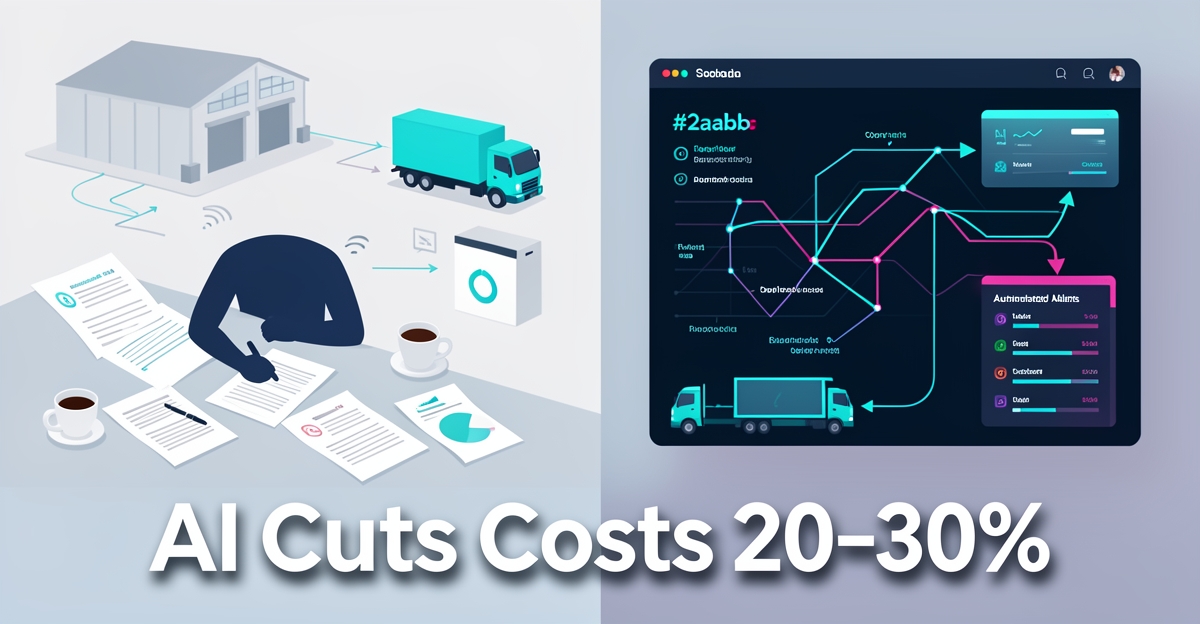
- AI-driven route optimization is widely reported to deliver meaningful operational cost reductions—often in the 20–30% range for distribution-heavy businesses
- AI-powered demand forecasting is commonly credited with sharply reducing both stockouts and excess inventory
- Owned AI systems carry no per-user licensing or monthly SaaS fees once deployed, unlike subscription tools
Hire a team member that works 24/7 — for less than a part-time wage.
AI receptionists, SDRs, dispatchers and 99+ roles. Trained on your business, fully managed.
Not sure where to start? Ask our AI planner
The Hidden Costs of Manual Beverage Order Management
In-house teams managing beverage distribution orders face challenges that quietly compound into substantial hidden costs. Manual processes are not only time-consuming but prone to errors, and in a business built on thin margins and high volumes, small mistakes add up fast.
The most obvious cost is labor. Employees must manually enter data, track orders, and manage inventory—work that is slow, repetitive, and easy to get wrong. Every hour spent on routine entry is an hour not spent on accounts, relationships, or growth. And the need for constant oversight and correction pushes operating costs even higher.
Then there's the scalability problem. As distribution operations grow, the complexity and volume of orders can quickly overwhelm manual processes. Bottlenecks form, shipments slip, and customers notice. AI systems, by contrast, handle large volumes of data and scale with your operation rather than your headcount.
Error is another hidden cost. A mistyped SKU, a missed delivery window, a wrong quantity—each one means credit notes, redelivery, or lost revenue. AI automates these tasks with consistent accuracy, reducing the risk of errors and the rework that follows them.
Finally, in-house teams often lack real-time data and analytics. Without up-to-date information, it's hard to make informed decisions or respond quickly to demand shifts. AI provides real-time insights and predictive analytics, helping businesses optimize operations instead of guessing.
- High labor costs associated with manual order processing
- Increased risk of human error in data entry and order management
- Scalability issues as operations grow
- Lack of real-time data and analytics for informed decision-making
In short, while in-house methods feel familiar, their true expense is substantial. From labor and error-prone processes to scaling limits and blind spots, manual beverage order management costs more than it looks on a payroll sheet. AIQ Labs offers three ways to fix this: AI Employees for managed AI staff, AI Workflow Builds to rebuild the one workflow that costs you most, and AI Operating Systems for a fully connected, owned operating layer.
How AI Transforms Beverage Distribution Order Processing
AI is reshaping how beverage distribution orders are processed by introducing automation and intelligence into core supply chain functions. By handling repetitive tasks like order entry, inventory tracking, and shipment scheduling, AI reduces manual effort and minimizes human error. This shift lets your people focus on strategic decisions rather than routine operations.
One of the most impactful applications is route optimization. Algorithms analyze traffic patterns, delivery windows, and vehicle capacity to determine the most efficient paths for distribution fleets. This cuts fuel consumption and transit times while increasing deliveries completed per route. Industry reporting commonly attributes operational cost reductions in the 20–30% range to AI-driven route planning—savings that go straight to the margin in a competitive industry.
Demand forecasting is another area where AI delivers measurable value. By analyzing historical sales, seasonal trends, promotional activity, and external factors like weather or local events, AI models predict future beverage demand more accurately than traditional methods. That lets distributors hold optimal inventory levels, reducing both stockouts and overstock, and strengthens retailer relationships through reliable fulfillment.
AI also improves supply chain visibility through anomaly detection. Continuous monitoring of order volumes, delivery timelines, and supplier performance lets systems flag irregularities—sudden spikes in returns, delayed shipments—before they escalate. Early detection prevents disruptions, protects service level agreements, and safeguards revenue. Together, these capabilities turn beverage distribution from a reactive process into a proactive, data-driven operation.
AIQ Labs supports this transformation with systems that integrate with your existing logistics and ERP platforms, giving you full ownership of your automation without vendor lock-in. With 200+ multi-agent systems deployed and four live SaaS products we run ourselves every day, this is proven infrastructure, not theory.
Why Owned AI Systems Outperform Subscriptions and Staffing Models
For beverage distribution operations, the choice between internal teams and AI isn't just about technology—it's about sustainable operational design. Traditional staffing models require ongoing salary, benefits, and training investments that scale linearly with volume, creating fixed costs that don't flex with demand. Vendor-locked subscription services reduce upfront effort but introduce recurring fees that accumulate year after year, and they often limit how deeply you can customize or integrate with your existing CRM and accounting platforms.
Owned AI systems eliminate these recurring drains. Once built and deployed, they run without per-user licensing or monthly SaaS fees, delivering 24/7 capacity for high-volume, repetitive tasks like order entry, inventory tracking, and shipment scheduling. This is the model behind AIQ Labs' AI Operating Systems: one connected operating layer, built in phases, owned outright—code, data, and integrations included, with no platform dependencies. The savings compound over time compared to the escalating cost of expanding human teams or renewing annual software subscriptions.
Beyond cost, owned AI provides seamless integration with critical business tools. Deep API connections synchronize data across CRM, accounting, and logistics platforms in real time, creating a single source of truth that eliminates manual reconciliation—a process that can consume 20+ hours weekly per employee in traditional setups. This isn't theoretical; it's how production systems handling thousands of daily transactions already work.
For beverage distributors managing fluctuating volumes, seasonal spikes, and complex routing logic, owned AI offers a resilient alternative: consistent performance without fatigue, zero missed shifts, and continuous learning from operational data. Unlike human teams that need hiring cycles and training overhead during peak periods—or subscription tools that throttle features by tier—owned AI scales predictably, handling 10 orders or 10,000 on the same architecture. If you're not ready for a full operating system, an AI Workflow Build targets the single workflow that costs you most, at a fixed price, in phases. To see where automation fits your operation, take the two-minute Fit Check at aiqlabs.ai/apply.
Still paying for 10+ subscriptions that don’t talk to each other?
We build custom AI systems you own outright. No vendor lock-in. Full control.
Not sure where to start? Ask our AI planner
Frequently Asked Questions
Is manual order management really that expensive for beverage distribution?
Can in-house teams keep up when order volume spikes seasonally?
How accurate is AI compared to people for order entry and forecasting?
Do we lose real-time visibility with manual processes?
What's the difference between owned AI systems and subscription AI tools?
What if we're not ready for a full AI system?
Own the Advantage, Not the Overhead
Manual beverage order management hides real costs in labor, errors, and missed scale. In-house teams struggle with time-consuming data entry, human error, seasonal bottlenecks, and a lack of real-time analytics. AI flips that equation by automating repetitive tasks, optimizing routes, forecasting demand, and flagging anomalies before they disrupt service—freeing your people for strategic work. The shift isn't about replacing teams; it's about giving them owned systems that scale without fatigue, vendor lock-in, or subscription churn. AIQ Labs builds systems that integrate with your existing logistics and ERP platforms so you keep control of code, data, and workflows—200+ multi-agent systems deployed and counting. If you're ready to see where automation fits, take the two-minute Fit Check at aiqlabs.ai/apply, then book a free 30-minute strategy call at aiqlabs.ai/book to map your biggest bottleneck and highest-ROI opportunities. The business case for owned automation is clear—the only question is which workflow you fix first.
Make AI your competitive advantage — not just another tool.
Strategy, implementation and ongoing optimization. One partner, end to end.
Not sure where to start? Ask our AI planner