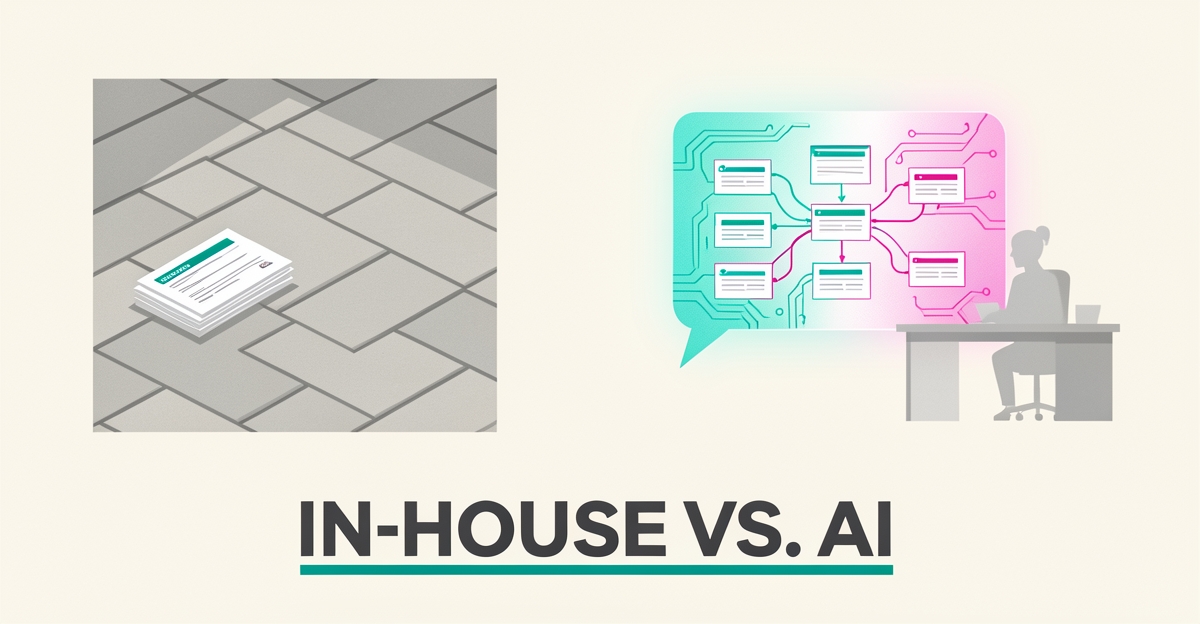
In-House vs. AI: Which Is Better for Managing Hardscape Client Inquiries?
Key Facts
- AI can typically handle most routine client questions without human intervention, covering FAQs, availability checks, and basic pricing ranges
- AI automates repetitive communication, reduces response delays, and qualifies inquiries faster while preserving human interaction for high-stakes conversations
- Many firms report limited access to AI-skilled professionals, which makes guided implementation especially valuable for small contractors
- AIQ Labs has deployed 200+ multi-agent systems and runs 4 live SaaS products daily on its own operations
- AI Employees cost roughly 80% less than a human hire while providing 24/7/365 coverage
Hire a team member that works 24/7 — for less than a part-time wage.
AI receptionists, SDRs, dispatchers and 99+ roles. Trained on your business, fully managed.
Not sure where to start? Ask our AI planner
The Hardscape Inquiry Bottleneck
Hardscape businesses often get overwhelmed by routine client questions about pricing, timelines, material options, and project availability. Staff spend hours answering the same inquiries, pulling them away from design work, site management, and client consultations. This creates a bottleneck where response times slow, leads go cold, and team capacity hits a hard ceiling, especially during peak seasons. Relying solely on an in-house team means scaling support requires hiring more staff, which increases overhead without guaranteeing 24/7 availability or consistent response quality.
Industry experience with AI support consistently shows that a large share of routine client questions can be answered without human intervention, directly addressing the volume of repetitive inquiries that clog hardscape workflows. When teams are tied up with basic Q&A, they lose time for high-value activities like custom design consultations and project oversight. This inefficiency compounds as inquiry volume grows, making it difficult to maintain responsiveness without proportional staff increases.
- Delayed responses increase the risk of losing clients to competitors who reply faster
- Staff burnout rises when skilled employees spend disproportionate time on repetitive tasks
- Inquiry volume spikes during spring and summer expose the limits of fixed team capacity
- Training new hires on inquiry handling takes time and pulls experienced staff from core duties
- Inconsistent messaging occurs when multiple team members answer similar questions differently
These constraints make pure in-house models costly and inflexible. Salaries, benefits, training, and recruiting add up quickly, especially when factoring in turnover and seasonal demand swings. Even with a full team, coverage gaps appear outside business hours, leading to missed opportunities and frustrated prospects. AIQ Labs helps hardscape businesses overcome these limits by designing hybrid systems where AI Employees manage routine inquiries instantly, while human staff focus on complex quotes, site visits, and relationship-building, ensuring scalability without sacrificing the personal touch clients expect.
What Research Says About AI Handling Client Inquiries
Managing hardscape client inquiries at scale means balancing speed with quality, and current industry experience shows where AI fits in the mix.
Across service-based sectors, AI support systems routinely handle the majority of routine client questions without human intervention, freeing in-house teams to focus on complex, high-value conversations. This automation potential applies directly to repetitive inquiry handling in trades like hardscaping.
The productivity case is strengthening as digitalization matures. Businesses that digitize inquiry intake and follow-up consistently report faster response times and lower cost per lead, with AI and machine learning as key drivers of those gains.
Adoption is growing but uneven. Many firms, particularly smaller contractors, report limited access to AI-skilled professionals, which shapes how hardscape businesses approach implementation. This talent constraint reinforces why a managed model can matter for SMBs that can't hire a full technical team.
In practice, AI is positioned to automate repetitive communication, reduce response delays, and qualify inquiries faster. Business commentary on AI support emphasizes that human interaction still matters, and AI simply allows businesses to operate at a higher level of responsiveness.
That balance points to a hybrid model. AI handles high-volume, repetitive intake such as project timelines, material options, pricing requests, and scheduling, while human specialists step in for site-specific design decisions, change orders, and relationship building.
A hybrid approach for hardscape inquiries typically includes:
- AI triage and instant answers for routine FAQs and quote requests 24/7
- Automated qualification that captures scope, budget, and timeline before human handoff
- Human review for complex bids, custom hardscaping designs, and sensitive client issues
- Continuous learning loop where human resolutions train the AI for future accuracy
This structure preserves client experience while scaling capacity. AIQ Labs designs hybrid models that combine human expertise with AI efficiency, ensuring smooth client experiences at scale through custom-built systems that businesses own outright.
The evidence supports a measured rollout rather than wholesale replacement. With strong automation potential for routine work and clear productivity gains from digitalization, the smart move is pairing AI efficiency with human judgment for the inquiries that define client trust in hardscape projects.
Cost, Speed and Quality: In-House Team vs AI Support
Hardscape operations live and die by how fast inquiries turn into quotes. When a homeowner asks about patio timelines, material options, or project costs, a delayed reply often means a lost job to a competitor who responded first.
Cost is the first trade-off. Maintaining an in-house team means salaries, benefits, recruiting and training that scale linearly with volume. AI-powered support shifts routine work to automated handling, allowing human staff to focus on high-value conversations. And because AI-skilled talent is scarce and expensive for small firms to hire in-house, staffing for 24/7 coverage with people alone is rarely practical.
Speed separates winners from the rest of the season. In-house teams work business hours and get overwhelmed during peak inquiry periods. AI automates repetitive communication, reduces response delays, and qualifies inquiries faster, letting businesses operate at a higher level of responsiveness around the clock.
Quality remains the concern for owners. Modern AI systems can handle most routine client questions without human intervention, FAQs, availability checks, basic pricing ranges, and follow-ups, freeing estimators and project managers for complex design discussions and site-specific decisions.
Productivity gains compound when digitalization is applied consistently. Businesses that digitize intake, qualification, and follow-up report faster lead capture and lower cost per inquiry, with AI and machine learning as key drivers. Adoption is real and accelerating across contracting and design-adjacent sectors as of late 2026.
A hybrid model balances those realities for hardscape firms:
- AI handles first response, qualification and routine updates 24/7
- Human experts step in for custom designs, change orders and relationship closing
- Shared knowledge base keeps answers consistent across channels
- Performance data informs where to add human touchpoints over time
This approach preserves response time and quality at scale without ballooning headcount. AIQ Labs helps design a hybrid model that combines human expertise with AI efficiency through managed AI employees and implementation roadmaps tailored to hardscape operations.
The result is faster lead capture, lower cost per inquiry, and a team focused on the work only people can do well.
A Hybrid Model That Works for Hardscape Businesses
The strongest hardscape businesses don't choose between in-house teams and AI, they combine the two. Since AI can handle most routine client questions without any human intervention, the real question isn't whether to adopt AI, but where to draw the line between automation and human judgment.
In a hybrid model, AI takes on the repetitive, high-volume work: answering common questions about materials and timelines, responding to inquiries outside business hours, and qualifying leads before a salesperson ever picks up the phone. Current analysis of AI in business communication shows AI can automate repetitive communication, reduce response delays, and qualify inquiries faster, while human interaction still matters for the moments that close deals and build trust.
That division of labor matters in hardscape work, where a routine question about paver options is very different from a complex site discussion or a six-figure patio design consultation. A practical split looks like this:
- AI handles first-touch responses, FAQs, after-hours calls, and initial lead qualification around the clock.
- AI routes qualified, high-intent leads directly to your team with full context attached.
- Humans handle complex consultations, custom design conversations, and final negotiations.
- Your team reviews AI performance data to refine responses and spot recurring client needs.
The result is a higher level of responsiveness without sacrificing the personal touch that wins hardscape projects. AI helps people make better decisions faster, with more structure, more context, and fewer blind spots, a principle that applies equally to guiding a homeowner through a retaining wall project.
This is the approach AIQ Labs builds around: pairing human expertise with AI efficiency through production-proven multi-agent systems rather than theoretical pilots. The firm has deployed 200+ multi-agent systems and runs 4 live SaaS products daily on its own operations, and designs hybrid models that let small teams operate with enterprise-grade responsiveness, including AI employees for lead qualification and reception that work alongside, not instead of, your crew.
Adoption is growing fast, though many firms still report limited access to AI-skilled professionals, a gap that makes a guided, phased implementation especially valuable for hardscape businesses without in-house technical talent.
The hybrid model isn't a compromise. It's the configuration where each side does what it does best: AI delivers speed, consistency, and coverage, while your people deliver the craftsmanship-focused conversations that turn inquiries into signed contracts.
How to Implement AI for Hardscape Inquiries Without Disruption
Transitioning to AI for hardscape client inquiries requires a thoughtful, phased approach that prioritizes continuity and team confidence. Begin with an AI readiness assessment to evaluate current inquiry volumes, common question types, and existing tool integrations, this helps identify which routine queries AI can handle without human intervention. Map these findings to a clear implementation roadmap that aligns with business goals and avoids disruption to ongoing client engagements.
Next, select an implementation path that matches your operational scale and comfort level. AIQ Labs offers three entry points: AI Employees under a Start Monthly model for managed intake and scheduling; AI Workflow Builds to rebuild the one inquiry workflow that costs you the most, at a fixed price and in phases; or AI Operating Systems for one connected operating layer you own outright. Each includes setup, training on your hardscape-specific workflows, tool integrations (like JobNimbus or Buildertrend), monitoring, and continuous improvement, with the ability to pause or adjust as needed. This structure supports steady progress without large upfront risk, especially valuable for teams without in-house AI talent.
Finally, establish governance and adoption practices that reinforce trust and consistency. Define clear escalation paths for complex inquiries, train teams to monitor AI performance via dashboards, and gather feedback from both clients and staff to refine responses. Use change management tactics like role-specific training and internal champions to drive adoption, ensuring the AI augments, not replaces, human expertise. Over time, this hybrid model enhances responsiveness, reduces response delays, and maintains the personal touch clients expect in hardscape services. By grounding each step in readiness, integration, and ownership, businesses can scale inquiry handling smoothly while building long-term AI capability.
Still paying for 10+ subscriptions that don’t talk to each other?
We build custom AI systems you own outright. No vendor lock-in. Full control.
Not sure where to start? Ask our AI planner
Frequently Asked Questions
Can AI really handle most hardscape client inquiries, or will I still need staff?
Isn't hiring in-house staff better for maintaining quality and control?
What happens when a client asks something too complex for AI?
How much does AI inquiry handling cost compared to hiring staff?
Will AI responses feel robotic and turn off potential clients?
How long does it take to implement AI for hardscape inquiries without disrupting current operations?
Where AI and Human Expertise Meet: A Smarter Path Forward for Hardscape Teams
The bottleneck of routine client inquiries doesn't have to limit your hardscape business. As we've seen, AI can reliably handle repetitive questions, about pricing, timelines, and materials, freeing your team to focus on what truly moves the needle: custom designs, site consultations, and closing high-value projects. But the real advantage isn't in replacing your staff with automation; it's in creating a hybrid model where AI manages the volume and your experts deliver the craftsmanship and trust that win contracts. This approach keeps response times fast, messaging consistent, and availability 24/7, without inflating overhead or sacrificing the personal touch clients expect. If you're ready to see how this could work in your operations, start with the 2-minute Fit Check, then book your free 30-minute strategy call to map your biggest inquiry bottlenecks and explore where AI can create immediate relief, a clearer path to scaling responsiveness without scaling headcount. Questions first? Reach the team at [email protected].
Make AI your competitive advantage — not just another tool.
Strategy, implementation and ongoing optimization. One partner, end to end.
Not sure where to start? Ask our AI planner