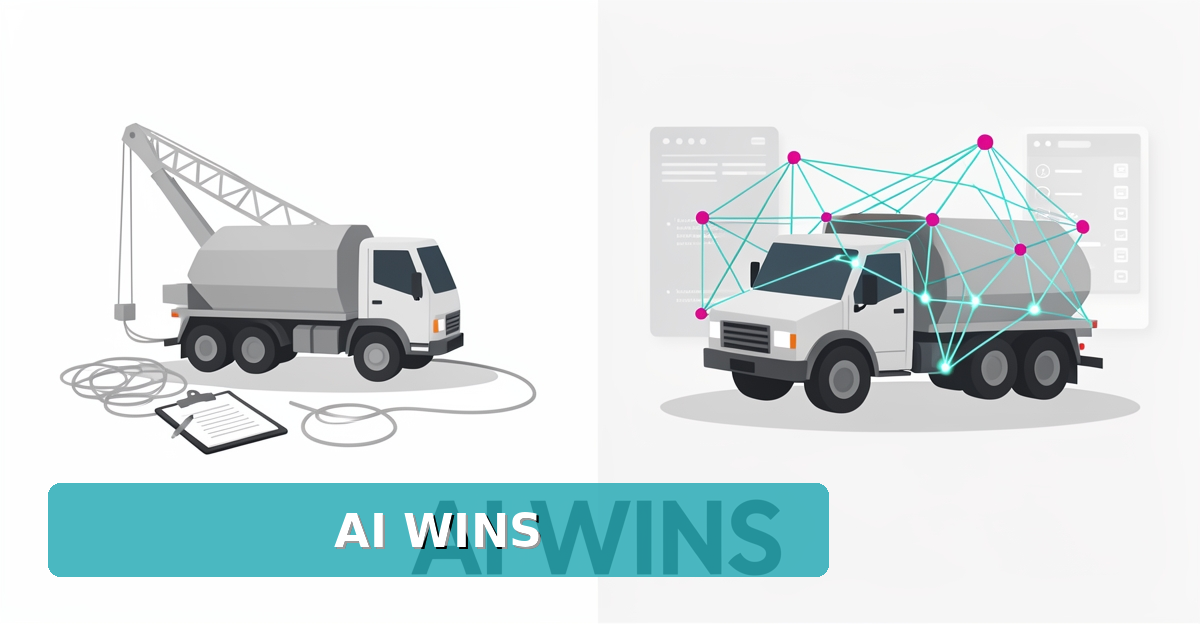
In-House vs AI: Which Is Better for Managing Job Dispatches in Sealcoating?
Key Facts
- AI-driven dispatch responds to job requests in real time, while human dispatchers typically lag during peak-season call volume
- Manual dispatching generally costs fleets more in total operating expenses once overtime, rework and wasted travel are included
- AI systems optimize routes and schedules with high accuracy, reducing errors that manual dispatch struggles to match on complex days
- AI dispatch scales without fatigue, a single human dispatcher has a hard ceiling on active jobs before response times degrade
- The strongest setup is hybrid: AI handles routing, tracking and analytics; experienced people handle exceptions and customer escalations
- AIQ Labs builds dispatch systems businesses own outright, with real numbers provided in writing after a free strategy call
Hire a team member that works 24/7 — for less than a part-time wage.
AI receptionists, SDRs, dispatchers and 99+ roles. Trained on your business, fully managed.
Not sure where to start? Ask our AI planner
The Dispatch Bottleneck Costing Sealcoating Crews Time and Money
Peak season in sealcoating brings a flood of job requests that can overwhelm manual dispatch, creating a costly bottleneck. During these high-demand periods, human dispatchers often struggle to keep up, leading to delayed responses that frustrate customers and delay crew deployment. This slow time-to-response directly impacts revenue, as crews sit idle waiting for assignments while potential jobs go unclaimed. AI-driven dispatch systems respond to job requests in real time, significantly reducing delays and increasing operational efficiency during critical windows.
Manual dispatch also introduces route errors and scheduling inefficiencies that compound labor costs. When dispatchers misjudge travel times or overlap jobs poorly, crews waste hours driving between sites instead of sealing driveways. These inefficiencies creep into operating expenses, fleets relying on manual dispatch typically spend meaningfully more in total operating costs than those using AI-optimized alternatives once overtime, rework and wasted travel are counted. For sealcoating businesses operating on tight margins, this excess cost erodes profitability and limits reinvestment in equipment or marketing. AI systems, by contrast, optimize routes and schedules with high accuracy, minimizing wasted time and fuel while maximizing daily job capacity.
The scalability gap becomes especially apparent as businesses grow. A single dispatcher can only manage so many active jobs before response times degrade and errors increase. During peak season, this limit is often exceeded, forcing businesses to either turn down work or absorb costly overtime. AI-driven dispatch systems handle high volumes of requests without fatigue, maintaining consistent performance regardless of request volume. Larger fleets in particular tend to recover their annual software cost quickly, often within the first month or two of implementation, because efficiency gains compound fast. For sealcoating operators, this means AI isn't just a tool for large fleets, it's a lever for sustainable growth that pays for itself quickly.
AI vs Human Dispatch: Response Time, Accuracy, Scalability and Cost Compared
When a sealcoating crew is sitting idle because a job request went unanswered for an hour, the cost isn't abstract, it's lost revenue on a truck that's already paid for. That's why the dispatch decision matters more than most owners realize.
Across the four metrics that define dispatch performance, the differences between human and AI-driven approaches are stark. AI systems respond to job requests in real time, while human dispatchers often lag during peak hours or periods of high volume. For a sealcoating business juggling seasonal surges, that gap directly affects how many jobs get booked and completed each day.
Accuracy tells a similar story. AI-driven dispatch optimizes routes and schedules with high precision, while manual dispatching remains prone to errors, especially when routes get complex or schedules shift mid-day. Human dispatchers juggling phone calls, crew assignments, and last-minute changes simply can't recalculate an entire day's routing the way software can, instantly and without fatigue.
Scalability may be the most decisive factor for growing operations. AI systems absorb a high volume of requests without breaking a sweat, whereas human dispatchers struggle to keep up, leading to delays and inefficiencies. This is why manual dispatching typically costs fleets meaningfully more in total operating expenses than AI-optimized alternatives, the gap shows up in overtime, rework, fuel and missed jobs.
Then there's the money. The financial case for AI dispatch comes down to a few concrete levers:
- Faster response means more booked jobs per day from the same call volume
- Optimized routing cuts fuel and windshield time per job
- Fewer scheduling errors means less rework and fewer missed windows
- No dispatcher overtime during peak season surges
For fleets running regular routes, fuel and labor savings alone often exceed the software cost. The strongest pattern in industry analysis points to a hybrid model, AI handling route optimization, real-time tracking, and analytics, with experienced dispatchers managing exceptions and customer escalations.
That balanced view is worth keeping in mind. AI dispatch doesn't eliminate the need for good people; it frees them from the repetitive coordination work where errors compound. Businesses exploring this transition, including sealcoating and other trades operations, can work with AIQ Labs, which builds custom AI dispatch systems the business owns outright, with no vendor lock-in. Real numbers are provided in writing after a free strategy call, so owners can weigh the investment against their actual crew size and call volume before committing. You can start with the 2-minute Fit Check or explore AI Workflow Builds to rebuild the dispatch workflow that costs you the most.
For most sealcoating operations, the evidence points one direction: faster responses, fewer errors, unlimited scalability, and a payback period measured in weeks rather than years.
The Hybrid Model That Works Best for Sealcoating Fleets
The most effective approach for sealcoating fleets combines the strengths of both human expertise and AI automation. AI-driven dispatch systems excel at route optimization, real-time tracking, and performance analytics, while experienced dispatchers remain essential for handling exceptions, driver coaching, and customer escalations. This hybrid model leverages AI for repetitive, data-intensive tasks and human judgment for nuanced situations that require empathy and adaptability.
Implementing this balanced system delivers measurable financial and operational benefits: more jobs completed per crew-day, less wasted travel, and consistent response times through peak season. Larger fleets often recover their annual software cost within the first month or two, making the investment accessible even for mid-sized sealcoating operations, but the exact numbers depend on your crew size, route density and call volume, which is why AIQ Labs provides real figures in writing rather than generic promises.
Successful implementation requires attention to data quality, cybersecurity, and change management. AI systems depend on accurate, well-structured data to optimize routes and schedules effectively, while robust security protocols protect against potential threats. Training dispatchers to work alongside AI tools ensures smooth adoption and maximizes the value of both human and machine intelligence. AIQ Labs supports sealcoating businesses through this transition, whether that's an AI dispatcher as a managed AI employee or a full AI Operating System connecting dispatch with scheduling, invoicing and customer comms. Every system is owned outright by the business, with no vendor lock-in. This approach enables fleets to scale efficiently, reduce operating expenses, and maintain high service quality during peak demand periods.
From Manual to Automated Dispatch: A Sealcoating Implementation Roadmap
Moving from phone calls and spreadsheets to automated dispatch changes how sealcoating crews spend their day. A structured rollout protects service quality while unlocking the real-time response and route accuracy AI systems deliver.
Start by selecting an AI dispatch platform built for field operations. The system should optimize routes, schedules, and dispatches in real time and integrate with existing crew tools. Industry analysis consistently shows AI fleet management saving meaningful money versus manual dispatch, but the honest way to size it for your business is a scoped quote based on your actual routes and volume, not a generic benchmark.
Configuration is where sealcoating specifics matter. Map service zones, crew capacities, equipment types, and job windows into the software. Set dispatch rules for priority jobs, weather holds, and travel time buffers. Configure the software to meet the specific needs of the business, including setting up routes, schedules, and dispatch rules.
Training dispatchers shifts their role from manual assignment to exception handling. Teach the team how to review AI recommendations, override when site conditions change, and coach drivers on optimized routes. Train dispatchers on real-time optimization so human judgment supports the system rather than duplicates it.
Monitor performance from day one and refine continuously. Track time-to-response, on-time arrival, miles per job, and crew utilization. Manual dispatching typically costs fleets more in total operating expenses than AI-optimized alternatives, your own metrics will show the gap within the first few weeks.
A practical rollout sequence for sealcoating crews looks like this:
- Implement AI dispatch software that optimizes routes, schedules, and dispatches in real-time.
- Configure routes and dispatch rules for sealcoating crews, including equipment constraints and weather windows.
- Train dispatchers on how to use the software and optimize dispatches in real-time.
- Monitor and evaluate performance of the AI-driven dispatch system and make adjustments as needed.
AIQ Labs approaches this transition in phases: start with an AI dispatcher as a managed AI employee, rebuild the dispatch workflow through a fixed-price Workflow Build, or connect dispatch into a full AI Operating System your business owns and controls. That ownership model eliminates vendor lock-in and allows dispatch rules to evolve with the season and the fleet.
The ideal setup pairs AI for route optimization, real-time tracking, and performance analytics with experienced dispatchers for exception handling, driver coaching, and customer escalations.
Still paying for 10+ subscriptions that don’t talk to each other?
We build custom AI systems you own outright. No vendor lock-in. Full control.
Not sure where to start? Ask our AI planner
Frequently Asked Questions
Is AI dispatch actually better than a human dispatcher for sealcoating crews?
How much money can AI dispatch save a sealcoating business?
I only run a few trucks, is AI dispatch worth it for a small sealcoating operation?
Will AI dispatch replace my dispatchers?
How do I switch from manual dispatch to AI without disrupting my crews?
What are the risks or downsides of AI dispatch systems?
Turn Dispatch from a Bottleneck into Your Competitive Edge
The pattern is clear: AI-powered dispatch transforms sealcoating operations by eliminating response delays, reducing route errors, and scaling effortlessly through peak season. But the real advantage lies in the hybrid approach, where AI handles optimization and real-time tracking, freeing experienced dispatchers to focus on exceptions, coaching, and customer relationships. This balance maximizes efficiency without sacrificing the human touch that builds trust and repeat business. For sealcoating crews ready to move beyond spreadsheets and phone tags, the next step is simple: take the 2-minute Fit Check, then book a free 30-minute strategy call to see how AIQ Labs can build a custom dispatch system you own, no vendor lock-in, no invented numbers, just real figures in writing and measurable gains in capacity, cost control, and crew utilization. Questions first? Email [email protected] and find out what's possible when dispatch stops holding you back.
Make AI your competitive advantage — not just another tool.
Strategy, implementation and ongoing optimization. One partner, end to end.
Not sure where to start? Ask our AI planner