Is AI Worth It for Accessibility Consulting? A Data-Driven Look at ROI
Key Facts
- Automated tools typically detect only a minority of accessibility issues—commonly cited figures fall in the 30-60% range, depending on site complexity
- Manual testing by skilled auditors can address the full set of WCAG success criteria, including the context-dependent checks automation can't judge
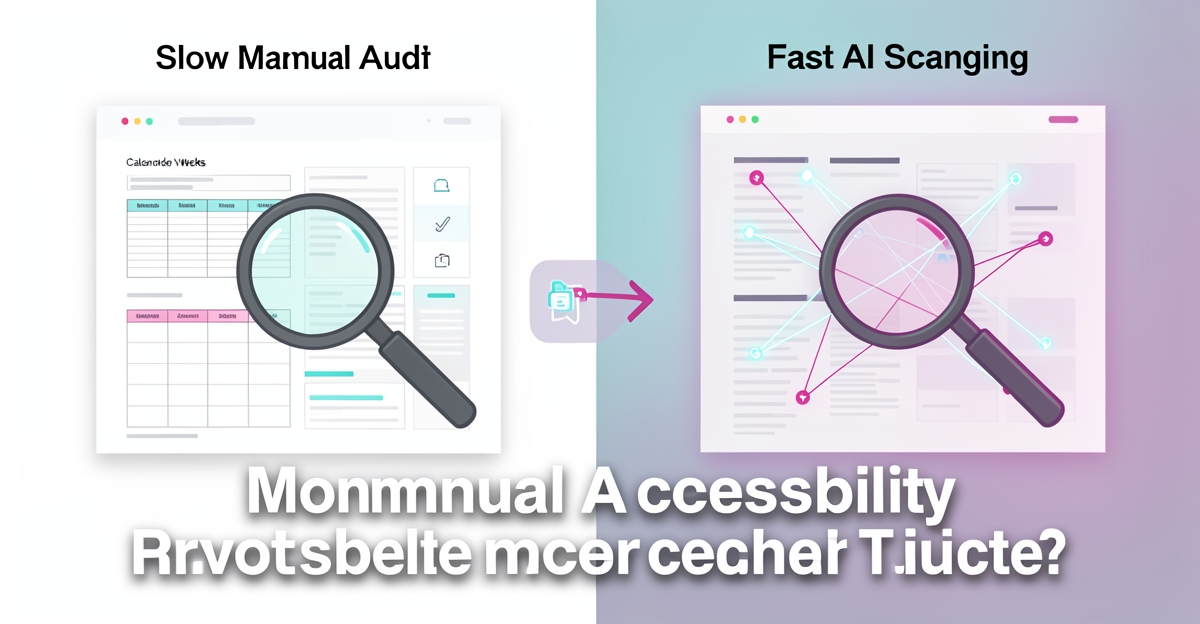
- AI tools scan websites in minutes, versus weeks or months for comprehensive manual audits of complex sites
- Automated tools are highly reliable—often over 95% accurate—for structural issues like missing alt attributes and broken heading structures
- Industry analyses suggest false negative rates of 60-70%, meaning AI misses most actual accessibility violations without human review
- Roughly 40-70% of accessibility issues typically remain undetected by automation and require manual review
- Manual accessibility audits can cost tens of thousands of dollars for large websites, putting full coverage out of reach for many SMBs
Hire a team member that works 24/7 — for less than a part-time wage.
AI receptionists, SDRs, dispatchers and 99+ roles. Trained on your business, fully managed.
Not sure where to start? Ask our AI planner
The Accessibility Testing Gap: Why Manual Audits Alone Are Unsustainable
The pressure to meet WCAG and ADA standards keeps intensifying for businesses of all sizes, driven by rising legal scrutiny and growing user expectations. Yet relying solely on manual accessibility audits creates a real bottleneck—these assessments are slow, expensive, and difficult to scale across large or frequently updated websites. Automated tools can scan a website in minutes, a stark contrast to manual audits that often take weeks or even months for complex sites. That speed gap becomes a critical liability when you need to maintain compliance amid rapid development cycles or face imminent legal deadlines.
Cost is another prohibitive factor. Manual accessibility audits can easily run into tens of thousands of dollars for large websites, putting comprehensive testing out of reach for many organizations—especially SMBs operating on tight budgets. Even when budgets allow, the limited scalability of human-led audits means consultants can only review a fraction of a site's pages in a given timeframe, increasing the risk of missed issues. Industry analyses consistently find that automated tools typically detect only 30-60% of accessibility issues, leaving a substantial portion undetected without human intervention. This coverage gap isn't just a technical shortfall—it directly impacts your ability to defend compliance claims in legal or regulatory contexts.
The limitations of manual testing extend beyond cost and speed. Human auditors, while essential for nuanced evaluation, are prone to fatigue and inconsistency when reviewing large volumes of content, which can introduce variability in findings. Meanwhile, automated tools, though fast, struggle with context-dependent challenges like determining whether alt text is meaningful or assessing keyboard trap scenarios—areas where human judgment remains indispensable. This combination of high cost, slow turnaround, and incomplete coverage creates a clear opening for AI augmentation. By handling repetitive, high-volume scans quickly and consistently, AI frees expert auditors to focus on the complex, high-impact issues that truly define an inclusive user experience. AIQ Labs supports this balanced approach through AI Workflow Builds, which rebuild the specific workflow that costs you the most—like accessibility testing pipelines—so expert time goes where it matters.
Where AI Excels—and Where It Falls Short: The Data on Automated Testing Accuracy
Automated accessibility tools can scan an entire website in minutes, yet they typically catch only 30-60% of accessibility issues, depending on site complexity. This gap between speed and thoroughness defines the central trade-off of AI-driven testing: rapid detection of surface-level defects versus the nuanced judgment required for true inclusivity.
The technology excels at identifying structural, code-based problems. Industry accuracy testing shows automated tools achieve over 95% accuracy when detecting missing alt attributes, empty links, and broken heading structures. These capabilities make AI invaluable for continuous integration pipelines, where immediate feedback prevents regressions from reaching production. For large websites requiring ongoing monitoring, this speed translates to significant efficiency gains.
However, the data reveals critical blind spots. Automated tools generate false positive rates commonly estimated at 10-30%, flagging non-issues that waste developer time, while simultaneously producing false negative rates of 60-70%, meaning they miss the majority of actual violations. Compliance guidance consistently notes that these tools cannot reliably determine whether alt text is meaningful in context or whether keyboard focus order makes logical sense across multi-step flows. They struggle specifically with:
- Evaluating whether alt text conveys meaningful information rather than just existing
- Detecting keyboard traps that prevent users from navigating away from interactive elements
- Assessing the logical flow and behavior of custom widgets and dynamic content
- Understanding context-dependent user experience barriers
These limitations explain why automated tools effectively test only a minority of WCAG success criteria—commonly cited at 30-40%—leaving most compliance requirements unverified. While AI handles the "what" of code structure, it cannot assess the "how" of human interaction, particularly for users relying on screen readers or keyboard navigation.
At AIQ Labs, we help organizations navigate this complexity by designing hybrid testing frameworks that use AI for what it does best—rapid, scalable detection of structural issues—while integrating expert human judgment for contextual evaluation. This balanced approach ensures defensible compliance without sacrificing the efficiency that makes AI-driven testing financially compelling.
The data clearly indicates that AI serves as a powerful first line of defense, not a complete solution. Organizations that understand these accuracy boundaries can build testing strategies that maximize ROI while genuinely serving users with disabilities.
The Hybrid Model: How AI-Augmented Consulting Maximizes ROI and Reduces Risk
AI-driven scanning finds the easy wins fast, but it cannot sign off on compliance alone. That gap is where ROI lives.
Automated tools typically detect 30-60% of accessibility issues depending on site complexity and the tools used. Industry research on AI versus manual testing consistently shows this coverage ceiling, with automated testing able to check only 30-40% of WCAG success criteria effectively. The same analyses note that approximately 40-70% of issues remain undetected by automation and require manual review.
Speed is the clear advantage. AI tools can scan a website in minutes, significantly faster than manual audits, which can take weeks or months. Accuracy testing of AI accessibility tools confirms automated scans are highly accurate for specific issues such as missing alt attributes, empty links, and broken heading structures. For continuous integration and regression monitoring, that speed creates measurable cost avoidance.
Limitations drive risk. Automated tools can carry a false positive rate of 10-30% and a false negative rate of 60-70%. False negatives allow barriers to persist while false positives waste developer time. And automated tools can't reliably answer whether alt text is meaningful in context or whether focus order makes sense across a multi-step flow—judgments that require a human auditor.
A hybrid model captures speed without sacrificing defensibility. AI handles broad, repetitive scanning while expert manual review validates complex interactions, keyboard navigation, and screen reader compatibility. Manual testing can address 100% of WCAG success criteria when performed by skilled auditors—essential for a defensible compliance claim. Manual review is not a ceremonial final step. It's where many serious issues are confirmed.
For SMBs, the hybrid approach reduces audit costs and lawsuit exposure while improving customer satisfaction. Manual accessibility audits can cost tens of thousands of dollars or more for large websites. That cost reality makes a strong case for using AI to narrow scope, then deploying targeted expert review where it counts.
AIQ Labs applies this balanced approach through AI Workflow Builds for a single high-cost workflow, or an AI Operating System when you want accessibility testing wired into one connected layer across your organization—built in phases, owned outright. Either way, you get faster remediation and lower audit costs without weakening your compliance posture. See the payment models—Start Monthly, Build in Milestones, or Own It Outright.
The hybrid workflow typically includes:
- Automated scanning in CI/CD for early defect detection and regression monitoring
- Prioritized manual audits focused on complex widgets, dynamic content, and user journeys
- Documented findings and remediation trails to support WCAG and ADA defensibility
- Continuous monitoring with AI plus periodic expert validation
When release decisions, VPAT sign-off, or lawsuit exposure are on the line, understanding exactly what automated tools catch, what they miss, and where expert manual review becomes indispensable is the foundation of defensible compliance.
Still paying for 10+ subscriptions that don’t talk to each other?
We build custom AI systems you own outright. No vendor lock-in. Full control.
Not sure where to start? Ask our AI planner
Frequently Asked Questions
Can I rely on AI tools alone to make my website fully accessible and compliant?
How much faster is AI scanning compared to a traditional manual audit?
What specific accessibility issues is AI actually good at catching?
What are the biggest blind spots of AI accessibility tools that could leave me legally exposed?
How does a hybrid AI-human approach reduce audit costs for my business?
Do false positives from AI tools waste my developers' time?
The Verdict: AI Is a Powerful Lever, Not a Replacement
The data is clear: AI-driven scanning is a force multiplier for accessibility, catching a meaningful share of issues in minutes and slashing the cost and timeline of broad coverage. But speed without judgment creates risk—false negatives leave barriers in place, and false positives burn developer cycles on ghosts. The ROI lives in the hybrid model: let automation own the repetitive, structural checks across every release, then deploy expert auditors where context decides compliance—keyboard traps, meaningful alt text, dynamic widgets, and the full WCAG spectrum. That combination delivers faster remediation, lower audit spend, and a defensible posture that holds up under legal scrutiny. For SMBs especially, it turns accessibility from a periodic fire drill into a continuous, governable capability. If you're weighing tooling decisions, signing a VPAT, or simply trying to stop surprises before they hit production, the next step is mapping exactly where automation earns its keep and where human review becomes non-negotiable. Start the two-minute Fit Check at aiqlabs.ai/apply, then book a free 30-minute strategy call to identify your highest-ROI automation targets and build a practical roadmap—no pitch, just a working session with an AI engineer.
Make AI your competitive advantage — not just another tool.
Strategy, implementation and ongoing optimization. One partner, end to end.
Not sure where to start? Ask our AI planner