Is AI Worth It for Arborist Services? A ROI Breakdown for Small Businesses
Key Facts
- Industry analyses suggest only a minority of enterprise AI projects meet ROI expectations, highlighting the risk of technology-first approaches
- In-house AI specialists typically command $175K-$350K annually, a major hidden cost of building AI yourself
- A large share of AI project time, often cited at 45-70%, is spent on data cleansing, frequently underestimated by arborist businesses
- Integration with existing systems can add 25-40% to AI project costs when overlooked
- Poor data quality is commonly cited as a driver of roughly 30% of AI project failures, a critical risk for arborist firms with fragmented data
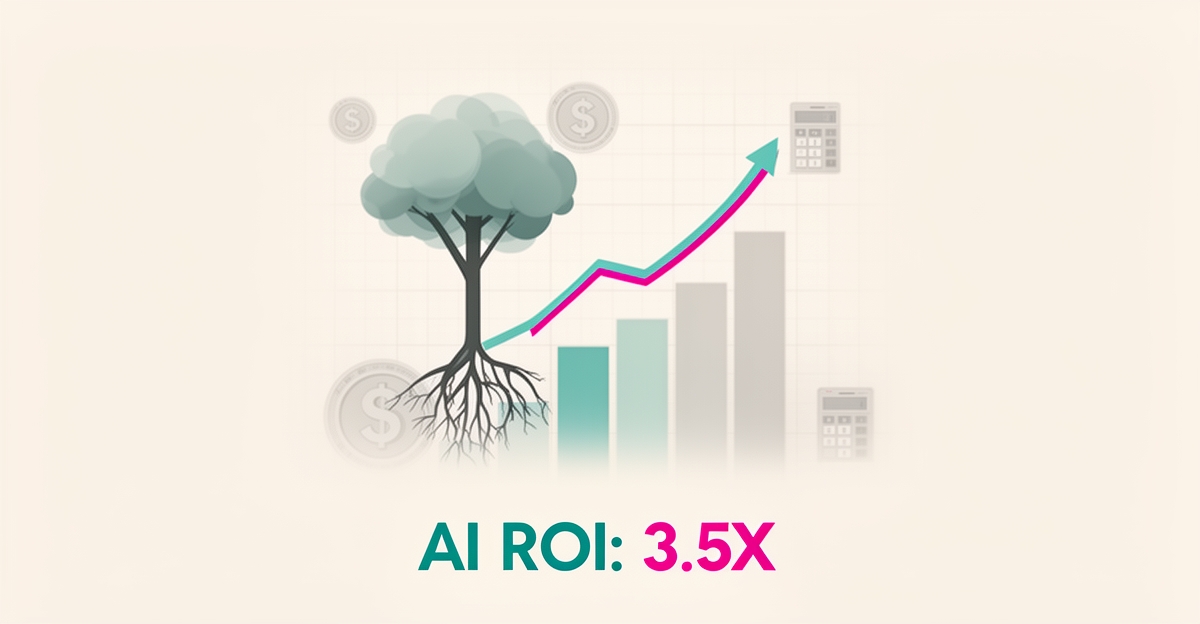
- Industry ROI benchmarks often cite average AI investment returns around 3.5X, with some companies reporting higher when tied to business outcomes
- A widely cited figure holds that most organizations see no tangible ROI from AI adoption due to lack of focus on business impact
Hire a team member that works 24/7 — for less than a part-time wage.
AI receptionists, SDRs, dispatchers and 99+ roles. Trained on your business, fully managed.
Not sure where to start? Ask our AI planner
The AI Reality Check: Why Most Arborist AI Projects Fail to Deliver ROI
The hard truth about AI investment is that most businesses buy the hype before the business case. For arborist firms chasing reduced labor costs, faster response times, and increased job visibility, that gap between promise and performance is costly.
Industry analyses as of late 2026 suggest only a minority of enterprise AI projects meet ROI expectations, and a widely cited figure holds that most organizations see no tangible ROI from AI adoption. The pattern is consistent across industries and it repeats in tree care when technology is chosen first and outcomes second.
Arborist businesses often fall into the technology-first trap. Tools are purchased to "use AI" rather than to solve a defined operational bottleneck like quoting accuracy, scheduling, or dispatch visibility. Without a clear business outcome, metrics default to model accuracy or number of tools deployed instead of revenue growth, cost savings, and efficiency gains.
Hidden costs erode returns before they materialize. A large share of AI project time, often cited at 45-70%, goes to data cleansing, and poor data quality is commonly blamed for roughly 30% of AI project failures. Integration with existing estimating, CRM, and dispatch systems can add 25-40% to project cost, while in-house AI talent typically runs $175K-$350K annually.
These realities push many pilots to stall at the experimentation stage. A strategic approach requires business-driven, integrated implementation with proactive risk management rather than technology-driven silos.
Common ROI killers for arborist AI projects include:
- Buying tools without defining business outcomes like reduced labor hours or faster quote-to-job time
- Underestimating data preparation, which can consume 45-70% of project time
- Ignoring integration complexity that adds 25-40% cost to connect AI with legacy systems
- Skipping ROI metrics upfront, making it impossible to measure uplift in employee capabilities or customer experience
The shift is from measuring technological adoption to measuring tangible business outcomes. That means tracking time saved per job, increase in customer satisfaction scores, and reduction in operational costs from day one.
AIQ Labs approaches this reality head-on: before anything gets built, the focus is on identifying the single workflow that costs your tree care operation the most and modeling whether automating it pays. A readiness assessment helps firms pick high-value automation targets instead of chasing tools.
If you can't measure ROI, you can't scale AI. Period. Starting with clear objectives, relevant metrics, and honest accounting for hidden costs is what separates pilot experiments from sustainable competitive advantage.
AI isn't a science experiment. It's a business engine, and it only delivers when the engine is built around the business, not the other way around.
What Real ROI Looks Like: The 3.5X Return When AI Targets Arborist Pain Points
Failed AI pilots are common in tree care, but the return changes when AI is aimed at real operational pain. Arborist firms that target specific workflows instead of chasing model accuracy consistently see stronger financial results.
Industry ROI benchmarks often cite average AI investment returns around 3.5X, with some companies reporting higher when initiatives are tied to business outcomes. That benchmark is not achieved by deploying AI broadly; it is earned by solving problems that directly affect revenue, cost, and efficiency.
The gap is stark. Only a minority of enterprise AI projects meet ROI expectations, largely because teams focus on technological adoption rather than business outcomes. Recent analyses suggest most organizations see no tangible ROI from AI adoption, often due to a lack of focus on business impact beyond technological metrics.
For arborist services, the 3.5X-type return shows up when AI is mapped to daily workflows that create waste and delay. Revenue growth, cost savings, and efficiency gains become measurable when the right use case is chosen first.
High-impact applications for tree care teams include:
- AI dispatchers cutting scheduling chaos by routing crews in real time and reducing drive time between jobs
- Voice agents capturing after-hours emergency calls and booking inspections without staff overtime
- Automated quoting reducing site-visit waste by pre-qualifying leads and generating estimates from photos and history
- Invoice automation accelerating cash flow through intelligent capture, approval routing, and payment scheduling
These are not science experiments. They are business engines that replace repetitive manual work with consistent 24/7 execution. AIQ Labs models ROI for arborist firms by assessing readiness and projecting returns against these specific operational levers before anything is built.
The difference between a failed pilot and a 3.5X return is measurement discipline. Firms that define clear business objectives before deployment, track time saved per job, cost per appointment, and cash conversion, and then iterate on a single workflow tend to scale successfully.
The Hidden Cost Equation: What Arborist Owners Overlook Before Investing
Most arborist owners calculate AI costs by looking at software subscriptions and maybe a consultant's fee. The real bill arrives months later in forms no line item anticipated. Research consistently shows that organizations overlook costs related to talent, infrastructure, data preparation, integration, and governance, categories that can multiply the projected investment.
Talent sits at the top of the hidden ledger. In-house AI specialists typically command $175K-$350K annually, and that's before you factor in the compute infrastructure multiplier. Integration alone can add 25-40% to project costs when connecting AI to existing field service platforms, CRM systems, and accounting software. Governance frameworks, risk management, compliance, audit trails, add another layer of cost most small businesses never budget for.
- Talent acquisition: $175K-$350K per specialist annually
- Compute infrastructure: a significant multiple of baseline requirements
- Data preparation: routinely underestimated by 30-40%
- System integration: 25-40% added project cost
- Governance frameworks: often a five-figure line item before compliance is even considered
The data readiness cliff hits arborist businesses harder than most. Crews operate on paper job sheets, scattered phone photos, and undocumented tribal knowledge about tree species, site hazards, and client preferences. Poor data quality is commonly cited as a driver of roughly 30% of AI project failures, and teams can spend 45-70% of project time just cleansing data. When your "dataset" lives in a foreman's notebook and a dispatcher's memory, that preparation phase becomes a full-scale digitization project.
This is why the build-it-yourself path rarely makes sense for a tree care company. AIQ Labs helps arborist firms map the true cost structure before a single dollar gets committed, turning surprise expenses into planned investments. See how the pricing models work at aiqlabs.ai/pricing.
From Pilot to Profit: A 7-Step Arborist AI Implementation Roadmap
Arborist firms don't need more AI pilots, they need pilots that turn into payroll savings and more jobs per truck. A disciplined roadmap moves from hypothesis to weekly KPI gains without the hidden costs that derail most projects.
Start by naming the business problem in arborist terms, not tech terms. Define objectives like emergency response time, quote accuracy, and crew utilization that map directly to revenue. Pick ROI metrics you will track weekly: jobs per week, revenue per truck, and customer acquisition cost. Industry research consistently shows most AI projects miss ROI expectations largely because metrics are defined after deployment.
Audit data readiness before tool selection. Job photos, species databases, equipment logs, and historical quotes are the fuel for arborist AI. A large share of AI project time, often cited at 45-70%, goes to data cleansing, and poor data quality is a leading failure driver. Clean, accessible field data reduces that drag and protects ROI.
Select tools that integrate with field service software rather than adding another silo. Integration is a hidden cost driver, adding 25-40% to project cost when overlooked. AIQ Labs approaches this as ROI modeling work, assessing readiness and projecting returns before build.
Pilot one high-impact, low-risk workflow. After-hours intake is a classic arborist starting point: an AI Employee answers calls, qualifies emergencies, books site visits, and logs notes into the CRM. The pilot runs 4-6 weeks with a clear baseline and a stop criteria.
Integrate into daily crew rhythms so adoption sticks. Push AI-generated quotes and job briefs into the tools crews already use each morning. Track leading indicators weekly and review with the team.
Keep the loop tight with weekly tracking against baseline KPIs:
- Jobs per week and revenue per truck versus pre-pilot baseline
- Quote-to-book time and quote accuracy rate
- After-hours call capture rate and missed-call reduction
- Crew utilization hours and overtime trend
This sequence mirrors a strategic approach focused on business value over technology. If you can't measure ROI, you can't scale AI, and arborist leaders who actively measure see a stronger link to employee satisfaction and performance. Industry benchmarks often cite average AI investment returns around 3.5X when initiatives are tied to tangible outcomes like cycle time and revenue growth.
Build vs. Buy vs. Partner: Choosing the Right AI Investment Model for Your Crew Size
Choosing the wrong AI engagement model is a leading reason AI projects miss ROI expectations. For arborist firms, the right model matches crew size, seasonality, and the operational pain you want solved first.
Solo and 2-5 person crews need coverage without headcount. An AI Employee on a Start Monthly plan, managed AI staff costing roughly 80% less than a human hire, delivers 24/7 phone coverage, lead qualification, and dispatch. Receptionists, SDRs, dispatchers, and 99+ other roles are covered, with the ability to pause or adjust anytime for seasonal demand.
Firms with 5-15 people typically hit a bottleneck in quoting-to-invoicing. An AI Workflow Build targets the one workflow that costs the most, at a fixed price and split into phases you approve and pay for as they ship. You can stop anytime and keep everything built so far, which controls risk while automating estimates, scheduling, and billing.
Companies with 15+ crews ready to scale across estimating, scheduling, safety compliance, and fleet management benefit from an AI Operating System: one connected operating layer built in phases and owned outright. It replaces subscription chaos with a unified asset that grows with the business.
Seasonality changes the math. Arborist work peaks in spring and summer and contracts in winter. Pause or adjust anytime flexibility protects cash flow when call volume drops, a core reason AI initiatives succeed in field services.
A strategic approach focuses on business outcomes, not tools. AIQ Labs maps engagement models to crew size through ROI modeling and readiness assessments tailored to tree care operations.
Common pitfalls to avoid when selecting a model:
- Skipping data readiness, since 45-70% of AI project time is often spent on data cleansing
- Underestimating hidden costs like integration and governance that erode ROI
- Choosing technology-first pilots instead of business-driven workflows
Industry benchmarks often cite average AI investment returns around 3.5X, with some companies reporting higher. That upside requires defining ROI metrics before implementation, such as time saved per job, faster response times, and reduced operational costs.
Poor data quality is commonly cited as a driver of roughly 30% of AI project failures. Starting with a focused pilot, measuring tangible outcomes, and integrating AI into existing workflows increases the odds of scaling successfully.
If you want clarity on which model fits your crew, start the 2-minute Fit Check at aiqlabs.ai/apply, then book a free 30-minute strategy call at aiqlabs.ai/book to map your biggest bottleneck and identify high-ROI automation opportunities.
Still paying for 10+ subscriptions that don’t talk to each other?
We build custom AI systems you own outright. No vendor lock-in. Full control.
Not sure where to start? Ask our AI planner
Frequently Asked Questions
Is AI actually worth it for a small arborist business, or is it just hype?
Why do so many arborist AI projects fail to make money?
What hidden costs should I budget for before investing in AI?
How much time does data preparation really take for tree care companies?
What's a low-risk way to start AI without committing to a huge build?
Which AI investment model fits a small crew vs a larger firm?
The Bottom Line: Turning AI from Expense into Asset
For arborist firms, the question isn't whether AI can deliver value, it's whether you'll build the operational discipline to capture it. The gap between the projects that succeed and those that stall lies in measuring what matters: revenue per truck, quote-to-book time, and after-hours capture rates rather than model accuracy. When you account for the full cost equation, including data preparation, integration, and governance, the path to that 3.5X-type return becomes clear. Start by auditing your data readiness and selecting one high-impact workflow to pilot, whether that's an AI dispatcher handling emergency calls or automated quoting that cuts site-visit waste. Scale only when the metrics prove the model. If you're ready to identify which bottleneck offers the fastest payback for your crew size, start the 2-minute Fit Check at aiqlabs.ai/apply and book a free 30-minute strategy call to map your highest-ROI opportunity.
Make AI your competitive advantage — not just another tool.
Strategy, implementation and ongoing optimization. One partner, end to end.
Not sure where to start? Ask our AI planner