Is AI Worth It for Auto Hauling Companies? A Cost-Benefit Breakdown
Key Facts
- Industry analyses of AI fleet management report strong Year 1 returns, with break-even often reached within the first few months according to industry analysis
- One AI-assisted dispatcher can typically manage 35-50 vehicles versus 10-12 manually, roughly tripling operational capacity industry data suggests
- Predictive maintenance is widely reported to cut fleet downtime by up to 50% and maintenance costs by around 40% per fleet management research
- Manual dispatch typically carries meaningfully higher operating expenses than AI-assisted dispatch, with losses compounding as fleets grow analysis indicates
- Human dispatchers often secure 8-15% higher line-haul rates than algorithmic platforms a 2026 comparison suggests
- AI route optimization is commonly credited with reducing fuel consumption by 10-15% through intelligent stop sequencing per industry data
- Purely algorithmic dispatch has been associated with 23% more unexpected detention hours than human dispatchers research shows
Hire a team member that works 24/7 — for less than a part-time wage.
AI receptionists, SDRs, dispatchers and 99+ roles. Trained on your business, fully managed.
Not sure where to start? Ask our AI planner
The Cost of Running Auto Hauling Without AI
Running an auto hauling operation without AI means absorbing hidden costs that erode profitability month after month. Manual dispatch systems typically limit one dispatcher to 10-12 vehicles, creating a labor-intensive bottleneck that scales poorly as fleets grow, while AI enables a single dispatcher to oversee 35-50 vehicles through automation and intelligent routing. This disparity directly inflates payroll expenses and limits operational agility, especially during peak demand periods when human dispatchers become overwhelmed.
Beyond labor inefficiencies, traditional operations leak money through avoidable fuel waste and extended downtime. AI-optimized routes eliminate unnecessary mileage and poor stop sequencing, with industry data commonly citing 10-15% fuel savings by dynamically adjusting for traffic, weather, and delivery windows—savings that compound across hundreds of weekly miles. Simultaneously, the absence of predictive maintenance means issues are often caught only after they cause breakdowns, leading to unplanned downtime that AI-driven systems can reduce by up to 50% through early fault detection and scheduled interventions. Taken together, these inefficiencies represent tens of thousands of dollars in annual losses for a mid-sized fleet relying on manual processes, according to industry benchmarks.
Administrative overhead further drains resources in non-AI environments. Manual dispatch commonly consumes 60-120 minutes daily for route planning alone—a task AI completes in minutes—while separate compliance systems for ELD tracking add avoidable monthly software costs. For haulers hesitant about upfront investment, AIQ Labs helps quantify these specific pain points with ROI modeling grounded in your actual fleet numbers, transforming abstract concerns into clear financial projections. By exposing where every dollar is lost in manual operations, the path to AI-driven efficiency becomes not just visible, but hard to ignore.
Where AI Delivers Measurable ROI in Auto Hauling
AI is proving its worth in auto hauling through three high-impact use cases that deliver clear, measurable returns. Route optimization alone is credited with fuel savings of 10-15% by eliminating unnecessary mileage and improving stop sequencing, directly cutting one of the industry's largest variable costs according to industry analysis. For a 25-vehicle fleet, this translates to thousands in annual savings while reducing planning time from 60-120 minutes daily to minutes.
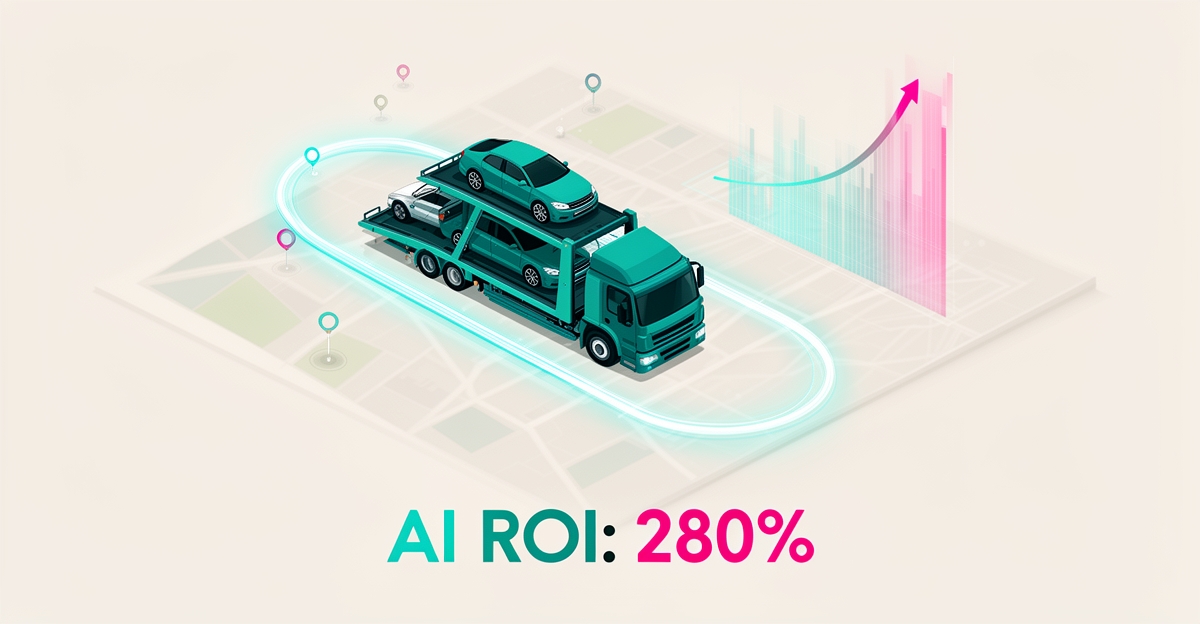
Predictive maintenance further amplifies ROI by reducing fleet downtime by up to 50% and maintenance costs by around 40% through early fault detection and risk-based repair scheduling research shows. This shifts maintenance from reactive to proactive, preventing costly breakdowns and extending vehicle life. Larger fleets often recover their annual AI software cost within the first few months, with industry analyses reporting strong Year 1 returns when combining fuel, labor, and downtime reductions data confirms.
Dispatch automation completes the trifecta by enabling one dispatcher to manage 35-50 vehicles versus the traditional 10-12, slashing labor overhead while improving load matching efficiency studies indicate. AI-powered load search reduces deadhead miles by recommending reload opportunities and cuts load search time significantly analysis reveals. Together, these use cases create a compounding effect where even modest AI investments yield operational cost reductions of roughly 15-25%, turning technology from a cost center into a profit driver. For auto haulers ready to validate these gains, AIQ Labs offers a free strategy call to model ROI based on your fleet size and routes—no obligation, just clarity on where AI delivers the fastest payback. Start the 2-minute Fit Check, then book your free 30-minute strategy call.
Human vs Algorithm: The Hybrid Model That Works Best
For auto hauling companies weighing pure algorithmic dispatch against traditional human-led operations, the data reveals a clear middle path. While AI excels at rapid route calculations and load matching, human dispatchers consistently outperform algorithms in nuanced scenarios like rate negotiation and crisis management. Carriers using purely algorithmic dispatch experienced 23% more unexpected detention hours than those using human dispatchers, and a large share of specialized freight moves still require human coordination due to complex routing and broker relationships.
The hybrid model leverages AI for administrative efficiency while reserving human judgment for high-stakes decisions. AI enables one dispatcher to manage 35-50 vehicles versus the traditional 1:10-12 ratio, freeing human operators to focus on tasks where they add unique value. This includes securing 8-15% higher line-haul rates through skilled negotiation and reducing deadhead miles through strategic multi-leg planning that algorithms struggle to replicate.
For businesses considering this approach, AIQ Labs' AI Workflow Builds help design systems where technology handles repetitive dispatch tasks while humans oversee exceptions, negotiate contracts, and manage disruptions. The result captures AI's scalability without sacrificing the relational expertise that drives profitability in specialized freight and volatile market conditions. This balanced integration addresses the core tension between automation efficiency and human adaptability that pure algorithmic or manual models fail to resolve.
How to Build a Cost-Benefit Case and Pilot AI Safely
For auto haulers, building a credible cost-benefit case starts with a clear assessment of current operational pain points—fuel waste, dispatch bottlenecks, and maintenance downtime. AIQ Labs helps translate these into quantified savings using ROI modeling grounded in your real numbers and industry benchmarks. This data-driven foundation turns hesitation into actionable insight, showing how even modest investments can cut operational costs by roughly 15–25% through optimized routing, predictive maintenance, and automated dispatch.
The next step is selecting tools that align with specific fleet needs without overcomplicating the rollout. Rather than adopting a full suite immediately, haulers can pilot AI in one high-impact area—like route optimization, which alone can save 10–15% on fuel by eliminating inefficient stop sequencing and idle time. AIQ Labs supports this phased approach through AI Employees (such as an AI Dispatcher for load matching and scheduling) and AI Workflow Builds, letting haulers test, validate, and scale AI capabilities with minimal disruption. For example, deploying an AI Dispatcher to manage load matching and scheduling allows one human dispatcher to oversee 35–50 vehicles instead of the traditional 10–12, directly addressing labor inefficiencies highlighted in industry analyses.
Finally, successful piloting requires clear metrics, team training, and a feedback loop to refine performance. AIQ Labs' implementation process is built in milestones—discovery, development, deployment, and ongoing optimization—so the AI system learns from real-world data and adapts to changing conditions like weather or traffic. By combining AI's speed in processing route options and fault codes with human oversight for negotiation and crisis management, haulers achieve a balanced model where technology handles repetitive tasks while humans focus on strategic decisions. This hybrid approach maximizes ROI while preserving the relational expertise that remains critical in specialized freight moves. To begin, auto haulers can start with the 2-minute Fit Check and then book a free 30-minute strategy call to map their biggest bottlenecks and identify high-ROI automation opportunities tailored to their fleet size and operational patterns.
Still paying for 10+ subscriptions that don’t talk to each other?
We build custom AI systems you own outright. No vendor lock-in. Full control.
Not sure where to start? Ask our AI planner
Frequently Asked Questions
How much can AI actually save a 25-vehicle auto hauling fleet annually?
How quickly can an auto hauling company expect to break even on an AI investment?
Will AI replace human dispatchers in auto hauling operations?
What specific fuel savings can AI route optimization deliver for auto haulers?
How does predictive maintenance with AI reduce downtime and costs?
Is AI worth it for small auto hauling fleets with fewer than 10 vehicles?
Your Path to Smarter Auto Hauling Starts Here
The evidence is clear: continuing with manual dispatch is costing auto haulers thousands in avoidable losses each year—from wasted fuel and extended downtime to bloated payroll and administrative drag. AI doesn't replace your team; it amplifies their impact, turning dispatchers into strategic operators who can manage 35-50 vehicles while saving 10-15% on fuel and cutting downtime by up to half. For larger fleets, the math is often compelling, with many recovering their AI investment within the first few months. The real opportunity lies not in choosing between humans or algorithms, but in blending both: letting AI handle the repetitive grind while your experts focus on negotiation, crisis management, and relationship-building where they drive real profit. If you're ready to see exactly where AI can unlock savings in your operation, the next step is simple. Start the 2-minute Fit Check, then book your free 30-minute strategy call to get a clear, no-obligation view of your highest-ROI automation opportunities.
Make AI your competitive advantage — not just another tool.
Strategy, implementation and ongoing optimization. One partner, end to end.
Not sure where to start? Ask our AI planner