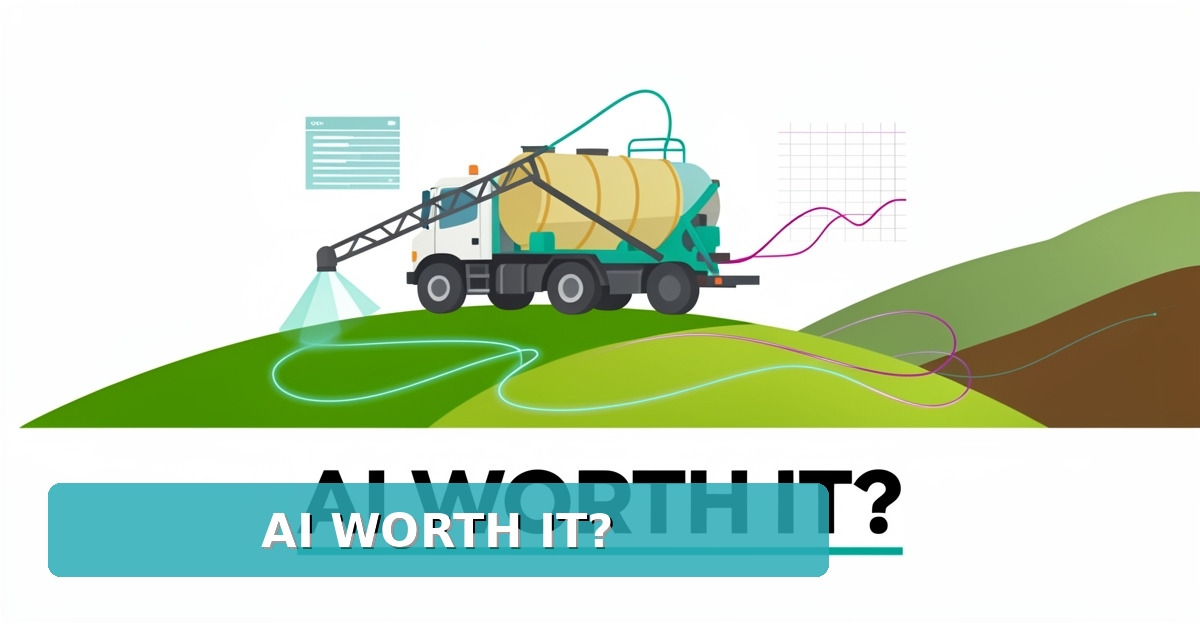
Is AI Worth It for Hydroseeding Operations? A Cost-Benefit Breakdown of Automation
Key Facts
- A large share of hydroseeding office work, dispatching, scheduling, routing, and follow-up, is repetitive and rules-based, which is exactly the kind of work AI handles well according to IBM's overview of AI capabilities.AI Employees typically cost around 80% less than an equivalent human hire in field service roles like dispatching and coordination.
- A human administrative hire typically costs $35,000–$55,000+ annually before benefits, taxes, and training; an AI Employee runs on a flat monthly plan.
- Automated intake, scheduling, and documentation reduce the manual errors that drive callbacks and disputed invoices in hydroseeding work.
- AIQ Labs has deployed 200+ multi-agent systems and runs four live SaaS products daily, the same infrastructure approach it applies to field service operations.
- AI enables computers to learn, reason, and perform tasks that used to require human judgment per IBM's definition of AI, including scheduling and routing decisions made under time pressure.
Hire a team member that works 24/7 — for less than a part-time wage.
AI receptionists, SDRs, dispatchers and 99+ roles. Trained on your business, fully managed.
Not sure where to start? Ask our AI planner
The Hidden Costs of Manual Hydroseeding: Labor, Rework, and Delayed Projects
Manual hydroseeding still runs on crews, trucks, and tight weather windows, and those dependencies quietly erode margin on every job. Labor is the single largest variable cost, and it scales linearly with project size. Inconsistent application across slopes and hard-to-reach areas creates patchy germination, which forces costly rework and callbacks. Weather-related delays then compress schedules, push crews into overtime, and idle equipment.
Operational variability is compounded by scheduling inefficiencies. Crews are dispatched based on experience and availability rather than real-time site conditions, leading to missed windows and duplicated mobilizations. As IBM notes, AI is technology that enables machines to simulate human learning, decision-making, and problem-solving, which is directly relevant to field operations where decisions get made under time pressure.
The hidden cost stack shows up in three places:
- Labor dependency and overtime from reactive dispatch and manual mixing ratios
- Rework from uneven seed, mulch, and fertilizer distribution that requires second passes
- Delayed projects from weather holds and poor sequencing that extends equipment rental
A meaningful share of this coordination work, dispatching, scheduling, routing, quoting, follow-up, is repetitive and rules-based. That is precisely the category of work where AI performs reliably today, without replacing the skilled operators who actually spray the ground.
Manual hydroseeding also suffers from data fragmentation. Application logs, weather data, and site photos live in different places, making it hard to learn from past jobs. Consolidating that information into one system creates a single source of truth for execution and outcomes, so each job makes the next one better.
For hydroseeding companies evaluating ROI, the pain points map cleanly to measurable levers: labor hours per acre, first-pass success rate, and days from bid to completion. AIQ Labs works with SMBs to quantify those levers against real workflows before implementation, so teams can see where automation reduces rework and accelerates turnaround without overcommitting capital. If you want to see how that maps to your operation, the AI Workflow Builds page breaks down the approach.
The cost of staying manual is not just payroll. It is lost capacity during peak season, reputation risk from uneven stands, and the inability to scale crews fast enough to meet demand. Automation of decision support and scheduling addresses the root causes rather than adding more people to the problem.
How AI Transforms Hydroseeding: From Guesswork to Precision Execution
Hydroseeding has long relied on crews, calendars, and gut feel. AI replaces that guesswork with data-driven execution that moves faster and wastes less.
AI-powered dispatching and predictive job routing cut the hours spent planning routes and rebalancing crews. The repetitive, rules-based portion of delivery work, routing, scheduling, status updates, customer follow-up, is exactly what AI handles well, freeing your team to focus on execution instead of coordination. Real-time weather adaptation prevents costly callbacks by adjusting spray windows and material mixes before conditions change.
Automated work order management creates a single source of truth across sales, dispatch, and field teams. Work orders generate automatically from contracts, sync with crew mobile apps, and update job status without manual entry. This reduces labor hours, minimizes material waste, and increases on-time project completion.
For hydroseeding, that translates into practical controls:
- Predictive routing that clusters jobs by geography, soil type, and crew skill
- Weather-triggered rescheduling that protects seed germination rates
- Dynamic material calculators that adjust slurry volumes to slope, coverage, and forecast
- Automated compliance logs and photo verification for client sign-off
These capabilities reduce rework and accelerate turnaround. Precision execution means less idle time, fewer do-overs, and tighter margins on every acre. Teams spend less time chasing updates and more time seeding.
AIQ Labs approaches this through ROI modeling tailored to field operations, helping companies evaluate labor savings, reduced rework, and faster project turnaround before committing capital. The focus is on measurable workflow improvement, not technology for its own sake.
When dispatch, routing, weather, and work orders operate as one intelligent system, hydroseeding moves from reactive to proactive. That is where cost control and reliability improve together.
ROI in Action: Quantifying Savings from AI Adoption in Hydroseeding
Numbers tell the real story. When hydroseeding operators look past the hype and model what AI actually saves, labor, rework, and turnaround time, the financial case becomes hard to ignore.
Start with labor. A human administrative hire typically costs $35,000–$55,000+ annually before benefits and taxes add another 25–35%, plus recruiting and training. An AI Employee in an equivalent role, dispatching crews, qualifying leads, scheduling jobs, runs on a flat monthly plan that typically costs around 80% less than a human hire, while working 24/7 instead of 40 hours a week. You can see the current roles and payment options on the AI Employees page.
The labor math compounds across roles. Quote intake, scheduling, customer follow-up, and invoicing are all repetitive, rules-based tasks, the category where AI performs reliably. Automating them removes the manual coordination that consumes staff hours every day and keeps your best people on revenue-producing work.
Reduced rework is the second lever. Precision in application records, job documentation, and customer communication prevents the costly do-overs that erode margins in vegetation and erosion control work. Automated intake and documentation means fewer misapplied jobs, fewer disputed invoices, and fewer callbacks, the errors that quietly drain profit on erosion control contracts.
Faster project turnover is the third. When an AI dispatcher books jobs, answers calls at midnight, and routes crews without waiting for office hours, projects move sooner. The gap between inquiry and completed work compresses, which matters most during peak season when every scheduling slot counts.
For a hydroseeding operation, the ROI stack looks like this:
- Labor: roughly 80% savings in administrative and dispatch roles versus human hires
- Rework: fewer operational errors through automated, accurate job documentation
- Turnover: faster quote-to-job cycles with 24/7 intake and automated scheduling
- Capacity: handle more jobs per season without adding headcount
The pattern holds across AIQ Labs' client work, 200+ multi-agent systems deployed to date: take a manual workflow, intake, scheduling, dispatch, collections, and rebuild it as an automated system the business owns outright, whether the company has five employees or five hundred. For operators weighing the investment, tailored ROI modeling turns these levers into a business-specific projection, so the decision rests on real numbers rather than vendor promises. That's the difference between hoping AI pays off and knowing it will.
Your Path to AI-Powered Hydroseeding: Low-Risk Entry Points and Next Steps
Starting your AI journey doesn't need a full-scale overhaul. A focused pilot, like an AI Dispatcher or Service Coordinator, lets you test automation in a high-impact area with minimal disruption. AIQ Labs' Start Monthly model delivers this for a flat monthly cost well below a part-time hire, including build, training, tool integrations, and ongoing optimization, with the flexibility to pause or adjust anytime.
This approach works because so much of field service coordination work is repetitive and rules-based, making hydroseeding ideal for early wins. By automating dispatch logic, scheduling, and crew routing, you reduce manual coordination errors and free up supervisors for higher-value tasks. Early pilots also generate performance data that informs ROI modeling before scaling to broader workflows.
From there, progress through milestone-based automation, such as integrating AI with your CRM for lead follow-up or connecting to accounting for invoice tracking. Each phase builds on proven results, letting you approve and pay per step while retaining everything built so far. AIQ Labs supports this Build in Milestones model to ensure transparency and control, especially for SMBs managing tight budgets. Over time, those phases can grow into a full AI Operating System, one connected layer running your whole operation, owned outright.
Before any investment, leverage AIQ Labs' free strategy call to map your biggest bottlenecks and model potential returns. This session uses your actual systems and workflows to identify high-ROI opportunities, whether it's reducing rework through better scheduling or cutting response times to client inquiries. If there isn't a clear win, we'll say so.
Start with the two-minute Fit Check at https://aiqlabs.ai/apply, then schedule your free 30-minute strategy call at https://aiqlabs.ai/book to begin your path to AI-powered hydroseeding.
Still paying for 10+ subscriptions that don’t talk to each other?
We build custom AI systems you own outright. No vendor lock-in. Full control.
Not sure where to start? Ask our AI planner
Frequently Asked Questions
How much can AI actually save on labor costs for hydroseeding operations compared to hiring a human employee?
What percentage of delivery work in hydroseeding can realistically be automated with AI without replacing skilled operators?
Can AI really reduce rework in hydroseeding by improving application accuracy and documentation?
Is there proof that AI-driven systems actually increase job flow and reduce turnaround time in field services like hydroseeding?
What's a low-risk way to start using AI in my hydroseeding business without a big upfront investment?
Will using AI in hydroseeding mean I lose control over my business systems or get locked into a vendor platform?
From Guesswork to Growth: Your Next Step in Hydroseeding Intelligence
This article has shown how manual hydroseeding erodes margins through labor dependency, rework from uneven application, and weather-related delays, costs that compound season after season. AI transforms these pain points into measurable advantages: predictive routing, real-time weather adaptation, and automated work orders cut coordination time, reduce manual errors, and accelerate project turnover without adding headcount. For hydroseeding operators, the path forward isn't about overhauling everything at once, it's about starting with a focused pilot, like an AI Dispatcher, to test impact in a high-leverage area with minimal risk. AIQ Labs helps SMBs model ROI upfront using real workflows, so investments target proven levers like labor savings and faster turnaround. To see where AI could unlock capacity and consistency in your operation, start with the two-minute Fit Check at https://aiqlabs.ai/apply, then schedule your free 30-minute strategy call to map your biggest bottlenecks and model potential returns, no obligation, just clarity.
Make AI your competitive advantage — not just another tool.
Strategy, implementation and ongoing optimization. One partner, end to end.
Not sure where to start? Ask our AI planner