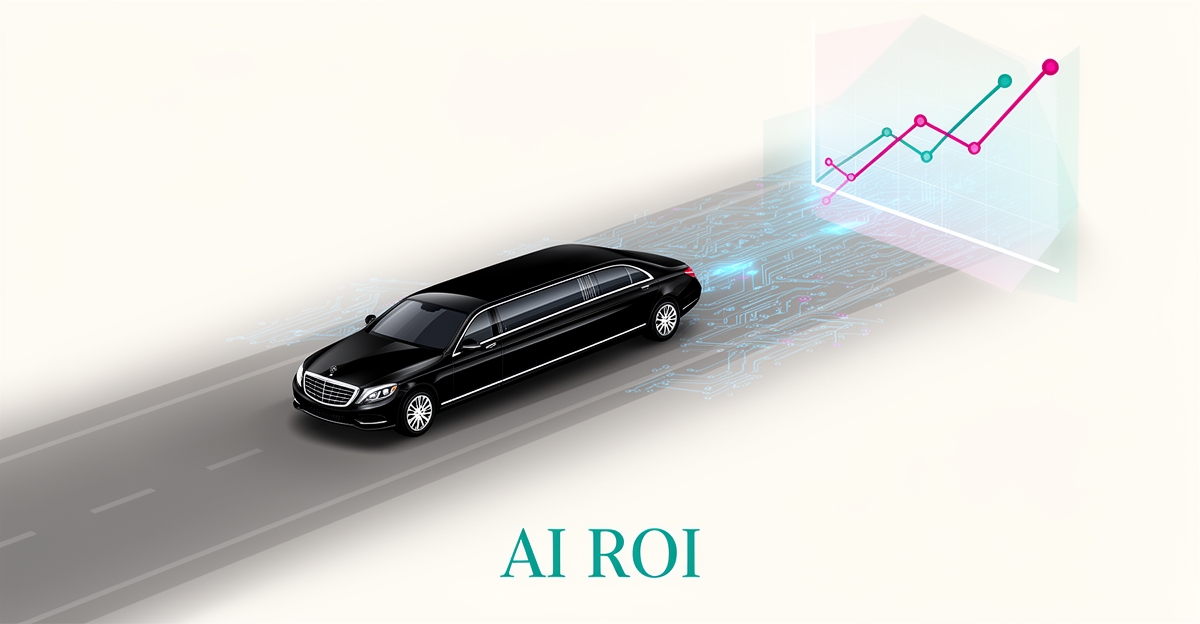
Is AI Worth It for Limousine Services? A Cost-Effectiveness Breakdown
Key Facts
- Market valued at approximately USD 98.5 billion in 2024 according to market research
- Projected to reach USD 178.2 billion by 2032 with a 7.7% CAGR from 2026 to 2032
- Ride-Hailing Services segment projected for fastest growth within service type in the market
- AI-powered dynamic pricing optimizes fares based on real-time demand per industry analysis
- ROI should be calculated using a comprehensive Total Cost of Ownership analysis, with a contingency buffer for deployment overruns
- Break-even analysis should typically account for 15-20% cost overruns common in automotive tech deployments
Hire a team member that works 24/7 — for less than a part-time wage.
AI receptionists, SDRs, dispatchers and 99+ roles. Trained on your business, fully managed.
Not sure where to start? Ask our AI planner
The Cost Pressure Facing Modern Limousine Operators
The limousine industry is growing — and getting more expensive to compete in. Operators who don't rethink their cost structure now risk being priced out of a market that's expanding without them.
The numbers tell a compelling story. According to market research on taxi and limousine services, the global market was valued at approximately USD 98.5 billion in 2024 and is projected to reach USD 178.2 billion by 2032, growing at a 7.7% CAGR. That growth signals opportunity, but it also means more competitors, tighter margins, and rising customer expectations.
Growth alone doesn't guarantee profitability. Limousine operators face a convergence of cost pressures that traditional management approaches struggle to absorb. Understanding where those pressures originate is the first step toward building a realistic case for AI investment.
The Staffing Squeeze
Labor remains the single largest operating expense for most limousine businesses. Dispatchers, reservation agents, customer service staff, and scheduling coordinators all represent fixed costs that scale linearly with volume — until they don't. When call volume spikes or a dispatcher calls in sick, service quality drops immediately.
The challenge compounds when you factor in the cost of errors. A missed booking, a miscommunicated pickup time, or a delayed response to a corporate client can cost far more than the hourly wage of the person who made the mistake.
The Ride-Hailing Disruption
Perhaps the most significant competitive threat comes from ride-hailing platforms. According to the same industry analysis, the ride-hailing segment is projected to experience the fastest growth within the service type category, driven by its convenience, technological integration, and widespread urban adoption. These platforms have reset customer expectations around instant booking, real-time tracking, and transparent pricing.
Limousine operators can't out-spend Uber on technology. But they also can't afford to ignore the operational gap. Customers who experience frictionless booking from a ride-hailing app increasingly expect the same responsiveness from premium transportation providers.
Manual Operations Erode Margins Quietly
The most insidious cost pressure isn't a line item — it's the accumulated inefficiency of manual processes. For limousine businesses still relying on manual dispatch and routing, these hidden costs show up in several ways:
- Dispatchers spending hours on route assignments that algorithms could optimize in seconds
- Vehicles running empty or taking suboptimal routes, burning fuel and driver hours
- Reservation staff handling repetitive booking inquiries instead of high-value client relationships
- No real-time visibility into fleet status, leading to reactive rather than proactive decisions
- Inconsistent pricing that leaves revenue on the table during peak demand
These inefficiencies don't appear dramatic on any single day. Over a quarter or a year, however, they compound into a significant drag on profitability — especially in a market growing at 7.7% annually, where competitors who operate more efficiently capture disproportionate share.
The question isn't whether the market will grow. It's whether your cost structure lets you grow with it.
This is precisely the kind of operational analysis worth doing before any technology investment — identifying where manual workflows create the greatest financial drag first. AIQ Labs approaches this through its AI Workflow Builds, which start by rebuilding the single workflow that costs you the most, at a fixed price and in phases. For limousine operators evaluating AI, understanding these baseline costs isn't optional. It's the foundation every ROI calculation depends on.
Where AI Delivers Measurable Savings in Limousine Services
AI-powered dynamic pricing models optimize fares based on real-time demand, directly boosting revenue while minimizing idle fleet time. A recent market analysis indicates that such systems improve pricing accuracy and responsiveness, allowing limousine services to capture higher margins during peak periods without overpricing during lulls. This adaptive approach reduces revenue leakage and increases asset utilization, turning fluctuating demand into a more predictable income stream.
IoT sensor integration transforms vehicle maintenance from reactive to predictive, cutting unexpected breakdowns and extending asset lifespans. By continuously monitoring engine health, tire pressure, and brake wear, AI systems flag issues before they cause failures, reducing emergency repairs and downtime. According to industry research, this proactive maintenance lowers operational costs by minimizing service interruptions and avoiding costly roadside assistance, while also enhancing passenger safety — a critical differentiator in high-end transportation.
Automated dispatch and optimized routing with real-time tracking eliminate inefficient manual coordination and reduce fuel consumption through smarter route planning. AI-driven dispatch platforms match the nearest available vehicle to each request, factoring in traffic, weather, and customer preferences, which decreases deadhead miles and improves on-time performance. These efficiencies translate directly into lower operational expenses, with optimized routing typically reducing fuel costs and vehicle wear over time.
Finally, AI automation of routine tasks such as booking confirmations, invoicing, and customer follow-ups reduces the need for administrative staff without sacrificing service quality. By handling high-volume, repetitive workflows, AI Employees — managed AI staff covering roles like receptionists, SDRs, and dispatchers — free up human teams to focus on high-touch client interactions, typically at around 80% less cost than an equivalent human hire. This shift not only cuts staffing overhead but also improves scalability, allowing businesses to handle more bookings without proportional increases in headcount.
True Cost of AI: Implementation, Ongoing Expenses and Break-Even
Many limousine operators hesitate at the upfront investment required for AI implementation, fearing hidden costs and uncertain returns. A detailed cost-effectiveness analysis reveals the true financial picture, balancing initial outlay against sustained operational savings.
Implementation costs for AI in limousine services typically include software licensing, hardware, integration, and data preparation. These capital expenditures can vary significantly based on system scope and existing infrastructure readiness. Ongoing expenses include recurring subscriptions, API usage fees, cloud storage for telematics and vehicle imagery, cybersecurity measures, and continuous model refinement to maintain accuracy in dynamic service environments.
To determine true value, operators should conduct a risk-adjusted ROI analysis that factors in 15-20% potential cost overruns common in automotive technology deployments. This approach calculates the break-even point where efficiency gains from optimized dispatch, reduced staffing needs, and improved customer acquisition offset both initial and recurring investments. Such modeling provides a realistic timeline for when AI begins generating net positive returns — essential for informed strategic planning in a market projected to reach USD 178.2 billion by 2032, a growth trajectory market research confirms and which underscores the long-term relevance of AI investments.
How you pay for AI matters as much as what you pay. AIQ Labs offers three straightforward models: Start Monthly for AI Employees, Build in Milestones for fixed-price workflow rebuilds, and Own It Outright for a full AI Operating System you own outright — no lock-in, no inflated case-study numbers. To explore your specific opportunity, start with the free 2-minute Fit Check followed by a free 30-minute strategy call to identify high-ROI automation pathways.
A Practical ROI Roadmap for Limousine AI Adoption
Implementing AI in limousine services requires a structured approach to evaluate true cost-effectiveness beyond initial price tags. Operators should begin by conducting a comprehensive Total Cost of Ownership (TCO) analysis that captures both visible and hidden expenses across the technology lifecycle. This foundational step ensures decisions are grounded in realistic financial projections rather than optimistic assumptions, particularly important given the market's projected growth to USD 178.2 billion by 2032 at a 7.7% CAGR from 2026 to 2032.
The TCO framework must dissect capital expenditure (CAPEX), operating expenditure (OPEX), human capital implications, and automotive-specific variables unique to limousine operations. CAPEX includes software licensing, hardware for telematics and IoT sensors, and integration with existing dispatch and CRM systems. OPEX encompasses recurring subscription fees, cloud storage for vehicle data and telematics, cybersecurity measures, and continuous model tuning for automotive terminology and customer interaction patterns. Human capital analysis should quantify savings from reduced administrative overhead in booking, dispatch, and customer service, balanced against any new roles needed for AI oversight and exception handling.
Implementation costs extend beyond software to include historical data cleansing for ride patterns, customer preferences, and pricing elasticity — critical for accurate dynamic pricing and demand forecasting. Third-party integration fees with payment processors, scheduling tools, and fleet management platforms often represent a meaningful share of initial setup expenses. Ongoing expenses require careful modeling of API call volumes for real-time routing, storage needs for high-resolution vehicle imagery used in predictive maintenance, and compliance overhead for data privacy regulations affecting customer information.
To determine viability, perform a break-even analysis comparing cumulative efficiency gains against total investment. Key efficiency drivers include reduced idle time through optimized routing (typically saving 10-15% on fuel costs), decreased no-show rates via intelligent appointment reminders, and lower customer acquisition costs from AI-powered lead nurturing. Industry benchmarks suggest AI-driven dispatch improvements can boost vehicle utilization meaningfully — often in the 20-25% range — directly impacting revenue per available mile. Adjust projections for 15-20% cost overruns common in automotive technology deployments to create risk-adjusted timelines.
AIQ Labs supports this process with a phased approach that translates these analyses into actionable roadmaps — starting with a single high-cost workflow, then scaling toward a connected operating layer — while accounting for the high-touch service nuances that define premium transportation. The goal is not just cost reduction, but strategic reinvestment of savings into fleet electrification, driver training, or premium customer experiences that strengthen competitive positioning in an evolving market.
Still paying for 10+ subscriptions that don’t talk to each other?
We build custom AI systems you own outright. No vendor lock-in. Full control.
Not sure where to start? Ask our AI planner
Frequently Asked Questions
How much is the limousine market expected to grow by 2032, and what does that mean for operators?
What are the biggest hidden costs of manual operations in limousine services?
Can AI really reduce staffing costs without hurting the premium customer experience?
What specific savings can AI bring to fuel and vehicle maintenance in limousine fleets?
How do I know if AI will actually pay off for my limousine business?
What's included in the ongoing expenses of running AI in a limousine service?
The Road to Profitability Is Paved with Smart Decisions
Deciding whether AI is worth the investment for your limousine service isn't about chasing trends — it's about building a sustainable, efficient operation that can thrive in a market projected to reach USD 178.2 billion by 2032. The evidence is clear: when implemented strategically, AI delivers measurable returns through dynamic pricing that captures peak demand, predictive maintenance that reduces costly breakdowns, and optimized routing that can cut fuel costs by 10-15%. But the true value extends beyond immediate savings. AI frees your team from repetitive administrative tasks, allowing them to focus on the high-touch, personalized service that defines premium transportation. The key is approaching adoption with eyes wide open — conducting thorough TCO analysis, modeling realistic break-even timelines, and accounting for potential cost overruns. AIQ Labs helps limousine operators navigate exactly this journey, from a single fixed-price workflow rebuild to a full AI operating system you own outright — with 200+ multi-agent systems deployed behind that work. If you're ready to explore what AI could mean for your operation, start with our free 2-minute Fit Check, followed by a 30-minute strategy call. No pressure, no obligation — just clarity on whether AI makes financial sense for your business.
Make AI your competitive advantage — not just another tool.
Strategy, implementation and ongoing optimization. One partner, end to end.
Not sure where to start? Ask our AI planner