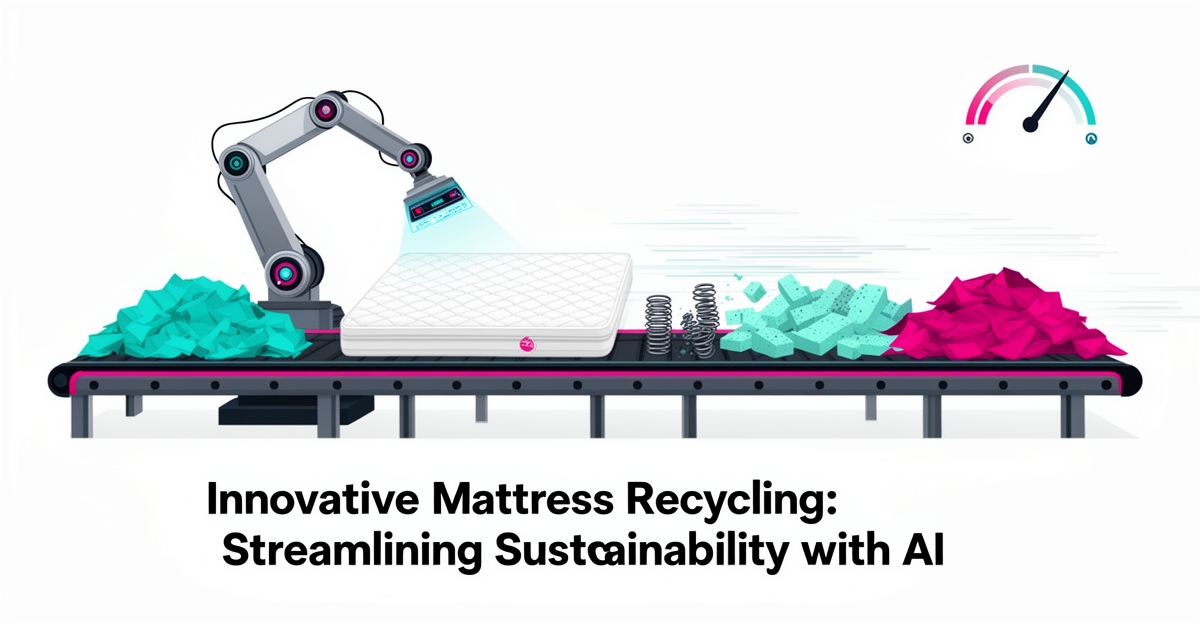
Is AI Worth It for Mattress Disposal Services? A Cost-Benefit Breakdown
Key Facts
- AI-powered robotic systems have been reported to sort materials up to 20 times faster than human workers in mattress recycling
- Manual mattress deconstruction typically takes 1.5 to 2 hours per unit, while automation can reduce it to 20-30 minutes
- AI sorting robots have been credited with reducing contamination by nearly 40% compared to human sorting in recycling facilities
- Jurisdictions covering well over 100 million consumers now have mattress-specific Extended Producer Responsibility laws
- LoadUp has publicly credited its AI photo recognition quoting system with roughly 270% revenue growth over three years
- Industry analyses have cited average ROI on AI investments in logistics at around 190%
- Surveys report that a majority (around 68%) of warehouse operators see workforce digital literacy as the primary barrier to AI deployment
Hire a team member that works 24/7 — for less than a part-time wage.
AI receptionists, SDRs, dispatchers and 99+ roles. Trained on your business, fully managed.
Not sure where to start? Ask our AI planner
The Scaling Bottleneck in Mattress Disposal
Scaling a mattress disposal business today means fighting bottlenecks that eat margin on every pickup and every ton processed. Labor is tight, deconstruction is slow, and compliance is getting stricter all at once.
Manual mattress deconstruction still typically takes 1.5 to 2 hours per unit, with workers exposed to dust and chemical inhalants from flame retardants. Automation can cut that to 20-30 minutes per mattress, but most operators remain stuck with crews and clipper tables.
The waste volume makes the problem unavoidable. The mattress industry generates over 9 million tons of waste annually in North America, with tens of millions of mattresses discarded each year in the United States. Only about 19% of global waste is recycled; less than a quarter is recycled in the U.S., leaving a large recovery gap and disposal cost exposure.
Regulatory pressure is tightening that gap. Jurisdictions covering over 120 million consumers now have mattress-specific Extended Producer Responsibility laws in states like California, Massachusetts, Connecticut and New York. EPR mandates collection and recycling targets that turn compliance into a throughput problem.
Rising labor costs compound the issue. Deconstruction and sorting are labor-intensive, and inflation plus shortages make headcount a volatile cost center. Efficiency and compliance are now survival issues, not optional upgrades.
The core operational pain points show up daily:
- Slow manual deconstruction at 1.5-2 hours per unit limiting daily throughput
- Low recycling rates and contamination that erode material recovery value
- Regulatory pressure from EPR laws covering 100M+ consumers with mandated targets
- Rising labor costs and safety exposure during manual dismantling
These constraints create a scaling ceiling. More trucks and crews raise costs faster than revenue, while missed EPR targets risk fines and lost producer contracts. Businesses that rely on manual quoting and dispatch also lose speed to competitors using instant pricing and route optimization.
This is where a structured look at your operation matters. A targeted workflow build can map which workflows, intake, quoting, routing, deconstruction sorting, offer the fastest ROI for a given size and geography. AIQ Labs works with SMBs to identify high-value automation targets without forcing a one-size-fits-all platform.
Without changes to throughput and compliance, growth stalls. With targeted workflow automation, disposal operators can lift units per crew, improve material recovery, and meet EPR obligations as a competitive advantage rather than a cost.
Where AI Delivers Measurable ROI
AI is no longer a futuristic concept for mattress disposal services, it’s delivering measurable returns today. Businesses that implement AI solutions are seeing tangible improvements in speed, accuracy, and cost efficiency across customer-facing and backend operations. These gains translate directly into labor savings, higher throughput, and stronger compliance with evolving regulations.
LoadUp’s use of AI-powered photo recognition for instant quoting exemplifies how technology can transform customer experience and drive growth; the company has publicly credited it with roughly 270% revenue growth over three years. This approach eliminates scheduling delays and provides transparent pricing, a key differentiator in a competitive market. On the recycling side, AI-driven robotic systems have been reported to sort materials up to 20 times faster than human workers while reducing contamination by nearly 40%, significantly boosting material recovery rates. These systems also enable 24/7 operations, increasing effective work hours without adding shifts or overtime costs.
Further efficiency gains come from automating the deconstruction process itself. What once took 1.5 to 2 hours per mattress manually can reportedly be completed in just 20 to 30 minutes with robotic dismantling, a 60% to 75% reduction in processing time. This acceleration allows facilities to handle higher volumes with the same or fewer staff, directly addressing labor shortages and rising wage pressures. AI-based predictive analytics also help optimize workflows by forecasting material quality and equipment maintenance needs, reducing downtime and improving overall facility efficiency.
For mattress disposal businesses navigating complex Extended Producer Responsibility (EPR) laws across multiple jurisdictions, AI systems provide audit-ready data tracking and reporting capabilities. This ensures compliance while uncovering opportunities to recover value from recycled steel, foam, and textiles. AIQ Labs supports this transition by identifying which AI applications, from instant quoting tools to robotic sorting systems, align with a business’s scale, goals, and regulatory environment. The result is not just automation, but a smarter, more resilient operation built for long-term scalability.
Costs, Risks and Readiness Gaps to Plan For
Adopting AI in mattress disposal looks compelling on paper, but the path from pilot to production is shaped by cost and readiness constraints that can erode ROI if they are not planned for early.
High upfront capital remains the first filter. Robotic dismantling and sorting systems require substantial initial investment in hardware, AI software and facility retrofits, a barrier that is especially acute for smaller operators. Robot-as-a-Service models are emerging to lower capital barriers, but the core spend is still significant before any efficiency gains materialize.
Integration with existing operations is where budgets and timelines often stretch. Legacy Transport Management Systems and Warehouse Management Systems are not built for AI-native workflows, and industry analysis of AI in logistics suggests TMS/WMS integration can consume 30-40% of total AI project cost and 40-60% of project timelines. That cost concentration means a readiness review of current tech stacks is not optional; it is a financial control point.
People and data readiness form the second layer of risk. Logistics workforce surveys find around 68% of warehouse operators identify workforce digital literacy as the primary barrier to AI deployment, with different roles requiring different interfaces for office planners, warehouse staff and drivers. Without targeted training and change management, adoption stalls even when the technology works.
Data quality is the quiet dependency that determines performance. AI sorting and photo-recognition quoting systems must be trained on large, consistent datasets of waste items and mattress types. Research on AI in recycling notes that poor data leads to poor performance, and systems need accurate, consistent inputs to learn to sort properly and reduce contamination.
These barriers are assessment points, not deal-breakers, when they are mapped before investment.
- Capital planning: model robotics, software and integration spend against throughput gains such as reducing manual deconstruction from 1.5-2 hours to 20-30 minutes per unit.
- Integration scope: audit TMS/WMS and dispatch tools to quantify the 30-40% cost share and timeline risk identified in logistics AI projects.
- Workforce readiness: assess digital literacy gaps cited by most operators and design role-specific training and interfaces.
- Data foundation: validate the quality, volume and labeling of waste composition and operational data needed to train vision and predictive models.
Framing these constraints as readiness criteria helps mattress disposal businesses size the right pilot, sequence investments, and avoid the pilot trap that stalls many logistics AI initiatives. A structured workflow build can translate these gaps into a prioritized roadmap that matches tools like workflow automation or managed AI employees to business size and goals without overcommitting capital.
A Right-Sized AI Path for Your Business Size
For mattress disposal businesses, the path to AI adoption isn't one-size-fits-all, it must align with operational scale, budget, and specific pain points. AIQ Labs' three entry points translate these variables into actionable steps: starting with managed AI employees, advancing to a fixed-price workflow build, and culminating in a full AI operating system you own outright. This structured progression ensures investments deliver measurable returns without overextending resources.
The most accessible entry point is AI Employees, managed AI staff handling roles like receptionists, SDRs, and dispatchers at roughly 80% less cost than a human hire. For instance, AI-powered photo recognition, similar to LoadUp's system that the company credits with major revenue growth, can provide instant, accurate quotes from customer-uploaded images, eliminating scheduling delays and improving conversion rates LoadUp's AI-driven junk removal model demonstrates this impact. Automating dispatch through AI reduces manual coordination time, optimizes routing, and ensures 24/7 responsiveness, directly tackling labor bottlenecks in field services. These fixes often yield quick wins by reducing administrative overhead and improving customer experience without requiring systemic overhaul.
For businesses ready to scale impact, a Workflow Build targets the one workflow that costs the most, typically recycling operations, at a fixed price and in phases. Manual mattress deconstruction takes 1.5 to 2 hours per unit, but AI-enabled robotic systems can reduce this to 20-30 minutes Robotic mattress recycling market data supports this time reduction. AI sorting robots further amplify gains, reportedly processing up to 1,000 items per hour with near-40% lower contamination rates compared to human sorting of 50-80 items hourly Recycling industry AI applications show these efficiency and accuracy improvements. Automating these high-labor, high-error departments not only cuts processing costs but also enhances material recovery value, critical as landfill expenses rise and EPR laws cover over 120 million consumers Extended Producer Responsibility laws now apply to over 120 million consumers.
At the pinnacle of integration, an AI Operating System connects intake, quoting, dispatch, and reporting into one operating layer, built in phases and owned outright, no recurring platform dependency. AI receptionists and dispatchers handle inquiries, book pickups, and manage follow-ups without fatigue, sick days, or missed calls, directly addressing the workforce readiness concerns most logistics firms cite Logistics sector AI adoption challenges highlight workforce readiness concerns. Payment models scale with commitment: Start Monthly for AI Employees, Build in Milestones for workflow builds, or Own It Outright for a full operating system. By aligning implementation tiers with business size, mattress disposal services can right-size their AI journey, ensuring each phase builds on proven ROI before advancing to the next. This milestone-driven approach turns AI from a costly experiment into a scalable, self-funding operational advantage.
Still paying for 10+ subscriptions that don’t talk to each other?
We build custom AI systems you own outright. No vendor lock-in. Full control.
Not sure where to start? Ask our AI planner
Frequently Asked Questions
How much can AI actually reduce mattress processing time compared to manual deconstruction?
What are the upfront costs and ROI timeline for implementing AI in mattress disposal?
Can AI help my mattress disposal business comply with EPR laws and regulations?
Will AI replace my workers or create workforce disruptions?
How difficult is it to integrate AI with our existing dispatch and management systems?
Is AI worth it for small mattress disposal businesses or only large operations?
Turn Throughput Pressure Into Competitive Advantage
AI is no longer a future bet for mattress disposal, it’s a practical lever for solving the bottlenecks that cap growth today. From instant photo-based quoting that lifts conversion, to robotic deconstruction that can cut manual time from 1.5 to 2 hours down to 20-30 minutes per unit, and sorting systems that run 24/7 with substantially less contamination, the gains show up as higher units per crew, stronger material recovery, and audit-ready compliance under EPR laws covering 100M+ consumers. The payoff is real, but so are the readiness gaps: capital planning, TMS/WMS integration that can consume a large share of project cost, workforce digital literacy, and data quality. That’s why a right-sized path matters more than a big platform. Start with managed AI employees or a focused workflow build, validate ROI, then scale toward a full AI operating system you own outright as your operation matures. AIQ Labs can map that path for your size and geography. Take the 2-minute Fit Check at https://aiqlabs.ai/apply, then book a free 30-minute strategy call to identify your highest-ROI automation opportunity, and if there isn’t a clear win, we’ll tell you that too.
Make AI your competitive advantage — not just another tool.
Strategy, implementation and ongoing optimization. One partner, end to end.
Not sure where to start? Ask our AI planner