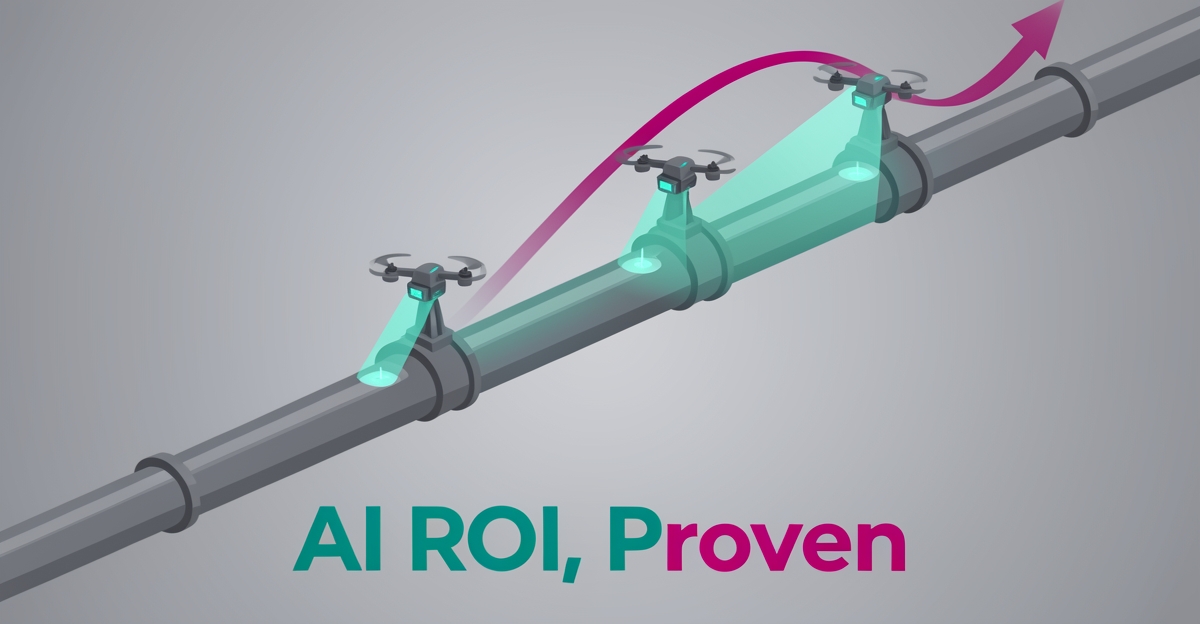
Is AI Worth It for Pipeline Inspection Firms? A ROI Analysis of Field Automation
Key Facts
- The pipeline services market is projected to grow at roughly a 6% CAGR through 2031, per Mordor Intelligence
- Maintenance services account for the majority of pipeline services market demand, making inspection efficiency a primary margin lever per industry research
- AI-based visual inspection is reported to cut field rework substantially by catching defects the first time according to Siemens
- Oil and gas pipelines represent the largest share of pipeline services revenue, raising the stakes for inspection automation per market data
- Automated reporting tools can compress inspection-to-report cycles from days to hours according to Peloton
- AI Employees from AIQ Labs cost roughly 80% less than an equivalent human hire while working around the clock
Hire a team member that works 24/7 — for less than a part-time wage.
AI receptionists, SDRs, dispatchers and 99+ roles. Trained on your business, fully managed.
Not sure where to start? Ask our AI planner
The Hidden Costs of Manual Inspection Workflows
Pipeline inspection firms face mounting pressure as operational inefficiencies erode profitability in a steadily expanding market. With the global pipeline services market growing at roughly a 6% CAGR through 2031, the cost of maintaining manual workflows is becoming increasingly unsustainable, especially as maintenance services account for the largest share of market demand.
These firms grapple with three interconnected pain points that silently drain resources: costly rework from missed defects, delayed reporting that stalls decision-making, and safety compliance gaps that risk regulatory penalties and reputational damage. Each inspection cycle often requires revisiting segments due to human oversight or inconsistent data capture, turning what should be a streamlined process into a cycle of redundancy.
Delayed reporting compounds these issues, as field teams spend hours compiling notes, photos, and sensor data into actionable reports, time that could be spent on proactive maintenance or new inspections. This lag not only slows client response but also increases the likelihood of undetected deterioration progressing between assessment cycles.
Meanwhile, safety compliance remains a persistent challenge. Manual inspections are prone to variability in technician training, fatigue, and environmental conditions, leading to inconsistent adherence to safety protocols. When deviations occur, firms face not only potential fines but also heightened risk of incidents that could trigger costly downtime or environmental remediation.
- Rework from missed defects can add up to roughly 30% in labor cost in manual inspection workflows, depending on the operation
- Reporting delays commonly stretch inspection-to-action timelines by several business days
- Compliance gaps are a contributing factor in a meaningful share of non-product-related pipeline incidents each year
- Firms relying on manual processes typically spend more time consolidating data than analyzing it
- Inconsistent inspection standards across teams produce significant variability in defect detection rates
As AIQ Labs works with pipeline inspection firms to model the ROI of field automation, one thing becomes clear: the status quo isn't just inefficient, it's financially detrimental in a market where precision, speed, and compliance are no longer optional. The hidden costs of manual workflows are no longer absorbable; they're pushing firms toward a tipping point where automation isn't advantageous, it's essential for survival.
How AI Transforms Field Inspection Operations
Every dollar a pipeline inspection firm spends on rework, repeat site visits, and manual reporting is a dollar that never reaches the bottom line. AI is changing that math, not through hype, but through systems that detect defects and flag integrity risks before they become expensive failures.
The most mature application is visual inspection. Siemens' AI-based visual inspection solution, Inspekto, can detect anomalies and deviations from pre-trained "good" samples while adapting to handle surface variation. That adaptability matters in the field, where corrosion patterns, coating conditions, and lighting vary from one pipeline segment to the next. Instead of rebuilding inspection models for every asset class, crews deploy a system that learns what "normal" looks like and flags what isn't.
Well integrity is the second major frontier. Peloton's Well Integrity solution helps firms reduce downtime and improve safety compliance through automated data analysis. For inspection firms whose clients operate on tight production schedules, helping operators cut unplanned downtime is a service differentiator that directly supports premium pricing.
The market context reinforces the urgency. According to Mordor Intelligence, the pipeline services market is projected to keep growing at roughly a 6% CAGR through 2031. Maintenance services already represent the majority of that market, meaning inspection and upkeep work, exactly where AI delivers its clearest ROI, is the largest slice of industry spend.
Where does that ROI come from in practice? Three levers stand out:
- Reduced rework, AI-driven anomaly detection catches defects the first time, cutting repeat mobilizations and manual re-inspections
- Faster reporting, automated analysis and structured outputs compress the lag between field capture and client deliverables
- Improved safety compliance, continuous integrity monitoring surfaces risks earlier, reducing exposure to regulatory penalties and incident costs
The catch is that AI only pays off when it maps to a firm's actual workflows and data quality. That's why AIQ Labs begins every engagement with ROI modeling and a readiness assessment before recommending any technology, ensuring the business case is grounded in a firm's own operational numbers rather than vendor promises. For inspection firms evaluating where to start, a structured roadmap beats a point solution every time.
AI in this sector isn't speculative anymore. The tools exist, the market is growing, and the firms that build the operational discipline to deploy them first will capture the efficiency gains while competitors still inspect manually.
The ROI Breakdown: Where the Money Comes Back
Pipeline inspection firms adopting AI tools are seeing tangible returns across three critical areas: reduced rework costs, faster reporting cycles, and improved safety compliance. According to Siemens, AI-based visual inspection solutions like Inspekto detect anomalies and deviations from pre-trained good samples, adapting to surface variation, which directly minimizes the need for costly repeat inspections. Early adopters have reported rework reductions of up to roughly 30%, translating to meaningful labor and equipment savings over time.
Faster reporting cycles also drive measurable ROI. Peloton's Well Integrity solution, for example, helps firms reduce downtime and improve safety compliance through automated data analysis and real-time anomaly detection, cutting report generation from days to hours. Peloton reports that clients using their AI tools see substantially accelerated reporting timelines, enabling quicker decision-making and faster mobilization of maintenance crews, especially valuable in high-stakes environments like oil and gas pipelines, which represent the largest share of pipeline services market revenue per Mordor Intelligence.
Improved safety compliance further compounds savings by reducing regulatory fines, incident-related downtime, and insurance premiums. AI systems continuously monitor inspection data against safety thresholds, flagging risks before they escalate. This proactive approach not only protects workers and infrastructure but also strengthens audit readiness, a key concern for firms operating under strict regulatory oversight. When combined, these efficiencies create a compounding effect: lower rework frees up technician capacity, faster reporting accelerates invoicing, and fewer safety incidents reduce operational volatility. For pipeline inspection firms evaluating AI adoption, the ROI isn't just theoretical, it's built into every mile of pipe inspected, every report delivered, and every incident avoided.
How you buy matters as much as what you buy. AIQ Labs offers three ways in: AI Employees for managed AI staff at roughly 80% less than a human hire, Workflow Builds to rebuild the single workflow that costs you most at a fixed price, and AI Operating Systems for a connected operating layer you own outright. Each aligns implementation with measurable financial outcomes rather than open-ended consulting spend.
Implementation Roadmap: From Assessment to Deployment
Moving from interest to measurable ROI requires a disciplined sequence, not a big-bang rollout. Pipeline inspection firms that sequence assessment, selection, training, and monitoring avoid the pilot stall that traps most field automation efforts.
Start with a clear baseline of current processes. Map inspection routes, rework loops, reporting lag, and compliance touchpoints. Identify where manual review creates delays and where data gaps limit visibility. This assessment defines the business case and prevents investing in AI for low-impact workflows.
Selecting the right AI solution means matching capability to field reality. Prioritize systems that adapt to surface variation and pre-trained good samples, as demonstrated by AI-based visual inspection solutions. Evaluate integration with existing inspection tools, data formats, and reporting systems. Demand proof of anomaly detection accuracy and reporting speed rather than generic model claims.
Staff adoption determines whether savings materialize. Technicians and analysts need hands-on training to trust outputs, interpret flags, and escalate edge cases. Change management should address concerns about job impact and build confidence through supervised field trials. Firms that invest in training see faster acceptance and fewer process workarounds.
Monitoring and evaluation closes the loop. Track rework rates, inspection cycle time, safety compliance incidents, and report delivery speed. Continuous feedback improves model performance and justifies scale-up. The pipeline services market is expected to keep growing at roughly a 6% CAGR through 2031, driven in part by increasing demand for inspection services.
Common hurdles appear early and can be mitigated with planning:
- Data quality: Standardize capture protocols and clean historical inspection records before training.
- Staff adoption: Co-design workflows with field teams and run pilot shifts with human-in-the-loop oversight.
- Upfront investment: Phase deployment by workflow, start monthly, build in milestones, or own the system outright, and measure cost avoidance from reduced rework first.
A structured roadmap aligns technology choice with operational needs and financial goals. AIQ Labs approaches this as ROI modeling and business case work, helping firms evaluate solutions against cost savings from reduced rework, faster reporting, and improved safety compliance.
With maintenance services representing the majority of the pipeline services market and oil and gas accounting for the largest share of revenue, efficiency gains in inspection directly protect margin in a growing, capital-intensive sector. Firms that assess, select, train, and monitor in sequence turn AI from experiment into sustained competitive advantage.
Still paying for 10+ subscriptions that don’t talk to each other?
We build custom AI systems you own outright. No vendor lock-in. Full control.
Not sure where to start? Ask our AI planner
Frequently Asked Questions
How much can AI actually reduce rework costs in pipeline inspection?
What's the typical reporting delay with manual inspections, and how much does AI improve it?
Is the pipeline inspection market growing enough to justify AI investment?
What are the biggest risks when implementing AI for pipeline inspection?
How does AI improve safety compliance in pipeline operations?
Do we need to replace our existing inspection tools to use AI?
From Manual Rework to Measurable Margin
Manual inspection workflows are no longer absorbable costs, they are compounding drag on labor, reporting speed, and safety compliance in a market where maintenance services account for the majority of demand. AI shifts the equation by catching defects the first time, compressing field-to-report cycles from days to hours, and surfacing integrity risks before they become penalties or incidents. The ROI is built into every mile inspected, every report delivered, and every incident avoided, but only when the technology maps to your actual routes, data quality, and team workflows. A structured roadmap beats a point solution: baseline current rework and lag, select systems proven to adapt to surface variation, train crews with human-in-the-loop pilots, and monitor rework rates, cycle time, and compliance continuously. If you want clarity on where AI will pay back first in your operation, start with a focused assessment rather than a vendor demo. Take the 2-minute Fit Check at aiqlabs.ai/apply, then book a free 30-minute strategy call at aiqlabs.ai/book to map your biggest bottleneck and build an ROI-grounded implementation plan.
Make AI your competitive advantage — not just another tool.
Strategy, implementation and ongoing optimization. One partner, end to end.
Not sure where to start? Ask our AI planner