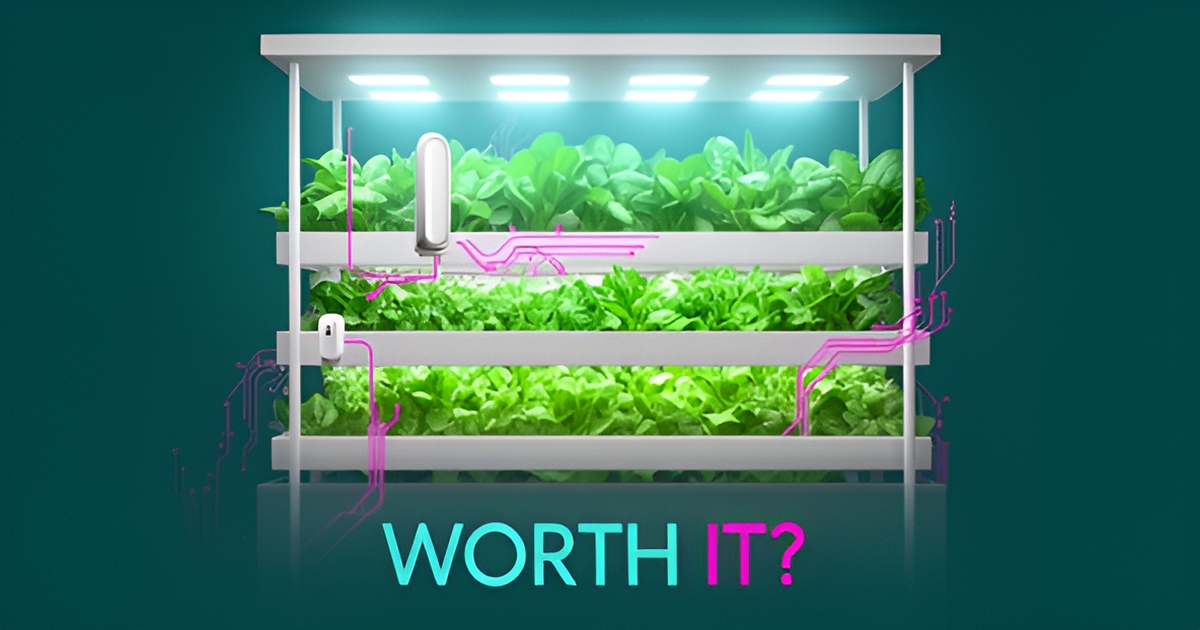
Is AI Worth It for Small Vertical Farms with Limited Staff?
Key Facts
- The vertical farm automation market has been growing at a double-digit compound annual rate as precision tools become accessible to smaller operations according to industry research
- Manual monitoring typically consumes 15–20 hours weekly per staff member in small vertical farm operations
- Missed nutrient adjustments can meaningfully reduce leafy green yields in small farms
- Environmental fluctuations during unstaffed monitoring gaps tend to increase waste in vertical farms
- Automated systems can precisely monitor and adjust nutrients, humidity, temperature, and light intensity for higher productivity per market analysis
- Asia Pacific has led vertical farm automation growth due to dense urban populations and supportive government policies according to research
- AIQ Labs offers three payment models: Start Monthly, Build in Milestones, and Own It Outright
Hire a team member that works 24/7 — for less than a part-time wage.
AI receptionists, SDRs, dispatchers and 99+ roles. Trained on your business, fully managed.
Not sure where to start? Ask our AI planner
The Staffing Bottleneck in Small-Scale Vertical Farming
Small vertical farms face a hard ceiling on growth not from space or technology, but from staffing limits. With small teams, farmers must manually monitor climate, nutrients, and crop health across multiple daily checks—a time-intensive process that leaves little room for strategic tasks. When staff are stretched thin, critical adjustments get delayed or missed, directly impacting yield and increasing waste. According to industry research, automated systems can precisely monitor and adjust environmental factors, reducing the burden of constant manual oversight. Without automation, even minor fluctuations in humidity or nutrient levels can go unnoticed until visible crop stress appears, by which point damage is already done. This reactive approach forces farmers into damage control rather than prevention, eroding both productivity and profitability. The result is a cycle where limited staff cannot keep up with the farm's needs, capping output regardless of how efficient the growing system might be.
- Manual monitoring typically consumes 15–20 hours weekly per staff member in small operations
- Missed nutrient adjustments can meaningfully reduce yield in leafy greens
- Environmental fluctuations during unstaffed monitoring gaps tend to increase waste
How Automation Is Reshaping Vertical Farm Economics
Automation is no longer a luxury reserved for industrial-scale agriculture. According to market analysis, the vertical farm automation sector has been expanding at a double-digit compound annual growth rate as technology becomes accessible to operations of all sizes.
This expansion signals a fundamental shift in how small farms approach labor constraints. Smart sensors, cloud-based management platforms, and AI-powered monitoring systems now handle tasks that once required constant human oversight. These technologies enable year-round cultivation in urban settings while maximizing yield per square meter and reducing water and pesticide usage.
The operational impact centers on precision. Automated systems continuously monitor and adjust nutrient delivery, humidity, temperature, and light intensity without fatigue or inconsistency. For farms running skeleton crews, this means maintaining optimal growing conditions around the clock while staff focus on harvesting, packaging, and business development rather than manual climate checks.
Key capabilities driving this transformation include:
- Climate control automation that adjusts temperature and humidity based on real-time sensor data
- Irrigation management that delivers precise water and nutrient mixtures while minimizing waste
- AI-powered monitoring that detects plant stress or equipment issues before they impact yield
- Cloud-based dashboards that centralize farm data for remote decision-making
The market research indicates that as these technologies become more affordable, adoption barriers continue to fall. Asia Pacific has led this growth due to dense urban populations and supportive government policies, but North American small farms increasingly leverage these tools to compete with larger operations.
However, adopting automation requires more than purchasing hardware. Small farms need clear ROI models that account for their specific crop types, energy costs, and labor availability. AIQ Labs works with operations like these to build the business case before implementation—often starting with a single [AI Workflow Build](/workflow-builds) that rebuilds the one process costing the most time, at a fixed price and in phases. The goal is ensuring that investments in sensors and AI monitoring align with actual operational bottlenecks rather than perceived technological trends.
The result is a shift from reactive farming to predictive management. When automation handles routine environmental adjustments, limited staff can focus on quality control and customer relationships. This reallocation of human capital often proves more valuable than the resource savings alone, particularly for farms supplying local restaurants or farmers markets where consistency and reliability command premium prices.
Basic AI Tools That Reduce Labor Without Replacing People
Small vertical farms don't need complex AI systems to see real returns — they need tools that handle the repetitive monitoring that consumes hours each day. The vertical farm automation market has been growing at a double-digit CAGR, driven largely by technologies that make precise environmental control accessible to smaller operations.
Basic AI applications now handle the constant vigilance that small teams struggle to maintain. Automated systems can precisely monitor and adjust nutrient delivery, humidity, temperature, and light intensity without human operators checking sensors every hour. These tools don't replace growers — they eliminate the 2 AM wake-up calls and the mental load of tracking dozens of variables simultaneously.
- Real-time climate alerts that trigger before crops stress
- Nutrient dosing adjustments based on uptake patterns
- Light intensity optimization for each growth stage
- Automated logging that replaces manual spreadsheet entry
The labor savings compound quickly when a two-person team no longer spends 15–20 hours weekly on environmental monitoring and manual adjustments. AIQ Labs helps small operations model these savings before investing, using ROI modeling that accounts for the specific crop mix, facility size, and existing labor costs. For repetitive coordination tasks—like supplier calls, order tracking, or customer follow-ups—a managed [AI Employee](/ai-employees) can absorb that workload around the clock at a fraction of the cost of another hire. The focus is identifying which basic automations deliver the fastest payback for farms with limited staff and capital.
As these technologies become more accessible and affordable, the barrier to entry continues dropping for small-scale growers who previously assumed AI was only for large commercial operations.
Proving ROI Before You Buy: A Lean Model for SMB Growers
Small vertical farms can't afford to guess on AI. With limited staff, every hour saved and every crop loss avoided goes straight to margin, so ROI has to be proven before capital is committed.
The automation wave is already moving. Industry research shows the vertical farm automation market expanding at a robust double-digit CAGR as of late 2026. That growth is driven by the need for year-round cultivation and resource efficiency in urban settings.
For a lean grower, the business case starts with measurable operational levers, not hype. Market analysis notes automation enables year-round crop cultivation in urban settings, maximizing yield per square meter and reducing pesticide and water usage. Those gains translate directly into labor and input savings.
A lean ROI model for SMB growers quantifies impact before implementation. AIQ Labs uses tailored ROI modeling to map current costs against post-automation scenarios specific to a farm's crops, footprint, and staffing.
The model typically pressure-tests:
- Labor hours reclaimed from manual monitoring, nutrient mixing, and harvest tracking
- Efficiency gains from precise monitoring and adjustment of nutrients, humidity, temperature, and light intensity
- Risk reduction from early anomaly detection and reduced crop loss
- Throughput uplift from faster cycle times and consistent environmental control
These inputs build a conservative payback view using the farm's own data, not vendor benchmarks. Quantify labor savings by logging repetitive tasks staff perform daily and pricing them at loaded hourly cost. Model how an AI workflow or managed AI employee absorbs those tasks 24/7/365.
Efficiency gains are modeled from resource optimization. Automated systems can precisely monitor and adjust nutrient delivery, humidity, temperature, and light intensity, leading to higher productivity and lower operational costs. That precision reduces waste and stabilizes yields, which matters when staff cannot be on-site constantly.
Risk reduction is often the hidden ROI. Limited staff means delayed responses to sensor drift, pest pressure, or climate spikes. An AI system provides continuous oversight, alerts, and corrective actions, lowering the probability of batch loss.
Adoption accessibility is critical for SMBs. Start Monthly provides setup plus a flat monthly plan that costs less than a part-time hire, with build, training, integrations, monitoring and improvements included and the ability to pause or adjust anytime. Build in Milestones splits a workflow or department system into phases with approval and payment per phase, so a farm can stop anytime and keep everything built so far. Own It Outright delivers a full [AI Operating System](/ai-operating-systems) with full ownership of code, agents, and data when complete.
With a proven model and flexible payment structures, small vertical farms can validate value, limit upfront risk, and scale AI as results materialize. The starting point is simple: complete the [2-minute Fit Check](/apply), and AIQ Labs will map your biggest bottleneck on a free 30-minute strategy call.
Still paying for 10+ subscriptions that don’t talk to each other?
We build custom AI systems you own outright. No vendor lock-in. Full control.
Not sure where to start? Ask our AI planner
Frequently Asked Questions
How much time does manual monitoring actually eat up for a small vertical farm team?
Can basic AI tools really cut labor without replacing our growers?
What kind of yield loss happens when staff can't catch environmental drift in time?
Is the vertical farm automation market actually growing fast enough that tools are becoming affordable for small farms?
How do I prove ROI before committing budget to AI automation?
What if we start with AI and it doesn't deliver — can we pause or stop without losing everything?
From Staffing Limits to Scalable Growth
Small vertical farms don't need to choose between growth and limited staff—they need smarter ways to work within their constraints. As we've seen, manual monitoring eats up 15–20 hours weekly per team member, leading to delayed adjustments, avoidable waste, and capped yields. Automation, particularly targeted AI tools, breaks this cycle by handling continuous environmental oversight so farmers can focus on planting, harvesting, and building customer relationships. The real value isn't just in saved hours—it's in turning reactive damage control into proactive, consistent management that protects margins and unlocks scalability. For growers ready to see where AI delivers the fastest relief without overhauling their operation, the next step is clarity. AIQ Labs helps small farms model ROI upfront using their own data, identifying which basic automations—like real-time climate alerts or nutrient dosing—pay back quickest. If you're curious whether AI makes sense for your specific setup, [start with a free strategy call](/book) to map your biggest bottleneck and explore practical, low-risk paths forward.
Make AI your competitive advantage — not just another tool.
Strategy, implementation and ongoing optimization. One partner, end to end.
Not sure where to start? Ask our AI planner