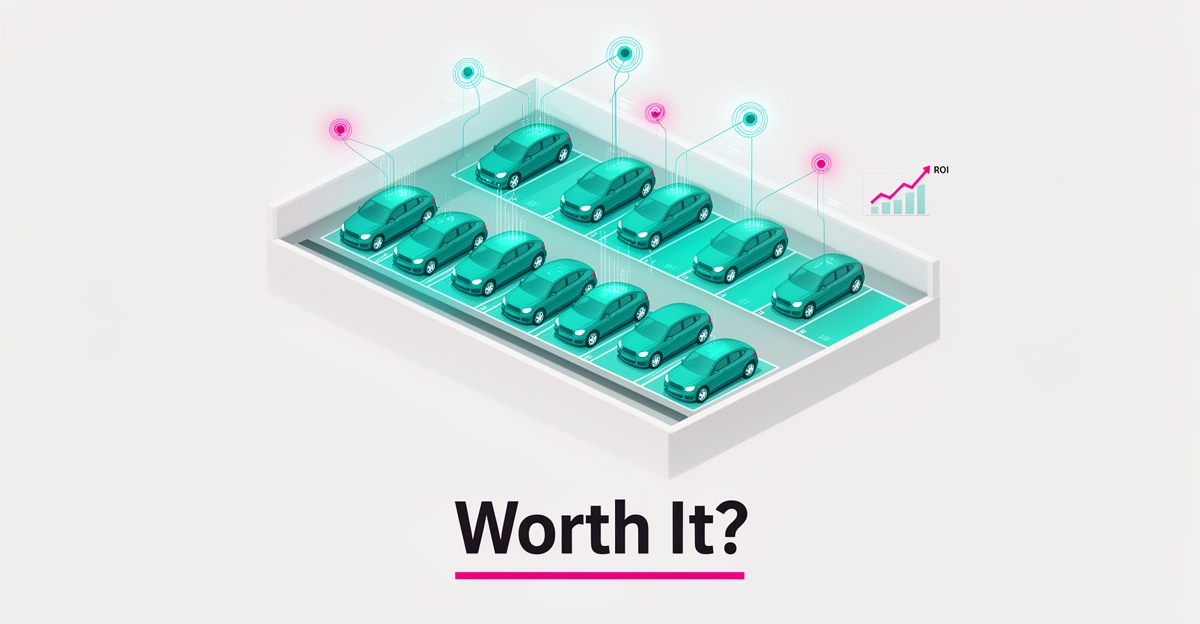
Is AI Worth It for Valet Parking Services? A Cost-Benefit Breakdown
Key Facts
- Industry analyses typically report AI parking systems improving space utilization well above the 60–70% typical of manual operations
- Manual payment processing errors commonly affect a small but meaningful share of transactions, with cash shrinkage adding further revenue loss
- AI dispatch typically lets one operator manage several times more vehicles than manual dispatch ratios allow
- AI-optimized routing typically reduces fuel consumption and eliminates unnecessary mileage from manual dispatching
- Smarter vehicle allocation and real-time demand forecasting typically reduce overtime and idle time by a meaningful margin
Hire a team member that works 24/7 — for less than a part-time wage.
AI receptionists, SDRs, dispatchers and 99+ roles. Trained on your business, fully managed.
Not sure where to start? Ask our AI planner
The Valet Cost Trap: Labor, Leakage and Lost Spaces
Most valet operators don’t realize they’re losing money in three places at once: labor inefficiency, payment leakage, and underutilized inventory. The costs don’t show up as a single line item—they hide in overtime hours, manual errors, and spaces that sit empty during peak demand.
The root problem is human limitation. A typical parking attendant can effectively track only a limited set of spaces during regular patrols and cannot provide real-time occupancy data or predict availability trends. For a 300-space garage or a multi-lot valet operation, that means you’re either overstaffing to compensate or accepting blind spots that cost revenue.
Payment processing creates another silent drain. Manual payment errors typically affect a small percentage of transactions, while cash shrinkage adds further revenue loss. For a high-volume valet service processing hundreds of transactions daily, those percentages compound into thousands of dollars in annual leakage—money that never reaches your bottom line.
Labor costs spiral further when you factor in scheduling inefficiency. Manual scheduling relies on guesswork; you either overstaff to cover peak uncertainty or understaff and sacrifice service quality during rushes. Fleet operations that have moved to AI dispatch consistently report meaningful reductions in overtime and idle time.
Then there’s the space utilization problem. Traditional parking systems typically operate at 60–70% space utilization, meaning roughly 30% of your inventory sits idle at any given time. For valet operations paying per-space leases or managing limited footprint facilities, that’s a massive opportunity cost.
Here’s how these hidden costs stack up:
- Limited tracking capacity: Attendants max out at a fraction of total inventory, forcing overstaffing or operational blind spots
- Payment leakage: Transaction errors plus cash shrinkage erode margins daily
- Overtime and idle time: Manual dispatch creates recurring inefficiency in labor allocation
- Underutilized spaces: Traditional systems leave a large share of inventory unused, capping revenue potential
This is where an AI readiness assessment becomes valuable. AIQ Labs works with valet operators to quantify these hidden costs and model the specific ROI of automation for their scale and traffic patterns. The goal isn’t to push technology—it’s to determine whether the math actually works for your operation before you invest a dollar.
What AI Actually Delivers for Valet Operations
For valet operations, AI doesn't just automate tasks—it reshapes how spaces are managed and vehicles are tracked. By applying fleet management intelligence to parking, AI delivers measurable gains in efficiency, accuracy, and scalability that directly impact the bottom line.
AI-powered license plate recognition and real-time occupancy monitoring cut vehicle search times and lift space utilization well above the 60–70% typical of manual systems. That means valets spend less time circling for spots and more time serving customers, directly improving throughput during peak hours. Automated payment processing further reduces revenue leakage by removing manual cash and card handling from the equation.
On the dispatch side, AI enables one operator to effectively manage several times more vehicles than manual ratios allow, by optimizing routing and reducing idle time. For a mid-sized valet fleet, this translates to substantial annual savings through reduced fuel consumption, lower overtime, and streamlined compliance. These aren't theoretical gains; they mirror results seen in fleet operations where AI handles thousands of data points continuously, something no human team can match at scale.
For valet businesses evaluating AI readiness, these operational levers—faster vehicle turnover, higher space yield, and labor optimization—form the core of a compelling investment case. AIQ Labs helps assess whether these benefits align with your specific scale, traffic patterns, and service goals through a structured readiness evaluation that maps AI capabilities to your operational pain points.
Cost-Benefit Math and When AI Pays Off
For valet services evaluating AI, the financial calculus often hinges on how quickly operational savings offset initial technology investment. Drawing from fleet management parallels—where AI delivers comparable efficiency gains—break-even for operations of sufficient scale is often measured in months, not years, driven by reductions in labor inefficiencies and fuel waste. AI-optimized routing typically cuts fuel consumption by 10–15% while eliminating unnecessary mileage from manual dispatching, and meaningfully reduces overtime and idle time through smarter vehicle allocation and real-time demand forecasting. These savings compound because manual dispatching inflates total operating expenses relative to AI-optimized alternatives, with one dispatcher covering far more vehicles under AI than manually. For valet fleets processing high transaction volumes, the revenue recovery from eliminating manual payment errors further accelerates payback. Beyond direct savings, predictive maintenance features reduce unexpected downtime by anticipating service needs, while improved space utilization maximizes revenue per square foot without physical expansion. For valet businesses assessing readiness, AIQ Labs’ strategic assessment evaluates these specific levers against current operational pain points to model realistic timelines for ROI, ensuring investment aligns with measurable efficiency gains rather than speculative promises. The decision ultimately scales with fleet size and transaction density, where even mid-sized operations can achieve meaningful cost structure improvements within a single quarter.
Implementation Roadmap for Valet AI
A phased rollout keeps valet operations running while AI takes over the repetitive, high-volume tasks that drive cost.
Start with an honest operational audit. Map current staffing ratios, average vehicle retrieval times, payment error rates, and space utilization across peak periods. A typical parking attendant can effectively track only a limited set of spaces, while AI systems can manage thousands with consistent performance. That gap explains why manual operations leak revenue and create delays during rush hours.
Define requirements by spaces and traffic patterns, not by vendor features. Count stalls, entry/exit lanes, and valet pod locations. Model expected arrivals per hour, average dwell time, and integration points with existing POS, access control, and fleet dispatch. This clarity prevents overbuilding and aligns the technology tier to actual need.
Select a technology tier that matches scale and risk tolerance. For basic automation, an AI operating system with real-time monitoring and license plate recognition delivers immediate wins. For high-density or multi-site valet fleets, AI dispatch platforms typically show substantial annual savings compared to manual dispatch. Choose the tier that funds the next phase.
Plan sensor, camera, and LPR integration around workflow, not coverage maps. Position cameras for plate capture at entry/exit and at pod staging areas. Add IoT sensors where real-time occupancy drives routing decisions. Design network redundancy so monitoring stays live during peak demand.
Pilot in a contained zone before full rollout. Run a limited pilot with defined success metrics: retrieval time, space utilization, labor hours per 100 vehicles, and payment accuracy. Use industry benchmarks—faster search times and higher utilization—to validate pilot results.
Configure pricing and business rules from day one. Set dynamic pricing windows, reservation policies, and escalation paths for exceptions. Build dashboards for managers to monitor throughput and intervene when needed.
Establish ongoing monitoring and optimization. Track KPIs weekly, retrain models on new traffic patterns, and refine dispatch logic. An AI readiness assessment helps map current technology stack, data infrastructure, and team capabilities to a prioritized roadmap, reducing pilot stall risk.
Implementation can be staged to match cash flow and operational appetite:
- Assess current operations and costs to quantify labor, overtime, and revenue leakage
- Define space and traffic requirements and select the appropriate AI technology tier
- Plan sensor, camera, and LPR integration with existing systems
- Pilot rollout in one lot or shift, then expand with pricing and business rules configured
- Establish monitoring, adoption support, and continuous optimization
AIQ Labs supports this path with structured discovery and flexible delivery. The Start Monthly model covers build, training, integrations, monitoring, and improvements with the ability to pause or adjust anytime, while Build in Milestones lets you approve and pay per phase and keep everything built so far. If you'd rather rebuild the single workflow that costs you the most first, a fixed-price workflow build is often the fastest entry point.
Still paying for 10+ subscriptions that don’t talk to each other?
We build custom AI systems you own outright. No vendor lock-in. Full control.
Not sure where to start? Ask our AI planner
Frequently Asked Questions
How much can AI actually improve space utilization in valet parking operations?
What kind of savings can valet operators expect from AI in terms of labor and dispatch efficiency?
How long does it typically take for AI investment in valet services to pay for itself?
Does AI really reduce payment errors and revenue leakage in valet parking?
Is AI only worthwhile for large valet operations, or can smaller services benefit too?
What’s the first step in determining if AI makes sense for my valet business?
Turning Valet Inefficiencies into AI-Driven Profit
The hidden costs in valet operations—labor blind spots, payment leakage, and underutilized spaces—don’t just add up; they compound daily, eroding margins in ways manual processes can’t fix. AI reshapes core economics by lifting space utilization, cutting search times, and letting one dispatcher cover far more vehicles than manual ratios allow. For high-volume valet services, these gains translate into substantial annual savings, with break-even often measured in months. The real question isn’t whether AI can help—it’s whether your operation is ready to capture these efficiencies. Start by assessing your current costs and traffic patterns to see where AI delivers the fastest return. If you’re exploring whether AI makes sense for your valet business, AIQ Labs offers a free 30-minute strategy call to map your biggest bottlenecks and model realistic ROI—no obligation, just clarity on your path forward. Reach us anytime at [email protected].
Make AI your competitive advantage — not just another tool.
Strategy, implementation and ongoing optimization. One partner, end to end.
Not sure where to start? Ask our AI planner