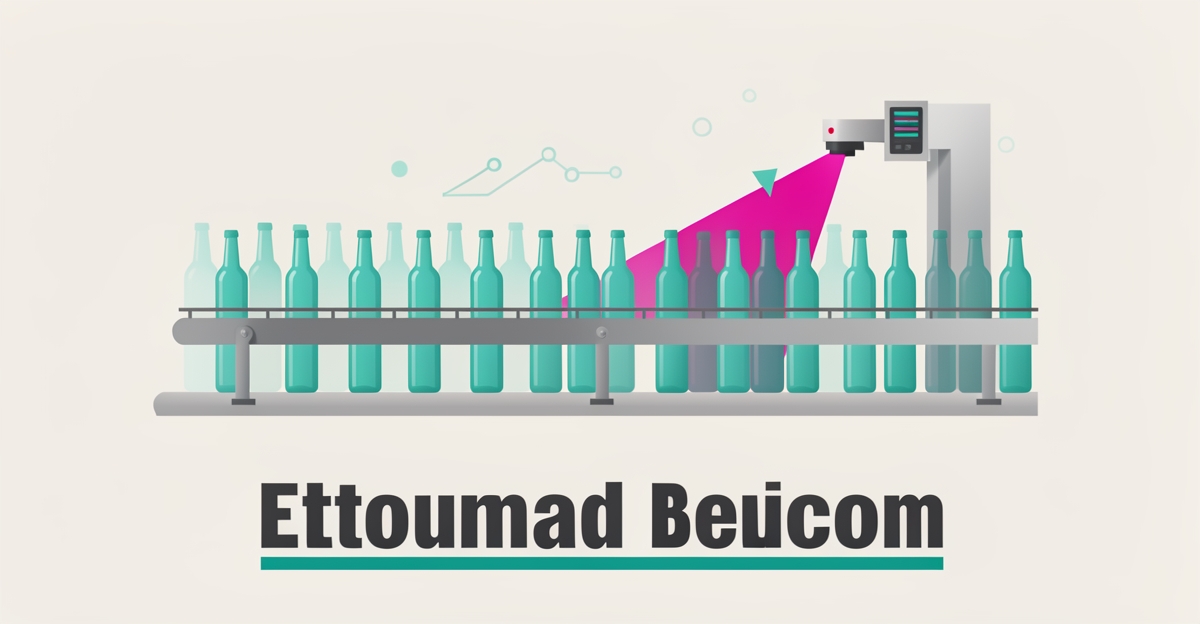
Is AI Worth It for Your Beverage Bottling Business? A ROI Breakdown for Small to Midsize Co-Packers
Key Facts
- Computer vision inspection can deliver 10–20% yield improvement by catching defects earlier per industry research
- AI-driven inventory optimization has been linked to 30–50% reductions in inventory costs per reported studies
- Machine learning models can cut forecasting error by roughly 13%, reducing overproduction and stockouts per beverage AI statistics
- As of late 2026, roughly one in five organizations continues to name AI a top investment priority per industry analysis
- Predictive maintenance reduces unplanned downtime by anticipating equipment failures per bottling industry report
- Labor savings emerge from automating repetitive monitoring and data entry tasks per AI transformation insights
- Energy consumption can drop through AI-driven process adjustments in real time per operational efficiency findings
Hire a team member that works 24/7 — for less than a part-time wage.
AI receptionists, SDRs, dispatchers and 99+ roles. Trained on your business, fully managed.
Not sure where to start? Ask our AI planner
The Co-Packer Squeeze: Labor, Waste, and Margin Pressure
Small to midsize beverage co-packers are being squeezed from every side. Rising labor costs, unpredictable demand, and thin margins turn every line stop into a profit leak.
Manual inspection and forecasting keep teams busy while waste accumulates. Industry research suggests computer vision-based inspection can deliver 10–20% yield improvement by catching defects earlier. That gain comes directly from reduced scrap, rework, and lost bottles.
Workforce visibility is another pressure point. A bottling industry report notes most manufacturers are only scratching the surface on production gains and workforce opportunities. Scheduling gaps, overtime, and turnover drive up unit cost while line downtime rises.
Forecasting error compounds the problem. Machine learning models can cut forecasting error by roughly 13%, according to beverage AI statistics. Better demand signals mean fewer overruns, less expired inventory, and more stable staffing.
The urgency is not fading. As of late 2026, roughly one in five organizations still names AI a top investment priority, per industry analysis. For co-packers, that priority is less about hype and more about survival.
The squeeze shows up daily as:
- Labor cost inflation with limited access to skilled line operators
- Line downtime from reactive maintenance and manual quality checks
- Waste from overproduction, spoilage, and inspection misses
- Margin pressure from clients demanding lower cost per unit and faster changeovers
These issues are interconnected. Manual inspection slows throughput. Poor forecasts create excess inventory and stockouts. Both force overtime, and overtime drives errors.
AIQ Labs evaluates this dynamic through ROI modeling tailored to production volume and bottling complexity. The focus is on quantifying savings from reduced labor, waste, and error rates before any build decision. For teams that need capacity rather than another dashboard, managed AI Employees can absorb repetitive monitoring, scheduling, and data entry work at a fraction of a human hire's cost.
Predictive maintenance, automated visual inspection, and demand-driven inventory are the levers most co-packers test first. The goal is not full automation overnight, but measurable relief on the three cost drivers that define the co-packer squeeze.
Where AI Pays Off on the Bottling Line
AI-driven improvements are delivering measurable returns on bottling lines through smarter automation. Computer vision-based quality inspection systems have shown 10–20% yield improvements by catching defects earlier and reducing waste on the line, per industry research. This translates to more sellable product per run without increasing input costs, a critical advantage for co-packers operating on tight margins.
Beyond the production line, AI-powered inventory optimization has been associated with 30–50% reductions in inventory costs by aligning stock levels with real-time demand signals, as reported studies indicate. At the same time, machine learning models are cutting forecasting errors by roughly 13%, helping businesses avoid overproduction and stockouts alike, per available data. These gains compound across operations, lowering carrying costs and improving cash flow predictability.
- Predictive maintenance reduces unplanned downtime by anticipating equipment failures
- Supply chain AI optimizes routing and load planning to cut fuel and labor costs
- Labor savings emerge from automating repetitive monitoring and data entry tasks
- Energy consumption can drop through AI-driven process adjustments in real time
- Fewer recalls and rework incidents stem from consistent, computer vision-enhanced quality control
For beverage co-packers evaluating AI adoption, these ROI drivers aren't theoretical, they're being realized today by early adopters. AIQ Labs helps businesses model these savings against their specific production complexity, ensuring investments target the highest-impact areas first. With clear payback paths emerging across quality, inventory, and labor, the case for AI on the bottling line keeps getting harder to ignore.
Modeling ROI for Your Production Volume and Complexity
For co-packers evaluating AI, ROI isn't abstract, it scales directly with production volume, SKU complexity, and current error rates. A mid-sized facility bottling 10 million units annually with moderate SKU diversity (50–100 variants) and a 5% defect rate can realize meaningful savings by targeting high-impact areas like quality inspection and inventory management. Computer vision systems alone can improve yield by 10–20%, directly reducing waste and rework costs tied to misfilled, mislabeled, or contaminated bottles, savings that compound with higher throughput. Similarly, AI-driven demand forecasting can cut forecasting errors by roughly 13%, enabling tighter inventory control and reducing carrying costs, by up to 50% in the strongest reported cases, through better alignment of raw material and finished goods stock with actual consumption patterns. These efficiencies reflect gains from AI applications in beverage manufacturing environments where data quality and process stability allow models to deliver consistent predictions.
The financial impact becomes clearer when modeling savings against typical co-packer cost structures. Labor typically accounts for 30–40% of operational expenses in bottling lines, and AI automation in repetitive tasks, such as visual inspection, data entry for batch records, or changeover coordination, can reduce manual effort by an estimated 25–35% without eliminating roles, instead redirecting staff to higher-value oversight and troubleshooting. Predictive maintenance further protects uptime by identifying equipment wear before failure, avoiding unplanned downtime that can cost thousands of dollars per hour in mid-scale operations. When these savings accumulate, lower waste, less overtime, fewer emergency repairs, and optimized inventory, the payback period for targeted AI investments often falls within 12–18 months, especially when implementation follows a phased approach. AIQ Labs supports this progression through flexible payment models, Start Monthly for initial workflow automation, Build in Milestones for department-scale systems, or Own It Outright when you want the asset on your balance sheet, so co-packers can validate ROI at each stage before scaling. This volume-sensitive, complexity-aware framework turns AI adoption from a cost center into a measurable lever for margin improvement.
From Pilot to Production: A Lean Implementation Path
The gap between an AI pilot that impresses and a production system that pays for itself is where most bottling operations stall. A structured, lean path forward changes that equation.
The barriers are real but navigable. Research from drinktec shows that 28% of companies cite data quality as a major obstacle, while the Augury bottling industry report highlights the persistent skills gap in implementing these systems. These challenges demand a phased approach, not a leap of faith.
Start with predictive maintenance on your most failure-prone line equipment. Machine learning models analyze vibration and performance data to flag issues before breakdowns occur, directly protecting throughput. This single use case often delivers the fastest payback because downtime costs are immediate and measurable.
Next, layer in inventory forecasting. Machine learning models can reduce forecasting error by roughly 13%, according to Gitnux research, and have been linked to 30–50% reductions in inventory costs. For co-packers juggling multiple SKUs and seasonal demand swings, this precision frees up working capital.
Then expand into computer vision for quality control. Industry data shows these systems can deliver 10–20% yield improvements by catching fill-level, cap, and label defects at line speed. Finally, address workforce scheduling with AI-powered optimization to close the labor visibility gaps that plague manual planning.
A realistic implementation sequence looks like this:
- Assess data readiness, audit sensor coverage, historical records, and integration points
- Pilot one high-impact use case, typically predictive maintenance on a single line
- Measure and model ROI, track downtime, waste, and labor savings against baseline
- Scale to adjacent workflows, extend to inventory, quality, and scheduling systems
- Build internal capability, train operators and supervisors to work alongside AI outputs
AIQ Labs structures this journey in phases that mirror these steps, beginning with readiness assessment and ROI modeling tailored to your specific production volume and bottling complexity. A single Workflow Build targets the one workflow that costs you the most, at a fixed price. Operations ready to connect scheduling, inventory, quality, and reporting into one layer can move toward AI Operating Systems, built in phases and owned outright. The goal is not to install technology but to build a system your operation owns and your team trusts, one validated win at a time.
Still paying for 10+ subscriptions that don’t talk to each other?
We build custom AI systems you own outright. No vendor lock-in. Full control.
Not sure where to start? Ask our AI planner
Frequently Asked Questions
What kind of yield improvement can AI-based quality inspection deliver for a beverage bottling line?
How much can AI reduce forecasting errors in beverage demand planning?
What inventory cost reductions are achievable with AI-driven optimization in bottling operations?
Is AI adoption still a priority for beverage companies in 2026?
What's a realistic first step for implementing AI in a bottling facility without overhauling the whole line?
How does AI impact labor costs on bottling lines, and does it eliminate jobs?
Labor typically accounts for 30–40% of operational expenses in bottling lines.
Turn Margin Pressure Into Measurable Margin Gain
The co-packer squeeze is real, but it's also measurable. Rising labor costs, line downtime, waste from inspection misses, and forecasting error all compound into the same problem: profit leaks you can't afford. AI doesn't require a full automation overhaul to help. Targeted use cases like predictive maintenance, demand-driven forecasting, and computer vision quality control are already delivering 10–20% yield improvements by catching defects earlier, better forecasts, and lower inventory carrying costs for beverage operations at similar scale. The fastest path is lean and phased: assess data readiness, pilot one high-impact use case on your most volatile line, model ROI against your actual volume and SKU complexity, then scale to adjacent workflows. AIQ Labs supports that progression with ROI modeling tailored to production volume and bottling complexity, so investments target the highest-impact areas first. Start with clarity, not commitment. Take the two-minute Fit Check at https://aiqlabs.ai/apply for a free 30-minute strategy call to map your biggest bottleneck and identify high-ROI automation opportunities. If there isn't a clear win, we'll tell you.
Make AI your competitive advantage — not just another tool.
Strategy, implementation and ongoing optimization. One partner, end to end.
Not sure where to start? Ask our AI planner