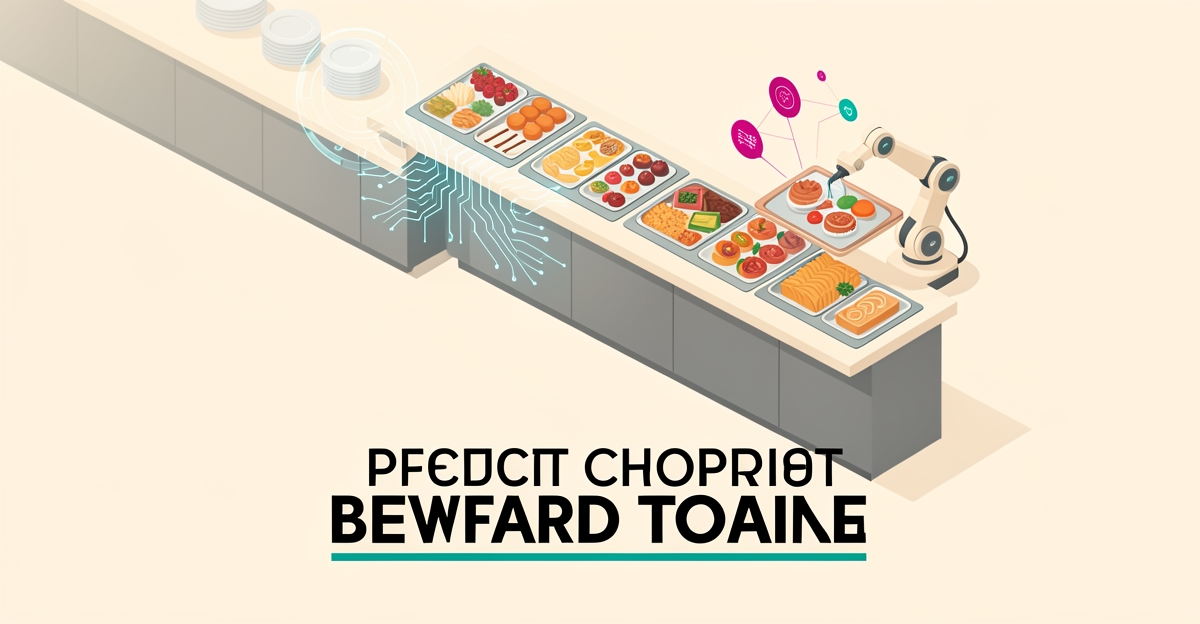
Is AI Worth It for Your Buffet Restaurant? A Cost-Benefit Breakdown of Automation
Key Facts
- AI-powered solutions have been reported to reduce labor costs by up to 25% in restaurant settings according to restaurant automation research
- AI can save restaurant staff an estimated 15–25 hours per week on repetitive tasks like manual counting and refills based on automation research
- Predictive inventory and demand signals are core AI use cases that reduce food waste from overproduction and underproduction per Deloitte industry research
- AI-powered solutions have been associated with up to 40% faster order fulfillment, improving tray return and seating cycles in buffets per Deloitte analysis
- Restaurants implementing comprehensive digital transformation have reported up to a 60% improvement in operational efficiency based on Deloitte findings
- AI-powered invoice processing has been reported to cut accounts payable costs by roughly 80% per restaurant technology adoption statistics
- A majority of restaurant executives surveyed expect their AI investment to increase in the next fiscal year per Deloitte survey data
Hire a team member that works 24/7 — for less than a part-time wage.
AI receptionists, SDRs, dispatchers and 99+ roles. Trained on your business, fully managed.
Not sure where to start? Ask our AI planner
The Hidden Costs of Running a Buffet Restaurant Today
Buffet operators are squeezed from every side, and the pain points show up directly on the P&L. Rising wages, spoilage that piles up daily, and tables that sit too long between seatings create a compounding drag on margins that manual processes can no longer absorb.
Labor is the largest and fastest-moving cost. Staffing a buffet requires constant floor coverage, food replenishment, and dish handling across long service windows. Restaurant automation research suggests AI-powered solutions can reduce labor costs by up to 25%, while saving staff an estimated 15–25 hours per week on repetitive tasks. That time is currently spent on manual counting, refills, and late-shift cleanups rather than guest experience.
Food waste is the quiet margin killer unique to self-service formats. Overproduction for peak rushes leaves proteins, salads, and baked items to be discarded, while underproduction during lulls drives guest dissatisfaction. Predictive inventory and demand signals are now core AI use cases in restaurants, with industry research highlighting inventory management as a high-adoption area for AI. Without forecasting, operators rely on guesswork that inflates spoilage and ties up cash in excess stock.
Guest turnover inefficiency compounds both problems. Slow table resets, uneven food availability, and long lines at peak times reduce covers per service period. Deloitte analysis associates AI-powered solutions with up to 40% faster order fulfillment, a proxy for throughput gains that buffet operators feel as faster tray return and seating cycles. Restaurants pursuing comprehensive digital transformation have reported up to a 60% improvement in operational efficiency overall.
These three pressures show up daily as:
- Rising labor costs that outpace menu price increases and compress margins
- Food waste from overproduction and lack of real-time consumption visibility
- Inefficient guest turnover from slow resets and uneven service pacing
- Manual admin burden that steals an estimated 15–25 hours weekly from frontline teams
The cumulative effect is higher cost per cover and lower repeat visitation, even when food quality is strong. Operators who quantify these leaks can build a clearer business case for change.
AIQ Labs works with SMB operators to map these operational leaks and assess readiness for automation. Through AI Workflow Builds, teams can evaluate labor, waste, and throughput data to rebuild the single highest-ROI workflow first, rather than adopting technology for its own sake.
Where AI Delivers Measurable ROI in Buffet Operations
Buffet restaurants face unique pressure points: labor-intensive service, high food waste risk, and the constant need to turn tables quickly. AI automation directly attacks these pain points. For example, AI-powered invoice processing has been reported to cut accounts payable costs by roughly 80%, freeing up staff time and reducing manual errors. That kind of efficiency gain is especially valuable in back-of-house operations where invoice volume spikes during peak service periods.
Labor remains one of the largest controllable expenses in buffet operations, and AI offers a clear path to reduction. Research suggests AI-powered solutions can reduce labor costs by up to 25% by automating repetitive tasks like inventory tracking, staff scheduling, and order forecasting. Additionally, AI can save restaurant staff an estimated 15–25 hours per week on manual processes, allowing teams to focus on guest experience and food quality instead of administrative work. These time savings translate into faster throughput and better service during rush hours.
Beyond labor, AI drives measurable improvements in inventory and waste management, critical for buffets where overproduction impacts both cost and sustainability. Predictive analytics help optimize food preparation levels based on historical data, weather, and local events, reducing excess inventory and spoilage. When integrated into a broader AI strategy, these systems support smarter purchasing, lower holding costs, and more consistent food quality. Buffets that implement such tools typically see improved cash flow and fewer last-minute adjustments to production schedules.
AIQ Labs helps buffet operators assess where automation delivers the fastest payback by mapping AI readiness against operational bottlenecks. Through strategic planning and phased implementation, we build custom systems that target high-impact areas like invoice processing, labor scheduling, and inventory forecasting, each designed to integrate with existing POS and accounting tools. The goal isn't automation for its own sake, but sustainable efficiency that scales with the business. By focusing on measurable outcomes, reduced labor hours, lower waste, faster financial close, buffet operators can make informed decisions about where AI investment delivers real, trackable ROI.
Building a Practical AI Roadmap for Your Buffet Business
The jump from "AI sounds interesting" to "AI is running our Thursday dinner rush" feels massive because most operators try to cross it in a single leap. A phased roadmap breaks that distance into steps that each pay for themselves before the next one begins.
Phase one targets the workflow bleeding the most time and money right now. Research suggests AI-powered invoice automation alone can cut processing costs by roughly 80%, while comprehensive digital transformation has been associated with a 60% improvement in operational efficiency. For a buffet, that means fixing the reorder spreadsheet that causes over-ordering on Tuesday and stockouts on Saturday, or automating the daily prep sheet that currently lives on a clipboard. You stop the bleeding, measure the savings, and build internal confidence. This is what an AI Workflow Build is designed for: one workflow, a fixed price, delivered in phases.
Phase two introduces managed AI employees into those stabilized workflows. Instead of hiring a part-time admin to chase invoices or answer the phone during peak, you deploy an AI employee trained on your specific menu, pricing, and vendor terms. These agents handle multi-step tasks, qualifying catering leads, managing reservation changes, reconciling delivery receipts, at a fraction of the cost of a human hire. Because the underlying workflows were cleaned up in phase one, the AI employee inherits a process that already works rather than amplifying chaos. You can explore the range of roles at aiqlabs.ai/ai-employees.
- Audit and rebuild the single highest-friction workflow (invoice processing, prep planning, or vendor communication)
- Deploy one AI employee into that workflow with full tool integration and ongoing management
- Measure ROI against the baseline established in phase one
- Expand to adjacent workflows only after the first agent proves consistent value
Phase three consolidates proven agents and workflows into a custom AI Operating System you own outright, no per-seat licenses, no vendor lock-in, no feature roadmap controlled by someone else. The system grows with your concept, whether that means adding a second location, launching a catering division, or integrating a new POS. AIQ Labs structures this progression through three payment models: Start Monthly to prove the concept, Build in Milestones to control cash flow, or Own It Outright when the architecture is complete. Each step compounds the last, turning isolated wins into a durable operational advantage.
Still paying for 10+ subscriptions that don’t talk to each other?
We build custom AI systems you own outright. No vendor lock-in. Full control.
Not sure where to start? Ask our AI planner
Frequently Asked Questions
Is AI actually worth the investment for a buffet restaurant?
How much time can AI actually save my restaurant staff each week?
Can AI help reduce food waste at a self-serve buffet?
What's the easiest AI win to start with if I'm skeptical?
Do I need to replace all my systems to use AI?
Will AI actually help me turn tables faster during peak rush?
The Bottom Line: AI Pays for Itself When You Start Where It Hurts
So, is AI worth it for your buffet restaurant? The numbers point to yes, if you approach it with discipline. The case isn't speculative: research suggests AI automation can drive a 25% reduction in labor costs, cut invoice processing expenses by roughly 80%, and reclaim an estimated 15–25 hours of staff time every week. For an operation where labor, spoilage, and table turnover quietly erode every cover, those gains compound fast. The key is sequencing. Start with the single workflow bleeding the most time or money, prove the ROI, then expand, exactly the phased approach we've outlined above. You don't need to transform everything at once, and you shouldn't trust anyone who says otherwise. If you want clarity before committing, take the two-minute Fit Check at aiqlabs.ai/apply and book a free 30-minute strategy call. It's a working session, not a sales pitch: we'll map your biggest bottleneck, identify your highest-ROI automation opportunity, and give you real numbers in writing. If there isn't a clear win for your buffet, we'll tell you that too. The operators who win with AI aren't the ones who move fastest, they're the ones who move first where it counts.
Make AI your competitive advantage — not just another tool.
Strategy, implementation and ongoing optimization. One partner, end to end.
Not sure where to start? Ask our AI planner