Is AI Worth It for Your Coding Bootcamp? A Cost-Benefit Analysis
Key Facts
- Industry surveys in recent years have consistently shown a majority of hiring leaders prefer candidates with hands-on AI experience over traditional skills alone
- Labor market analyses as of late 2026 suggest candidates with AI skills typically earn a meaningful wage premium, often cited as comparable to or exceeding a graduate degree premium
- Since 2024, job listings requiring AI skills have generally grown even as overall tech postings have contracted, widening the gap between AI-fluent and traditional candidates
- A large share of tech roles now list AI skills as expected or required, per current bootcamp and industry program data
- Security research (including Veracode's widely cited 2025 analysis) found that a substantial share of AI-generated code contains security vulnerabilities, commonly reported around 45%
- Most organizations now use AI-generated code, yet only a small minority apply equal security standards to it, per the same 2025 security research
- AI-generated code has shown roughly 2.7x higher vulnerability density than human-written code in that research, with some languages performing worse
Hire a team member that works 24/7 — for less than a part-time wage.
AI receptionists, SDRs, dispatchers and 99+ roles. Trained on your business, fully managed.
Not sure where to start? Ask our AI planner
The Rising Pressure to Integrate AI in Coding Bootcamps
The job market is moving faster than curricula can keep up, and coding bootcamps are feeling the pressure to prove graduate outcomes.
Employers are actively reshaping hiring priorities around AI fluency. Industry surveys over the past few years have consistently shown that a strong majority of hiring leaders prefer candidates with AI experience over those with traditional skills alone. Program data from major bootcamp providers similarly points to a large share of tech roles now expecting AI skills for candidates to remain competitive.
The shift is not hypothetical. Labor market analyses since 2024 generally show job listings requiring AI skills growing even while overall tech postings contracted. For bootcamps, this divergence creates a clear competitive risk: programs that do not signal AI readiness risk falling behind on placement rates and employer partnerships.
Placement outcomes increasingly drive enrollment decisions, and AI skills are becoming a core differentiator. Candidates with AI skills typically command a wage premium, analyses in recent years have placed it around 23%, which compounds the employability advantage. Bootcamps that can demonstrate practical AI development and deployment experience are better positioned to protect completion rates and graduate earning metrics.
The pressure shows up in three immediate areas:
- Curriculum relevance, as students expect exposure to AI tools and workflows
- Employer expectations, with hiring managers filtering for AI experience
- Competitive positioning, as peer programs add AI tracks and marketing
Falling behind on AI integration can create a negative feedback loop. Lower placement performance reduces referral traffic and increases cost per enrollment, while instructors spend more time compensating for skill gaps.
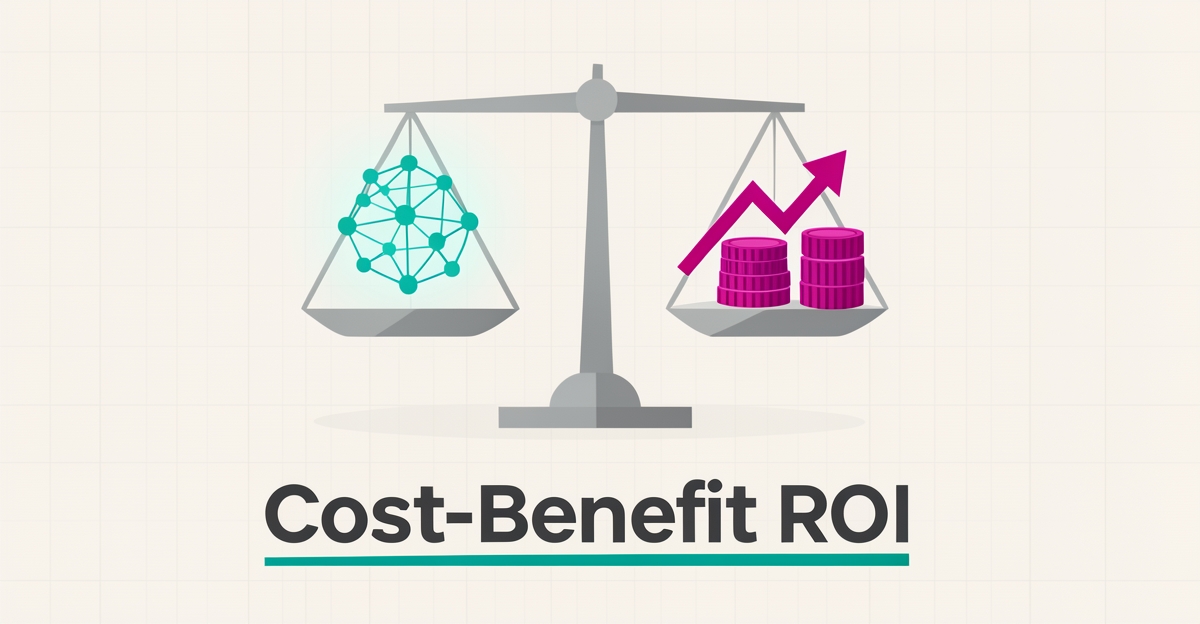
This is where a structured cost-benefit view helps. Bootcamps need to weigh implementation costs for development, training and maintenance against savings in student support, drop-out reduction and improved completion rates. AIQ Labs helps bootcamps model real-world financial impacts and justify investments, whether that starts with a single workflow rebuild or grows into a fuller AI operating system for the whole program.
Programs that treat AI as a strategic capability rather than a feature list are more likely to sustain placement advantages. Mapping where AI can support personalized learning and real-time feedback while also building job-ready project experience aligns curriculum decisions with market demand.
The rising pressure is not about chasing hype. It is about protecting job placement outcomes in a market where AI competency is becoming table stakes.
Quantifying the Benefits: How AI Improves Outcomes and Efficiency
When done right, AI integration in coding bootcamps delivers measurable returns that go far beyond marketing hype. The pattern is consistent: students learn faster, instructors reclaim valuable time, and graduates enter the job market with skills that command premium salaries.
AI transforms the learning experience through personalized instruction and immediate feedback loops. Educator resources from major AI providers, including Microsoft's foundational AI bootcamp materials, emphasize that AI improves student outcomes by adapting to individual learning styles and providing real-time guidance when students hit roadblocks. This means fewer students fall behind, and those who struggle get targeted help exactly when they need it, not three days later during office hours.
The operational efficiency gains are equally compelling. AI automates routine tasks like grading basic assignments, answering common syntax questions, and generating practice exercises. This frees instructors to focus on complex problem-solving, code review, and mentorship, the high-value activities that actually differentiate a quality bootcamp from YouTube tutorials.
Perhaps most important is the job readiness factor. The labor market has shifted dramatically:
- A majority of hiring leaders now prefer candidates with AI experience over those with traditional skills alone, per recent industry surveys
- Candidates with AI skills typically earn a meaningful wage premium, analyses have placed it around 23%, higher than what a master's degree commands
- Since 2024, job listings requiring AI skills have generally grown even as overall postings contracted
- A large share of tech roles now expect AI skills to remain competitive
These aren't marginal improvements. When labor market data shows this level of divergence, bootcamps that integrate practical AI development experience give graduates a concrete competitive advantage. Students don't just learn to code, they learn to build, deploy, and work alongside AI systems, which is exactly what employers are hiring for.
The challenge is quantifying these benefits against implementation costs. AIQ Labs works with education providers to model these trade-offs precisely, factoring in reduced dropout rates from better student support, decreased instructor workload from automation, and improved completion rates that directly impact revenue. The business case becomes clear when you map specific AI capabilities to measurable operational improvements.
The question isn't whether AI delivers value. The evidence points that way. The real question is whether your bootcamp can afford to fall behind while competitors integrate these capabilities and capture the growing demand for AI-fluent developers.
The Hidden Costs: Security Risks and Implementation Challenges
Adopting AI in a coding bootcamp is not just about gaining efficiency; it also introduces a new layer of risk. For many institutions, the most significant hidden cost lies in security. Veracode's widely cited 2025 analysis found that roughly 45% of AI-generated code contains security vulnerabilities.
This statistic is particularly alarming given the rapid adoption of these tools. The same research found that while the vast majority of organizations now use AI-generated code in their workflows, only a small minority, around 12%, apply the same security standards to it as they do to human-written code. This creates a governance gap where speed often trumps safety.
The risks are not evenly distributed across all stacks. That research showed AI-generated code with roughly 2.7x higher vulnerability density than human-written code, with some languages, Java in particular, showing a very low security pass rate. For a bootcamp, this means that without strict oversight, you could be inadvertently teaching students to deploy insecure applications.
Beyond security, implementation challenges often stall progress. Instructor training is a critical bottleneck; without proper support, faculty cannot effectively guide students in reviewing or debugging AI output. As Microsoft's foundational AI bootcamp resources for educators note, teachers need specific training to integrate these tools effectively.
To mitigate these risks, bootcamps must budget for ongoing operational costs, not just initial setup:
- Continuous monitoring of AI-generated code to catch vulnerabilities before deployment.
- Regular instructor training to keep pace with evolving AI capabilities and security standards.
- Establishing governance frameworks that treat AI code with the same scrutiny as human code.
- Implementing review processes where students must validate and secure AI suggestions.
These factors contribute to the Total Cost of Ownership (TCO). AIQ Labs helps educational institutions model these hidden expenses, security audits, monitoring tools, and faculty development, against the projected ROI. By accounting for these implementation challenges upfront, bootcamps can build a realistic business case that ensures AI adoption enhances learning without compromising security.
Making the Investment Decision: A Framework for ROI Modeling
The ROI question for AI in a coding bootcamp isn't "should we adopt AI?", it's "will the numbers work for our specific operation?" A disciplined cost-benefit framework answers that with evidence rather than enthusiasm. The stakes are real: with a large share of tech roles now expecting AI skills, the cost of standing still compounds every enrollment cycle.
Start by mapping your investment across three cost buckets. Development costs cover building or configuring AI systems, tutoring agents, feedback tools, curriculum integrations. Training costs account for instructor upskilling, which educator research consistently flags as essential; without proper training and support, instructors struggle to integrate AI into teaching practices effectively. Maintenance costs cover ongoing monitoring, updates, and quality assurance, non-negotiable given that a substantial share of AI-generated code contains security vulnerabilities, per Veracode's 2025 analysis.
On the benefit side, model savings against three levers:
- Reduced drop-out rates, personalized learning and real-time feedback keep struggling students engaged, protecting tuition revenue you'd otherwise lose mid-cohort.
- Improved completion rates, every additional graduate strengthens outcomes data, which drives referral and enrollment growth.
- Instructor efficiency, automating routine grading and Q&A frees instructors for high-value mentoring, letting you serve more students without adding headcount.
Quantify each lever conservatively. If AI support prevents even a handful of mid-cohort withdrawals per cohort, the recovered tuition alone can offset a meaningful share of implementation costs, before counting reduced instructor workload or improved placement outcomes. AIQ Labs takes this modeling approach in its consulting work: build the business case with real operational numbers first, then scope the technology to fit, rather than the reverse.
A practical stress test: ask what happens if benefits materialize at only half your projection. Structured engagement models, such as milestone-based workflow builds where you approve and pay per phase, cap downside risk by letting you validate value before full commitment. This staged approach mirrors the framework itself: prove the economics at small scale, then scale what works. For programs ready to go further, a phased AI operating system connects those wins into one layer you own outright.
Finally, weigh market timing. Job listings requiring AI skills have generally grown since 2024 even as overall postings contracted, per industry labor data. Bootcamps that graduate AI-fluent developers capture that demand premium; those that delay face a widening curriculum gap. The framework above turns that urgency into a defensible, numbers-backed decision, one your board, investors, or leadership team can actually evaluate.
Still paying for 10+ subscriptions that don’t talk to each other?
We build custom AI systems you own outright. No vendor lock-in. Full control.
Not sure where to start? Ask our AI planner
Frequently Asked Questions
Is AI integration actually worth the investment for a coding bootcamp?
What are the real costs of implementing AI in our bootcamp curriculum?
How do we justify the ROI of AI to our board or investors?
What are the biggest risks of using AI-generated code in our curriculum?
How do we prepare our instructors to teach with AI tools effectively?
Can we phase in AI adoption to test ROI before full commitment?
The Numbers Are In: Make Your AI Decision Count
So, is AI worth it for your coding bootcamp? The honest answer: it depends on your numbers, but the market has already voted. Hiring leaders consistently prefer candidates with AI experience, and AI-skilled graduates typically command a wage premium, so the demand side is settled. What remains is execution: weighing development, training, and maintenance costs against reduced drop-out rates, better completion metrics, and instructor efficiency, while accounting for hidden risks like the security vulnerabilities in AI-generated code. The bootcamps that win won't be the ones that adopt AI fastest, but the ones that adopt it smartest, with a defensible business case behind every investment. That's where AIQ Labs comes in: we help education providers map real operational numbers to AI capabilities before a single dollar is spent, whether that's one workflow rebuilt at a fixed price or a full operating layer built in phases and owned outright. Your next step is simple, take two minutes to complete the Fit Check at aiqlabs.ai/apply, then book a free 30-minute strategy call. It's a working session with an AI engineer, not a sales pitch. If there isn't a clear win for your program, we'll tell you that too.
Make AI your competitive advantage — not just another tool.
Strategy, implementation and ongoing optimization. One partner, end to end.
Not sure where to start? Ask our AI planner