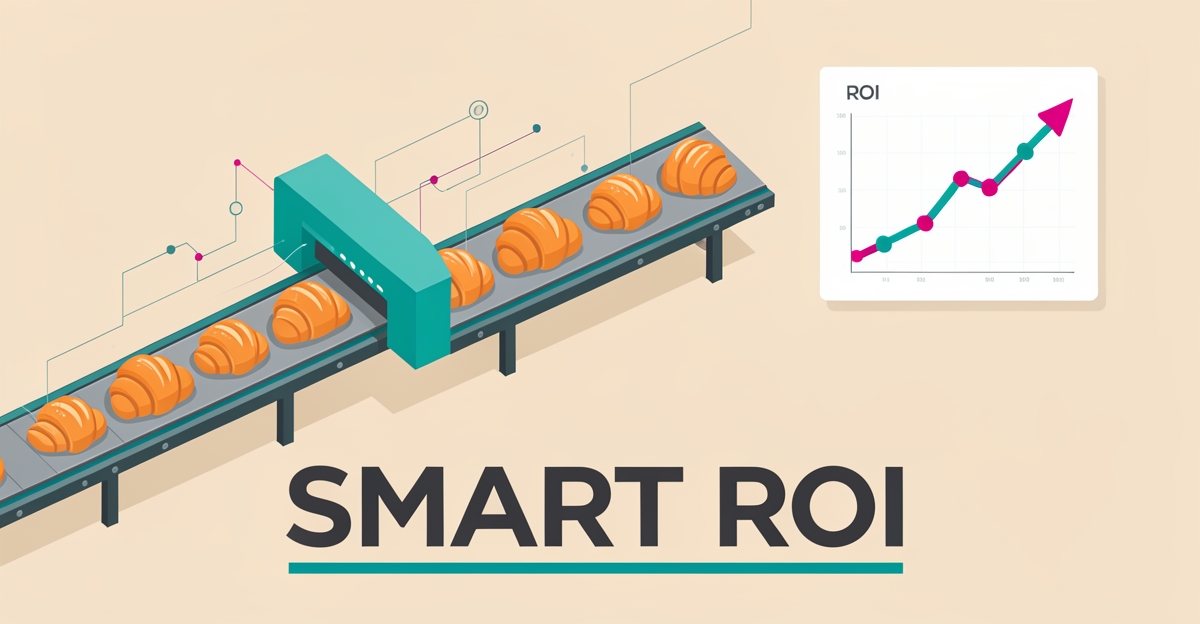
Is AI Worth It for Your Commercial Bakery? A ROI Breakdown of Automation in Production and Delivery
Key Facts
- Perishable inventory makes bakeries unusually sensitive to forecasting errors, small accuracy gains translate directly into less spoilage
- Inventory optimization is typically the fastest-payback AI workflow for bakeries, because waste savings hit the P&L immediately
- Production scheduling and demand forecasting AI typically require 6-12 months of clean operational data to perform well
- Most successful AI implementations connect to established bakery management systems rather than replacing them
- AIQ Labs has deployed 200+ multi-agent systems and runs 4 live SaaS products daily, automation we rely on ourselves
Hire a team member that works 24/7 — for less than a part-time wage.
AI receptionists, SDRs, dispatchers and 99+ roles. Trained on your business, fully managed.
Not sure where to start? Ask our AI planner
The Bakery Bottleneck: Why Manual Operations Are Costing You
Perishable inventory, staffing gaps, and volatile demand are squeezing commercial bakeries from every side. Manual operations built for stability are now a margin liability when a single missed forecast can mean thousands in spoilage.
Waste is the most visible bleed. Every overbaked batch, every expired ingredient, every tray of day-old product marked down or tossed is margin leaving the building. That waste is not random; it compounds from overproduction on slow days and stockouts on busy ones, two symptoms of the same forecasting problem.
Labor pressure makes the problem worse. Skilled bakery labor is scarce and expensive, and shortages force overtime, reduced hours, and inconsistent quality. When your best baker spends half their morning on reorder spreadsheets and schedule juggling, you're paying craft wages for clerical work. The bottleneck is not effort, it is visibility.
Demand volatility exposes manual planning. Fresh bread and pastries with 1-2 day shelf lives require forecast accuracy that humans cannot sustain across weather, events, and seasonality. A heatwave, a local festival, or a shifted commute pattern can swing demand by double digits overnight, and static production schedules don't see it coming.
The margin crisis shows up daily as:
- Overbaked batches and expired ingredients tied to static production schedules
- Manual reorder points that miss supplier lead times and spike ingredient costs
- Inconsistent staffing coverage during peak demand windows
- Reactive delivery routing that increases last-mile cost and late orders
Manual processes cannot close these gaps because they rely on tribal knowledge and end-of-day spreadsheets. Meanwhile, bakeries that have automated forecasting, scheduling, and inventory are compounding their advantage every week. The competitive gap widens for operations still running manually.
This is where AIQ Labs works with food-production businesses: mapping these pressure points into measurable automation opportunities through AI Workflow Builds, rebuilding the one workflow that costs you the most, at a fixed price, in phases. The focus is not hype, it is operational relief: stabilizing waste, freeing labor, and making demand predictable enough to scale.
Without intervention, the bottleneck hardens into a ceiling. Margins erode while competitors automate production scheduling, smart inventory tracking, and delivery workflows. The cost of staying manual is now measurable in waste, overtime, and lost sales.
What the Numbers Say: AI Adoption Rates and Real-World ROI
Adoption of AI in food production has accelerated sharply as of late 2026, driven by the same forces hitting your P&L: labor scarcity, ingredient cost volatility, and thin margins that punish every forecasting error. Bakeries are no longer asking whether AI works, they're asking which workflow to automate first.
Implementation costs vary by scope. A focused single-workflow build, say, inventory optimization wired into your existing ordering process, costs a fraction of a full operating-system overhaul. The honest framing: the entry point is low, but the return depends entirely on picking the right workflow and integrating it with the systems you already run.
The financial logic is straightforward. Waste savings hit the P&L immediately, every percentage point of spoilage you eliminate is recovered margin. Labor savings compound as AI employees absorb the reorder, scheduling, and reporting work that currently eats skilled staff hours. Most bakeries that start with a well-scoped workflow see payback within the first year to eighteen months, with inventory-focused projects typically paying back fastest because the savings are direct and measurable.
A caution on vendor claims: published ROI figures for "bakery AI" vary widely by source, bakery size, and data quality. Treat any specific percentage, ours included, as a range to validate against your own baseline, not a guarantee. That's why we insist on measuring your current waste, labor efficiency, and inventory turns before any build begins.
For bakeries evaluating where to begin, AIQ Labs offers tailored ROI modeling through a free strategy call to clarify payback timelines and identify high-impact automation opportunities based on your specific workflows and data readiness. This ensures investments target the areas with the fastest, most sustainable returns, whether that's reducing ingredient waste, optimizing labor allocation, or scaling delivery accuracy.
Where AI Pays for Itself First: The Three Highest-ROI Workflows
Not every AI investment pays off at the same speed. For commercial bakeries, three workflows consistently deliver the fastest payback, but the right starting point can shorten that dramatically.
Inventory optimization is the proven front-runner. Because waste savings hit the P&L immediately, payback is typically the fastest of any bakery AI project. At AIQ Labs, this maps naturally to an Inventory Manager AI Employee: it monitors ingredient freshness and expiration dates, applies dynamic reorder points based on usage patterns and supplier lead times, and automates ingredient ordering with preferred supplier integration. This fits the AI Workflow Builds model for bakeries with one clear pain point.
Production scheduling comes second. AI demand forecasting analyzes historical sales data, weather patterns, and local events to predict demand, then automates batch sizing and custom order capacity planning in real time. For perishable items like fresh bread and pastries, products with 1-2 day shelf lives where every forecasting error becomes tomorrow's discount bin, forecast accuracy is the whole game. This is typically a larger phased build, suited to the milestone model.
Quality control rounds out the top three. AI-powered freshness monitoring and production tracking flag real-time adjustment recommendations before marginal batches ship, direct revenue recovery that compounds over time, since every caught batch is a return prevented and a customer retained.
Regardless of which workflow you start with, the implementation sequence is consistent:
- Establish baseline measurements for waste percentage, labor efficiency, inventory turns, schedule adherence, and stockout frequency.
- Implement AI that integrates with your existing POS, bakery management, and supplier systems, built on top of your stack, not in isolation.
- Use AI to analyze historical sales, weather, and local events to predict demand and automate batch sizing.
- Apply dynamic reorder points and automate ingredient ordering with preferred suppliers.
- Deploy real-time production adjustment recommendations and automated recipe scaling to optimize batch sizes against demand and ingredient availability.
One integration detail matters more than the rest: AI built in isolation from your existing systems underperforms, AI built on top of them compounds. Whatever you deploy must talk to the tools your team already uses daily.
If you're unsure which of these three workflows carries the biggest bottleneck in your operation, AIQ Labs offers a free strategy call to map your highest-ROI starting point, real numbers in writing, and an honest answer if AI isn't the right fit yet.
Integration Reality Check: What It Takes to Deploy Without Disruption
Bakeries that rush into AI integration often underestimate the technical and operational hurdles involved. Success depends heavily on compatibility with existing systems and sufficient historical data for training models. Without these foundations, even promising tools can stall or fail to deliver expected returns.
Integration success depends on the platform. AI implementations connect far more reliably to established bakery management platforms than to generic retail POS systems, which is why choosing solutions designed for bakery-specific workflows matters more than chasing the newest generic tool. Attempting to force AI into incompatible systems increases complexity, extends timelines, and raises the risk of disruption during peak production periods.
Deployment timelines vary by scope, but most meaningful builds require maintaining 6 to 12 months of clean operational data beforehand for accurate forecasting and scheduling. Mid-size operations without dedicated IT teams often struggle with data cleansing, system mapping, and change management during this phase. These challenges can delay benefits and inflate costs if not managed with clear milestones and expert guidance.
AIQ Labs addresses these risks by evaluating data readiness, system compatibility, and workflow impact before development begins. Our Build in Milestones payment model lets bakeries fund integration in phases, paying only for completed, approved work, while retaining all built components if adjustments are needed. For bakeries that want a single connected layer across inventory, scheduling, and delivery rather than point fixes, AI Operating Systems take the same phased approach at larger scale, and you own the result outright. This reduces upfront exposure and ensures alignment with operational realities, turning integration from a potential bottleneck into a controlled, measurable step toward automation.
Your Next Move: From Curiosity to a Concrete Automation Plan
You've seen the potential of AI automation, now it's time to turn curiosity into action. Start by establishing clear baseline measurements: track your current waste percentage, labor efficiency, inventory turns, schedule adherence, and stockout frequency. These metrics will reveal where AI can deliver the fastest impact, and they give you an honest yardstick for every claim a vendor makes, including ours.
With your baseline in hand, prioritize workflows that align with proven AI use cases in the bakery sector. Focus first on areas with clear ROI paths, inventory optimization and demand forecasting, before expanding to production scheduling, quality control, or delivery routing. The fastest payback almost always comes from the workflow where waste or labor leakage is most visible in your baseline data.
Define a pilot scope that tests one high-impact workflow, such as AI-driven demand forecasting integrated with your existing POS and ordering systems, to validate results before scaling. Choose a partner who understands bakery-specific challenges and offers flexible entry points. AIQ Labs provides three payment models: Start Monthly (a managed AI employee for less than a part-time hire), Build in Milestones (pay per phase for a workflow or department system), or Own It Outright (full ownership of code, agents, and data). Starting with a single AI Employee, build, training, tool integrations, monitoring, and ongoing improvements included, lets you test value with low risk, and pause or adjust anytime.
- Measure your current waste, labor efficiency, and inventory turns to identify automation priorities
- Target workflows with proven bakery adoption, like inventory optimization or demand forecasting, for fastest ROI
- Launch a focused pilot using flexible payment models to test value before scaling
Ready to move from curiosity to a concrete plan? Start with the two-minute Fit Check at aiqlabs.ai/apply, then schedule your free 30-minute strategy call at aiqlabs.ai/book to assess your systems, identify high-ROI opportunities, and map a tailored implementation path, no obligation, just clarity on your AI opportunity.
Still paying for 10+ subscriptions that don’t talk to each other?
We build custom AI systems you own outright. No vendor lock-in. Full control.
Not sure where to start? Ask our AI planner
Frequently Asked Questions
Is AI automation actually worth it for a commercial bakery?
Which AI workflow pays back the fastest?
How much waste and labor can I realistically save?
Do I need a ton of data before AI will work?
Will AI integrate with my current bakery systems like Toast POS or FlexiBake?
How long does it take to get AI running without disrupting production?
From Waste to Workforce: Your Bakery's AI Payoff Starts With One Workflow
The logic is clear: bakeries run on perishable inventory and thin margins, which makes forecasting accuracy and inventory visibility worth real money. The bottleneck was never effort, it was visibility across perishable stock, volatile demand, and stretched labor. That visibility is now achievable, starting with a single high-impact workflow like inventory, production scheduling, or quality control. AIQ Labs helps bakeries turn these metrics into a concrete automation plan, mapping your current waste, labor efficiency, and inventory turns to the fastest payback opportunity, with 200+ multi-agent systems deployed and 4 live SaaS products we run ourselves every day. Start by establishing your baselines, then test one workflow with a focused pilot that integrates with your existing POS and bakery management systems. Ready for clarity, not a sales pitch? Start the two-minute Fit Check at aiqlabs.ai/apply and book your free 30-minute strategy call at aiqlabs.ai/book to map your highest-ROI starting point.
Make AI your competitive advantage — not just another tool.
Strategy, implementation and ongoing optimization. One partner, end to end.
Not sure where to start? Ask our AI planner