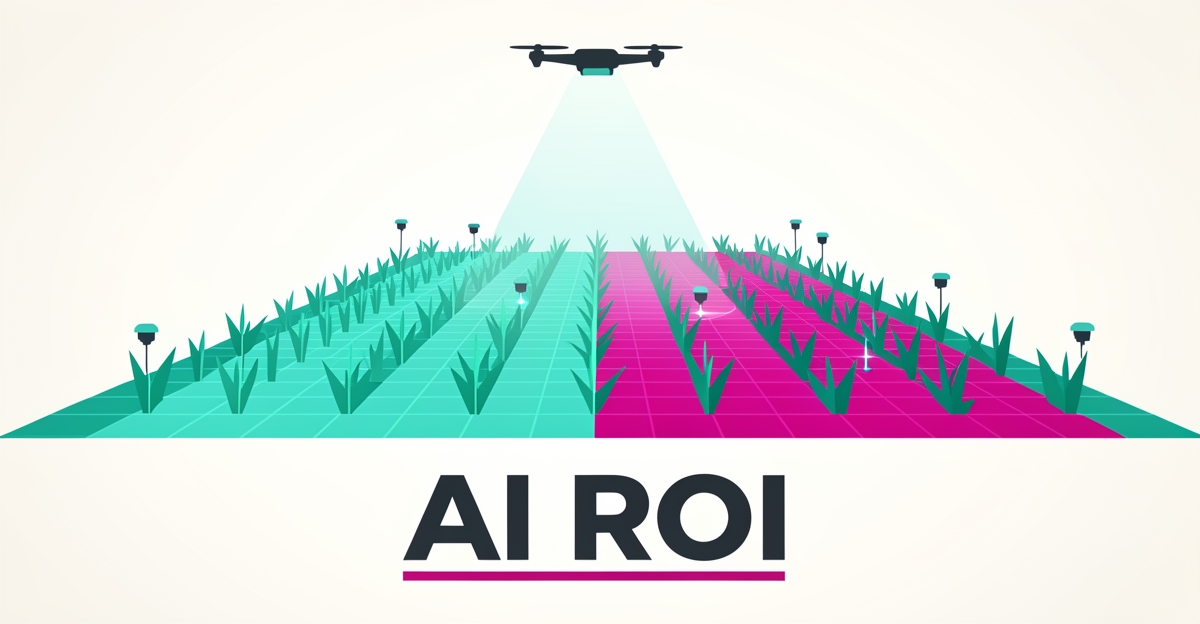
Is AI Worth It for Your Weed Control Business? A Cost-Benefit Breakdown
Key Facts
- Industry analyses typically report herbicide reductions of roughly 50% when precision targeting replaces blanket spraying
- Automated weed detection is commonly reported to cut scouting time by well over half compared with manual field walks
- Labor requirements for detection and application typically fall substantially, often by more than half, with AI-assisted monitoring
- Overall weed management costs are frequently reported to drop by around 50% per hectare with precision approaches
- Scentless mayweed can produce over 30,000 seeds per plant, remaining viable in soil for decades
- Weed competition beginning around 3 weeks after crop emergence can trigger meaningful daily yield losses in sensitive crops like onions
Hire a team member that works 24/7 — for less than a part-time wage.
AI receptionists, SDRs, dispatchers and 99+ roles. Trained on your business, fully managed.
Not sure where to start? Ask our AI planner
The Hidden Costs of Traditional Weed Control
Weed control businesses often overlook the true cost of manual methods, costs that quietly erode profitability year after year. Traditional approaches rely heavily on labor-intensive scouting and blanket herbicide applications, leading to significant financial drains that compound over time. Without precise detection, crews waste hours walking fields that may not need treatment, while chemicals are applied uniformly regardless of actual weed pressure.
Labor inefficiencies represent one of the largest hidden expenses. Under conventional methods, manual weed detection can take several hours per hectare, requiring substantial crew time for what AI-assisted systems can typically accomplish in a fraction of that time. This inefficiency scales quickly: for a 50-hectare operation, traditional detection can consume hundreds of crew hours monthly compared to a small fraction of that with AI-assisted monitoring. Beyond detection, overall labor requirements for weed management often drop dramatically with automation, industry reports commonly cite reductions well above 50%, which directly impacts payroll and scheduling overhead.
Perhaps most costly is the yield loss from delayed intervention. Weeds begin competing with crops within roughly 3 weeks of emergence, and in sensitive crops like onions, competition can trigger meaningful daily yield reductions once it starts, a pattern that applies broadly across many vegetable and row crops. When detection lags, even by days, this compounds into measurable revenue loss per hectare before treatment begins. Simultaneously, blanket spraying can waste a large share of herbicide volume, by some estimates up to half, on areas with minimal or no weed presence, inflating input costs without improving outcomes. These combined factors, excess labor, chemical waste, and preventable yield loss, create a baseline cost per hectare that AI-driven precision can typically cut substantially through targeted application and early detection. For weed control businesses aiming to benchmark their current performance, these industry patterns provide a clear foundation for evaluating where AI transformation delivers the highest return. To explore how these savings apply to your specific operation, start the fit check to identify your biggest bottleneck and map high-ROI automation opportunities.
What AI-Driven Weed Management Actually Delivers
AI-powered weed management transforms how businesses approach field operations by delivering measurable gains in efficiency and cost savings. AIQ Labs helps weed control businesses model these outcomes to understand the real impact on their bottom line. Precision targeting through image recognition and drone technology allows for exact identification of weed infestations, eliminating wasteful blanket spraying. As a result, businesses commonly see herbicide usage drop by around half while protecting or improving yields through earlier, better-timed intervention. This dual benefit reduces input costs and supports productivity at the same time.
Labor efficiency improves dramatically with AI automation handling detection and application tasks that previously required significant manual effort. Detection time typically falls by 80–90% with AI-assisted monitoring, while overall labor requirements often drop by more than half. These changes directly cut operational overhead and reduce total weed management costs per hectare, frequently by around 50% in reported cases. For businesses facing labor shortages or rising input prices, this shift offers a clear path to more sustainable operations.
- Herbicide usage typically reduced by around 50% through precision targeting
- Labor requirements often cut by more than half with automated detection and application
- Weed detection commonly accelerated by 80–90% compared with manual scouting
- Overall management costs frequently lowered by around 50% per hectare
- Yields protected or improved through earlier intervention and reduced weed competition
These performance gains aren't theoretical, they reflect patterns reported across farms and field service providers who have adopted AI-driven weed control. By minimizing chemical use, protecting yield potential, and streamlining labor deployment, AI enables weed control businesses to operate with greater consistency and lower risk. AIQ Labs supports this transition by helping organizations assess their readiness, model potential returns, and implement solutions that align with their scale and goals, without locking them into proprietary systems or ongoing vendor dependencies. The result is a smarter, more resilient approach to weed management that pays dividends across seasons.
Matching AI Solutions to Your Operation's Scale
For weed control businesses, selecting the right AI technology depends heavily on operational scale and specific weed challenges. Small operations managing under 5 hectares often benefit most from image recognition systems for precision detection, which can dramatically reduce weed identification time while requiring minimal infrastructure investment. Medium-sized businesses handling 5–20 hectares typically see the strongest ROI from drone-based monitoring, which provides comprehensive field coverage and enables significant savings in overall weed management costs by optimizing herbicide application based on real-time weed density data. Large operations exceeding 20 hectares frequently justify investment in robotic removal systems or predictive analytics, as these technologies address the largest labor savings achievable through automation while mitigating risks from aggressive weeds like scentless mayweed, which can produce over 30,000 seeds per plant and remain viable in soil for decades. AIQ Labs helps businesses map these solutions to their specific acreage, weed species, and labor constraints through detailed ROI modeling that compares implementation costs against projected savings from reduced chemical use, labor efficiency gains, and yield improvements. This tailored approach ensures investments align with actual operational needs rather than adopting technology for its own sake, preventing both under-investment in critical capabilities and over-spending on unnecessary complexity. Matching AI sophistication to scale creates a foundation where technology enhances, not disrupts, existing workflows while building toward long-term resilience against evolving weed resistance patterns.
Implementation Realities: Investment, Infrastructure, and Training
Adopting AI for weed control isn't just about the technology, it's about preparing your business for the practical demands of integration. Upfront capital remains a significant barrier, as drones, sensors, robotic systems, and AI platforms require substantial initial investment that can strain budgets, especially for smaller operations. Industry observers consistently cite these high initial costs as a primary obstacle to adoption, even when long-term savings are projected.
Beyond hardware, successful implementation depends on reliable technical infrastructure, which many rural agricultural settings lack. AI systems need consistent internet connectivity for data transmission, adequate storage for processing field imagery, and compatible hardware to run complex models, infrastructure gaps that can derail deployment before it begins. Pair this with the need for specialized training, where staff must learn to operate AI interfaces, interpret data outputs, and maintain equipment, and the human element becomes as critical as the technology itself. AIQ Labs addresses these realities through readiness assessments and tailored roadmaps that help businesses navigate these challenges without overpromising on ease or speed. Maintenance requirements and regulatory compliance, such as approvals for drone use or chemical application systems, add ongoing layers of complexity that must be factored into any realistic adoption plan. Ignoring these practical barriers risks turning AI ambition into operational frustration, undermining the very efficiencies the technology promises. A phased approach, starting with pilot programs in high-impact areas, allows businesses to build capability incrementally while validating ROI before scaling.
Building Your AI Business Case with Expert Guidance
A convincing AI business case doesn't start with technology, it starts with your own numbers. Before any weed control operation invests in AI, it needs baseline metrics: current labor hours, herbicide spend, detection timelines, and yield impact. Without that foundation, ROI projections are guesswork.
The potential upside is well documented across the industry. Precision weed management systems are commonly reported to cut herbicide usage by around half while protecting yields through earlier intervention. Labor requirements often drop by more than half, and overall management costs per hectare frequently fall by a similar margin when precision targeting replaces blanket methods.
But those headline numbers only become real when modeled against your specific operation. This is where structured ROI modeling separates serious investments from expensive experiments. AIQ Labs begins with a readiness evaluation and business case development, mapping your current technology stack, data infrastructure, and team capabilities before recommending anything. The goal is to identify the highest-value automation targets for your size and scale, not to sell you the most complex system available.
A right-fit approach typically focuses on a few core questions:
- Which workflows carry the greatest cost today, detection labor, blanket chemical application, or reactive scheduling?
- What baseline metrics will you use to measure improvement, such as detection time or herbicide volume per hectare?
- Which AI solution matches your operational scale, image recognition, drone-based monitoring, robotics, or predictive forecasting?
- What infrastructure and training gaps must be closed before deployment?
Execution matters as much as selection. Most organizations stall at the pilot stage, running limited trials that never scale. AIQ Labs addresses this with phased rollouts, starting with a single critical workflow, proving measurable results, and expanding only as ROI becomes evident. The implementation process moves from discovery and architecture through development, deployment, and ongoing optimization, with ROI tracking built in at every phase. Engagement structures like Build in Milestones reinforce this discipline: you approve and pay for each phase as it ships, and you can stop anytime while keeping everything built so far.
The evidence supports this incremental path. AI-assisted weed detection is typically 80–90% faster than manual scouting, an improvement that compounds quickly once proven in one area of operation. Scaling after evidence beats scaling on faith.
If you want to pressure-test your own numbers, start with the two-minute Fit Check at aiqlabs.ai/apply, followed by a free 30-minute strategy call at aiqlabs.ai/book. It's a working session with an AI engineer to map your biggest bottleneck and identify high-ROI automation opportunities, and if there isn't a clear win, they'll tell you that too.
Still paying for 10+ subscriptions that don’t talk to each other?
We build custom AI systems you own outright. No vendor lock-in. Full control.
Not sure where to start? Ask our AI planner
Frequently Asked Questions
How much can AI actually reduce my herbicide costs in weed control?
Will AI really save me money on labor, or just shift costs to expensive tech?
My operation is small (under 5 hectares), is AI worth it for me?
What happens if weeds get resistant to herbicides, can AI help with that?
How long before I see ROI from AI weed control, is it years?
What if I don't have reliable internet or tech infrastructure in my fields?
From Cost Center to Competitive Edge
The pattern is clear: traditional weed control quietly drains margin through excess labor, blanket spraying, and preventable yield loss, while AI-driven precision typically cuts detection time by 80–90%, reduces labor needs by more than half, and lowers overall management costs by around 50% per hectare. The payoff is not just savings, it is dramatically less herbicide use and better-protected yields when intervention happens early and only where needed. That shift turns weed management from a recurring cost center into a controllable, scalable service offering. The right path depends on your scale, crops, and current bottlenecks, and a phased approach helps you prove ROI before you scale. If you want to pressure-test your own operation, start the two-minute Fit Check at aiqlabs.ai/apply for a free 30-minute strategy call with an AI engineer to map your biggest bottleneck and identify high-ROI automation opportunities, and if there isn't a clear win, AIQ Labs will tell you that too.
Make AI your competitive advantage — not just another tool.
Strategy, implementation and ongoing optimization. One partner, end to end.
Not sure where to start? Ask our AI planner