Prioritizing Features For AI Powered Strategic Planning
Key Facts
- 80–85% of AI projects fail to deliver on promises, twice the failure rate of traditional IT projects, according to RAND and Gartner research.
- Only 48% of AI projects make it past pilot to production, per Gartner data.
- 42% of companies abandoned most AI initiatives in 2025, up from 17% the year before, S&P Global found.
- In one 2025 MIT Sloan study, 80% of AI implementation work went to data engineering and governance, not the model itself (source).
- Growing SMBs are twice as likely to have integrated tech stacks (66% vs. 32%) than declining peers, Salesforce research shows.
- 43% of organizations cite data quality as their top AI obstacle, and only 10% feel completely AI-ready, research indicates.
- AI high performers are 3x more likely to redesign processes rather than layer AI onto broken workflows, McKinsey reports.
Hire a team member that works 24/7 — for less than a part-time wage.
AI receptionists, SDRs, dispatchers and 99+ roles. Trained on your business, fully managed.
Not sure where to start? Ask our AI planner
Why Most AI Planning Initiatives Fail Before They Start
Most AI initiatives die quietly, and the numbers are brutal. Between 80% and 85% of AI projects fail to deliver on their promises, twice the failure rate of traditional IT projects, according to research cited by RAND Corporation and Gartner. Meanwhile, only 48% of AI projects make it past pilot to production.
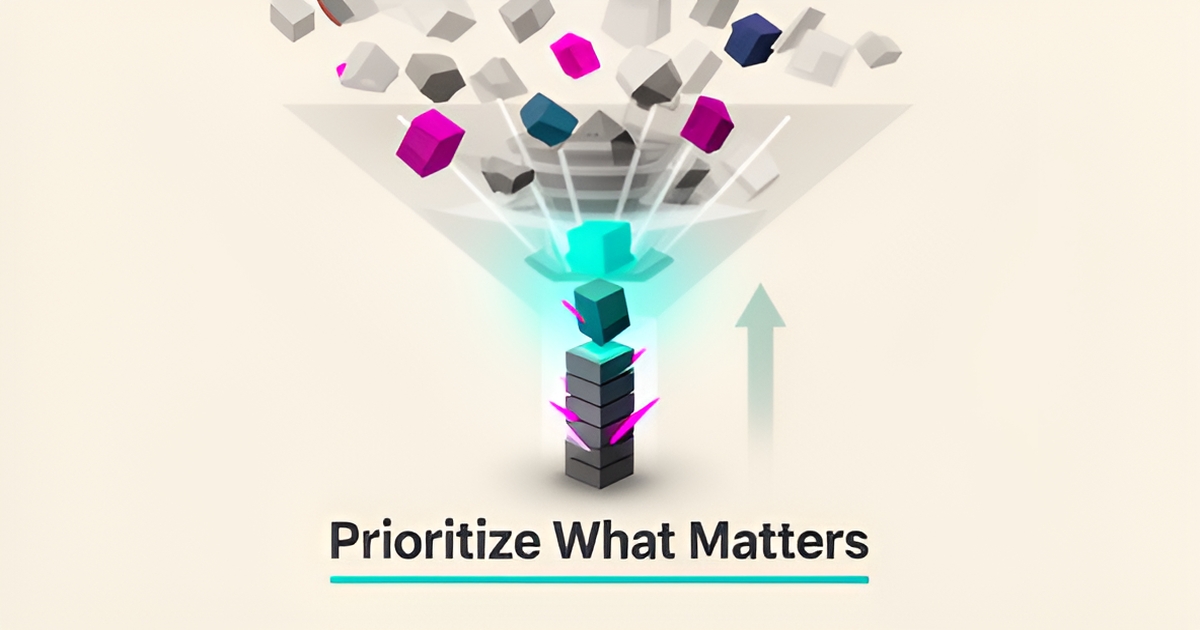
Here's the uncomfortable truth: this is not a technology problem. It's a prioritization problem.
The evidence backs this up. S&P Global Market Intelligence found that 42% of companies abandoned most of their AI initiatives in 2025, up from just 17% the year before, and the technology didn't get worse in twelve months. What changed is that more organizations rushed in without deciding what actually mattered. As one practitioner framework puts it, "Most AI strategies fail not because of technology but because of misplaced focus."
So where does the focus go wrong? Two predictable traps:
- Buying tools shaped like aspirations instead of bottlenecks. Leaders evaluate AI planning platforms against a wish list of impressive capabilities rather than asking what the actual constraint is in their business. The result is software that solves a problem nobody has.
- Using AI to validate existing beliefs. The biggest failure mode in AI-assisted planning is confirmation bias, prompting tools to confirm what leadership already thinks instead of stress-testing the strategy.
- Ignoring the data foundation. 43% of organizations cite data quality as their top AI obstacle, and only 10% feel completely ready for AI deployment.
The confirmation-bias trap deserves special attention because it's the most insidious. A language model predicts plausible text, and a strategic plan reads like other strategic plans, so the output looks right whether or not the reasoning underneath holds. Leaders walk away feeling validated, not challenged, and the planning process adds zero new intelligence.
The pattern behind nearly every failure is the same: the problem was poorly scoped, the data was unavailable or unfit, the value was unproven, or the solution couldn't operate at scale. None of these are model problems. All of them are selection and prioritization problems that happen before a single tool is purchased.
This is why the approach matters more than the vendor. Businesses that succeed tend to start narrow, targeting the one workflow that costs the most, proving value, then expanding. It's the philosophy behind how teams like AIQ Labs structure engagements: fix a single broken process first, build confidence, then scale into department-wide and company-wide systems. Early wins beat early moonshots, every time.
The good news is that failure is avoidable. The organizations winning with AI aren't doing more, they're doing less, better, and in the right order. The rest of this guide shows you exactly how to make those choices.
Start With the Bottleneck, Not the Feature List
Most AI strategies fail not because the technology falls short, but because teams buy tools shaped like their aspirations instead of their bottlenecks. Before you evaluate a single feature in an AI strategic planning tool, run a short diagnostic, it will eliminate most of your shortlist in under an hour.
The numbers back this up. According to research on AI project failure, 80–85% of AI projects fail to deliver on their promises, roughly twice the failure rate of traditional IT projects. The cause is rarely the tool. It's misplaced focus, applied in the wrong order.
Four questions before any demo:
- What is the actual bottleneck? Name the specific workflow that bleeds the most hours, revenue, or accuracy. If you can't name it, no feature list will save you.
- Does the AI touch your real data, or just generate prose? Analysis computed against your CRM, financials, and operations is a different product category than text about strategy, and priced very differently.
- Who lives in this tool weekly? If no one on your team touches it after month one, it's shelfware regardless of its capabilities.
- Where does human judgment stay? Prioritization, resource commitment, and contrarian calls must remain with people who know your constraints.
The second question deserves special attention, because it's where most buying mistakes happen. As analysis of AI strategy tools makes clear, a language model predicts plausible text, and a strategic plan reads like every other strategic plan, so the output looks right whether or not the reasoning holds. General chatbots are fine for mapping the high-level shape of a market. They're not enough for action, because committing resources takes analysis against your real constraints.
This is also why AI structurally fails at certain jobs. It excels at research, synthesis, first drafts, and scenario generation, work that used to take a small team two weeks can now surface in hours, per practitioners who use AI in strategic planning. But prioritization, dependency analysis, and contrarian judgment require a model of your specific business that no general tool possesses. As one CEO coach puts it: "AI can give you a hundred options, but you have to decide."
The failure mode in this market is buying one category when your problem lives in another. AIQ Labs' own approach reflects this, its workflow builds target the one process that costs the most, rather than selling capabilities in search of a problem. Whatever vendor you choose, make them prove the tool computes against your business, not just writes fluently about it.
Score Features With a Framework: Foundations Before Intelligence
Most AI initiatives don't fail because the technology was wrong, they fail because the wrong features were built first. A structured scoring framework turns feature selection from a debate into a decision.
Score every candidate feature on six dimensions: value, feasibility, data readiness, risk, time-to-value, and strategic fit. As the CIGen prioritization framework puts it, "weights are where strategy lives", so freeze your weights before scoring begins, and review them quarterly rather than mid-cycle. This prevents the quiet bias where a loud stakeholder reweights criteria to rescue a favorite feature.
The evidence strongly supports weighting data readiness heavily. Growing SMBs are twice as likely to have integrated tech stacks (66% vs. 32% of declining peers), and they're investing in data management at higher rates (74% vs. 47%), according to Salesforce's SMB trends research. Meanwhile, 43% of organizations cite data quality as their top AI obstacle.
The reason is simple: the AI itself is rarely the hard part. In one 2025 study of an agentic AI deployment, 80% of implementation work went to data engineering, stakeholder alignment, governance, and workflow integration, not the model. A feature that sounds intelligent but sits on fragmented data will burn months in plumbing before it produces anything.
The Capability Staircase: sequence for early wins, not early moonshots. Resist the temptation to attack your hardest problem first. Instead, sequence initiatives by impact and complexity:
- Start with high-impact, low-complexity wins, roughly 7+/10 impact, 3–5/10 complexity, that build confidence and reusable capability.
- Prioritize projects that unlock future projects; a short initiative that makes five others easier is worth more than its individual score.
- Automate the basics before layering AI on top, or you risk "adding complexity without fixing core processes."
- Redesign the underlying workflow rather than layering AI onto a broken one, high performers are 3x more likely to do exactly this.
This staircase logic is why phased delivery models work. AIQ Labs structures engagements this way, one workflow, approved milestone by milestone, precisely because early confidence-building wins compound, while early moonshots stall at the pilot stage (only 48% of AI projects make it past pilot to production).
One caution as you score: AI can support prioritization with structured inputs and real business data, but it can't substitute for human judgment on your constraints. Use the framework to organize the decision, then make it.
Automate the Basics Before Layering on AI
Here's a hard truth that separates the 6% from the rest: only a small fraction of companies achieve high-performer status with AI, and the difference isn't the technology they buy, it's the state of the processes they point it at. As one practitioner put it, AI doesn't fix broken processes, it accelerates them. If your manual workflow is inconsistent, your AI system will be inconsistently wrong, just faster.
The path forward follows a three-stage maturity model. First comes automated awareness: rule-based systems that follow defined steps for speed and consistency. Second is assisted intelligence, where AI recommends and humans decide. Third is agentic operations, where AI handles routine tasks end-to-end and escalates only the exceptions. Skipping straight to stage three without automating the basics risks adding complexity without fixing core processes.
McKinsey's research backs this up: AI high performers are 3x more likely to redesign processes rather than layer AI onto legacy workflows. The work of redesign isn't glamorous, either. In one 2025 study, 80% of implementation effort went to data engineering, stakeholder alignment, governance, and workflow integration, not the AI model itself.
For businesses evaluating AI strategic planning tools, this translates into a phased build path:
- Fix one workflow first, the single process that costs the most in lost time, missed follow-ups, or manual data entry.
- Then extend to a full department, integrating scheduling, communication, and reporting into one coherent system.
- Only then consider a complete AI operating system that connects intake, operations, and strategy across the business.
This is the sequence AIQ Labs builds around with its AI Workflow Builds and AI Operating Systems, one process fixed first, then a department, then a connected operating layer with AI that takes action inside it. The point isn't incrementalism for its own sake; it's that each phase produces clean data and proven workflows the next phase depends on.
The data foundation matters more than the intelligence layer on top. Growing SMBs are twice as likely to have an integrated tech stack (66% vs. 32%) than declining peers, and 74% are increasing data management investments, according to Salesforce research. With 43% of organizations citing data quality as their top AI obstacle, integration and data readiness deserve heavier weight in your feature scoring than flashy agent capabilities.
When comparing vendors, ask a simple question: does this tool assume your processes already work, or does it help you rebuild them? The answer tells you whether you're buying acceleration for a broken machine or an actual fix.
Demand Governance and Prove It in the Demo
Once you've shortlisted features, a harder filter applies: some capabilities are non-negotiable, and some vendor claims aren't real yet. Knowing the difference is what separates a tool that survives contact with your business from one that quietly fails three months in.
The most important warning comes from MIT Sloan's Kate Kellogg: "As you move agency from humans to machines, there's a real increase in the importance of governance and infrastructure to control and support agentic systems" (MIT Sloan research on agentic AI). Her fieldwork found that 80% of implementation work went to data engineering, stakeholder alignment, governance, and workflow integration, not the AI itself. Any feature list that skips these is a feature list for a demo, not for production.
Four features belong at the top of your priority list regardless of vendor:
- Validation layers, every action the AI takes gets checked against defined rules before execution, so errors fail safely instead of compounding.
- Human-in-the-loop escalation, configurable thresholds that route exceptions to a person when a situation exceeds the AI's authority.
- Audit trails, complete logging of what the system did and why, which matters doubly in regulated workflows like collections or legal intake.
- Honest metrics, shared measurements tied to actual business goals, not vanity dashboards.
On metrics, resist a common sleight of hand. Kellogg's research is blunt: "Just because an agentic AI model reclaims 20% of someone's time, that doesn't mean it's a 20% labor-cost savings." Reclaimed hours only become savings if you redeploy them deliberately. If a vendor's ROI pitch conflates the two, treat it as a yellow flag.
Then verify everything. Practitioner guidance on AI strategy tools advises treating advertised agent capabilities as unshipped until a demo proves them against your data, your tools, and your edge cases. A capability that works on the vendor's curated sample tells you nothing about your messy CRM records or your noisy phone lines. This is why AIQ Labs runs production systems of its own, the question to ask any builder is what they operate daily, not what they can describe.
The practical path forward is simple. Run a bottleneck-focused working session, two to four hours is the benchmark suggested in prioritization guidance from CIGen, and identify the single workflow where a validated, governed, auditable build would return the most value. Score it honestly. Then demand the demo.
Still paying for 10+ subscriptions that don’t talk to each other?
We build custom AI systems you own outright. No vendor lock-in. Full control.
Not sure where to start? Ask our AI planner
Frequently Asked Questions
Why do so many AI planning projects fail, is the technology just not ready?
Should I fix my broken workflows before adding AI on top of them?
How do I decide which AI features to prioritize first?
Does my data really need to be in good shape before I invest in AI planning tools?
Can AI actually make strategic decisions for my business, or is that still my job?
What's the biggest hidden risk when using AI for strategic planning?
How can I tell if an AI vendor's claims are real before I buy?
Do Less, Better, In the Right Order
The pattern across every failed AI initiative is the same: the problem was poorly scoped, the data wasn't ready, or the tool solved a problem nobody had. The winners aren't doing more, they're doing less, better, and in the right order. Start by naming your actual bottleneck. Score features on data readiness and feasibility before intelligence. Automate the basics before layering AI on top. And demand governance, audit trails, and a demo against your real data, because only 48% of AI projects make it past pilot to production, and that number doesn't improve by buying bigger feature lists. That's exactly how AIQ Labs structures its engagements: one broken workflow fixed first, proven value, then scaled into a department-wide or company-wide system, built in milestones, so you stop anytime and keep what's shipped. Your next step is simple. Run the two-minute Fit Check at aiqlabs.ai/apply, then book a free 30-minute strategy call to map your highest-cost workflow and score it honestly. If there isn't a clear win, we'll tell you that too.
Make AI your competitive advantage — not just another tool.
Strategy, implementation and ongoing optimization. One partner, end to end.
Not sure where to start? Ask our AI planner