Real-Time Sales Intelligence: How Bakery Cafes Can Track Performance with AI
Key Facts
- Bakery waste ratios typically run 15–25% without modern forecasting
- AI-driven forecasting can typically bring waste down toward 8–12%
- AI-based planning is reported to reduce returns by up to 40% while keeping products available
- AI-assisted store planning is associated with sales increases of 3% or more in industry reporting
- Effective forecasting layers item-level sales history, hyperlocal weather, and community events
- Many modern POS systems now include built-in forecasting features at modest monthly cost
Hire a team member that works 24/7 — for less than a part-time wage.
AI receptionists, SDRs, dispatchers and 99+ roles. Trained on your business, fully managed.
Not sure where to start? Ask our AI planner
The Perishability Problem Bakery Cafes Can't Forecast Away
Every unsold croissant is a loss you can't take back. When a bakery cafe misjudges demand, the margin doesn't just slip, it spoils on the rack, and the day ends with product you can't sell tomorrow.
That's why perishability turns forecasting into a daily profit decision. Unlike shelf-stable retail, bakery items often have hours, not days, to sell. The result is a tight tradeoff: overproduce and you eat waste; underproduce and you lose sales, frustrate regulars, and create a "sold out" reputation that's hard to undo.
Traditional intuition-based forecasting struggles here because it's built for imperfect memory, not for perishable complexity. Industry reporting commonly places bakery waste ratios around 15–25% without modern forecasting. With AI-driven forecasting and planning, that range can typically drop toward 8–12%, a meaningful swing when ingredient costs and labor are already tight.
The forecasting gap isn't only about "being bad at math." It's about cognitive bias. People remember vivid spikes, like a holiday rush, more than slow, ordinary patterns. AI helps by focusing on patterns rather than memories, correcting for the tendency to over-weight what felt important last week.
Labor pressure makes the problem sharper. When staffing is thin, owners and managers don't have time for careful, multi-factor planning every morning. As of late 2026, bakery and snack operators are increasingly turning to automation and digitalization to address labor shortages and make better use of real-time data for production and demand planning.
Stockouts and spoilage aren't abstract, they're measurable costs with different failure modes. A stockout costs you immediate revenue and customer trust. Spoilage costs you ingredients, labor time, and disposal. AI-based planning is designed to balance both by using historical sales plus external signals like weather and local events to anticipate demand more precisely.
- Perishability compresses your margin for error into hours, not weeks.
- Waste ratios typically run 15–25% without modern forecasting.
- AI forecasting can typically bring waste down toward 8–12% by learning demand patterns.
- Labor shortages reduce the time available for careful daily planning, increasing reliance on gut feel.
For bakery cafes, the takeaway is simple: forecasting isn't a "nice-to-have" analytics project, it's the difference between disciplined production and daily guesswork. Once you can quantify demand patterns and track performance in real time, the waste-versus-stockout tradeoff becomes manageable instead of painful. That's the foundation for the kind of real-time sales intelligence AIQ Labs builds into dashboards and monitoring systems that help owners act on what's happening now, not what they hope will happen.
How AI Turns POS Data into Real-Time Sales Intelligence
Every morning, bakery cafe owners face the same critical question: how much to bake? AI transforms this daily gamble into a data-driven decision by analyzing three essential layers of information that traditional methods miss.
Accurate forecasting requires more than yesterday's sales figures. Effective prediction needs three key data layers working together: item-level sales history, hyperlocal weather, and community events. This granular approach captures patterns that human intuition often overlooks.
The first layer tracks precisely which items sell at specific times under specific conditions. Rather than remembering that "Saturdays are busy," AI recognizes that chocolate croissants spike on rainy Saturday mornings while sourdough maintains steady weekday demand. This timestamped, granular data forms the foundation of reliable prediction.
Weather integration adds crucial context. Temperature, precipitation, and seasonal shifts dramatically influence customer behavior, hot coffee sales surge on cold mornings, while iced beverages dominate summer afternoons. AI systems connect to weather APIs to adjust forecasts automatically based on hyperlocal conditions.
The third layer incorporates community intelligence. Local festivals, school holidays, street closures, and even competitor openings create demand fluctuations that historical data alone cannot predict. AI systems that monitor community calendars help bakeries prepare for these irregular but significant events.
The impact of this multi-layered approach can be substantial. AI-based planning is reported to reduce returns by up to 40% while ensuring constant product availability, and bakeries implementing AI-driven store planning are associated with sales increases of 3% or more in industry reporting.
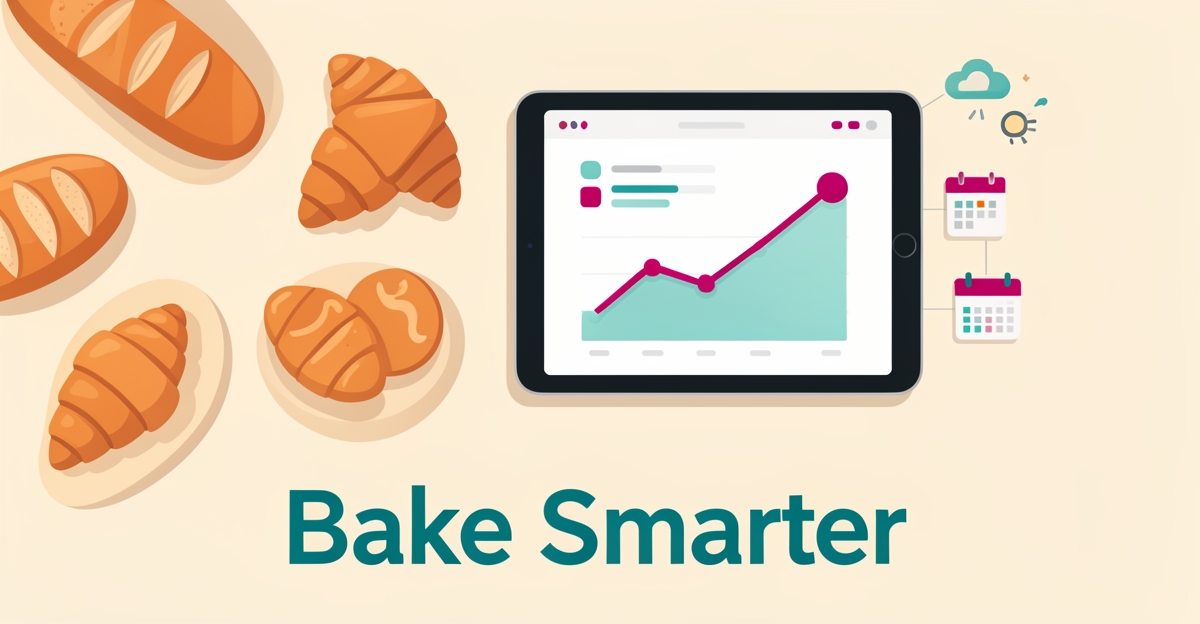
Real-time dashboards transform this intelligence into actionable insights throughout the day. These systems track:
- Live sales performance against forecasted targets
- Popular item velocity and projected stockout times
- Customer traffic patterns and peak period predictions
- Waste accumulation and end-of-day surplus risks
AIQ Labs builds custom dashboard solutions that consolidate these data streams into single interfaces owners can check instantly. Rather than juggling multiple systems or relying on gut instinct, bakery operators gain immediate visibility into performance trends that guide same-day production adjustments. For shops that want to start smaller, an [AI Workflow Build](/workflow-builds) can rebuild the single workflow that costs the most, like daily production planning, at a fixed price.
The technology treats holidays and special occasions as clusters of conditions rather than simple calendar dates. By analyzing past years with enriched context, day-of-week shifts, weather impacts, local pay cycles, AI generates predictions that account for the true complexity of bakery demand patterns.
From Forecast to Action: Building an AI-Powered Operations Loop
Bakeries face a constant balancing act between overproduction and stockouts, where even small miscalculations can erode profits and frustrate customers. The key to breaking this cycle lies in turning AI-generated forecasts into concrete, daily actions that align with real-time demand signals.
AIQ Labs helps bakery cafes implement an operations loop where morning forecast ranges directly inform production decisions. By starting the day with conservative baking at the lower bound of the AI's prediction, such as preparing only 80% of the forecasted croissant demand, owners minimize waste while staying prepared for fluctuations. This approach leans on the reported advantage of AI-based planning: fewer returns while keeping goods constantly available, which matters most for perishable items.
To respond quickly to unexpected surges, bakeries keep partial batches of dough or fillings ready to finish within 15–20 minutes, a tactic practitioners use to scale rapidly without compromising freshness. Throughout the day, staff compare actual sales against forecasts, refining the model's accuracy over time, especially valuable given that artisan and seasonal items typically see forecasting error in the ±15%–25% range.
Cost-based decision rules further optimize this loop: production continues as long as the probability of selling the next unit exceeds the ratio of stockout cost to the sum of stockout and spoilage costs. For example, if unsold croissants represent a $2 loss and missed sales a $5 loss, baking should continue until the sell probability drops below 29%. This method turns abstract forecasts into profit-driven actions, helping push waste ratios from the typical 15–25% down toward 8–12% with AI forecasting.
By integrating weather APIs and local event calendars into their forecasting systems, bakery cafes enhance prediction reliability, particularly important since hyperlocal weather and community events are two of the three essential data layers for accurate demand forecasting. AIQ Labs supports this end-to-end process through custom dashboard development that delivers instant visibility into performance trends, enabling owners to shift from reactive guessing to proactive, data-informed operations.
Implementing Real-Time Intelligence Without Replacing Your Team
Bakery cafe owners don't need to replace their teams to gain real-time sales intelligence, they can start with what they already have. Many modern POS systems like Square or Toast include built-in forecasting features that use historical sales data to predict demand for key items, often at a modest monthly cost. These tools generate daily high and low estimates for popular products, giving owners a data-informed starting point for production planning.
To improve accuracy, integrate external data sources such as hyperlocal weather APIs and community event calendars, which account for demand drivers beyond sales history. Staff should begin each shift by reviewing the AI's forecast range, then adjust for known variables like street fairs or competitor closures before baking. Starting conservatively, baking to the lower end of the forecast range, helps minimize waste while the team learns to trust the system's recommendations.
Tracking forecast versus actual sales daily is essential for refining the model over time. Bakeries that align production with AI-driven forecasts and monitor daily variances typically see waste decline within the first weeks of consistent use. Over time, this practice builds staff confidence as they see the AI consistently identify patterns humans might miss, such as how weather shifts or pay cycles affect demand for specific items.
AIQ Labs supports this rollout through its Build in Milestones payment model, allowing cafes to implement forecasting workflows phase by phase, starting with POS integration, then adding weather and calendar data, and finally establishing daily tracking and staff training protocols. Each phase delivers usable functionality immediately, with full ownership of the custom-built system retained by the business. For owners who'd rather have managed AI staff handling the reporting and follow-up, [AI Employees](/ai-employees) cover 99+ roles at roughly 80% less cost than a human hire. This approach ensures teams aren't overwhelmed, can validate results at each step, and gradually adopt AI as a trusted decision-making partner rather than a replacement for their expertise. As staff see fewer stockouts and less waste, their reliance on the system grows organically, turning AI into a quiet but powerful force multiplier for daily operations.
Still paying for 10+ subscriptions that don’t talk to each other?
We build custom AI systems you own outright. No vendor lock-in. Full control.
Not sure where to start? Ask our AI planner
Frequently Asked Questions
How much can AI forecasting reduce waste for bakery cafes compared to traditional methods?
What three data layers does AI use to improve demand forecasting accuracy for bakery items?
Can bakery cafes implement AI forecasting without replacing their existing staff or POS systems?
How quickly can bakeries see results from implementing AI-driven forecasting?
What cost-based rule should bakeries use to decide when to stop producing an item during the day?
How does AI help bakery cafes prepare for unexpected demand surges during the day?
Turn Daily Guesswork into Profitable Precision
Bakery cafes operate on razor-thin margins where every unsold pastry represents lost revenue and wasted effort. As this article shows, AI-driven real-time sales intelligence tackles the daily challenge by combining item-level sales history, hyperlocal weather, and community events to forecast demand with greater accuracy, typically cutting waste from the 15–25% range toward 8–12% while reducing stockouts and supporting sales growth. The real power lies in turning those forecasts into action: starting production conservatively, adjusting for local events, and using cost-based rules to decide when to bake the next unit. AIQ Labs helps bakery owners implement this intelligence through custom dashboards and phased integration, starting with existing POS data, then layering in weather and calendar insights, so teams gain trust in the system without disruption. The result is fewer surprises, less waste, and more confident decisions grounded in what's actually happening in your shop. To see how this could work for your bakery, start with a [free Fit Check](/apply) and a 30-minute strategy call to map your biggest bottleneck and find where AI delivers the fastest win.
Make AI your competitive advantage — not just another tool.
Strategy, implementation and ongoing optimization. One partner, end to end.
Not sure where to start? Ask our AI planner