Should Agricultural Co-ops Invest in AI for Crop Health Monitoring?
Key Facts
- AI-powered monitoring has reportedly detected disease 10-14 days earlier in some operations, with case studies claiming major reductions in crop losses and fungicide use according to published case studies — treat vendor-reported figures as directional until verified on your own fields
- Industry analysis suggests a majority of top-performing farms now use AI tools for real-time crop health and soil data integration as reported by industry research
- AI-driven soil analysis is credited with productivity gains of up to 30% through precise data integration and plant selection per Farmonaut
- Just 14% of surveyed U.S. and Canadian farmers use AI tools on their operations today per Bushel's 2026 State of the Farm Report
- Modern AI yield prediction models are reported to achieve roughly 90-95% accuracy at the field level when updated with in-season satellite data per recent case studies
Hire a team member that works 24/7 — for less than a part-time wage.
AI receptionists, SDRs, dispatchers and 99+ roles. Trained on your business, fully managed.
Not sure where to start? Ask our AI planner
The Yield Protection Gap: Why Traditional Crop Monitoring Falls Short
Manual scouting can't keep pace with how fast disease spreads across thousands of acres. By the time a problem is visible to the eye, the window for low-cost intervention has already closed, and co-ops absorb the loss in yield and input waste.
Traditional crop monitoring relies on scheduled field walks, spot checks, and reactive treatment after symptoms appear. This approach leaves large areas unobserved between visits and depends on human interpretation under variable weather and lighting. The result is delayed response and preventable damage that compounds across member farms.
Published case studies suggest the size of that delay's cost. Real-world case studies report disease detected 10-14 days earlier on average with AI-powered monitoring, with claimed reductions in crop losses and fungicide use in the tens of percent. We'd treat those specific percentages as directional rather than guaranteed — results depend heavily on crop, region, and how quickly a co-op acts on alerts. What is not in dispute is the mechanism: early detection shifts management from rescue spraying to targeted intervention.
The gap is also visible in adoption patterns. Bushel's 2026 State of the Farm Report found just 14% of surveyed U.S. and Canadian farmers use AI tools on their operations today, and among those early adopters, half apply AI to business and financial analysis rather than field-level decisions like yield prediction or pest detection. Capability exists, but field use lags.
Where AI is deployed, monitoring becomes continuous and data-driven. Crop monitoring tools use AI technology combined with satellite imagery and real-time data analytics to monitor moisture levels, growth stages, and pest management, enabling farmers to catch problems early. Core capabilities that close the yield protection gap include:
- Real-time data analytics for up-to-date insights across entire co-op acreage
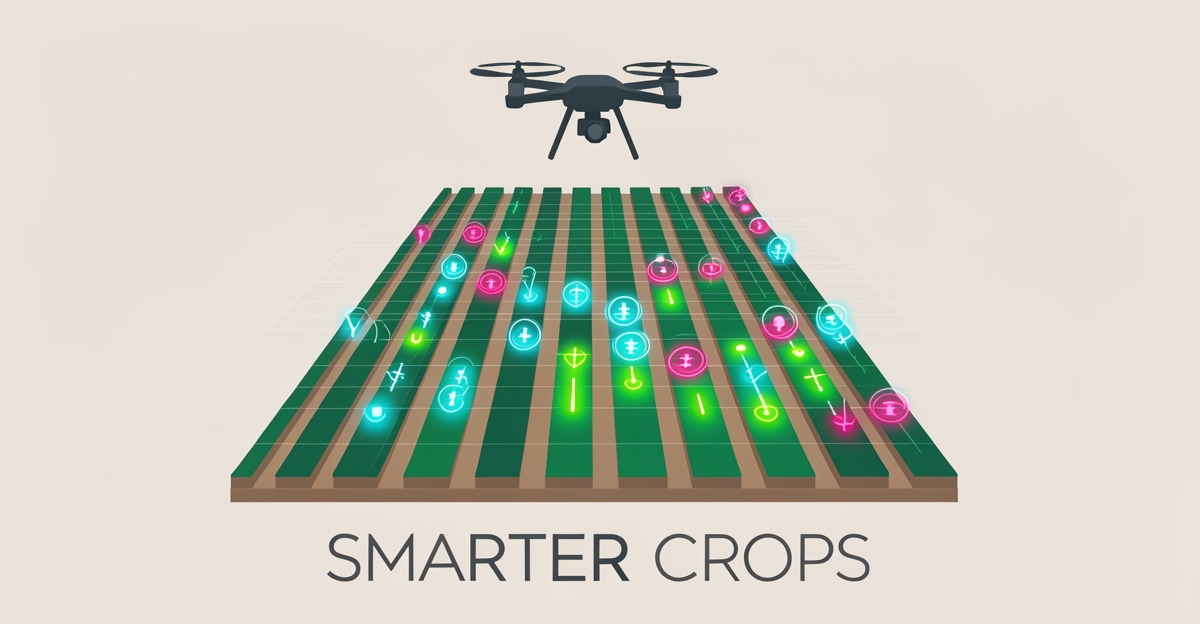
- Satellite imagery and drone integration for comprehensive field assessments without extra field time
- Pest and disease detection algorithms for early threat identification before visual symptoms spread
- Precision mapping and GPS integration for granular field analysis and targeted treatment zones
Integration with existing farm data amplifies the value. Industry research suggests that a majority of top-performing farms now use AI tools for real-time crop health and soil data integration, and that AI-driven soil analysis can increase farm productivity by up to 30% through precise data integration and plant selection. AI-powered crop health monitoring provides early detection and response to crop stress, diseases, and nutrient deficiencies to prevent losses before they escalate.
This is exactly the kind of problem AI Workflow Builds at AIQ Labs are designed for: we rebuild the one workflow that costs your co-op the most — in this case, crop monitoring and response — at a fixed price, in phases. The yield protection gap is not a lack of data, it is a lack of timely, actionable interpretation at scale.
How AI-Powered Satellite and Drone Imagery Actually Works
The idea that a computer can spot a sick plant before a farmer walking the field can sounds like science fiction, but it comes down to a straightforward reality: stressed crops reflect light differently long before they show visible symptoms. AI-powered monitoring systems capture those subtle spectral changes through satellite and drone imagery, then translate them into actionable intelligence.
Modern crop monitoring platforms combine AI technology, satellite imagery, and real-time data analytics to track moisture levels, growth stages, and pest pressure across entire operations. According to industry analysis of leading platforms, these systems enable farmers to catch problems early, which directly increases yield, reduces input costs, and enhances overall productivity.
The mechanics involve layering multiple data sources. Satellites provide broad coverage with multispectral imaging that reveals plant stress invisible to the naked eye, while drones capture high-resolution detail — some platforms achieve leaf-level imagery at 0.3mm resolution. AI algorithms then process this imagery alongside weather data and historical patterns to identify anomalies.
Core capabilities that matter for co-op operations include:
- Pest and disease detection: Algorithms identify early infestations and infection patterns before they spread across fields
- Precision mapping: GPS-integrated field analysis enables variable-rate application of water, fertilizer, and pesticides
- Yield prediction: Models forecast harvest outcomes to inform storage, logistics, and marketing decisions
- Real-time monitoring: Continuous data streams alert managers to emerging issues within hours, not weeks
The accuracy of these systems has reached a tipping point. Recent case studies report that modern AI yield prediction models achieve roughly 90-95% accuracy at the field level when updated with in-season satellite data. For disease detection specifically, one vineyard operation reported identifying outbreaks 10-14 days earlier than traditional scouting methods, with substantial reductions in crop losses and fungicide use.
What makes this particularly relevant for agricultural co-ops is the network effect. When multiple member farms feed data into shared predictive models, accuracy improves across the entire operation. AIQ Labs works with co-ops to integrate these AI capabilities with existing farm management systems, building custom models that learn from collective data while maintaining individual farm privacy.
The technology is no longer experimental. Industry data indicates that a majority of top-performing farms now use AI tools for real-time crop health and soil data integration, with some operations reporting productivity increases up to 30% through precise data integration and targeted interventions.
The Real ROI: Case Studies from Working Farms and Co-ops
Real returns from AI crop health monitoring are no longer theoretical. Co-ops and farms that connect satellite and drone imagery to predictive models are measuring savings in fertilizer, fungicide, and logistics, not just dashboards. One caveat up front: the most-cited figures below come from vendor-published case studies rather than independent audits, so use them to frame expectations, not to sign off on a budget.
Heartland Farms, as documented in published agriculture case studies, reportedly cut fertilizer costs by roughly 18% while decreasing pesticide usage by about 25% and lifting overall yield through variable-rate application, alongside a meaningful reduction in environmental runoff. The pattern — input savings plus yield gains from satellite- and soil-data-driven precision farming — repeats across commercial operations.
FreshGrow Vineyards, per the same case-study collection, detected disease 10 to 14 days earlier on average with AI monitoring, which drove large reductions in crop losses from disease and fungicide use, with wine quality and per-acre revenue improving as a result. Early detection and targeted intervention is the core value of AI crop health monitoring, where catching problems early increases yield and reduces costs. Industry analysis of crop monitoring tools confirms these capabilities.
AgriCo Cooperative reportedly improved yield prediction accuracy from a 75-85% baseline to roughly 94% after integrating AI with existing farm data, cutting storage and logistics planning costs and improving marketing timing enough to raise member farmer income per acre. Real-world AI in agriculture results highlight how co-op data sharing strengthens model accuracy.
These outcomes align with broader adoption signals. A majority of top-performing farms now use AI tools for real-time crop health and soil data integration, and AI-driven soil analysis is credited with productivity gains of up to 30%. Precision farming research notes that integration of soil diagnostics and planting decisions is now a competitive necessity.
Co-ops see compounding benefits when AI is built on their own data:
- Earlier disease and stress detection from satellite and drone imagery
- Optimized fertilizer and pesticide application via variable-rate models
- Improved yield forecasts that tighten storage, logistics, and pricing decisions
- Shared learning across members that raises prediction accuracy over time
AIQ Labs helps co-ops integrate AI with existing farm data to build predictive models that improve yields and reduce losses, focusing on practical deployment rather than pilots that stall. The financial case is clear when monitoring moves from reactive scouting to continuous, AI-driven insight.
Starting Small: A Practical Implementation Path for Co-ops
The gap between AI's potential and its current adoption is striking: according to Bushel's 2026 State of the Farm Report, just 14% of surveyed U.S. and Canadian farmers currently use AI tools on their operations. For co-ops, this represents an opportunity to lead — starting with accessible, low-risk tools that deliver immediate value without requiring major capital investment.
Begin with free satellite monitoring platforms that provide NDVI (Normalized Difference Vegetation Index) imagery. Tools like OneSoil offer free tiers for core satellite monitoring, allowing members to track crop health and soil conditions across their fields without purchasing new hardware. These platforms integrate with smartphones and tablets, making them accessible even for operations with limited technical infrastructure.
Smartphone-based disease detection apps offer another practical entry point. Plantix, for example, covers a wide range of symptoms across dozens of crop types with diagnostic accuracy reported above 90%, and it's free. Members can photograph affected plants in the field and receive instant identification and treatment recommendations, catching problems days or weeks before they become visible to the naked eye.
As adoption grows, co-ops can scale to more sophisticated predictive models that integrate with existing farm data. This is where the cooperative structure becomes a competitive advantage: data sharing within co-ops enhances model accuracy, allowing AI systems to learn from collective experience across multiple farms and growing conditions. Modern AI yield prediction models are reported to achieve 90-95% accuracy at the field level when updated with in-season satellite data, according to recent case studies.
Implementation can leverage existing farm equipment rather than requiring wholesale replacement. Many precision agriculture tools integrate with machinery already in use through standard GPS and data connections. Start with a pilot program on a few member farms, measure results against traditional methods, and expand based on proven ROI.
The path forward doesn't require betting the farm on unproven technology. It requires taking the first step with tools that are already accessible, affordable, and delivering measurable results for early adopters.
Making the Investment Decision: Build, Buy, or Partner?
The decision to adopt AI for crop health monitoring isn't just about choosing software — it's about selecting an investment model that aligns with your co-op's scale, technical readiness, and long-term data strategy. With a majority of top-performing farms already using AI tools for real-time crop health and soil data integration, the question has shifted from whether to adopt to how to structure the investment.
- Off-the-shelf platforms like EOSDA Crop Monitoring or OneSoil offer immediate deployment with subscription pricing — ideal for co-ops needing standardized NDVI monitoring and pest detection across member farms without development overhead.
- Custom predictive systems integrate satellite imagery, drone data, and historical yield records into models tuned to your specific crops and regional conditions — the approach behind the yield-prediction gains reported by AgriCo Cooperative.
- Hybrid approaches start with proven tools for immediate value while building proprietary models on accumulated co-op data, creating intellectual property that compounds over seasons.
Budget and technical expertise remain decisive factors. Smaller operations often begin with free or low-cost tools — Plantix provides disease diagnosis across dozens of crop types with over 90% reported diagnostic accuracy on smartphones — while larger co-ops invest in high-resolution drone imagery from providers like Taranis for leaf-level analysis at 0.3mm resolution. The 14% adoption rate among North American farmers reported by Bushel's 2026 survey suggests significant competitive upside for early movers who structure their investment to capture data ownership.
AIQ Labs supports co-ops across this spectrum with three entry points: AI Employees for specific monitoring and dispatch workflows on a monthly basis, AI Workflow Builds that rebuild your highest-cost workflow at a fixed price in milestones, and AI Operating Systems that unify satellite, drone, and sensor data into one connected operating layer your co-op owns outright. Whatever structure you choose, make sure your co-op retains control over the agricultural intelligence that becomes its most valuable asset.
Still paying for 10+ subscriptions that don’t talk to each other?
We build custom AI systems you own outright. No vendor lock-in. Full control.
Not sure where to start? Ask our AI planner
Frequently Asked Questions
Can AI really spot crop disease before I can see it in the field?
What kind of ROI are co-ops actually seeing from AI crop health monitoring?
How accurate is AI for yield prediction and disease detection?
Do we need expensive drones and hardware to get started?
Is AI for crop health only for big farms?
What features should we look for in a crop monitoring tool?
From Reactive Scouting to Predictable Yield Protection
The yield protection gap isn't a lack of data, it's a lack of timely interpretation at scale. Manual scouting leaves disease and stress invisible for days while AI-powered satellite and drone imagery reveals spectral changes before symptoms appear, enabling targeted intervention instead of rescue spraying. Co-ops that act now are positioned for earlier detection, lower input use, and stronger yield forecasts — and the network effect of shared member data compounds accuracy season over season. Start small with free NDVI monitoring or smartphone diagnostics, measure ROI against traditional methods, then scale to predictive models built on your co-op's own data. AIQ Labs helps co-ops integrate AI with existing farm data to build owned predictive models that improve yields and reduce losses. Take the two-minute Fit Check at https://aiqlabs.ai/apply, then book a free 30-minute strategy call at https://aiqlabs.ai/book to map your highest-ROI automation opportunity.
Make AI your competitive advantage — not just another tool.
Strategy, implementation and ongoing optimization. One partner, end to end.
Not sure where to start? Ask our AI planner