Should Basement Waterproofing Firms Use AI for Leak Detection Analysis?
Key Facts
- AI can analyze weather, moisture, and site data to predict leak risks before visible damage occurs
- Proactive service planning replaces calendar-based inspections with data-driven dispatch
- A phased pilot lets firms test predictive leak detection without overhauling operations
- Data security, bias testing, and explainability should be built in from day one
- AIQ Labs has deployed 200+ multi-agent systems and runs 4 live SaaS products daily
Hire a team member that works 24/7 — for less than a part-time wage.
AI receptionists, SDRs, dispatchers and 99+ roles. Trained on your business, fully managed.
Not sure where to start? Ask our AI planner
The Rising Cost of Reactive Leak Management
Basement waterproofing firms that rely on reactive leak management face mounting financial and operational strain. Emergency repairs driven by undetected moisture intrusion often come with premium labor costs, rushed material sourcing, and extended site disruptions, turning predictable maintenance into crisis response. This approach not only inflates service expenses but also erodes profit margins when unexpected callouts strain crews and delay scheduled work.
The hidden toll extends beyond immediate repair bills. Missed leaks frequently lead to secondary damage, mold growth, structural weakening, or ruined finishes, that homeowners attribute to the waterproofing firm's oversight, even when the initial intrusion occurred between service visits. These incidents trigger negative reviews, referral losses, and costly warranty claims, directly impacting customer lifetime value.
Reactive models also create inefficiencies in resource allocation. Teams spend excessive time on repeat visits for the same unresolved issue, while preventable leaks in high-risk zones go unaddressed due to lack of predictive insight. Without tools to correlate historical weather patterns, soil saturation levels, and foundation vulnerabilities, firms operate on guesswork rather than data-driven prioritization.
Shifting from reactive to proactive leak management requires more than better tools; it demands a change in service philosophy. Firms that anticipate failure points based on environmental triggers and historical performance can schedule targeted inspections, recommend preemptive drainage adjustments, or offer seasonal maintenance packages, turning uncertainty into opportunity. This proactive stance not only reduces emergency call volume but also positions the firm as a trusted advisor rather than a last-resort contractor.
For basement waterproofing companies exploring this transition, AI-powered analytics offers a practical foundation. By interpreting moisture sensor logs, rainfall trends, and subsurface conditions, AI models can flag rising risk levels before visible damage occurs, enabling timely, cost-effective interventions. These capabilities support smarter dispatching, optimized inventory for preventative materials, and clearer communication with homeowners about long-term protection strategies.
Explore how AI-driven analytics can transform your leak detection approach, start the Fit Check at https://aiqlabs.ai/apply to assess your current systems and identify high-ROI automation opportunities in predictive maintenance.
How AI Analyzes Weather, Moisture, and Site Data to Predict Leaks
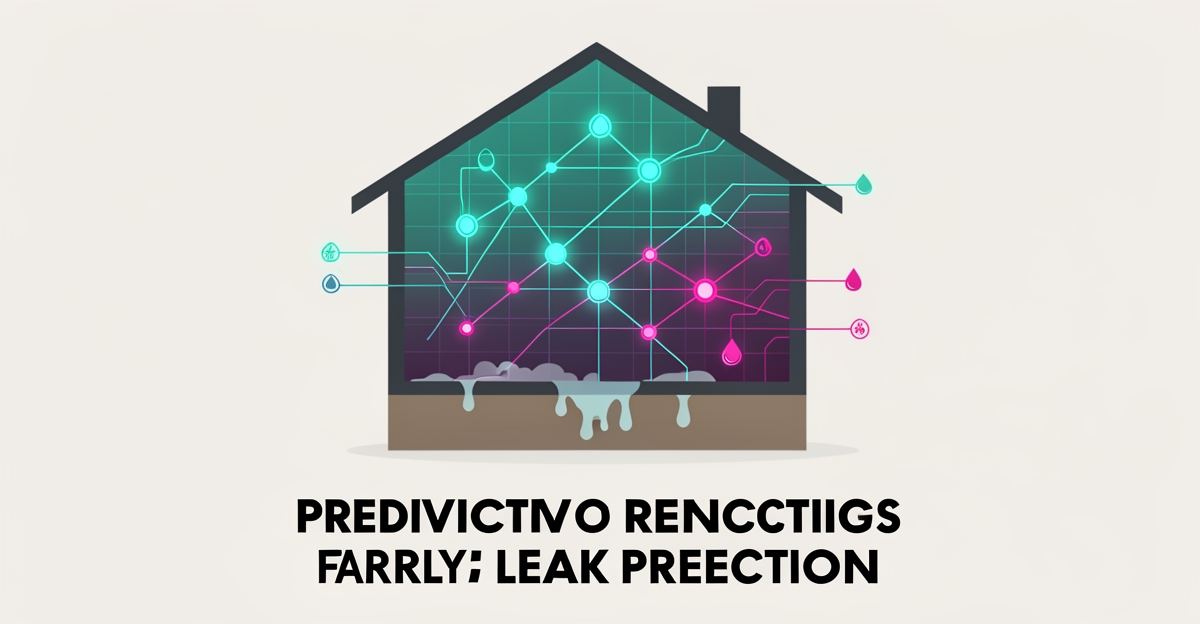
Predictive leak detection shifts basement waterproofing from reactive repairs to proactive service planning. AI models combine historical weather patterns with real-time site signals to forecast where water intrusion is most likely.
AI ingests historical weather data, such as rainfall intensity, freeze-thaw cycles, and seasonal humidity trends, to establish baseline risk windows. These patterns are cross-referenced with real-time moisture sensor readings from basements, crawl spaces, and perimeter drains. Site-specific conditions are layered in next, including soil type, foundation age, drainage design, and previous repair history. The model learns which combinations raise leak probability and flags properties before visible damage appears.
For waterproofing firms, the output is a risk score per property and a prioritized service queue. Proactive service planning replaces calendar-based inspections with data-driven dispatch. AI can help basement waterproofing firms identify potential leaks before they occur, reducing the risk of damage and costly repairs. Teams can target high-risk homes ahead of storm events, schedule preventive maintenance, and document conditions for customers.
The analysis workflow typically involves:
- Weather correlation: matching historical precipitation and groundwater levels to past leak incidents
- Moisture trend detection: identifying subtle sensor drift that precedes visible seepage
- Site profiling: weighting soil permeability, foundation age, and drainage adequacy
- Probability forecasting: generating leak likelihood scores by property and time window
This is the kind of predictive modeling AIQ Labs builds through its AI Workflow Builds service, rebuilding the one workflow that costs you the most, at a fixed price, in phases. For firms that want predictive insights connected across scheduling, dispatch, and customer communication, a full AI Operating System provides one connected operating layer you own outright.
Accuracy improves as feedback loops close. When a predicted risk is confirmed or dismissed in the field, the model updates its weights. Over time, the system becomes tuned to local microclimates and the firm's own service history, making forecasts more reliable and sales conversations more consultative.
Addressing Security, Bias, and Transparency in AI Leak Detection
While AI offers powerful tools for predicting basement leak risks through historical weather and moisture data, its adoption introduces real concerns around security, bias, and transparency, barriers that can undermine trust and operational integrity. Addressing these issues is not optional; it's foundational to responsible AI use in field services like waterproofing, where decisions directly impact property safety and client confidence.
Leak detection systems often integrate geospatial data, historical incident logs, and third-party weather feeds alongside sensitive client property details. Without encryption, access controls, and continuous monitoring, AI systems designed to prevent water damage could inadvertently enable data leaks of their own. Firms should treat customer data handling as a first-class requirement, not an afterthought.
Beyond security, algorithmic bias poses a subtle but serious threat. Training data skewed toward certain geographic regions, building ages, or soil types can cause AI models to under-predict leak risks in underrepresented areas, leading to unequal service recommendations. This isn't just a technical flaw, it risks reinforcing disparities in home maintenance access, particularly in older or economically diverse neighborhoods where water intrusion is already more prevalent. Transparency compounds these challenges: when stakeholders cannot understand how an AI arrived at a leak risk score, they lose the ability to validate, challenge, or improve the system. Clear, explainable AI reasoning is now a baseline expectation for trust and accountability.
To mitigate these risks, firms should adopt a compliance-first approach to AI implementation. This includes conducting regular security audits of AI pipelines, using diverse and representative training datasets, and deploying models that provide clear rationales for their predictions, such as highlighting which weather patterns or moisture thresholds triggered a high-risk alert. Partnering with providers that embed governance into their AI development lifecycle ensures that security, fairness, and transparency are core design principles. For basement waterproofing businesses aiming to leverage AI responsibly, this disciplined approach transforms potential liabilities into sustainable advantages.
Practical Steps to Pilot AI Leak Detection Without Overhauling Operations
A phased pilot lets waterproofing firms test AI leak detection without disrupting crews or service workflows.
Start with a clear data assessment before any model is built. Map where historical weather data, moisture readings, and site conditions already live, and identify which systems are critical versus outdated. This review prevents wasted work on fragmented sources and sets realistic expectations for prediction quality.
Next, define a narrow, high-value use case rather than a broad platform. AI can analyze large amounts of data to predict leak risks and support proactive service planning, but value appears fastest when the problem is well-defined. Choose one high-risk zone type, such as homes with prior seepage or specific soil profiles, and limit the pilot to that segment.
Pilot design should mirror proven implementation patterns. Pilot a well-defined module with measurable outcomes like inspection lead time or false alarm rate. Keep human review in the loop for every alert so crews learn to trust the signal and you capture feedback for model refinement.
Security and transparency need to be built in from day one. Sensitive data, moisture readings, property details, incident logs, should be encrypted, access-controlled, and monitored. Stakeholders also need to understand how risk decisions are made, so prioritize explainable outputs and auditability in any system you deploy.
Integration keeps the pilot practical. Feed AI insights into existing service workflows, dispatch notes, CRM tickets, and preventive maintenance schedules, rather than creating a separate dashboard. This approach aligns with AIQ Labs' Build in Milestones model, where firms approve and pay per phase and keep everything built so far, reducing risk while preserving optionality.
Operationalize learning with three guardrails:
- Limit scope to one geography or property class for the first 60-90 days
- Require technician validation of every AI-generated risk flag before outreach
- Track simple metrics: prediction accuracy, inspections avoided, and time to service
As adoption grows, data quality and domain-specific tuning will matter more than model size for leak risk prediction. Firms that keep their data clean and their feedback loops tight see the most reliable forecasts.
End the pilot with a decision gate. Review accuracy, crew adoption, and business impact, then choose to expand, refine, or pause. This milestone-based discipline keeps AI leak detection low-risk and operationally aligned while building the data foundation for broader proactive service planning.
Still paying for 10+ subscriptions that don’t talk to each other?
We build custom AI systems you own outright. No vendor lock-in. Full control.
Not sure where to start? Ask our AI planner
Frequently Asked Questions
How can AI actually help basement waterproofing firms prevent leaks before they happen?
Is using AI for leak detection secure, or could it put our customer data at risk?
Will AI recommendations be biased against older homes or certain neighborhoods?
Do we need to overhaul our entire operations to start using AI for leak detection?
How do we know if the AI's leak predictions are accurate and trustworthy?
What kind of return on investment can we expect from using AI for leak detection?
From Guesswork to Growth: How Smart Leak Detection Builds Trust and Efficiency
This article explored how basement waterproofing firms can shift from reactive leak management to proactive, AI-powered service planning, turning unpredictable emergencies into scheduled, cost-effective interventions. By analyzing historical weather, real-time moisture data, and site-specific conditions, AI models can flag rising risk before visible damage occurs, reducing emergency calls, preventing secondary damage like mold or structural issues, and improving customer trust. The piece also addressed critical considerations around data security, algorithmic bias, and transparency, emphasizing that responsible AI adoption requires built-in governance, diverse training data, and explainable outputs. For firms ready to test this approach, a phased pilot, starting with a narrow use case, validating alerts with technician feedback, and tracking simple metrics like prediction accuracy and inspections avoided, offers a low-risk path to proving value. AIQ Labs has deployed 200+ multi-agent systems and runs 4 live SaaS products daily, building production-ready systems that SMBs own outright. To see how this could work for your business, start with the free 2-minute Fit Check at https://aiqlabs.ai/apply, then book a free 30-minute strategy call to identify high-ROI opportunities in predictive maintenance.
Make AI your competitive advantage — not just another tool.
Strategy, implementation and ongoing optimization. One partner, end to end.
Not sure where to start? Ask our AI planner