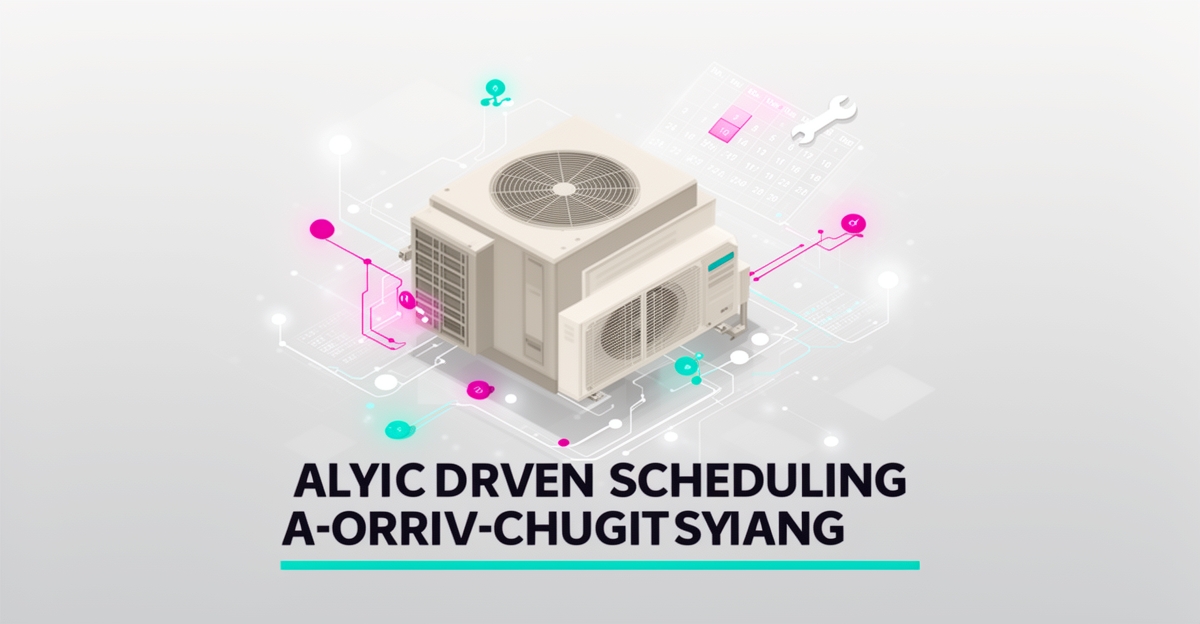
Should HVAC Contractors Use AI for Preventive Maintenance Scheduling?
Key Facts
- Preventable equipment failures drain an estimated $233 billion annually from the U.S. economy according to industry analysis
- HVAC businesses lose an estimated 400 hours per year to unplanned downtime, equivalent to 10 full workweeks according to maintenance research
- AI-powered preventive maintenance can reduce equipment downtime by up to 45% according to HVAC industry data
- Businesses using AI maintenance systems report energy savings of around 25% by avoiding inefficient operation according to industry research
- AI-driven scheduling may extend HVAC equipment life by several years, estimates run as high as 7, while cutting maintenance costs by up to 30% according to implementation studies
- Roughly 60% of trade businesses still operate reactively despite preventable failures costing billions annually according to industry surveys
- 69% of trade business owners identify workflow optimization as AI's biggest impact area according to Simpro research
Hire a team member that works 24/7 — for less than a part-time wage.
AI receptionists, SDRs, dispatchers and 99+ roles. Trained on your business, fully managed.
Not sure where to start? Ask our AI planner
The Hidden Cost of Reactive Maintenance
The hidden cost of reactive maintenance extends far beyond emergency repair bills. HVAC businesses operating in a reactive mode face a cascade of financial and operational drains that silently erode profitability and client trust. According to industry research, preventable equipment failures drain an estimated $233 billion annually from the U.S. economy, with HVAC contractors bearing a significant portion of this loss through wasted labor, expedited parts, and lost service opportunities.
This reactive approach creates a vicious cycle where teams spend more time fighting fires than preventing them. The same research suggests HVAC businesses lose an average of 400 hours per year to unplanned downtime, equivalent to 10 full workweeks where technicians could be performing scheduled maintenance, building client relationships, or growing the business. Meanwhile, industry surveys indicate that roughly 60% of trade businesses still operate reactively, treating breakdowns as inevitable rather than manageable events.
- Emergency service calls often command premium rates but damage long-term client relationships
- Technicians waste time sourcing parts on short notice instead of performing planned work
- Equipment runs inefficiently between failures, increasing energy costs for clients
- Reputation suffers as clients perceive the contractor as unreliable
- Opportunity cost rises as reactive work blocks time for profitable preventive maintenance contracts
For HVAC contractors, this model isn't just expensive, it's strategically limiting. While reactive maintenance might feel responsive in the moment, it prevents businesses from building the predictive capabilities that lead to sustainable growth. Breaking free from this cycle requires shifting from a mindset of constant repair to one of intelligent anticipation, where maintenance becomes a value driver rather than a cost center. The financial burden of staying reactive isn't just measurable in dollars; it's felt in every missed opportunity to strengthen client trust and operational excellence.
How AI-Driven Preventive Maintenance Works
AI-driven preventive maintenance transforms how HVAC contractors manage equipment health by combining real-time sensor data, historical performance, and pattern recognition to predict failures before they occur. Unlike reactive maintenance, which waits for breakdowns, or traditional preventive maintenance that follows fixed schedules regardless of actual condition, AI continuously analyzes vibration, temperature, pressure, and energy consumption patterns to detect subtle anomalies indicating wear or impending failure. This shift from time-based to condition-based scheduling ensures interventions happen precisely when needed, neither too early nor too late.
The impact is measurable: businesses using AI-powered systems report up to 45% less downtime and energy savings of around 25% by avoiding inefficient operation and unexpected shutdowns, according to HVAC industry data. These gains come from catching issues like refrigerant leaks, compressor strain, or airflow restrictions long before they trigger emergency calls. By extending equipment life through timely, targeted maintenance, implementation studies suggest gains of several years, with estimates as high as 7, contractors reduce capital replacement frequency and improve service reliability for clients.
AIQ Labs supports this transformation through AI Workflow Builds, a fixed-price engagement that rebuilds the one workflow costing your business the most, in phases, so maintenance scheduling, dispatch, and follow-up run as one connected process. For contractors ready to go further, AI Operating Systems build one connected operating layer across the whole business, owned outright. The approach turns maintenance from a cost center into a strategic advantage, where fewer breakdowns mean more billable hours, lower energy bills translate to happier customers, and longer-lasting equipment strengthens long-term service contracts.
The ROI of AI for HVAC Businesses
The financial case for AI in HVAC maintenance is compelling. Industry estimates suggest AI-driven preventive maintenance scheduling can reduce maintenance costs by up to 30% and extend equipment life by several years, directly improving profitability and service reliability. These gains translate to fewer emergency calls, better technician utilization, and stronger client retention, core outcomes for any HVAC business aiming to scale efficiently.
Industry data shows that AI-powered systems can cut downtime by up to 45% and deliver energy savings of around 25%, reducing operational waste and increasing system efficiency. With an estimated $233 billion lost annually to preventable maintenance failures and roughly 60% of businesses still running reactive models, the opportunity to capture avoided costs is significant. AI shifts maintenance from a cost center to a predictive, value-driven function.
- Reduced emergency service calls through early fault detection
- Optimized technician schedules via AI-driven work prioritization
- Higher client retention from reliable, proactive service
- Lower parts waste, estimates suggest up to 30% savings on unnecessary replacements
- Extended asset lifespan delaying costly capital expenditures
For HVAC contractors evaluating AI adoption, the ROI extends beyond immediate savings. By integrating AI into preventive maintenance scheduling, supported by AIQ Labs' workflow builds, businesses can build resilient operations that reduce risk, improve service consistency, and position themselves as trusted, forward-thinking providers in a competitive market.
Implementing AI in Your HVAC Business: A Practical Roadmap
Moving from reactive service calls to AI-driven prevention is a shift in philosophy, not just software. HVAC contractors who adopt phased implementation reduce downtime, extend equipment life, and protect client retention without overhauling operations overnight.
Start with visibility. Install AI-powered sensors and monitoring systems on high-value assets to detect subtle signs of equipment degradation before failure is visible to technicians. This data discipline creates the foundation for predictive scheduling and replaces guesswork with measurable signals.
Integrate alerts into existing workflows. AI-driven alerts and recommendations should feed directly into dispatch and scheduling tools so interventions happen efficiently and avoid unnecessary breakdowns. According to industry research, 69% of trade business owners see AI's biggest impact in workflow optimization.
Build the prediction layer with history. Use AI to analyze historical service data, runtime hours, and sensor trends to predict equipment failures before they happen. HVAC maintenance software analysis suggests AI can reduce downtime by up to 45% and cut energy waste by up to 25%.
Train teams for partnership, not replacement. Maintenance teams need clear training to work with AI-driven systems, interpret recommendations, and provide support for troubleshooting and maintenance tasks. Adoption accelerates when technicians see AI as a co-pilot that prioritizes their day.
A practical rollout follows a phased approach that controls risk and proves ROI:
- Pilot sensors on a single client portfolio or equipment type to validate data quality and alert accuracy
- Connect AI alerts to dispatch and CRM so recommendations become scheduled work orders automatically
- Train technicians on interpreting AI insights and logging outcomes to improve model accuracy
- Measure downtime reduction, energy savings, and first-time fix rates to quantify return
Common challenges are data quality, team adoption, and upfront investment. Start small, clean data at the source, and expand only after measurable gains. Phased implementation lets contractors prove value before scaling across the fleet.
AIQ Labs supports this journey through phased AI Workflow Builds, fixed price, delivered in milestones, and, for contractors ready to connect everything, AI Operating Systems built in phases and owned outright. The focus stays on phased implementation and measurable ROI, not hype.
With careful planning, sensor investment, and team enablement, AI-driven preventive maintenance scheduling delivers the cost savings, equipment longevity, and client retention HVAC businesses need to compete.
Still paying for 10+ subscriptions that don’t talk to each other?
We build custom AI systems you own outright. No vendor lock-in. Full control.
Not sure where to start? Ask our AI planner
Frequently Asked Questions
What is the actual ROI of AI preventive maintenance for HVAC contractors?
How much downtime can AI actually prevent for HVAC businesses?
Isn't reactive maintenance cheaper than investing in AI sensors?
Will AI replace my HVAC technicians?
How do I start implementing AI preventive maintenance without disrupting operations?
What if my equipment is older or doesn't have smart sensors?
From Reactive Firefighting to Predictive Growth
AI-driven preventive maintenance scheduling shifts HVAC contractors from chasing breakdowns to controlling them, turning sensor data and historical patterns into condition-based work that reduces downtime, extends equipment life, and cuts maintenance costs, industry estimates run as high as 7 years and 30% respectively. The payoff is operational: fewer emergency calls, better technician utilization, stronger client retention, and energy savings of up to 25% by avoiding inefficient operation. The shift requires a phased approach, start with visibility on high-value assets, integrate AI alerts into dispatch and CRM, build the prediction layer from service history, and train teams to partner with AI as a co-pilot. For contractors ready to move from reactive to resilient, tailored guidance matters. AIQ Labs supports this with phased AI Workflow Builds and, when you're ready to connect the whole business, AI Operating Systems you own outright. Start the 2-minute Fit Check at aiqlabs.ai/apply, then book a free 30-minute strategy call to map your biggest bottleneck and identify high-ROI automation opportunities, if there isn't a clear win, we'll tell you that too.
Make AI your competitive advantage — not just another tool.
Strategy, implementation and ongoing optimization. One partner, end to end.
Not sure where to start? Ask our AI planner