Should Janitorial Businesses Use AI for Dispatch or Stick to Human Teams?
Key Facts
- AI adoption in janitorial and cleaning has grown sharply since 2022, with a majority of commercial cleaning operations now using at least one automated workflow system
- Companies using AI automation typically report a 25-40% reduction in operational costs
- AI automation can improve scheduling efficiency substantially for janitorial businesses, often cited around 60%
- AI route optimization typically reduces drive time by 20-35% in cleaning operations
- AI route optimization can increase daily job capacity by 15-20% for janitorial teams
- AI dispatch eliminates scheduling conflicts and optimizes routes in real time
Hire a team member that works 24/7 — for less than a part-time wage.
AI receptionists, SDRs, dispatchers and 99+ roles. Trained on your business, fully managed.
Not sure where to start? Ask our AI planner
The Dispatch Bottleneck Costing Your Janitorial Business
Manual dispatch quietly drains margin every day, and most owners don't see it until growth stalls. The bottleneck shows up as crews driving too far, jobs missed, and dispatchers burning hours on phone calls instead of strategy.
AI adoption in the janitorial and cleaning industry has grown rapidly since 2022, and as of late 2026 most commercial cleaning operations use at least one automated workflow system. That shift is driven by the cost of staying manual.
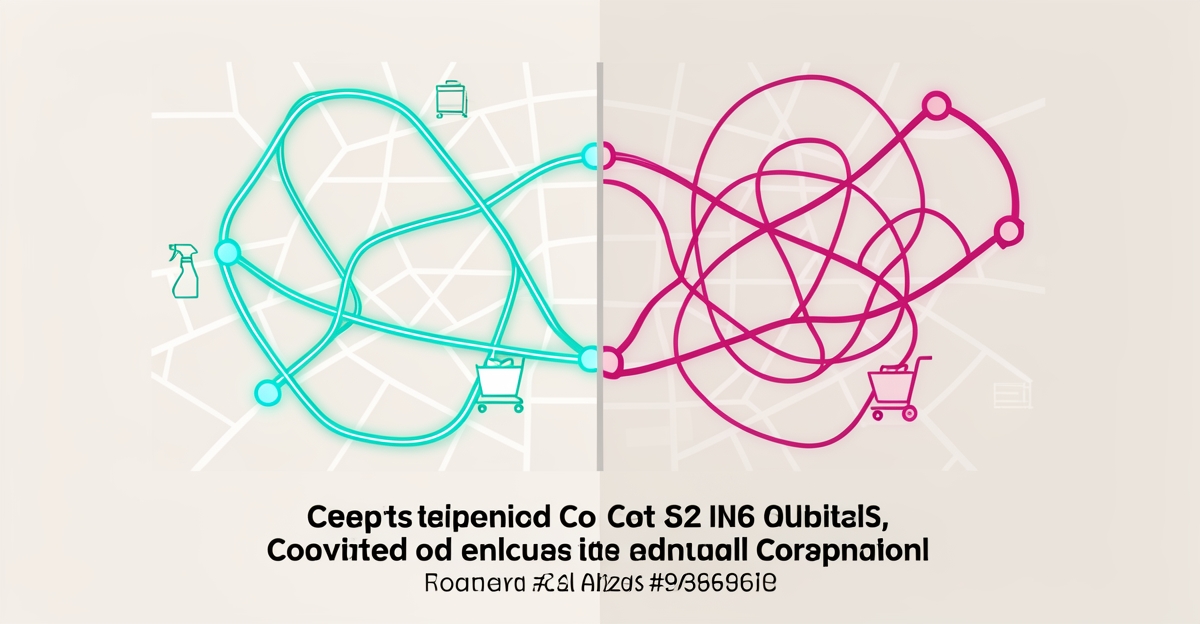
Human dispatch creates three compounding inefficiencies that limit profitable scale. First, route planning is reactive and fragmented. Dispatchers build routes from memory and spreadsheets, which leaves gaps in coverage and adds unnecessary miles.
Second, scheduling errors erode trust. Last-minute changes, crew call-outs, and overlapping service windows force constant rework. Companies that adopt AI automation often report scheduling efficiency gains around 60%.
Third, capacity is capped by people. A dispatcher can only juggle so many calls, confirmations, and adjustments per hour. That ceiling shows up as excessive drive time and lost jobs.
The numbers are stark. Companies that adopt AI route optimization typically reduce drive time by 20-35% and increase daily job capacity by 15-20%. Those gains come from real-time sequencing that balances travel, service windows, and crew skill sets.
Operational cost pressure makes the problem urgent. Companies that adopt AI automation commonly report a 25-40% reduction in operational costs, largely from fewer miles, better utilization, and less overtime.
Manual dispatch also creates hidden quality risks. Without real-time monitoring, missed cleanings and late arrivals surface as complaints, not data. That erodes customer satisfaction and makes retention harder in a competitive market.
The dispatch bottleneck typically looks like this in practice:
- Crews spend hours in transit between jobs due to non-optimized routing
- Dispatchers manually reassign work when calls come in, creating delays
- Scheduling mistakes lead to missed sites and emergency callbacks
- Capacity plateaus even as sales grow, forcing owner intervention
For owners weighing the decision, it's not about replacing people, it's about removing repetitive coordination work so teams can focus on service quality and growth. AIQ Labs rebuilds the one workflow that costs you the most, dispatch, as a fixed-price, phased [AI Workflow Build](/workflow-builds), with change management and training built in so the transition lands with your team, not against it.
The Hard Numbers: AI Dispatch vs. Human Dispatch Performance
The numbers tell a clear story: AI dispatch is reshaping how janitorial businesses operate, delivering measurable gains in cost, accuracy, and scalability. Companies using AI-powered scheduling and route optimization commonly report a 25-40% reduction in operational costs and scheduling efficiency improvements around 60%. These aren't incremental tweaks, they're fundamental shifts in how cleaning companies allocate resources and manage daily workflows.
Beyond cost, AI dispatch enhances precision and scalability in ways human teams struggle to match consistently. AI systems eliminate scheduling conflicts, optimize technician routes in real time, and typically reduce drive time by 20-35%, directly increasing daily job capacity by 15-20%. This means more jobs completed per technician without adding headcount, a critical advantage in an industry where labor costs dominate expenses. For growing businesses, this scalability allows expansion without proportional increases in dispatch overhead.
Human dispatchers bring valuable experience and adaptability, but they're limited by fatigue, shift changes, and the cognitive load of managing multiple variables simultaneously. AI dispatch operates 24/7 with consistent logic, reducing errors from manual entry or oversight. When paired with change management support, like the team training and adoption strategies AIQ Labs builds into every engagement, businesses can transition smoothly, ensuring staff understand how AI augments their roles rather than replaces them. The result is a dispatch system that's not just faster or cheaper, but more resilient and responsive to real-time operational demands.
The Critical Role of Data Accuracy and Human Oversight
The success of AI dispatch in janitorial businesses hinges on one non-negotiable factor: the accuracy of input data. Even the most advanced algorithms will generate suboptimal routes if fed incorrect addresses, outdated service times, or incomplete crew availability, directly undermining potential efficiency gains. Inaccurate data is consistently cited in industry analysis as the primary barrier to effective AI route optimization, with flawed inputs negating the technology's ability to reduce drive time or increase daily job capacity.
Human oversight remains indispensable for navigating complex, exception-based scenarios that AI systems are not designed to handle autonomously. Situations such as last-minute client cancellations, emergency cleanups requiring specialized equipment, or disputes over service quality demand contextual judgment and interpersonal skills that exceed current AI capabilities. Maintaining a hybrid model, where AI manages routine dispatch tasks while human supervisors intervene for edge cases, ensures both operational consistency and adaptability to real-world variability.
To implement this balance effectively, janitorial businesses should prioritize three foundational steps: standardizing data entry protocols across all customer touchpoints, conducting weekly audits of GPS and scheduling inputs for accuracy, and establishing clear escalation paths for AI-generated dispatch recommendations that fall outside predefined parameters. These practices create a feedback loop where human expertise continuously refines AI performance, turning oversight into a strategic advantage rather than a bottleneck. This approach aligns with how AIQ Labs builds systems, aligning technology with human workflows rather than replacing them. By anchoring AI implementation in data integrity and guided human judgment, janitorial operations can unlock measurable improvements in route efficiency without sacrificing service flexibility.
A Phased Transition Strategy That Preserves Team Buy-In
The biggest mistake janitorial businesses make when adopting AI isn't technical, it's organizational. A rushed rollout can trigger resistance from dispatchers and field staff who feel replaced, undermining the very efficiency gains you're chasing.
Industry guidance consistently recommends implementing AI automation in stages, starting with scheduling and route optimization before expanding to other workflows. This phased approach lets teams build confidence with the technology while you validate results at each step. It's also how AIQ Labs structures every build: milestones with fixed pricing, so you can stop or continue based on real results rather than a leap of faith.
A practical transition framework looks like this:
- Phase one targets scheduling and route optimization, the area with the fastest measurable wins, including typical 20-35% reductions in drive time
- Run AI recommendations in parallel with your dispatcher's decisions for two to four weeks, comparing outcomes before handing over control
- Train staff on the platform's capabilities and limitations, a step industry guidance identifies as critical to implementation success
- Redeploy experienced dispatchers toward quality assurance, client check-ins, and exception handling, work that directly protects contracts
The staff redeployment piece deserves emphasis. When AI handles the routine scheduling gains, often cited around 60% efficiency improvement, your most experienced people stop juggling logistics and start strengthening the client relationships that prevent churn. Dispatchers who once spent their day rearranging routes can instead conduct site walkthroughs, resolve escalations personally, and identify upsell opportunities.
Change management is where most transitions stall, and it's also where outside support pays for itself. AIQ Labs builds adoption and change management directly into its engagements, role-specific training, stakeholder communication strategies, and feedback loops that surface concerns before they become resistance. That structure matters because the technology itself is rarely the failure point; unclear expectations and threatened team members are.
One operational caution: AI route optimization depends entirely on accurate input data. Outdated or incorrect information undermines the algorithm's effectiveness. Assign clear ownership of data hygiene from day one, someone must verify addresses, service windows, and crew availability before the system can deliver on its promise.
Done right, the transition doesn't feel like replacement. It feels like promotion, for your dispatchers, your schedulers, and ultimately your entire operation.
Still paying for 10+ subscriptions that don’t talk to each other?
We build custom AI systems you own outright. No vendor lock-in. Full control.
Not sure where to start? Ask our AI planner
Frequently Asked Questions
Will AI dispatch replace my dispatchers or just help them?
How much can AI actually reduce drive time and costs?
Is AI dispatch really being adopted in janitorial businesses?
What's the biggest risk if we switch to AI dispatch?
Can we transition to AI without disrupting our crews?
How much more efficient is scheduling with AI versus manual?
Dispatch Smarter, Not Harder
The choice between AI dispatch and human teams isn't about replacement, it's about removing the repetitive coordination work that caps growth. Manual dispatch still creates reactive routing, scheduling errors, and a ceiling on capacity, while AI delivers measurable gains in cost, consistency, and scale when built on accurate data and human oversight. The fastest path is a phased transition that starts with scheduling and route optimization, runs AI recommendations in parallel, and redeploys experienced dispatchers to quality assurance, client check-ins, and exception handling. That approach preserves team buy-in while capturing real-time sequencing benefits like typical 20-35% reductions in drive time. If you're evaluating next steps, AIQ Labs can rebuild your dispatch workflow at a fixed price, in phases, with change management built in. Start the 2-minute [Fit Check](/apply), then book a free 30-minute strategy call to identify the highest-ROI automation opportunity for your operation, or email [email protected] directly.
Make AI your competitive advantage — not just another tool.
Strategy, implementation and ongoing optimization. One partner, end to end.
Not sure where to start? Ask our AI planner