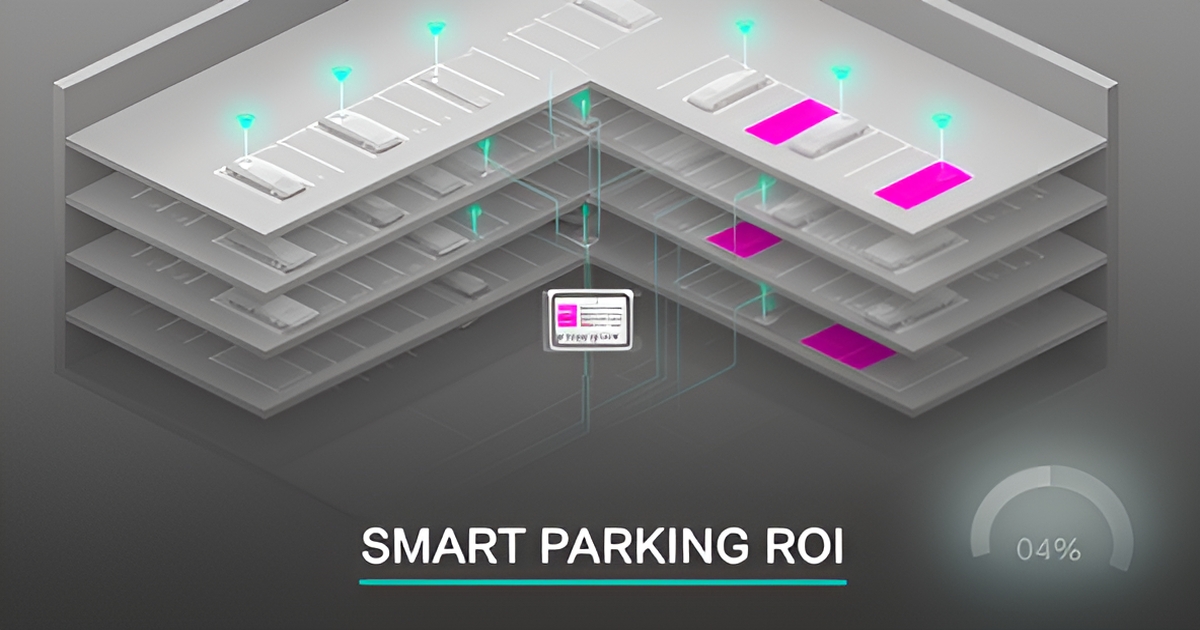
Should Parking Garage Operators Invest in AI for Real-Time Occupancy Monitoring?
Key Facts
- Drivers in traditionally managed facilities typically spend several minutes searching for parking, contributing to congestion and a poor first impression.
- Industry analyses consistently report meaningful search-time reductions—often cited in the 30-45% range—after AI-guided parking deployment.
- Space utilization typically improves to the 85-95% range with AI-driven management versus 60-70% for traditional operations.
- Manual payment processing commonly leaks revenue through transaction errors and cash shrinkage; automated collection largely eliminates this.
- Edge AI sensors can monitor many spots per device—vendor analyses cite figures as high as 125 spots per sensor—at materially lower hardware and installation cost than one-sensor-per-spot systems.
- Smart parking AI typically pays back in 2-5 years, with edge-based deployments often recovering costs faster.
Hire a team member that works 24/7 — for less than a part-time wage.
AI receptionists, SDRs, dispatchers and 99+ roles. Trained on your business, fully managed.
Not sure where to start? Ask our AI planner
The Hidden Cost of Manual Parking Operations
The traditional approach to parking garage management is silently draining revenue and frustrating customers. Relying on human attendants for occupancy monitoring creates fundamental limitations that directly impact the bottom line and user experience in measurable ways.
Drivers in facilities using traditional systems typically spend several minutes searching for parking, contributing to congestion and a poor first impression. This inefficiency is compounded by chronically low space utilization, with older systems typically achieving only 60-70% occupancy, meaning nearly a third of valuable real estate sits idle during peak hours. Manual processes also introduce avoidable financial leakage; industry studies indicate that manual payment processing errors commonly affect a low single-digit percentage of transactions, with additional losses from cash shrinkage.
These challenges stem from a simple capacity mismatch. A typical parking attendant can effectively monitor only a limited number of spaces—industry comparisons generally cite somewhere in the range of 50 to 100—making continuous, accurate oversight of larger facilities impossible. This human limitation creates blind spots in occupancy data, delays in identifying available spaces, and inconsistent enforcement. The result is an operational model that struggles to keep pace with 24/7 demand, relying on reactive measures rather than proactive, data-driven management. For operators seeking to modernize, AIQ Labs can assess where intelligent monitoring closes these critical gaps—see [AI Workflow Builds](/workflow-builds) for a fixed-price way to rebuild the one workflow that costs you the most.
How AI Real-Time Monitoring Drives Revenue and Efficiency
AI-powered real-time occupancy monitoring transforms parking operations by turning passive spaces into active revenue generators. By continuously tracking every spot, operators gain the visibility needed to eliminate guesswork and respond instantly to shifting demand. This level of insight is no longer optional—it's a competitive necessity in urban environments where every minute of idle space represents lost income.
One of the most immediate impacts is a reduction in driver search time—industry analyses commonly report reductions in the 30-45% range. When drivers spend less time circling for parking, turnover increases, congestion decreases, and customer satisfaction improves—all without adding staff or infrastructure. This efficiency gain alone can significantly boost the number of vehicles served per hour, directly increasing throughput and revenue potential.
Beyond search time, AI enables space utilization rates of 85-95%, a substantial improvement over the 60-70% typical of traditional systems. Higher utilization means more vehicles parked per square foot, translating to greater income from the same physical footprint. When combined with dynamic pricing that updates as frequently as every 15 minutes, operators can capture premium rates during peak demand while maintaining affordability during off-peak hours—maximizing yield without alienating customers.
Automation also drives long-term cost savings. Automated revenue collection removes the transaction errors and cash shrinkage inherent in manual processes, and predictive maintenance features reduce expenses by identifying equipment issues before they cause downtime. Together, these capabilities lower operational overhead while increasing reliability and compliance.
- Cuts driver search time—industry analyses commonly cite 30-45% reductions—improving traffic flow and user experience
- Boosts space utilization to 85-95%, increasing revenue per square foot
- Automates revenue collection, minimizing leakage from manual errors and shrinkage
- Enables dynamic pricing updates as frequently as every 15 minutes to capture peak demand value
- Supports predictive maintenance, reducing unplanned downtime
For parking garage operators evaluating AI investment, the return extends beyond immediate savings. Real-time data feeds smarter decisions—from staffing adjustments to long-term facility planning—while reducing dependency on manual oversight. As urban mobility evolves, facilities that leverage AI for occupancy intelligence will be better positioned to adapt, scale, and outperform competitors still relying on reactive, labor-intensive models.
AI Architecture Options and What Fits Your Portfolio
Not all AI occupancy monitoring is built the same—and the architecture you choose determines whether you're writing a five-figure check or a modest one. The market splits into three distinct approaches, each with different implications for cost, privacy, and scalability.
AI-enhanced traditional platforms are the conservative path. Established vendors have bolted AI modules—predictive analytics, dynamic pricing, improved license plate recognition—onto existing frameworks. The learning curve is minimal, which suits operators with heavy legacy hardware investment. The trade-off: AI capabilities are constrained by the underlying platform, and some systems need substantial historical data before their models perform well.
Purpose-built AI platforms treat AI as the operating system itself, not an add-on. These deliver the deepest automation—real-time occupancy prediction, automated enforcement, and rate adjustments as frequently as every 15 minutes during peak periods. The cost is a heavier implementation: significant data migration and staff retraining, which can disrupt operations.
Modular Edge AI solutions are where the math gets compelling, particularly for large or multi-site portfolios. Legacy magnetic sensors work one-to-one—one sensor per spot, one SIM per sensor, drilling and lot closures during installation. Edge AI flips that model entirely:
- A single sensor can monitor many spots simultaneously—vendor analyses cite figures as high as 125
- Hardware, installation, and connectivity costs are typically a fraction of one-sensor-per-spot systems
- Data is processed locally on the device—only metadata like "Spot 4 is occupied" leaves the sensor
- No additional gateway infrastructure is required for data collection
That last point matters more than it first appears. Cloud-based video systems carry high bandwidth costs, latency, and meaningful privacy exposure. Edge AI's local processing is privacy by design—a genuine advantage as GDPR-style regulations tighten. There's also a financial kicker: while smart parking AI typically pays back in 2-5 years depending on scale, edge-based deployments often recover costs considerably faster.
As one industry analysis puts it, "there is no good or bad solution—in the end, it's basic math associated with costs of setup, installation and maintenance." For a single garage with predictable demand, an AI-enhanced platform may suffice. For operators managing thousands of spaces across multiple sites, the 1-to-many sensor economics and privacy posture of Edge AI are hard to beat.
Whatever architecture you choose, the data pipeline behind it matters as much as the sensors themselves. Real-time occupancy data only drives dynamic pricing and faster response to demand spikes when it flows into dashboards your team actually uses—which is why operators increasingly work with firms like AIQ Labs to build custom data pipelines and monitoring dashboards they own outright, rather than renting another subscription platform. Larger, multi-facility programs are a better fit for [AI Operating Systems](/ai-operating-systems): one connected operating layer, built in phases, owned outright.
Pilot-to-Scale Playbook for Garage Operators
Operators who move from curiosity to deployment need a repeatable path that limits risk while proving revenue impact. A phased pilot-to-scale approach lets you validate real-time occupancy monitoring with your own traffic patterns before committing to portfolio-wide rollout.
Start by defining goals that tie directly to operations and revenue. Common targets include reducing driver search time, increasing revenue per space, and simplifying enforcement. Recommended deployment checklists begin with clear objectives so technology choices stay aligned with business outcomes.
Choose a technology mix matched to facility layout and privacy requirements. Computer vision, IoT sensors, and license plate recognition can be combined in a hybrid approach for accuracy and coverage. Edge AI architectures are increasingly favored because a single sensor can monitor many spots simultaneously while transmitting only metadata—at a fraction of the hardware and installation cost of one-sensor-per-spot systems.
Run a 3-6 month pilot in one garage or a specific zone. Pilots minimize risk and generate real-world data on performance and ROI before full scale. During the pilot, measure KPIs that prove financial impact.
- Occupancy rate and space utilization, with AI-based systems typically improving utilization to 85-95% versus 60-70% for traditional systems
- Average search time, where AI-guided parking commonly delivers reductions in the 30-45% range
- Revenue per space and revenue collection accuracy, comparing automated collection against your current manual error and shrinkage rates
Plan API integration with a privacy-first policy from day one. Prioritize vendors with robust APIs and proven integrations with existing parking management systems, payment gateways, and access control hardware, so occupancy data flows into pricing and enforcement workflows without manual handoffs.
When expanding, codify data retention, anonymization, and compliance with local regulations such as GDPR. Edge processing helps here by keeping video local and sharing only occupancy metadata, which supports privacy by design.
AIQ Labs supports this playbook with custom data pipelines and dashboards for real-time business monitoring, turning raw occupancy signals into pricing and staffing decisions. The goal is a system operators own and can scale across locations with consistent metrics and governance.
Typical payback for smart parking AI is 2-5 years depending on scale and pricing model, with edge-based solutions often recovering costs faster. That makes pilot validation especially valuable before portfolio-wide investment. If you want an outside read on where AI fits your operation first, start with the [2-minute Fit Check](/apply) and a free 30-minute strategy call.
Still paying for 10+ subscriptions that don’t talk to each other?
We build custom AI systems you own outright. No vendor lock-in. Full control.
Not sure where to start? Ask our AI planner
Frequently Asked Questions
How much faster do drivers actually park with AI monitoring compared to traditional systems?
What kind of revenue improvement can we expect from better space utilization?
Is the upfront cost of AI monitoring justified by the return on investment?
How does Edge AI differ from traditional sensor systems in terms of installation and cost?
Will AI monitoring create privacy compliance issues with regulations like GDPR?
What's the most practical way to start without betting the entire portfolio on unproven technology?
Turning Parking Spaces into Profit Centers
The case is clear: AI-powered real-time occupancy monitoring transforms parking garages from cost centers into profit drivers. By cutting driver search times, boosting space utilization to 85-95%, and automating revenue collection, operators gain measurable improvements in both customer experience and bottom-line performance. Whether through AI-enhanced platforms, purpose-built systems, or cost-effective Edge AI solutions that monitor many spots per sensor, the path forward starts with a focused pilot. Define your goals, measure KPIs like occupancy rate and search time, and scale with privacy-first data practices. For operators ready to move beyond guesswork, AIQ Labs builds custom data pipelines and dashboards that turn occupancy signals into smarter pricing and staffing decisions—systems you own outright. Start with a free strategy call to see where AI can deliver the fastest ROI for your portfolio.
Make AI your competitive advantage — not just another tool.
Strategy, implementation and ongoing optimization. One partner, end to end.
Not sure where to start? Ask our AI planner