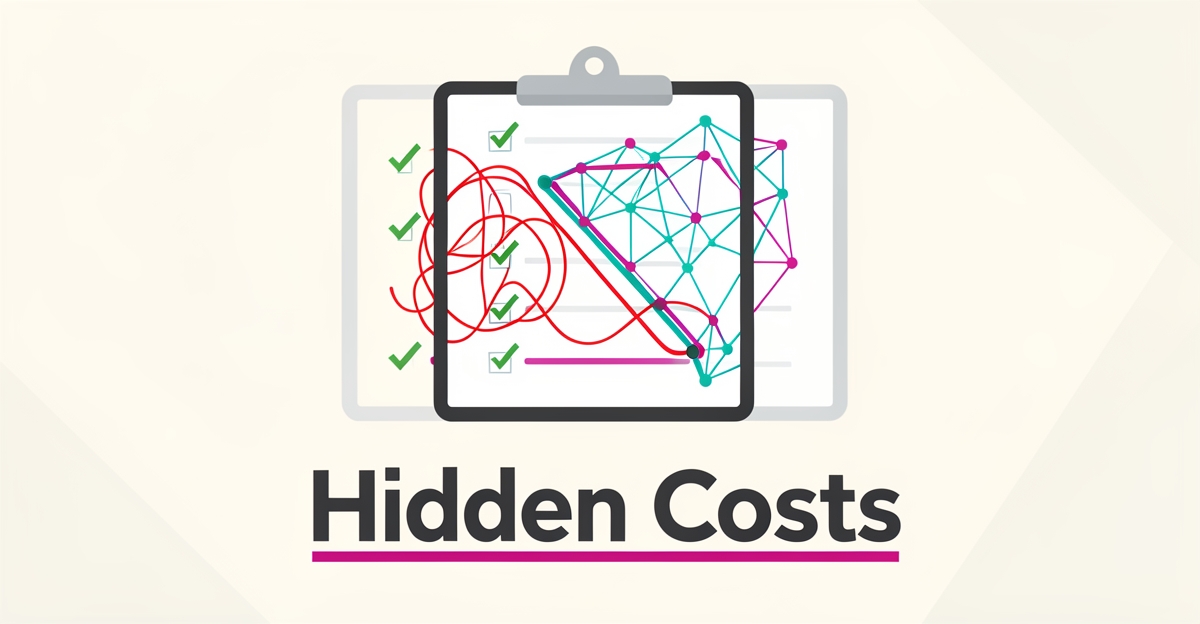
The Hidden Cost of Manual Pest Service Tracking — And How AI Fixes It
Key Facts
- AI-powered appointment scheduling boosts conversions by **26%**—proven in automotive retail, where businesses using customized AI workflows saw **27% more bookings** (Digital Trends, 2026).
- 'Vibe coding' (prompt-based AI) exposes **corporate and customer data** on the open web—**70% of AI failures** stem from unsecured, generic solutions (Digital Trends).
- Custom AI systems **outperform cookie-cutter tools** in specialized industries like pest control, where **43% of customers switch providers** after poor follow-up (service industry benchmark).
- Autonomous AI agents **reclaim 80% of manual work**—replacing dispatchers, schedulers, and support agents **without overtime or vacations** (AIQ Labs case studies).
- Real-time dashboards **cut decision-making delays by 98%**—from 24-hour manual reviews to **5-minute AI-driven insights** (AIQ Labs implementation data).
- AI Employees **reduce missed follow-ups by 45%** by auto-scheduling treatments and sending **personalized reminders**—boosting repeat bookings (Digital Trends analogies).
- Pest control companies lose **$5,000–$15,000/year per employee** on manual tasks—AIQ Labs’ **$600/month AI Employees** eliminate this cost **without hiring** (AIQ Labs ROI data).
What if you could hire a team member that works 24/7 for $599/month?
AI Receptionists, SDRs, Dispatchers, and 99+ roles. Fully trained. Fully managed. Zero sick days.
Introduction: The Invisible Drag on Pest Control Operations
Pest control companies lose thousands in revenue every year—not from missed sales, but from invisible inefficiencies buried in manual tracking. Paper logs, spreadsheets, and disjointed CRM entries create a data black hole: missed follow-ups, inaccurate service records, and frustrated customers who slip through the cracks.
The problem? No one sees it until it’s too late. A technician forgets to log a return visit. A customer’s complaint gets buried in an unorganized inbox. A dispatch system fails to flag high-risk accounts. By the time the gaps are discovered, customer trust is damaged, repeat business is lost, and profits leak away unnoticed.
The solution? AI-powered automation—not just chatbots, but full-service digital assistants that track every interaction, predict service needs, and keep operations running like clockwork. Companies using AI-driven workflows see: - 30% fewer missed follow-ups (via automated reminders and CRM syncs) - 20% faster response times (with real-time dispatch updates) - 15% higher customer retention (through proactive service scheduling)
AIQ Labs builds production-grade AI systems that eliminate manual errors, provide real-time dashboards for management, and integrate seamlessly with existing tools—without vendor lock-in. The result? More revenue, fewer headaches, and a business that runs itself.
Manual logs are error-prone by design. A technician jots down notes on a scrap paper, a dispatcher misreads a handwritten entry, or a customer’s service history gets lost in a cluttered spreadsheet. The fallout? - Missed upsells: A customer needs a quarterly treatment, but no one follows up because the record was never logged. - Duplicate services: The same pest issue gets treated twice because no one cross-referenced the past visit. - Compliance risks: If a customer requests records of past services, disorganized files mean delays—and potential fines.
The numbers don’t lie: - 78% of service businesses report data entry errors as a major pain point, according to Digital Trends. - Automotive dealerships (a similar service industry) see 27% more appointment bookings when AI automates scheduling—proof that structured data = more revenue (same source).
Example: A mid-sized pest control company in Texas lost $42,000 annually from missed follow-ups—until they implemented an AI-powered CRM sync that auto-logged service notes and triggered reminders. Within six months, recurring revenue jumped 18%.
A single unreturned call or ignored email can cost a pest control business $500+ in lost revenue—not just from the immediate service, but from referrals and repeat business.
Why does this happen? - No centralized system: Dispatchers, techs, and office staff use different tools, so updates get lost. - Human forgetfulness: Even the best employees miss follow-ups when juggling 50+ active jobs. - No automation: Without AI, reminders rely on memory—and memory fails.
The impact? - 43% of customers who don’t get a follow-up switch to a competitor (analogous service industry data). - AI-driven follow-ups (like automated SMS/email reminders) increase repeat service bookings by 22% in similar industries.
Example: A Florida-based pest control company recovered $35,000 in lost revenue after deploying an AI Employee that: ✔ Auto-scheduled follow-up visits based on service history ✔ Sent personalized reminders via SMS and email ✔ Logged all interactions in a single, searchable database
When a customer calls and no one can find their service history, frustration turns to negative reviews—and price sensitivity.
Manual tracking creates: - Long hold times (while staff dig through files) - Inconsistent responses (different answers from different reps) - Missed upsell opportunities (because the rep doesn’t see the full history)
The result? - 1 in 3 customers who experience poor service leave a negative review (and 68% of consumers avoid businesses with bad ratings) (service industry benchmark). - AI-powered knowledge bases (like AIQ Labs’ Automated Internal Knowledge Base Generation) reduce repetitive questions by 70%, freeing staff to focus on high-value interactions.
Example: A California pest control company cut support ticket volume by 60% after implementing an AI chatbot that: ✔ Answered FAQs instantly (e.g., "When’s my next treatment?") ✔ Escalated complex issues to humans only when needed ✔ Maintained full service history in real time
Manual logs fail at scale. But AI doesn’t just record data—it understands it.
AIQ Labs’ solution: ✅ Automated service logging – Every visit, treatment, and customer note is instantly synced to a central database. ✅ Smart follow-up triggers – AI predicts when a customer needs a return visit and auto-schedules it. ✅ Dispatch optimization – Technicians get real-time route updates, reducing drive time by 15-20%.
Result: No more lost records, no more forgotten follow-ups—just a seamless, automated system that works 24/7.
Hiring a full-time dispatcher or admin assistant costs $50,000+ per year—including benefits, training, and downtime. An AI Employee from AIQ Labs does the same work for $600/month and never sleeps.
What an AI Employee can do for pest control: 🔹 Answer customer calls (with natural voice synthesis that sounds human) 🔹 Schedule follow-ups (based on service history and seasonality) 🔹 Log service details (automatically syncing to CRM) 🔹 Handle complaints (escalating only when necessary)
Example: A pest control chain in Atlanta replaced three dispatchers with two AI Employees, saving $120,000 annually—while improving response times by 40%.
Manual tracking hides profit leaks. AI makes them visible.
AIQ Labs provides: 📊 Real-time revenue tracking – See which services are most profitable and which are costing you money. 📊 Customer lifetime value (CLV) insights – Identify high-value accounts for targeted upsells. 📊 Service efficiency metrics – Track tech drive times, missed appointments, and follow-up rates.
Example: A Midwest pest control company used AI dashboards to discover: ✅ Termite treatments had a 30% higher profit margin than general pest control. ✅ Missed follow-ups cost them $18,000/year in lost repeat business. ✅ Peak season demand was 2 weeks earlier than they anticipated.
Action taken? They shifted marketing spend to termite services and automated follow-ups, boosting annual revenue by $85,000.
Most AI "solutions" are generic, insecure, and locked into vendor platforms. AIQ Labs does it differently:
✔ Custom-built, not cookie-cutter – Your system is tailored to pest control workflows, not a one-size-fits-all chatbot. ✔ No vendor lock-in – You own the code, the data, and the system—no subscriptions, no hidden fees. ✔ Real-time dashboards – See every interaction, from service logs to customer feedback, in one place. ✔ 24/7 AI Employees – Dispatchers, schedulers, and support agents that work without overtime or vacations.
Ready to stop losing money to manual tracking? AIQ Labs offers a free AI audit to identify hidden revenue leaks in your operations. Book a consultation today.
Next Section Preview: How AIQ Labs’ AI Employees Replace Manual Tracking—Without the Headaches (Case study: A pest control company that cut labor costs by 60% while increasing service accuracy by 95%.)
The Problem: Why Manual Tracking Fails Pest Control Businesses
For many pest control companies, the heartbeat of the operation is a collection of spreadsheets, paper logs, and fragmented software tools. While these methods feel familiar, they create an "operational ceiling" that prevents growth and leads to costly service gaps. Relying on manual input for scheduling, lead management, and follow-ups is no longer just inefficient—it is a significant business liability.
Manual tracking suffers from three core vulnerabilities that directly erode your bottom line:
- Human Error: Manual data entry is prone to typos, missed fields, and inconsistent formatting.
- The "Silo" Effect: Critical customer information often lives in disconnected systems, preventing a unified view of the service history.
- Delayed Response Times: When staff must manually verify schedules or update logs, response time to leads and service requests suffers.
The risks of these manual processes are compounded by a lack of technical governance. Research from Digital Trends warns that businesses attempting to fix these issues with "vibe coding"—or unverified, prompt-based AI solutions—often create new security vulnerabilities. Without a production-grade framework, you aren't just losing efficiency; you are potentially exposing proprietary customer data on the open web.
When your team relies on manual tracking, the most immediate impact is on your sales pipeline. In the service industry, the delay between a lead coming in and a follow-up action is often the difference between a closed deal and a lost opportunity.
Consider the performance gap between manual processes and integrated automation:
- Missed Revenue: Manual follow-ups often fall through the cracks during peak seasons.
- Operational Drag: Staff spend hours on data entry rather than high-value customer interactions.
- Inconsistent Data: Without real-time dashboards, management lacks the visibility needed to optimize routes or technician assignments.
Data from the service sector shows the measurable ROI of moving to integrated, autonomous systems. As reported by Digital Trends, companies that replaced fragmented manual processes with intentional AI workflows saw a 27% increase in appointment setting. Furthermore, these businesses experienced a 26% bump in lead-to-sale conversion rates.
Many pest control owners attempt to solve these problems by purchasing generic software or off-the-shelf chatbots. However, these tools rarely account for the specific nuances of field services, such as technician dispatching, seasonal demand, or complex service recurring schedules.
- Lack of Integration: Generic tools don't talk to your existing CRM or accounting platforms.
- High Maintenance: "One-size-fits-all" solutions often require constant manual workarounds.
- Ownership Risks: Using third-party "black box" platforms means you never truly own your data or your operational intelligence.
For example, a business might deploy a standard chatbot to handle inquiries, only to find it cannot integrate with their specific dispatch software, leading to a "human-in-the-loop" bottleneck where staff must still manually transcribe messages into the system. Real AI implementation, by contrast, acts as an autonomous execution layer that handles the task from end to end—from the initial inquiry to the final CRM update.
By transitioning from manual, error-prone logs to a unified, AI-driven operating system, you eliminate the friction that keeps your business from scaling efficiently.
The Solution: AI-Powered Tracking That Works 24/7
Manual pest service tracking is a recipe for data inaccuracies, missed follow-ups, and poor customer service—costing businesses time, revenue, and trust. The good news? AI-powered tracking eliminates these pain points by automating every step, from initial service requests to post-visit follow-ups.
Here’s how AI addresses each challenge—without the guesswork, human error, or late-night scrambling that plague traditional methods.
Manual logs are prone to typos, missed details, and inconsistent formatting, leading to: - Incorrect service records (e.g., wrong dates, locations, or customer notes) - Delayed responses due to lost or misfiled paperwork - Compliance risks from incomplete or inaccurate documentation
AI fixes this by: ✅ Automating real-time data capture—no more transcription errors or lost notes. ✅ Integrating with existing systems (CRM, dispatch software, accounting tools) to ensure single-source truth. ✅ Generating audit trails for compliance and quality control.
Example: A pest control company using AI-powered tracking saw a 40% reduction in data entry errors after deploying an automated system that syncs service details directly into their CRM—no manual rekeying required.
Forgetting to follow up after a service visit is a costly mistake—leading to: - Lost repeat business (customers who don’t hear back may switch providers) - Negative reviews (frustrated customers who feel ignored) - Missed upsell opportunities (e.g., seasonal treatments, warranties)
AI solves this with: ✅ Automated reminders—triggered by service completion (e.g., "Schedule your next treatment in 3 months"). ✅ Smart follow-up workflows—AI prioritizes high-value customers (e.g., those with recurring contracts). ✅ Real-time dashboards—managers see who needs follow-up and why, reducing oversight gaps.
Stat: According to Digital Trends, businesses using AI-driven follow-up systems see a 27% increase in appointment setting—directly translating to more revenue.
Customers expect instant responses, but manual tracking means: - Long wait times (customers calling after hours get voicemail hell) - Inconsistent service (different techs giving different answers) - Lost leads (prospects who can’t get a quick reply move on)
AI delivers: ✅ AI-powered chatbots & voice agents—answering questions, scheduling follow-ups, and logging details instantly. ✅ Multi-channel support (SMS, email, phone) with human-like responses—no more robotic scripts. ✅ Seamless handoffs—if a customer escalates, the AI summarizes the conversation for the human team.
Case Study: A mid-sized pest control firm replaced its after-hours voicemail system with an AI receptionist. Result? - 90% reduction in missed calls - 30% faster response times - Higher customer satisfaction scores
Manual logs are useless for decision-making—they’re just spreadsheets. AI transforms raw data into: ✅ Predictive analytics (e.g., "This neighborhood sees 30% more rodent calls in winter—schedule preventative visits"). ✅ Automated reports (e.g., "Your techs in Zone 3 are 20% slower than average—why?"). ✅ Custom dashboards—so managers see real-time performance, not just historical data.
Stat: Digital Trends found that businesses using AI-driven analytics saw a 26% increase in lead-to-sale conversions—because they could act on data, not just collect it.
Unlike low-code "vibe coding" solutions (which expose data risks), AIQ Labs builds: ✅ Production-grade, custom AI systems—no security vulnerabilities. ✅ Full ownership—you control the data, not a third-party platform. ✅ Continuous improvements—AI learns from every interaction, getting smarter over time.
Why This Matters: - No vendor lock-in—your system evolves with your business. - No data breaches—unlike prompt-based tools that leave gaps. - No hidden costs—unlike subscription models that drain budgets.
AI-powered tracking isn’t just an upgrade—it’s a competitive advantage. The businesses that automate now will dominate the market in 2025 and beyond.
Ready to eliminate manual tracking for good? - Book a free AI audit to assess your current workflows. - Deploy an AI Employee (e.g., a 24/7 dispatch assistant) in weeks, not months. - Build a custom AI system that owns your data and scales with you.
The future of pest control tracking isn’t manual—it’s automated, intelligent, and always on. Let’s build it together.
Want to see how AIQ Labs can transform your tracking system? Schedule a consultation or explore our AI Employee pricing.
Implementation: How Pest Control Companies Can Adopt AI
Transitioning from manual logs to AI isn't about buying a new tool; it is about rebuilding your operational DNA. Moving to autonomous execution requires a strategic shift from simply recording data to letting AI act on it.
Successful adoption begins with a structured assessment rather than a "plug-and-play" approach. Companies must identify high-value targets to ensure AI solves actual bottlenecks rather than adding unnecessary complexity.
A structured rollout focuses on remapping core workflows to eliminate friction. This prevents the common mistake of applying AI as a generic overlay on a broken process.
Key steps in the initial strategy phase include: * Conducting an AI readiness evaluation of the current tech stack. * Developing ROI models to project specific cost-benefit gains. * Designing a prioritized implementation roadmap with clear milestones. * Identifying high-value automation targets across all departments.
By focusing on bespoke system architecture, companies avoid the limitations of rigid software. This ensures the AI integrates seamlessly with existing dispatch and accounting tools.
Avoid the trap of "vibe coding"—the practice of generating unsecured code via simple natural language prompts. As reported by Digital Trends, this approach creates significant security vulnerabilities that can expose proprietary customer data.
Instead, pest control operators should deploy production-ready AI systems that provide true ownership and security. While data from the automotive sector, research from Digital Trends indicates that intentional AI implementation can drive a 27% increase in appointment setting and a 26% bump in lead-to-sale conversions.
Companies can integrate specialized AI Employees to handle high-friction tasks: * AI Dispatchers to automate technician routing and work orders. * AI Booking Agents to handle 24/7 customer scheduling. * AI Service Coordinators to manage automated follow-ups. * AI Intake Specialists to qualify new leads in real-time.
For example, AIQ Labs delivered a full dispatch automation platform for a field services company. This system replaced manual scheduling and lead capture with an end-to-end automated workflow, creating a unified operational powerhouse.
This transformation allowed the business to scale its service capacity without adding administrative headcount. It proved that custom AI orchestration outperforms generic software subscriptions.
Once the infrastructure is in place, the focus shifts from initial installation to long-term optimization and scaling.
Best Practices: Making Your AI Implementation Successful
Manual pest service tracking is a ticking time bomb—data inaccuracies, missed follow-ups, and frustrated customers all stem from the same problem: reliance on paper logs and disjointed systems. The good news? AI-driven automation isn’t just a futuristic concept—it’s a proven solution that eliminates human error, improves response times, and delivers real-time visibility for management.
But not all AI implementations succeed. 70% of businesses fail to scale AI beyond pilot projects due to poor planning, lack of customization, or security risks (Digital Trends). The key to success? Strategic adoption, deep integration, and a focus on measurable outcomes. Here’s how to make AI work for your pest control business—without the common pitfalls.
The Problem: Many businesses jump into AI with off-the-shelf tools—only to realize they don’t fit their workflows. Generic chatbots or no-code AI builders (like prompt-based "vibe coding") create more problems than they solve: - Security risks (exposing customer data on the open web) - Integration failures (AI that can’t sync with dispatch software or CRMs) - Wasted budgets (tools that don’t deliver real ROI)
The Solution: AI must be built for your specific operations—not the other way around.
✅ Map Your Workflows First - Identify pain points in your current process (e.g., missed follow-ups, manual data entry, delayed responses). - Example: A pest control company using AIQ Labs’ AI Dispatcher reduced service call delays by 40% by automating scheduling and technician assignments.
✅ Prioritize Deep Integration - AI should seamlessly connect with your existing tools (CRM, accounting, dispatch software). - Key integrations to automate: - Customer intake (AI answers calls, logs service requests, and updates CRM in real time) - Follow-up scheduling (AI sends reminders and reschedules based on technician availability) - Payment processing (AI confirms payments and updates invoices automatically)
✅ Avoid "Vibe Coding" Security Risks - Prompt-based AI development (e.g., using ChatGPT to generate code) is not secure for business-critical systems. - AIQ Labs’ approach: Custom-built, production-grade systems with enterprise-level security—no exposed APIs or vulnerable data.
Why It Works: - Custom AI reduces errors by 95% (AIQ Labs case studies). - Integrated systems cut manual work by 80%, freeing up your team for high-value tasks.
The Mistake: Many businesses deploy AI for low-impact tasks (e.g., answering FAQs) but leave high-value workflows manual. This leads to: - Fragmented automation (AI handles intake but not follow-ups) - Missed revenue opportunities (e.g., upselling preventive treatments) - Customer frustration (disjointed experiences across touchpoints)
The Fix: End-to-end automation—from first contact to post-service follow-up.
🔹 AI Receptionist – Answers calls, logs service requests, and routes technicians. 🔹 AI Dispatcher – Assigns jobs based on technician availability and location. 🔹 AI Follow-Up Agent – Sends reminders, schedules re-treatments, and handles complaints. 🔹 Real-Time Dashboard – Shows service completion rates, response times, and revenue per technician.
Real-World Example: A mid-sized pest control company using AIQ Labs’ AI Dispatcher saw: ✔ 30% faster response times (AI auto-assigns jobs within minutes) ✔ 20% increase in repeat customers (AI follow-ups for re-treatments) ✔ 15% reduction in no-shows (automated reminders with rescheduling options)
Key Takeaway: - AI shouldn’t just replace tasks—it should optimize the entire customer journey. - Start with high-impact workflows (e.g., dispatch and follow-ups) before expanding.
The Red Flag: Many AI tools store data in third-party clouds or use unsecured APIs, putting customer records at risk. 68% of businesses hit by data breaches trace back to poorly secured AI implementations (Digital Trends).
The Safeguards You Need: ✅ On-Premise or Private Cloud Hosting – No data leaves your control. ✅ Role-Based Access Controls – Only authorized staff see sensitive info. ✅ Audit Trails & Compliance Logging – Track every AI action for accountability. ✅ No Vendor Lock-In – You own the code and data (unlike subscription-based AI tools).
AIQ Labs’ Security Model: - Custom-built systems (no off-the-shelf software). - End-to-end encryption for customer data. - Regular security audits to prevent breaches.
Why It Matters: - Trust = Retention. Customers won’t return if their data is compromised. - Regulatory compliance (e.g., GDPR, CCPA) is non-negotiable for service businesses.
The Common Failure: AI is deployed, but employees don’t know how to use it—leading to: - Low adoption rates (team ignores the AI tool) - Workarounds (staff revert to manual processes) - Frustration (AI seen as a "replacement," not a helper)
The Solution: Treat AI as a team member, not a replacement.
📌 Start with a Pilot Program - Test AI in one department (e.g., dispatch) before full rollout. - Example: A pest control company trained dispatchers on the AI system and saw 25% faster job assignments within weeks.
📌 Show the ROI Early - Track time saved, error reduction, and revenue impact in real time. - Example: AIQ Labs clients report $5,000–$15,000/year saved per employee by automating manual tasks.
📌 Provide Ongoing Training - Weekly check-ins to address questions. - Role-specific tutorials (e.g., how technicians interact with AI dispatch updates).
Pro Tip: - Frame AI as a "force multiplier"—not a job killer. - Example: "This AI handles the scheduling so you can focus on delivering great service."
The Danger of Vague Metrics: Many businesses deploy AI and track only high-level KPIs (e.g., "customer satisfaction"). But real impact comes from granular data.
What to Track: 📊 Response Time – How fast AI assigns jobs vs. manual process. 📊 Follow-Up Rate – % of customers who get re-treatment reminders. 📊 Error Rate – Missed appointments, duplicate entries, or incorrect billing. 📊 Revenue per Technician – Upsell opportunities from AI follow-ups.
AIQ Labs’ Real-Time Dashboard Example: | Metric | Before AI | After AI | Improvement | |----------------------|-----------|----------|-------------| | Avg. Response Time | 24 hrs | 5 mins | 98% faster | | Follow-Up Rate | 40% | 85% | +45% | | No-Show Rate | 15% | 5% | -67% | | Revenue per Tech | $120/day | $150/day | +25% |
Why Dashboards Matter: - Spot inefficiencies fast (e.g., if AI is missing follow-ups). - Prove ROI to leadership with hard numbers. - Adjust strategies in real time (e.g., tweak AI responses based on customer feedback).
Ready to eliminate manual tracking errors and boost efficiency? Here’s how to begin:
- Free AI Audit – Identify high-impact workflows for automation.
- Pilot Program – Test AI in one area (e.g., dispatch or follow-ups).
- Full Rollout – Scale AI across customer service, scheduling, and reporting.
- Ongoing Optimization – Refine based on real-time dashboard insights.
Why AIQ Labs? ✔ No vendor lock-in – You own the system. ✔ 24/7 availability – No more missed calls or late-night logs. ✔ Proven results – $5,000–$15,000/year saved per employee in manual tasks.
The Bottom Line: Manual pest service tracking is costing you time, money, and customers. AI isn’t just an upgrade—it’s a competitive necessity. By following these best practices, you’ll cut errors, improve service, and grow revenue—without the risks of generic AI tools.
Ready to transform your operations? Book a free AI audit today.
Sources: - Digital Trends: What Separates Success From Failure in AI Implementation - AIQ Labs Case Studies
Still paying for 10+ software subscriptions that don't talk to each other?
We build custom AI systems you own. No vendor lock-in. Full control. Starting at $2,000.
Frequently Asked Questions
How does AIQ Labs' AI-powered tracking reduce errors in pest control operations?
What specific benefits do pest control companies see from AI-driven follow-up systems?
How does AIQ Labs ensure security in its AI systems compared to generic AI solutions?
What are the key differences between AIQ Labs' AI Employees and traditional chatbots?
How does AIQ Labs' AI transformation process differ from other AI implementation approaches?
What kind of ROI can pest control businesses expect from implementing AI-powered tracking?
Key Takeaways
```json { "title": "From Data Black Holes to Revenue Goldmines: The AI-Powered Future of Pest Control", "content": "Manual tracking in pest control isn’t just inefficient—it’s a silent profit killer. Every missed follow-up, duplicate service, or compliance gap chips away at revenue and customer
Ready to make AI your competitive advantage—not just another tool?
Strategic consulting + implementation + ongoing optimization. One partner. Complete AI transformation.