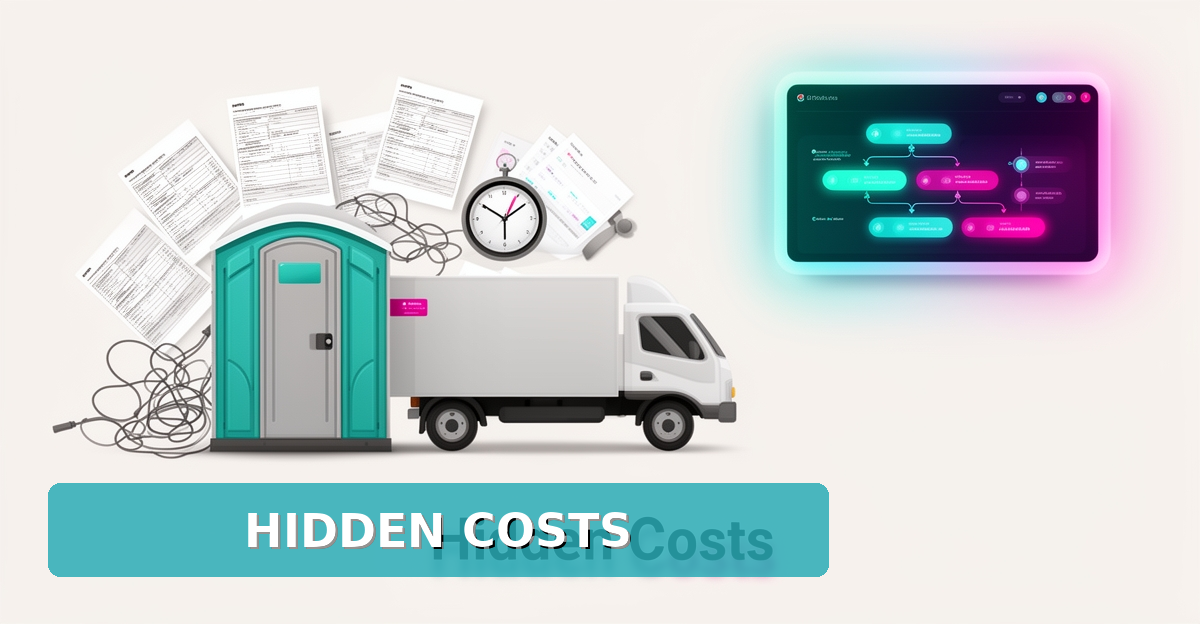
The Hidden Costs of Manual Booking in Portable Toilet Rentals (And How AI Saves Money)
Key Facts
- Manual booking errors like double-booking and missed requests directly cause lost revenue as customers switch to competitors with instant confirmation
- AI Employees typically cost around 80% less than an equivalent human hire while working 24/7/365
- Construction site portable toilet rentals commonly run in the low hundreds of dollars per month for extended rentals, so every missed booking directly hits cash flow
- Automated intake and scheduling eliminate the transcription errors and rework that consume staff hours every week
- AIQ Labs has deployed 200+ multi-agent systems and runs 4 live SaaS products daily—the automation is production-tested, not theoretical
Hire a team member that works 24/7 — for less than a part-time wage.
AI receptionists, SDRs, dispatchers and 99+ roles. Trained on your business, fully managed.
Not sure where to start? Ask our AI planner
The Real Price of Manual Scheduling in Portable Toilet Rentals
The hidden costs of manual booking in portable toilet rentals extend far beyond administrative inconvenience, directly impacting profitability through lost revenue, inflated labor expenses, and operational inefficiencies. When bookings are processed manually, errors such as double-booking, missed requests, or incorrect site details occur frequently, leading to immediate revenue loss as customers turn to competitors who can confirm availability instantly. In a market where response time influences booking decisions, even small delays result in lost opportunities—especially during peak seasons when demand surges and every missed inquiry represents a tangible financial hit.
Beyond lost bookings, the labor burden of manual scheduling creates avoidable overtime costs. Staff often work extended hours to process peak demand periods, such as weekends or project kickoffs, when booking volumes spike unpredictably. This reactive approach increases payroll expenses and contributes to burnout and higher turnover. Automating routine tasks like availability checks, confirmation messaging, and schedule updates frees staff to focus on higher-value activities like customer service and business development—and reduces the overtime needed to keep up.
Additionally, manual processes require frequent rework to correct mistakes, such as rescheduling due to equipment conflicts or reprocessing invoices after data entry errors. These corrective actions consume time that could be spent on new bookings or operational improvements, creating a drag on productivity. For operators carrying significant startup investment in trucks, units, and inventory, efficient operations are critical to achieving a timely return. Every hour spent fixing preventable errors delays profitability and increases the risk of cash flow strain.
AIQ Labs addresses these challenges through intelligent automation that eliminates manual touchpoints in the booking workflow. With AI Employees handling service requests, updating schedules in real time, and synchronizing with accounting systems, portable toilet providers can reduce errors, minimize overtime, and eliminate rework—turning a cost center into a streamlined, revenue-generating operation. The result is not just cost savings, but improved reliability and scalability that supports sustainable growth.
How AI-Powered Booking Eliminates Lost Revenue and Labor Waste
Manual booking quietly drains margin in portable toilet rentals long before a missed delivery shows up on a report. Every phone call, handwritten log, and spreadsheet update creates friction that turns into lost revenue and overtime.
AI-powered booking replaces error-prone steps with automated capture, logging, and scheduling. The system records each service request the moment it arrives, validates availability, and places it on the calendar without human re-entry. That shift moves teams from chasing paperwork to managing fleet and customers.
Labor cost is one of the first areas to improve. The savings come from fewer manual entries, less overtime to process late requests, and the elimination of rework caused by transcription errors. Because AI Employees work around the clock at a fraction of the cost of additional human hires, operators typically see admin labor drop sharply without adding headcount.
Planning time compresses as well. The same automation logic that has reshaped travel and logistics booking applies to rental dispatch: route and unit matching happen instantly instead of by phone tag.
Manual vs AI-powered booking highlights the contrast:
- Error-prone request capture becomes automated intake with validation
- Time-consuming phone and paper logging becomes instant digital scheduling
- Labor-intensive rework becomes labor-reducing exception handling
In practice, AI automation captures requests from web forms, phone, and email, logs them into a single source of truth, and schedules deliveries and pickups around crew capacity. Billing data flows from the same record, which keeps invoicing accurate without duplicate entry.
For SMBs operating on tight margins, protecting revenue per unit matters. Construction site rentals typically run in the low hundreds of dollars per month for extended terms, so a handful of lost bookings each month directly impacts cash flow.
AIQ Labs builds these workflows as owned, production-ready systems rather than subscription widgets. The result is faster fulfillment with fewer missed calls and less overtime, while staff focus on service quality instead of administrative rework.
Building an Owned AI Booking System for Portable Toilet Operations
Portable toilet rental businesses rely on seamless booking workflows to avoid costly delays and errors. Manual processes create bottlenecks that drain resources and frustrate customers. AIQ Labs addresses these challenges through three entry points: AI Employees for managed AI staff that handle real-time dispatch and booking tasks, AI Workflow Builds to rebuild the one workflow that costs you the most, and AI Operating Systems to connect everything into one operating layer integrated with existing tools like QuickBooks or field service software. This structure ensures portable toilet operators gain full control over their automation journey without vendor lock-in.
An owned AI booking system begins with a workflow build tailored to rental operations—capturing service requests, checking unit availability, and triggering delivery dispatches. Unlike off-the-shelf tools, these systems are built for scalability and integrate directly with accounting platforms to automate invoicing upon job completion. Automated intake eliminates manual data entry, cutting transcription errors and freeing staff from hours of weekly administrative work. For portable toilet companies, this means fewer missed bookings and faster billing cycles, directly tackling the hidden costs of manual scheduling. Workflow Builds are delivered at a fixed price and in phases, so you know what you're paying for at every step.
Managed AI Employees act as 24/7 virtual dispatchers, handling incoming rental requests via phone, SMS, or web forms. Trained on your specific service areas, pricing tiers, and inventory rules, they qualify leads, book units, and reschedule appointments without human intervention. At roughly 80% less than the cost of an equivalent human hire, this model is critical for businesses managing fluctuating demand across construction sites or events. AI Employees also feed real-time data into your system, ensuring inventory levels and billing records stay accurate.
For operators ready to go further, an AI Operating System connects booking, dispatch, billing, and reporting into one layer you own outright—built in phases so each stage proves its value before the next begins. By combining owned technology and managed AI staff, portable toilet rentals transform manual booking from a cost center into a streamlined, profit-driving process—retaining full ownership and avoiding recurring software fees.
Implementation Roadmap From Manual to AI-Automated Bookings
Transitioning from manual to AI-automated bookings in portable toilet rentals requires a structured approach to ensure smooth adoption and measurable results. Begin by assessing current workflows to identify pain points such as booking delays or data entry errors, then choose the entry point that aligns with operational goals and integrates with existing tools like scheduling or accounting software. AIQ Labs supports this transition with a 2-minute Fit Check that maps your situation before anything is built, ensuring the system fits seamlessly into daily operations without disrupting service delivery.
Implementation typically follows a phased rollout, starting with core booking functions before expanding to related processes like invoicing or dispatch. Staff training matters during this phase—employees should receive hands-on guidance on using the new system, understanding AI-generated insights, and handling exceptions. Monitoring performance metrics such as booking accuracy, response time, and labor hours helps validate the system's impact and highlights areas for refinement.
Ongoing optimization ensures the AI system continues to deliver value as business needs evolve. Regular reviews of system performance, user feedback, and integration stability allow for timely adjustments and scalability. Whether choosing Start Monthly, Build in Milestones, or Own It Outright, businesses can align investment with their readiness and growth trajectory. This approach not only minimizes hidden costs like lost bookings and overtime but also builds a foundation for long-term automation success across the organization. To explore how this transformation can apply to your operations, start with a free strategy call to map your biggest booking bottleneck and identify high-ROI opportunities. Schedule your free 30-minute strategy call today.
Still paying for 10+ subscriptions that don’t talk to each other?
We build custom AI systems you own outright. No vendor lock-in. Full control.
Not sure where to start? Ask our AI planner
Frequently Asked Questions
How much can AI-powered booking reduce labor costs for portable toilet rental businesses?
What are the hidden costs of manual booking in portable toilet rentals?
How much does it cost to start a portable toilet business?
Can AI booking systems integrate with existing tools like QuickBooks or field service software?
How does AI-powered booking improve response time and reduce missed bookings?
What is the typical monthly cost for extended portable toilet rentals on construction sites?
Your Next Move: From Manual Chaos to Automated Profit
Manual booking in portable toilet rentals isn't just inefficient—it's a silent profit killer that costs you lost bookings, unnecessary overtime, and constant rework. With significant startup investment and steady per-unit rental revenue on the line, every missed call or double-booking directly impacts your bottom line. The solution isn't hiring more staff; it's working smarter with AI automation that captures every request, validates availability instantly, and syncs billing without human error. AIQ Labs builds owned booking systems—deployed across 200+ multi-agent systems in production—while AI Employees handle intake at roughly 80% less than a human hire. No vendor lock-in, just your competitive advantage. Ready to stop losing revenue to manual processes? Take the 2-minute Fit Check or schedule your free 30-minute strategy call to map your biggest booking bottleneck and discover exactly how much you could save.
Make AI your competitive advantage — not just another tool.
Strategy, implementation and ongoing optimization. One partner, end to end.
Not sure where to start? Ask our AI planner