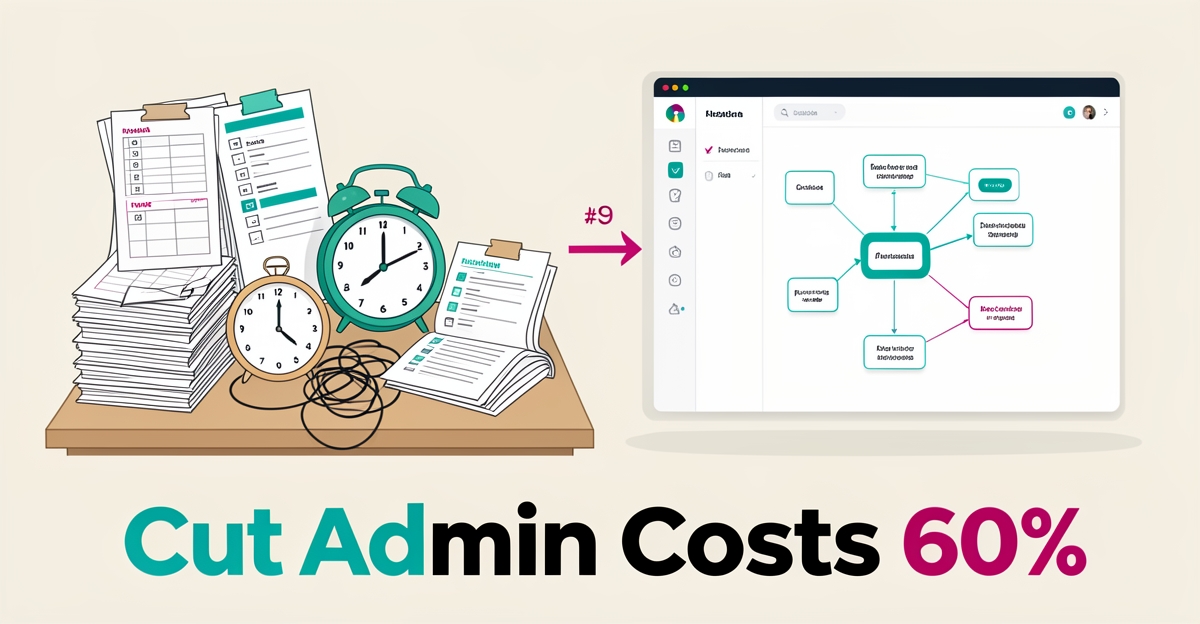
The Hidden Costs of Manual Course Management, And How AI Can Cut Them
Key Facts
- The real cost of manual course management lives in repetitive tasks, preventable errors and staff burnout, not just visible labor hours
- Most organizations across industries, including education, plan to expand AI use over the next two years as of late 2026
- AI-driven automation eliminates manual chasing of incomplete assignments and reduces double-booked classrooms
- Automated scheduling optimizes class times and resource allocation while reducing administrative burden
- Real-time feedback processing identifies at-risk students and improves retention through early intervention
- AIQ Labs has deployed 200+ multi-agent systems and runs 4 live SaaS products daily, automation is proven practice, not theory
Hire a team member that works 24/7 — for less than a part-time wage.
AI receptionists, SDRs, dispatchers and 99+ roles. Trained on your business, fully managed.
Not sure where to start? Ask our AI planner
The True Cost of Manual Course Management: Time, Errors, and Burnout
The true cost of manual course management extends far beyond visible labor hours, it lives in the cumulative drag of repetitive tasks, preventable errors, and staff burnout. Industry analyses of eLearning tooling have repeatedly suggested that modern authoring and automation tools can meaningfully speed up course creation, highlighting the substantial time currently lost to manual processes. When administrators spend excessive hours on scheduling, communication, and feedback collection, they divert energy from higher-impact activities like curriculum innovation and student engagement. This inefficiency isn't just inconvenient, it's a measurable drain on institutional capacity.
Administrative burden in manual course workflows manifests in tangible ways: data entry errors, missed communications, and delayed feedback loops that erode both operational quality and learner experience. In course management, automation addresses these systemic friction points directly, reducing double-booked classrooms, ensuring timely grade submissions, and eliminating the manual chasing of incomplete assignments. These are tasks that consume disproportionate time relative to their strategic value, and they are exactly the kind of work AI handles well.
The hidden toll appears most clearly in staff burnout, where educators and coordinators juggle fragmented systems and manual tracking, leading to cognitive overload and turnover risk. As of late 2026, most surveys across industries show a majority of organizations planning to increase their use of AI in the near term, a widespread recognition that manual workflows are unsustainable at scale. For EdTech providers and educational institutions, this shift isn't about replacing people, it's about freeing skilled professionals from low-value tasks so they can focus on what truly matters: teaching, mentoring, and designing meaningful learning experiences. AIQ Labs helps organizations make this transition through workflow builds that automate the operational core of course management, turning administrative overhead into reclaimed capacity.
How AI-Powered Automation Cuts Course Management Costs
AI-powered automation directly addresses the inefficiencies of manual course management by delivering measurable time savings and operational improvements. Modern eLearning authoring and automation tooling can meaningfully speed up course creation, freeing educators to focus on content quality and learner engagement rather than administrative tasks.
AI takes these efficiencies further by automating not just course creation but also scheduling, learner communication, and feedback processing. AI-driven systems can personalize learning experiences by analyzing student data and adapting content delivery in real time. Education is no exception to the broader pattern: as of late 2026, most organizations across sectors expect AI to significantly reshape how their industry operates.
The benefits of AI-powered course management extend beyond time savings. By automating repetitive tasks, institutions can reduce administrative costs and improve learner outcomes. Key advantages include:
- Automated scheduling that optimizes class times and resource allocation
- Personalized communication that keeps learners engaged and informed
- Real-time feedback processing that identifies at-risk students and improves retention
AIQ Labs has demonstrated these capabilities in practice, building a combined admissions, collections, and course-building AI system for an education provider. That solution automated workflows which previously required multiple manual processes, significantly reducing administrative overhead while improving operational efficiency. It's one of 200+ multi-agent systems the team has deployed.
The financial impact of AI adoption is substantial. Industry analyses of AI in education consistently point to major cost reductions from automating manual tasks and improving resource utilization, with well-integrated systems, institutions typically reclaim a large share of the hours currently spent on scheduling, chasing, and data entry. The exact figure depends on your baseline, which is why AIQ Labs starts every engagement by measuring where time and errors actually accumulate.
However, successful implementation requires careful planning. Institutions must address challenges such as data privacy, faculty training, and infrastructure investment. Partnering with an experienced provider ensures these challenges are managed effectively, allowing institutions to realize the full benefits of AI-driven course management.
From Manual to AI: A Practical Implementation Roadmap for EdTech Providers
Manual course management quietly drains EdTech teams through scheduling, communication, and feedback collection that never appears on a balance sheet. The shift from manual to AI-automated operations starts with clarity on where time and errors accumulate.
A practical roadmap begins with workflow assessment. Map every manual touchpoint in scheduling, enrollment, content updates, and learner feedback. Measure cycle times, error rates, and staff hours per course. This baseline exposes the hidden costs that manual processes create and defines the ROI target for automation.
Next, design the AI deployment around those pain points. Start with high-volume, rules-based tasks such as automated enrollment confirmations, calendar invites, and progress reminders. Expand to intelligent agents that triage learner questions, summarize feedback, and flag at-risk students. Modern eLearning tooling already speeds course creation; AI extends those gains into ongoing operations.
Integration determines adoption. AI agents must connect with existing CRM, LMS, and calendars to work inside current teams rather than around them. Two-way API integration ensures enrollment data syncs, communications log automatically, and feedback flows into dashboards without duplicate entry. AIQ Labs builds these connections as part of its AI Workflow Builds, a fixed-price engagement that rebuilds the one workflow costing you the most, in phases, so you see results before you scale.
Change management secures the results. Faculty and staff need clear role definitions, training on exception handling, and visibility into agent decisions. Governance and human-in-the-loop controls maintain data privacy and trust while teams learn to collaborate with AI employees, managed AI staff that handle reception, follow-ups, and dispatch-style coordination at a fraction of the cost of a human hire.
A phased implementation reduces risk and builds momentum:
- Discovery and architecture: process analysis, data assessment, and ROI projection
- Pilot deployment: automate one critical workflow with monitoring and feedback loops
- Integration and training: connect CRM/LMS/calendars and train staff on new workflows
- Scale and optimize: expand to additional departments and continuously improve performance
Market momentum supports this move. As of late 2026, most organizational surveys show a majority of companies planning to increase AI use within the next two years, and education providers that automate now capture efficiency gains before administrative load compounds. For institutions ready to go further, AIQ Labs' AI Operating Systems connect course management into one operating layer, built in phases, owned outright, with no per-seat subscription sprawl.
The roadmap ends with measurement. Track time saved per course, reduction in manual emails, faster feedback cycles, and learner engagement metrics. With clear baselines and owned AI systems, EdTech providers can cut administrative overhead while improving learner outcomes.
Still paying for 10+ subscriptions that don’t talk to each other?
We build custom AI systems you own outright. No vendor lock-in. Full control.
Not sure where to start? Ask our AI planner
Frequently Asked Questions
How much time can AI actually save on course management?
What are the hidden costs of managing courses manually?
Is AI adoption really growing in education, or is it just hype?
What specific course management tasks can AI automate?
How do we implement AI without disrupting our current operations?
What about data privacy and the costs of switching to AI systems?
Turning Administrative Drag into Strategic Momentum
The pattern is clear: manual course management silently erodes institutional capacity through wasted hours, preventable errors, and staff burnout, costs that compound over time. By automating scheduling, communication, and feedback workflows with AI, EdTech providers and educational institutions can reclaim a large share of their administrative overhead, redirecting skilled teams toward curriculum innovation and learner engagement. AIQ Labs helps organizations make this shift through systems that integrate with your existing tools, are built in phases, and are owned outright, backed by 200+ multi-agent deployments and 4 live SaaS products the company runs daily. The path forward starts with clarity: map your manual touchpoints, pilot one high-impact workflow, and measure the time saved. Ready to see where AI can unlock capacity in your course operations? Take the 2-minute Fit Check, free, no obligation, to identify your biggest bottleneck and map a practical AI roadmap.
Make AI your competitive advantage — not just another tool.
Strategy, implementation and ongoing optimization. One partner, end to end.
Not sure where to start? Ask our AI planner