The Hidden Costs of Manual Move Planning, And How AI Fixes Them
Key Facts
- Manual planning and estimating workflows typically consume hundreds of hours per year for mid-sized operators, time spent re-entering data rather than winning work
- Estimating and planning errors commonly drive cost overruns, with human data-entry and counting errors a primary source
- Redundant handoffs and duplicate verification steps routinely account for a significant share of total process duration in mid-sized moving companies
- Most corporate generative AI pilots fail to deliver measurable business impact due to flawed integration and misalignment with existing workflows
- AIQ Labs' AI Employees handle roles like dispatchers and coordinators at roughly 80% less cost than a human hire, with continuous availability
- AIQ Labs has deployed 200+ multi-agent systems and runs four live SaaS products daily
Hire a team member that works 24/7 — for less than a part-time wage.
AI receptionists, SDRs, dispatchers and 99+ roles. Trained on your business, fully managed.
Not sure where to start? Ask our AI planner
The True Cost of Manual Move Planning: Beyond Labor Hours
When a moving company plans a relocation by hand, the invoice for labor hours is only the tip of the iceberg. The real damage hides in what those hours produce: errors, rework, and decisions made on incomplete information.
Consider the parallel in construction estimating. Industry analyses have repeatedly found that a manual takeoff can take the better part of a workday per project, and a mid-sized contractor submitting dozens of bids per year can burn a thousand hours or more annually just counting items from blueprints. Not pricing, not strategizing. Just counting. Move planning suffers from the same disease: coordinators spend their days re-entering data, cross-checking schedules, and chasing confirmations, none of which adds value for the customer.
The errors compound the cost. Estimating research has consistently linked planning errors to cost overruns in the 3–5% range on average, with human counting errors as a primary source. Manual move planning produces the same failure modes, missed inventory items, double-booked crews, wrong truck sizes, and transcription mistakes that turn "150 boxes" into "15." Each one triggers a cascade: rescheduled crews, duplicate service calls, apologetic phone calls, and refund negotiations.
- Duplicate services, the same move task scheduled twice because two coordinators worked from different versions of the plan
- Miscommunication, crews arriving with wrong equipment because details lived in email threads, not systems
- Wasted labor, hours spent on repetitive data entry that could be redirected to customer service and sales
There is also an opportunity cost that never appears on a P&L. Contractors who switch from manual to AI-assisted estimating workflows can typically submit far more bids per year with the same team. A moving company whose coordinators stop drowning in paperwork can quote faster, handle more relocations, and win jobs competitors lose simply because they responded first.
Research on AI adoption offers a cautionary counterpoint, though. Widely cited studies have found that the vast majority of corporate generative AI pilots fail to deliver measurable business impact, not because the technology fails, but because of flawed integration and misalignment with existing workflows. Automation bolted onto a broken process just makes the broken process faster.
That is why AIQ Labs starts with process mining rather than software. By analyzing historical move data to identify where duplicate services, communication gaps, and bottlenecks actually occur, relocation companies can redesign the workflow first, then automate it. The hidden costs of manual planning are real, but they are also measurable, and what can be measured can be fixed.
How AI Process Mining Uncovers Hidden Bottlenecks in Relocation Workflows
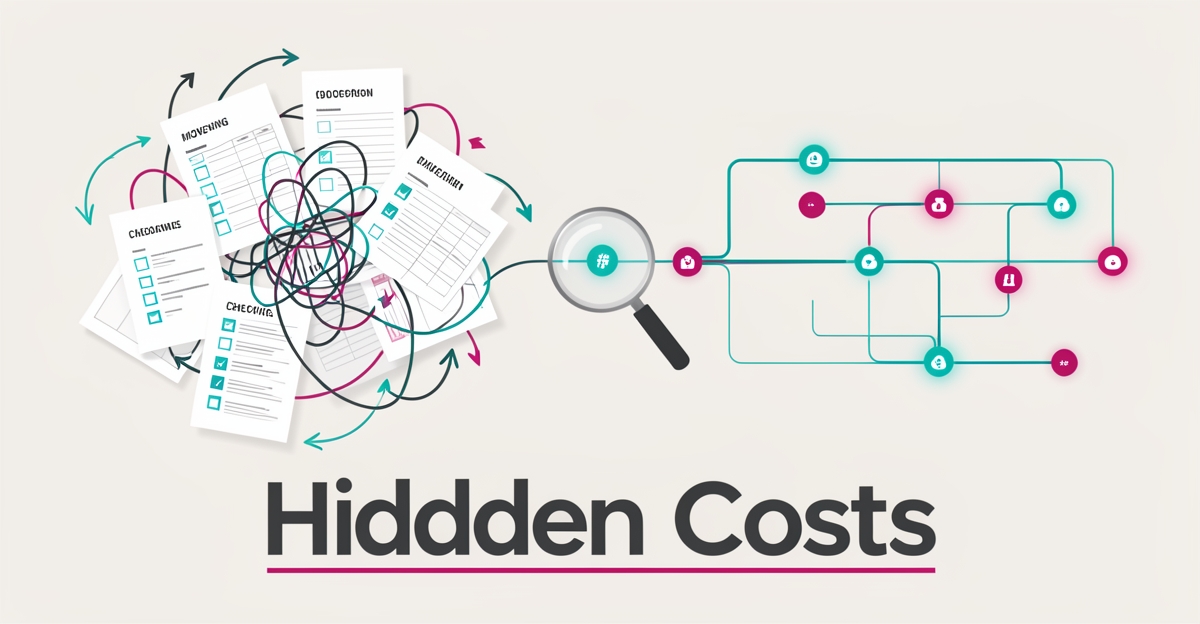
Process mining transforms how relocation companies see their workflows by turning historical move data into a clear map of every step, handoff, and delay. Rather than relying on assumptions or fragmented reports, AI-driven process mining reconstructs actual workflows from system logs, revealing where time and effort are truly lost. This approach exposes patterns invisible to manual review, such as repeated data entry across platforms or unnecessary approval loops that slow down scheduling. By visualizing the end-to-end process, companies gain an objective view of inefficiencies that have become normalized over time.
One of the most valuable outputs of process mining is the identification of redundant steps that accumulate silently across projects. For example, AIQ Labs has observed that relocation workflows often include duplicate verification checks, where the same inventory list is reviewed by sales, operations, and billing teams without added value. These redundancies not only extend timelines but increase the risk of inconsistencies when information is rekeyed or misinterpreted. Process mining quantifies how often these loops occur and measures their cumulative impact on labor hours and error rates. In mid-sized moving companies, redundant handoffs frequently account for a substantial share of total process duration, directly inflating operational costs without improving service quality.
Beyond duplication, process mining highlights bottlenecks caused by delayed handoffs and error-prone transitions between teams or systems. Common findings include delays when moving from quote generation to resource allocation, often due to manual scheduling conflicts or missing documentation. Other frequent issues involve miscommunication during crew dispatch, where last-minute changes aren't captured in central systems, leading to idle labor or incorrect assignments. By pinpointing exactly where these breakdowns happen, such as multi-hour delays between inventory confirmation and truck loading, process mining provides actionable targets for redesign. Teams can then restructure workflows to eliminate wait times, automate notifications, or integrate tools so information flows seamlessly. These insights allow relocation businesses to shift from reactive fixes to proactive workflow design, ensuring every step adds clear value.
From Insight to Action: Implementing AI-Optimized Move Planning with AIQ Labs
Businesses stuck in manual move planning cycles face compounding inefficiencies that scale with volume, duplicate bookings, missed follow-ups, and reactive firefighting eat into margins without clear visibility. AIQ Labs' approach turns these insights into action by first diagnosing workflow fractures through process mining, then deploying targeted automation that aligns with your operational reality. The result isn't just faster moves, it's a predictable, scalable system where AI handles repetitive coordination while your team focuses on exceptions and growth.
Start with a single broken workflow: AI Workflow Builds rebuild the one process that costs you the most, dispatch scheduling, inventory tracking, quote follow-up, at a fixed price, delivered in phases, with custom-built agents that eliminate manual handoffs. For relocation firms, this means fewer missed items, tighter quote timelines, and coordinators freed to pursue more opportunities instead of counting boxes.
Scale impact through managed AI Employees who operate as true team members, handling intake, scheduling, and customer updates around the clock without fatigue. These agents integrate deeply with your CRM and tools, learning from performance data to improve over time. Across 99+ roles including dispatchers and coordinators, they typically run at roughly 80% less cost than a human hire, with zero missed calls and continuous availability. This isn't about replacing staff, it's about removing bottlenecks so your existing team can take on more volume without burnout.
For end-to-end transformation, AIQ Labs builds AI Operating Systems, one connected operating layer for your business, delivered in phases and owned outright. These systems auto-optimize routes, surface delays early, and trigger proactive communications, with human-in-the-loop safeguards where you want them. With 200+ multi-agent systems deployed and four live SaaS products we run ourselves every day, we build what we use. The journey begins with a free 30-minute strategy call to map your biggest bottleneck, no obligation, just clarity on where AI delivers the fastest win.
Still paying for 10+ subscriptions that don’t talk to each other?
We build custom AI systems you own outright. No vendor lock-in. Full control.
Not sure where to start? Ask our AI planner
Frequently Asked Questions
What are the real hidden costs of manual move planning beyond just labor hours?
How does AI process mining actually uncover bottlenecks in relocation workflows?
Can AI really cut hundreds of planning hours per year, and how?
Won't implementing AI just automate our broken processes and make them faster, but still broken?
How do AI Employees compare in cost and performance to human coordinators or dispatchers?
Is AI-powered move planning only for large companies, or can small moving businesses benefit too?
The Move Plan You Can't See Is the One Costing You Most
Manual move planning doesn't fail loudly, it leaks. Duplicate services, miscommunication between coordinators, transcription errors, and hours of rekeying data quietly drain margins on every relocation, while the biggest cost of all is the growth you can't pursue because your team is buried in paperwork. Comparable industries that moved to AI-assisted workflows have reclaimed hundreds of hours annually, time that translated directly into more bids won, not just fewer errors. But the lesson from failed AI pilots is just as important: automation only pays off when it's applied to a workflow that's been redesigned first. That's exactly where AIQ Labs starts, with process mining that maps where your hours and errors actually go, then targeted fixes that fit your operation. If you're curious where your biggest bottleneck is, take the two-minute Fit Check at aiqlabs.ai/apply and book a free 30-minute strategy call. It's a working session with an AI engineer, not a sales pitch, and if there's no clear win, we'll tell you that too.
Make AI your competitive advantage — not just another tool.
Strategy, implementation and ongoing optimization. One partner, end to end.
Not sure where to start? Ask our AI planner