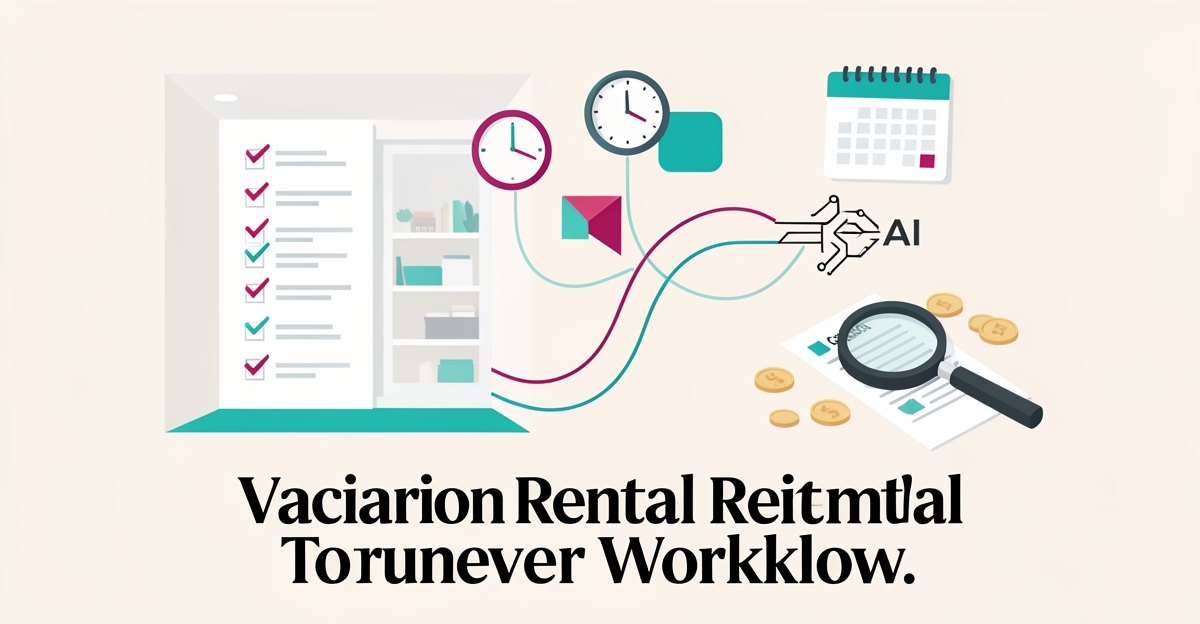
The Hidden Costs of Manual Turnover in Vacation Rental Cleaning, And How AI Fixes Them
Key Facts
- Knowledge workers typically spend a significant share of their week, as much as a quarter by some estimates, on repetitive tasks that could be automated.
- Manual data entry carries a measurable error rate, often cited in the low single digits depending on task complexity.
- Automating document-heavy processes is widely reported to cut errors dramatically, some organizations see reductions of up to 90%.
- AI-assisted scheduling is commonly reported to improve shift coverage and reduce overtime spend compared to manual scheduling.
- Managers using AI scheduling tools often reclaim several hours per week previously spent on manual scheduling.
- AIQ Labs has deployed 200+ multi-agent systems and runs 4 live SaaS products daily, this is production work, not theory.
Hire a team member that works 24/7 — for less than a part-time wage.
AI receptionists, SDRs, dispatchers and 99+ roles. Trained on your business, fully managed.
Not sure where to start? Ask our AI planner
The True Cost of Manual Turnover: Beyond Labor Expenses
When property managers calculate turnover costs, they typically count cleaning labor and supplies. But the real expense hides in the operational friction, time lost to repetitive documentation, errors in guest requests, and approval bottlenecks that delay check-ins.
The core issue with manual workflows is well understood: they waste time on duplicate work, preventing teams from focusing on guest experience and revenue-generating activities. In vacation rental operations, this translates to cleaners documenting the same checklist items across multiple systems, coordinators re-entering guest requests, and managers chasing approvals for supply orders.
The scale of this inefficiency is significant. Industry analyses commonly estimate that employees spend as much as 25% of their workweek on repetitive tasks that could be automated. For a turnover coordinator managing 20 properties, that's roughly 10 hours weekly spent on data entry, status updates, and manual scheduling instead of quality control or guest communication.
Manual data entry introduces another hidden cost: errors. Manual data entry typically carries an error rate in the 1-4% range depending on complexity. In vacation rental cleaning, this manifests as:
- Missed special requests (early check-in, hypoallergenic products, crib setup)
- Incorrect cleaning assignments or property access codes
- Billing discrepancies between owners and cleaning vendors
- Delayed maintenance reporting that leads to guest complaints
These aren't minor inconveniences. A missed crib request or incorrect lock code creates immediate guest dissatisfaction, triggers refund requests, and damages review scores that directly impact future bookings.
Approval bottlenecks compound these delays. When a cleaner discovers a broken appliance or stain requiring professional treatment, manual approval processes can delay resolution by hours or days. Surveys of executives consistently find that a majority believe their approval processes slow down decision-making and add unnecessary complexity.
The consistency problem extends beyond individual errors. Manual processes suffer from fatigue and drift, the third property cleaned on a Saturday receives different attention than the first. Guest expectations don't fluctuate, but human performance does.
AI workflow automation eliminates these hidden costs by removing human intervention from repetitive, rule-based tasks. Instead of coordinators manually logging cleaning completion, AI systems capture photo verification and timestamps automatically. Rather than cleaners texting about maintenance issues, intelligent workflows route issues to the right vendor with full context and approval authority pre-configured.
AIQ Labs builds these systems through AI Workflow Builds, we rebuild the one workflow that costs you the most, at a fixed price, in phases. The build connects property management platforms, cleaning teams, and guest communication into a single operational system, eliminating the duplicate data entry and approval delays that inflate your true turnover costs. And you own what's built outright.
How AI Automation Eliminates Turnover Inefficiencies
Every manual turnover process carries a hidden price tag, and every one of those price tags disappears when AI takes over the workflow. The solution isn't hiring more cleaners or pushing staff harder; it's rebuilding the turnover lifecycle around systems that never get tired, never skip a step, and never forget to document.
The most immediate win comes from intelligent scheduling. Workforce management analyses of AI-driven scheduling commonly report meaningful gains in shift coverage, overtime reduction, and staff retention compared to manual methods. For vacation rental operators juggling back-to-back checkouts, that means the right cleaner arrives at the right property every time, no scrambling, no overtime premiums, no gaps between guest stays.
Managers feel the relief just as directly. AI scheduling typically saves managers several hours per week on scheduling tasks alone, time that can shift from spreadsheet wrangling to guest experience and revenue growth. That recovered time compounds quickly across a busy season.
Consistency is where AI delivers its deepest value. The highest-value shift AI delivers is not speed, it is consistency: every process runs through the same logic without fatigue or drift. Applied to turnover, that means every property gets the identical cleaning protocol, every checklist item gets verified, and quality stops depending on who happens to be on shift that day.
Automated documentation closes the loop. Manual data entry carries a measurable error rate, and fixing those mistakes is expensive, errors in invoice processing alone are often estimated to cost tens of dollars each to correct, before counting the downstream damage of a missed guest request. Organizations that automate commonly report error reductions of up to 90%, and photo-verified, timestamped turnover records eliminate the "he said, she said" disputes that follow property damage claims.
A well-architected AI turnover system handles the full lifecycle:
- Assigns cleaning teams based on property location, checkout timing, and staff availability
- Enforces standardized cleaning protocols across every property and every crew
- Captures automated documentation, photos, checklists, timestamps, with no manual data entry
- Flags maintenance issues and supply shortages before the next guest checks in
- Triggers downstream workflows automatically, from restocking to guest messaging
The payoff is measurable. Companies implementing workflow automation frequently report strong returns within the first year, with many seeing positive returns within months. Automation is about more than saving money, it's about building systems that boost productivity, reduce errors, and allow for scalability.
This is exactly the transformation AIQ Labs builds for operators: fully owned, production-ready AI systems that automate the entire turnover lifecycle, scheduling, protocols, documentation, and communication, so the process runs the same way at ten properties as it does at a hundred. If you want to see where automation would deliver the biggest win in your operation, start with the 2-minute Fit Check, then a free 30-minute strategy call maps your biggest bottleneck and identifies the highest-ROI opportunities, and if there isn't a clear win, we'll tell you that too.
Implementing AI Turnover Systems: From Assessment to Optimization
Moving from manual turnover to AI is not a single switch flip, it is a phased build that protects operations while compounding gains.
Assessment starts with mapping the real cost of the current process. Teams commonly waste a significant share of their workweek on repetitive tasks that could be automated, and manual data entry carries a small but costly error rate depending on complexity. Documenting where documentation is duplicated, where guest requests are missed, and where cleaning standards drift creates the baseline for ROI and change management.
With the baseline set, design follows a phased implementation process: import operational data, configure business rules, train the team, then run in parallel and optimize. This structure reduces risk and builds trust before full cutover. AIQ Labs prices this transparently, you can start monthly, build in milestones, or own the system outright. No fake prices, no surprises.
Development and integration translate the assessment into owned systems. AI Workflow Builds replace disconnected tools with a unified turnover lifecycle that automates documentation, scheduling, and quality checks. For ongoing execution, AI Employees can handle dispatching, coordination, and guest communication at roughly 80% less cost than a human hire. And for operators ready to go further, an AI Operating System connects the whole operation in one layer, built in phases and owned outright, no vendor lock-in.
Deployment is staged for safety and learning. Managers and cleaners train on the new system while AI schedules run alongside manual schedules for comparison. Managers using AI scheduling typically reclaim several hours per week on scheduling tasks, and coverage generally improves compared to manual scheduling. Those early wins fund broader rollout.
Optimization is continuous. The system learns from each turnover, improving consistency without fatigue or drift. Organizations implementing automation commonly report error reductions of up to 90% in automated processes, and AI scheduling can meaningfully cut overtime costs. The focus shifts from firefighting to high-value work like guest experience and revenue optimization.
A practical rollout follows these steps:
- Discovery & Architecture: process analysis, data assessment, solution design and ROI projection
- Development & Integration: custom build, tool connections, testing and compliance verification
- Deployment & Training: production go-live with role-specific training and monitoring setup
- Optimization & Scale: continuous performance monitoring, feature enhancement and cross-department expansion
The shift is strategic, not just cost saving. Automation is about developing systems that boost productivity, reduce errors and allow for scalability. With the right phased plan, vacation rental operators eliminate hidden turnover costs and build a scalable, consistent operation they own.
Still paying for 10+ subscriptions that don’t talk to each other?
We build custom AI systems you own outright. No vendor lock-in. Full control.
Not sure where to start? Ask our AI planner
Frequently Asked Questions
What hidden costs am I missing if I only count cleaning labor?
How much time does manual turnover actually waste each week?
Are manual data entry errors really that expensive in vacation rentals?
Can AI scheduling actually improve coverage without hiring more cleaners?
Will AI make cleaning standards inconsistent between crews?
How fast can we see ROI from automating turnover?
Turnover Without the Hidden Tax
Manual turnover in vacation rental cleaning quietly erodes profits through duplicated effort, missed guest requests, and inconsistent quality, costs that show up not in labor line items but in refunds, poor reviews, and operational drag. AI automation eliminates this hidden tax by standardizing workflows, capturing documentation automatically, and ensuring every property receives the same meticulous attention, shift after shift. The result is fewer errors, reclaimed managerial time, and a scalable system that grows with your portfolio without adding complexity. If you're ready to see where automation would deliver the biggest win in your operation, a free 30-minute strategy call maps your bottleneck and identifies the highest-ROI opportunities, no obligation, just clarity. Book your strategy call today to discover how owned AI systems can transform your turnover process from a cost center into a competitive advantage.
Make AI your competitive advantage — not just another tool.
Strategy, implementation and ongoing optimization. One partner, end to end.
Not sure where to start? Ask our AI planner