The Real Cost of Manual Appointment Management in Quick Lube Franchises
Key Facts
- Industry surveys consistently find that a majority of service customers prefer providers offering online booking, change, or cancellation capabilities
- Customers who have used digital booking typically want to keep using it, making online scheduling a retention issue, not just a convenience feature
- Automated reminders via email or SMS are widely shown to reduce no-shows by addressing forgetfulness, a leading cause of missed visits
- Real-time dispatching lets a finished technician be sent to help on another job immediately, increasing billable hours and optimizing labor costs
- Manual scheduling often results in accidentally sending two technicians—or none—to one job, directly inflating labor costs without generating revenue
- Building a comprehensive custom scheduling platform from scratch is typically a multi-quarter, phased effort—not a quick weekend project
Hire a team member that works 24/7 — for less than a part-time wage.
AI receptionists, SDRs, dispatchers and 99+ roles. Trained on your business, fully managed.
Not sure where to start? Ask our AI planner
The Hidden Labor Drain: How Manual Scheduling Burns Profit
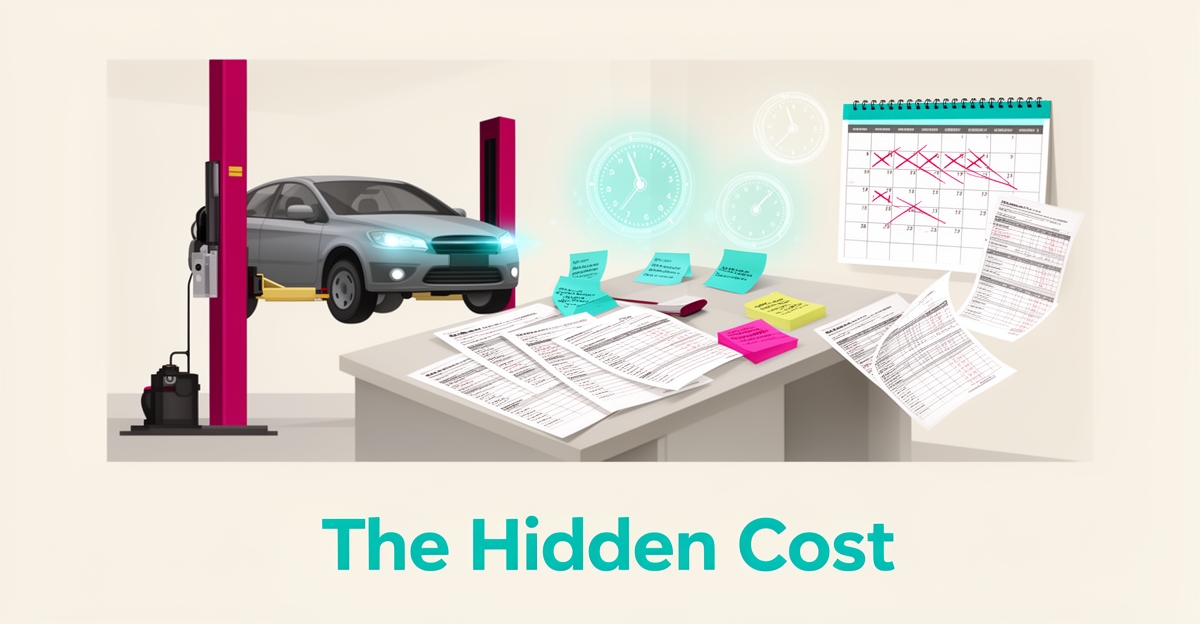
The hidden labor drain of manual appointment management begins long before a customer arrives at the service bay. Administrative staff spend hours juggling phone calls, paper logs, and whiteboard schedules to coordinate technician availability—a process riddled with double handling and synchronization errors. With manual methods, staff must cross-reference schedules or call technicians to verify availability, creating time-consuming inefficiencies that scale with each location. In a multi-location quick lube franchise, this lack of real-time visibility often results in accidentally sending two technicians to one job—or none at all—directly inflating labor costs without generating revenue.
These inefficiencies cascade into technician idle time and wasted billable hours. When a technician finishes a job early but the office remains unaware due to delayed communication, that skilled labor sits unused while overhead continues to accrue. Automated systems solve this by enabling immediate reassignment—sending finished technicians to help on another job the moment they become available, thereby increasing billable utilization. Without this capability, franchises pay for idle time that could otherwise be generating service revenue, silently eroding profit margins across shifts and locations.
Poor routing further compounds the drain. Manual scheduling rarely accounts for travel time or geographic proximity, leading to unnecessary overtime and inefficient job sequencing. Modern platforms calculate distances between sites and match the closest qualified technician to each job based on skill and location, preventing redundant travel and ensuring labor is deployed where it’s needed most. For AIQ Labs, this precision in labor allocation is a core opportunity where AI-driven scheduling—delivered through targeted workflow builds—turns fixed overhead into performance-aligned output, converting idle time into billable work without adding headcount.
No-Shows and Booking Errors: The Revenue Leak You Can’t Afford
No-shows and booking errors represent a silent drain on quick lube franchises, turning potential service hours into lost revenue with every missed appointment. Manual systems, reliant on phone calls and paper logs, lack the safeguards to prevent double-booking or send timely reminders, creating avoidable gaps in the schedule. Industry surveys consistently show that most service customers prefer providers offering online booking, change, or cancellation capabilities—a clear expectation for digital convenience that manual processes fail to meet. When appointments are missed or mishandled, technicians sit idle while labor costs continue to accrue, directly eroding billable hours and profitability.
Automated reminders via email or SMS measurably reduce no-shows by addressing forgetfulness—a leading cause of missed visits—while real-time scheduling prevents double-booking through centralized availability tracking. Without these features, franchises risk not only immediate revenue loss but also long-term damage to customer trust, as clients grow frustrated with scheduling confusion or unresponsive service. AIQ Labs helps franchises close this revenue leak with AI-driven scheduling—whether an AI receptionist handling bookings around the clock or a rebuilt scheduling workflow—that ensures every booked slot translates into actual service, protecting both operational efficiency and customer satisfaction. Automated communication cuts no-show rates, preserving labor utilization and breaking the costly cycle of rescheduling and customer dissatisfaction. By aligning scheduling with customer preferences for 24/7 booking and reducing human error, franchises reclaim lost hours and build a more reliable, profitable service model. Real-time dispatching and conflict prevention increase billable hours by ensuring technicians are never sent to overlapping jobs or left idle due to poor coordination. For quick lube chains operating on tight margins, eliminating these avoidable inefficiencies isn’t just operational improvement—it’s essential revenue protection. When every appointment slot is optimized and communicated clearly, the result is higher throughput, fewer wasted resources, and a service experience that keeps customers returning.
From Manual to Automated: A Practical Path to AI-Powered Scheduling
Manual scheduling bleeds margin in quick lube franchises long before the first oil change is missed. Phone tag, paper calendars and spreadsheet juggling create wasted admin hours, double handling and missed revenue that compounds across locations.
A practical transition starts with clarity on roles and rules, not a rip-and-replace. Define who can book, edit and dispatch, then configure service templates for oil changes, tire rotations and maintenance contracts with accurate durations and labor rates. This foundation prevents the classic franchise failure of accidentally sending two technicians—or none—to one job.
Integration comes next. Connect scheduling to existing POS, customer databases and calendar tools so availability updates automatically and payments can be collected at booking. Enable automated communication to send confirmations and reminders via email or SMS, a feature widely shown to significantly reduce the likelihood of no-shows caused by forgetfulness or scheduling conflicts.
Real-time dispatching turns idle time into billable hours. Managers can view field staff location, calculate distances and drag-and-drop jobs when a technician finishes early—sending staff to help on another job immediately, increasing billable hours and optimizing labor costs.
Customer expectations drive the business case. Industry research consistently finds that most customers prefer providers that allow them to book, change or cancel appointments online, and those who have used digital booking typically want to continue doing so. Offering 24/7 availability meets that demand and strengthens loyalty.
Implementation follows proven steps used in scheduling builds:
- Define user roles and permissions for administrator, technician and customer access
- Configure scheduling rules, service templates and labor rates for each location
- Integrate with existing POS, customer records and calendar systems
- Enable automated confirmations, reminders and real-time dispatch notifications
- Analyze labor productivity and schedule comparison reports to refine staffing
Building a fully custom solution from scratch is not trivial—comprehensive scheduling platforms are typically multi-quarter, phased efforts. For franchises seeking faster impact, AIQ Labs takes a different approach: rebuild the one scheduling workflow that costs you the most, at a fixed price and in phases, so you see results in weeks rather than waiting out a year-long build. Larger operators can go further with a connected AI operating system that ties scheduling, dispatch and customer communication into one layer you own outright.
Once live, the system provides centralized visibility, prevents booking conflicts and generates data on bookings, cancellations and no-shows. That visibility supports real-time dispatching and smarter workforce planning, turning scheduling from an administrative burden into a revenue driver.
Still paying for 10+ subscriptions that don’t talk to each other?
We build custom AI systems you own outright. No vendor lock-in. Full control.
Not sure where to start? Ask our AI planner
Frequently Asked Questions
How much time do administrative staff typically waste on manual appointment scheduling in quick lube franchises?
Do service customers prefer online booking, changes, or cancellations for appointments?
How does automated scheduling reduce technician idle time and increase billable hours?
Can automated scheduling prevent double-booking or sending no technicians to a job?
What impact do no-shows have on quick lube franchises, and how can automated reminders help?
Is building a custom scheduling system from scratch the only way to automate appointment management for franchises?
Turn Scheduling From a Cost Center Into a Profit Driver
Manual appointment management quietly erodes quick lube margins through admin double-handling, technician idle time, double-bookings and no-shows that leave bays empty while labor costs accrue. Real-time visibility, automated reminders and proximity-based dispatch convert fixed overhead into billable output, protect revenue from missed appointments, and meet the clear customer expectation for 24/7 booking. Moving from phone logs and whiteboards to an automated system isn’t a rip-and-replace project; it starts with clear roles, service templates, integrations with POS and customer records, and automated confirmations that reduce forgetfulness-driven no-shows. AIQ Labs helps franchises automate booking, confirmation and rescheduling—whether through an AI receptionist that never misses a call, a fixed-price rebuild of your most expensive scheduling workflow, or a connected operating layer you own outright. If you’re ready to map your biggest scheduling bottleneck to a high-ROI automation plan, take the two-minute Fit Check at https://aiqlabs.ai/apply and book a free 30-minute strategy call. No obligation, just clarity on what’s worth automating first.
Make AI your competitive advantage — not just another tool.
Strategy, implementation and ongoing optimization. One partner, end to end.
Not sure where to start? Ask our AI planner