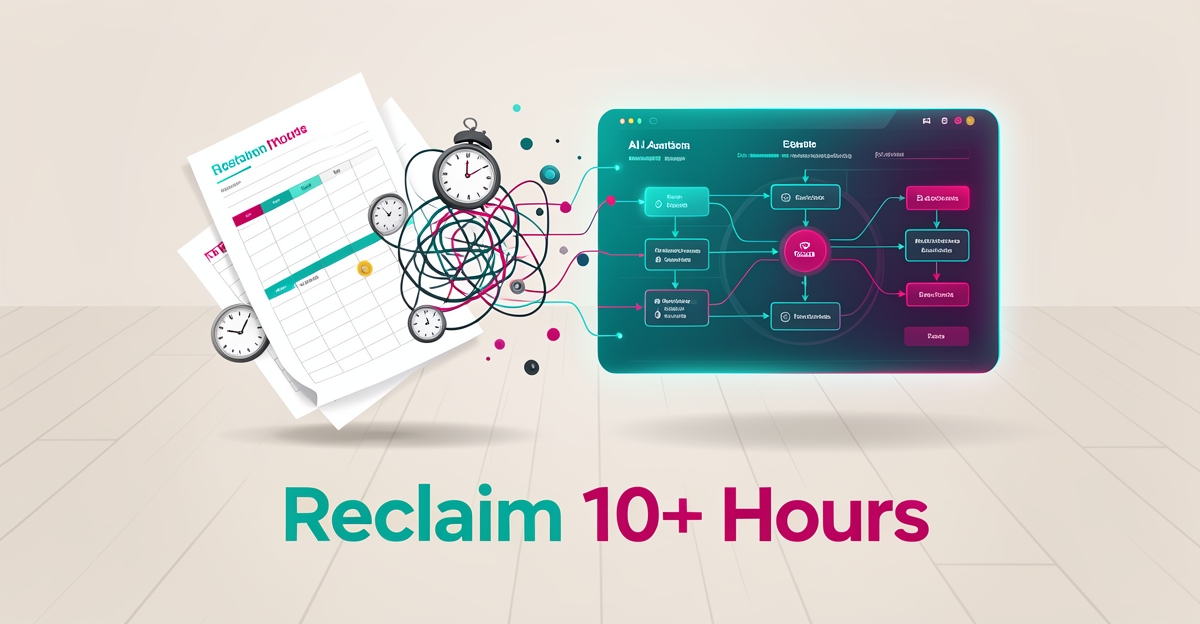
# The Real Cost of Manual Job Tracking in Flooring: How AI Saves Hours Every Week
**Quick Answer:** Manual job tracking drains flooring teams with re-entry, texts and spreadsheets. AI automation handles quoting, scheduling and inventory flows so teams typically reclaim 10+ hours per week.
## Key Facts
- Manual processes in flooring businesses, re-keyed measurements, text-based scheduling, spreadsheet inventory, create errors, inefficiencies and lost revenue
- AI-powered systems can automate data flows, inventory reorders and scheduling without manual input for flooring operations
- Flooring teams that automate job tracking and admin typically reclaim 10+ hours per week
- AIQ Labs has deployed 200+ multi-agent systems and runs four live SaaS products daily, the same automation it builds for clients
## Table of Contents
- [The Hidden Time Drain of Manual Job Tracking in Flooring](#the-hidden-time-drain-of-manual-job-tracking-in-flooring)
- [How AI-Powered Systems Eliminate Manual Job Tracking Burdens](#how-ai-powered-systems-eliminate-manual-job-tracking-burdens)
- [Implementing AI Job Tracking: A Practical Path for Flooring Businesses](#implementing-ai-job-tracking-a-practical-path-for-flooring-businesses)
## The Hidden Time Drain of Manual Job Tracking in Flooring
Manual job tracking quietly drains flooring businesses every week, turning repetitive admin into the biggest bottleneck on the job.
Sales estimators manually input measurements from Measure Square into separate quoting systems, installation managers juggle scheduling changes via phone calls and text messages, and inventory coordinators track stock levels across job sites using spreadsheets that require constant manual updates. These manual touchpoints are standard across the trade.
The result is a compounding time cost. Each measurement re-entry, schedule confirmation, and inventory check adds minutes that stack into hours. **Manual processes in flooring businesses lead to errors, inefficiencies, and lost revenue**, and the pattern is systemic, not isolated to one team or role.
The weekly drain shows up in three predictable areas:
- **Estimating and quoting:** Measurements captured in Measure Square are re-typed into quoting software, creating duplication and version errors.
- **Scheduling and site communication:** Installation managers coordinate changes by phone and text, with confirmations lost and updates delayed.
- **Inventory tracking:** Stock levels are maintained in spreadsheets per job site, requiring constant manual updates and risking over-ordering or stockouts.
These workflows keep teams reactive. When data lives in separate tools and messages, no one has a single source of truth. That fragmentation forces managers to spend time reconciling instead of installing.
For flooring, where job tracking overlaps with logistics, the implication is clear: hours lost to manual entry and coordination are hours not spent on revenue-generating work. AIQ Labs builds [AI Workflow Builds](/workflow-builds) that rebuild the one workflow costing you the most, fixed price, delivered in phases, automating job tracking, alerts, and reports so teams typically reclaim 10+ hours per week.
Without automation, the hidden time drain persists. With it, data flows between tools without manual input and the administrative load shrinks.
## How AI-Powered Systems Eliminate Manual Job Tracking Burdens
Manual job tracking bleeds hours from flooring teams every week, and the friction shows up in missed updates, stockouts, and delayed customer replies.
AI-powered systems automate data flows between tools, handle inventory reorders, scheduling updates, and customer communications without manual input. That shift removes the repetitive copy-paste work that keeps estimators, installers, and coordinators tied to spreadsheets and phones.
In flooring, manual tracking means sales estimators manually inputting measurements from Measure Square into separate quoting systems, installation managers juggling scheduling changes via phone calls and text messages, and in
AI Employees
Hire a team member that works 24/7 — for less than a part-time wage.
AI receptionists, SDRs, dispatchers and 99+ roles. Trained on your business, fully managed.
See If You’re a Fit — AI Employees from $700/mo
Not sure where to start? Ask our AI planner
ventory coordinators tracking stock levels across job sites using spreadsheets that require constant manual updates. These touchpoints create errors, inefficiencies, and lost revenue.
Automation replaces those handoffs with connected workflows. An AI system can ingest a measurement, generate a quote, push materials to the job site plan, and trigger a reorder when stock dips. Scheduling changes update crews and customers in one pass, and communications are logged automatically.
Adoption in adjacent sectors is well underway. As of late 2026, a meaningful share of transport and logistics firms across major markets are using AI technologies, and a majority of logistics professionals who regularly handle information report using AI in their daily work. Those firms report cost savings, reduced waste, and improved competitiveness. Flooring operations share the same material movement, scheduling, and information-handling burdens, so similar gains are realistic when manual job tracking is eliminated.
AIQ Labs designs workflows that are deeply integrated into day-to-day operations and built to reduce administrative burden. The focus is on practical automation, not point tools, and with 200+ multi-agent systems deployed, the patterns are proven.
What gets automated in practice:
- Data flows between estimating, CRM, scheduling, and accounting tools sync automatically
- Inventory reorders trigger from real-time job consumption and site usage
- Schedule updates propagate to crews and customers without phone or text chasing
- Customer communications are generated and logged from job status changes
This is [AI Workflow Builds](/workflow-builds) applied to flooring operations. Jobs move forward without staff re-entering the same information in multiple places, freeing up 10+ hours per week, typically, for revenue work.
By building systems that own the data flow, flooring businesses reduce administrative burden and improve customer satisfaction while keeping teams focused on installation quality rather than paperwork. For teams that want the whole operation connected, an [AI Operating System](/ai-operating-systems) extends the same approach across every workflow, built in phases and owned outright.
## Implementing AI Job Tracking: A Practical Path for Flooring Businesses
Knowing where to start is often the biggest barrier, many flooring business owners understand their manual tracking is costing them, but the path to fixing it feels unclear. The good news: implementing AI job tracking doesn't require a massive overhaul. It starts with a structured, phased approach that fits the realities of a small or mid-sized flooring operation.
The first step is an honest assessment of your current workflows. Map out where manual touchpoints create friction: sales estimators re-keying measurements from Measure Square into separate quoting systems, installation managers coordinating schedule changes through phone calls and texts, and inventory coordinators updating spreadsheets across job sites. Quantify the hours spent on each, this becomes your baseline for measuring ROI.
Next, evaluate AI-powered solutions against your specific bottlenecks. The right system should automate data flows between your existing tools, handle inventory reorders, scheduling updates, and customer communications without manual input. Look for solutions that integrate with the software you already use rather than forcing a rip-and-replace. This isn't an emerging trend, adoption in adjacent logistics and field-service sectors is already mainstream as of late 2026, and flooring businesses that move now gain a competitive edge.
A practical implementation path looks like this:
- **Discovery and architecture:** analyze your processes, assess your current tech stack, and design a solution with projected ROI before any code is written.
- **Development and integration:** build the system and connect it to your quoting, scheduling, and inventory tools, with testing and validation throughout.
- **Deployment and training:** go live with role-specific training so
AI Development
Still paying for 10+ subscriptions that don’t talk to each other?
We build custom AI systems you own outright. No vendor lock-in. Full control.
See If You’re a Fit — AI Employees from $700/mo
Not sure where to start? Ask our AI planner
estimators, installers, and office staff each know exactly how the new workflow affects them.
- **Ongoing optimization:** monitor performance, track hours saved, and expand automation to additional workflows as results prove out.
This is the approach AIQ Labs follows with flooring and field service businesses, starting with a single broken workflow via [AI Workflow Builds](/workflow-builds), or expanding to a full [AI Operating System](/ai-operating-systems) depending on the size of the opportunity. Payment models make it possible to start small, prove value, and scale: Start Monthly, Build in Milestones, or Own It Outright, no fake prices, no invented numbers. See [pricing](/pricing) for how each model works.
Finally, address the human side. Staff training and clear communication reduce resistance, and framing AI as a tool that eliminates tedious data entry, rather than replacing people, helps teams embrace the change. When implemented thoughtfully, businesses routinely reclaim 10+ hours per week previously lost to administrative busywork, time that flows back into sales, installations, and customer relationships.
## Frequently Asked Questions
**How many hours per week can flooring businesses actually save by automating job tracking with AI?**
Flooring businesses typically reclaim 10+ hours per week by automating job tracking with AI, freeing up time previously lost to manual data entry, scheduling coordination, and inventory updates.
**What specific manual tasks in flooring job tracking create the biggest time drain?**
The biggest time drains come from sales estimators re-entering measurements from Measure Square into quoting systems, installation managers coordinating schedule changes via phone and text, and inventory coordinators updating stock levels across job sites using spreadsheets that require constant manual updates.
**Is there evidence that AI reduces costs in industries similar to flooring?**
Adjacent logistics and field-service sectors have broadly adopted AI as of late 2026, and flooring shares similar material movement, scheduling, and information-handling burdens, so comparable gains are realistic when manual job tracking is eliminated.
**Do I need to replace all my current software to implement AI job tracking?**
No, implementing AI job tracking doesn't require a massive overhaul. The right system should integrate with your existing tools like Measure Square, quoting software, and scheduling platforms rather than forcing a rip-and-replace.
**How do I know if AI job tracking is right for my flooring business?**
Start with an honest assessment of your current workflows, map out where manual touchpoints create friction like re-keying measurements or chasing schedule updates, and quantify the hours spent on each to establish a baseline for measuring ROI.
## From Time Drain to Time Gain: Turning Admin Hours into Growth
Manual job tracking in flooring isn't just tedious, it's a silent profit leak, stealing hours every week from estimators re-entering measurements, managers chasing schedule updates via text, and coordinators juggling inventory spreadsheets. These fragmented workflows create errors, delay decisions, and keep teams stuck in reactive mode instead of focused on installations and customer relationships. The good news? AI-powered automation doesn't require a rip-and-replace, it starts with mapping your current bottlenecks, then building workflows that sync data between your existing tools, trigger real-time inventory alerts, and automate scheduling and communications. Flooring businesses that take this step aren't just saving 10+ hours per week, they're redirecting that time into revenue-generating work, reducing waste, and gaining a competitive edge while adjacent sectors race ahead with AI. If you're ready to see where your team's time is really going, start with the [two-minute Fit Check](/apply), it leads to a free 30-minute strategy call where an AI engineer maps your biggest bottleneck and shows you exactly where AI can save you hours, without the hype or hard sell.
AI Transformation Partner
Make AI your competitive advantage — not just another tool.
Strategy, implementation and ongoing optimization. One partner, end to end.
See If You’re a Fit — AI Employees from $700/mo
Not sure where to start? Ask our AI planner