The Real Cost of Manual Leaf Removal Scheduling, And How AI Can Cut It in Half
Key Facts
- AI route optimization is typically credited with cutting fuel costs 15-25% for landscaping businesses, according to industry analysis
- Crews commonly save 20-30 minutes per day with AI-optimized routes, per operating system comparisons
- Automated scheduling is reported to reduce administrative time 40-60% versus manual processes in landscaping operations
- Some landscaping businesses report dramatic monthly ROI from AI tools in industry roundups, though results vary by operation
- Manual leaf removal scheduling drains cash through overtime, fuel waste, and missed jobs
- AI automation can cut leaf removal scheduling costs in half or more for field service teams
Hire a team member that works 24/7 — for less than a part-time wage.
AI receptionists, SDRs, dispatchers and 99+ roles. Trained on your business, fully managed.
Not sure where to start? Ask our AI planner
The Hidden Financial Drain of Manual Leaf Removal Scheduling
Every autumn, leaf removal businesses lose money they never see on a balance sheet. The scheduling process itself, the whiteboard, the phone tag, the last-minute reshuffles, silently drains cash through overtime, wasted fuel, and jobs that simply fall through the cracks.
The most visible cost is labor. Manual scheduling demands significant mental bandwidth, and that cognitive load creates openings for conflicts, missed appointments, and inefficient resource allocation, according to industry analysis of landscaping operations. When routes are planned by hand, crews sit in traffic instead of on job sites, and owners end up paying overtime to compensate for hours lost to poor sequencing.
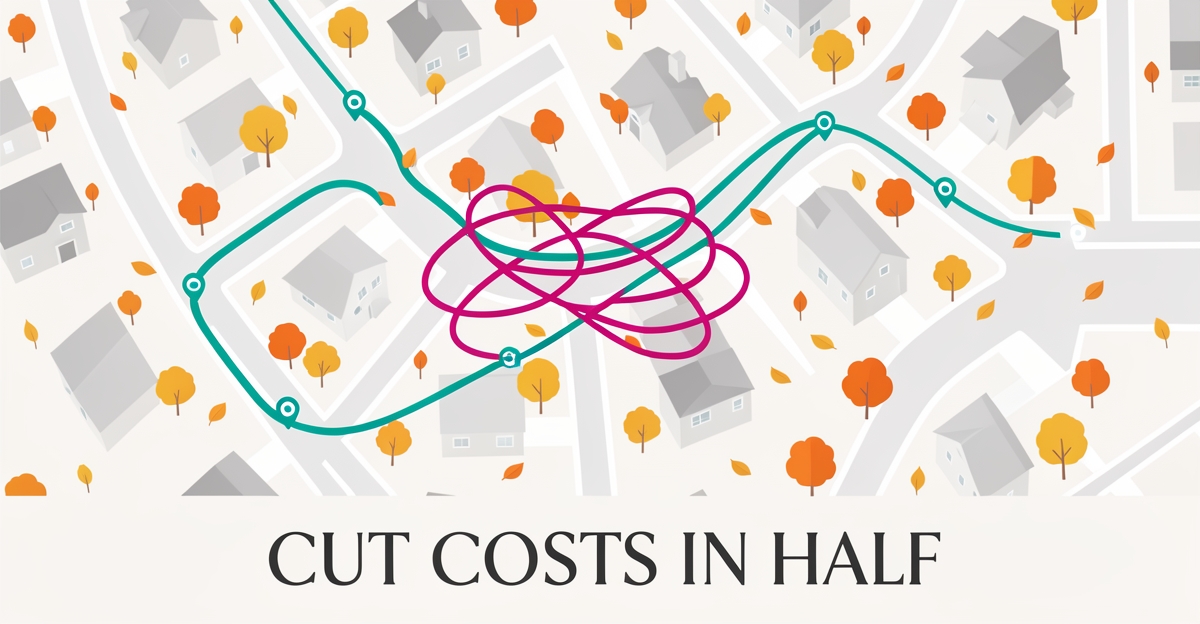
Fuel waste compounds the problem. Without optimized routing, trucks backtrack across town and idle between jobs. The same analysis suggests AI-driven route optimization typically delivers a 15-25% reduction in fuel costs, money that flows straight out of profit margins when scheduling stays manual. Crews also commonly lose 20-30 minutes per crew per day to inefficient routes, which multiplies into dozens of lost billable hours across a fleet over a single season.
Then there's the administrative overhead. Every manually scheduled job triggers a chain of follow-up tasks: confirming appointments, answering "when will you arrive?" calls, and rebooking missed visits. Industry comparisons indicate automated scheduling can reduce administrative time by 40-60% compared to manual processes, hours an owner or office manager currently spends on coordination instead of growth.
The indirect costs are harder to quantify but just as damaging:
- Missed appointments that push customers to competitors the following season
- Customer complaints from no-shows and unreliable arrival windows
- Overtime pay triggered by compressed, poorly sequenced schedules
- Limited scalability, manual processes simply cannot absorb more volume without more admin staff
These costs stack up quickly in a business with a short, weather-dependent season. Industry roundups of AI adoption in landscaping, such as this 2026 overview, report strong returns from AI tools, largely because automation eliminates the labor spend and lost revenue embedded in manual workflows. Your actual numbers will depend on your routes, crew size, and call volume, which is why modeling matters before anything else.
The takeaway is clear: manual scheduling isn't free, it's an untracked expense line. AIQ Labs works with leaf removal and field service businesses to model these hidden costs and run an ROI analysis that shows exactly where automation pays for itself, so owners can see the true price of the whiteboard before deciding to replace it.
How AI Automation Reduces Leaf Removal Scheduling Costs by 50% or More
Manual leaf removal scheduling drains resources through inefficient routes and excessive admin work. Crews waste time idling in traffic or backtracking between jobs, burning fuel and cutting into productive hours. Meanwhile, dispatchers spend hours manually coordinating schedules, fielding last-minute changes, and tracking job completion, time that could be spent growing the business.
AI-powered route optimization directly attacks these inefficiencies. By analyzing job locations, traffic patterns, and crew availability in real time, AI systems generate the most efficient daily routes for each team. This typically reduces fuel consumption by 15-25% through minimized mileage and idling, as crews spend less time driving between jobs and more time working. Crews also commonly reclaim 20-30 minutes per day previously lost to inefficient routing, nearly 2.5 hours of labor per crew each week.
Administrative burdens also drop sharply with AI automation. Automated scheduling eliminates manual job assignment, shift adjustments, and customer notifications. Dispatchers no longer juggle spreadsheets or make dozens of confirmation calls, an AI dispatcher employee handles scheduling conflicts, reschedules jobs based on weather or crew availability, and sends automated updates to clients. Industry comparisons report admin time reductions of 40-60%, freeing staff to focus on customer acquisition, quality control, or strategic planning instead of reactive coordination.
- Fuel costs typically drop 15-25% via optimized routes that minimize unnecessary driving
- Crews commonly gain 20-30 minutes daily from reduced transit time between jobs
- Administrative workload often decreases 40-60% through automated scheduling and communication
These savings compound quickly. For a mid-sized leaf removal business with three crews, daily time savings of 20-30 minutes per crew equals roughly 1.5-2.5 labor hours recovered each day, about 12.5 hours weekly. When combined with fuel savings and reduced admin overhead, AI automation delivers measurable operational efficiency that directly impacts the bottom line. AIQ Labs helps businesses model these specific savings through detailed cost analysis, showing exactly how AI transformation can cut leaf removal scheduling costs in half or more. To explore your potential savings, start the two-minute Fit Check at https://aiqlabs.ai/apply, then book a free 30-minute strategy call at https://aiqlabs.ai/book.
Implementing AI Scheduling: From Cost Modeling to Real-World ROI for Leaf Removal Businesses
Manual scheduling drains leaf removal crews before the first truck rolls. Overtime, missed stops, and back-and-forth calls add up fast during peak season, and the costs hide in fuel, admin hours, and lost retention.
A structured AI adoption path starts with clarity, not software. A free strategy call maps current scheduling bottlenecks and builds a cost model that shows where labor spend leaks. AIQ Labs uses that model to project savings from automated dispatch, route optimization, and client communication before any build begins.
From modeling, implementation moves in phases that match your risk tolerance. The Start Monthly model delivers a managed AI employee, such as a dispatcher or receptionist, on a flat monthly plan at roughly 80% less than a human hire, with build, training, integrations, monitoring, and improvements included. Pause or adjust anytime. The Build in Milestones model rebuilds the one workflow that costs you the most, dispatch, for example, at a fixed price, split into phases with approval and payment per phase, and the option to stop while keeping everything built so far. For businesses ready to connect everything, Own It Outright delivers a full AI operating system built in phases and owned outright, with no ongoing licensing.
Real-world impact is measurable. Landscaping comparisons of AI operating systems suggest a 15-25% reduction in fuel costs through route optimization, 20-30 minutes saved per crew per day, and 40-60% less administrative time with automated scheduling. AIQ Labs has deployed 200+ multi-agent systems and runs four live SaaS products daily, so the build patterns behind these savings are proven in production, not theory.
ROI compounds when communication scales without headcount. Industry roundups of AI tools for landscaping businesses report strong monthly returns from AI adoption. That return comes from fewer missed jobs, less overtime, and higher completion rates during short fall windows.
A practical rollout for leaf removal teams typically includes:
- Cost modeling and ROI analysis on current manual scheduling, overtime, and fuel spend
- Phased build of dispatch and route optimization with crew mobile access
- Automated client confirmations, reschedules, and post-job follow-ups
- Performance monitoring and continuous optimization after go-live
Businesses see clear ROI without upfront risk because the first step is modeling, not buying. The strategy call identifies high-ROI automation opportunities, defines success metrics, and outlines a phased plan that aligns with seasonal demand. See how the pieces price out at https://aiqlabs.ai/pricing.
AIQ Labs supports this path across all three entry points, AI Employees, AI Workflow Builds, and AI Operating Systems, helping leaf removal businesses see exactly how much they can save by going AI-powered.
Still paying for 10+ subscriptions that don’t talk to each other?
We build custom AI systems you own outright. No vendor lock-in. Full control.
Not sure where to start? Ask our AI planner
Frequently Asked Questions
How much money can AI automation actually save my leaf removal business on fuel costs?
Will AI scheduling really save my crews time each day, and how much?
How much administrative time can AI automation eliminate for my office staff?
Is there proof that AI tools deliver a strong return on investment for landscaping businesses like mine?
What are the hidden costs of manual scheduling that I might not be seeing on my balance sheet?
How does AIQ Labs help me understand my potential savings before I invest in automation?
Stop Paying for the Whiteboard
Manual leaf removal scheduling looks free until you add up the overtime from compressed routes, the fuel burned backtracking across town, and the admin hours lost to phone tag and rescheduling. Those hidden leaks compound in a short, weather-dependent season, eroding margins through missed jobs, customer complaints, and limited scalability. AI changes the math by optimizing routes in real time, automating dispatch and client communications, and commonly reclaiming 20-30 minutes per crew per day while cutting fuel costs by 15-25% and administrative time by 40-60%. The savings stack fast, and the first step is seeing them clearly for your operation. AIQ Labs models these specific costs with a free strategy call and ROI analysis so you can quantify the true price of manual scheduling before you replace it. Start the two-minute Fit Check at https://aiqlabs.ai/apply to book your free 30-minute strategy session at https://aiqlabs.ai/book.
Make AI your competitive advantage — not just another tool.
Strategy, implementation and ongoing optimization. One partner, end to end.
Not sure where to start? Ask our AI planner