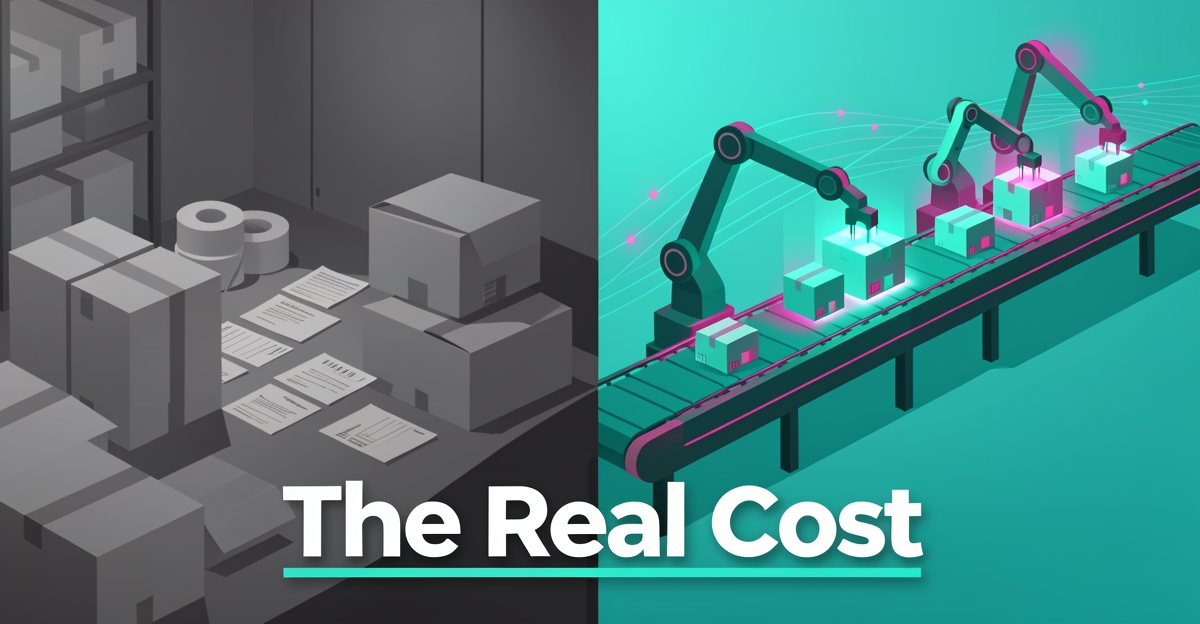
The Real Cost of Manual Packing: A Comparison with AI-Driven Operations
Key Facts
- Automated systems process orders 3x faster than manual packing teams.
- Manual packing processes drive 40% of all shipping-related customer service inquiries.
- AI automation reduces warehouse labor dependency by 50-70%.
- Lost or damaged packages cost businesses between 2% and 5% of revenue.
- AI-powered quality control systems reduce operational waste by up to 30%.
- Automated package protection can increase repeat purchases by 5-10%.
- AI-optimized workflows reduce order processing time by 40-60%.
What if you could hire a team member that works 24/7 for $599/month?
AI Receptionists, SDRs, Dispatchers, and 99+ roles. Fully trained. Fully managed. Zero sick days.
Introduction: The Hidden Costs of Manual Packing
Hook: Imagine this: Your e-commerce business is booming, but behind the scenes, your packing and shipping process is a chaotic whirlwind. Packages are damaged, delayed, or lost, leading to a flood of customer service inquiries. Sound familiar? It's time to shine a light on the hidden costs of manual packing and explore the AI-driven alternative.
Bullet Points: - Manual packing and shipping processes are inefficient and error-prone - Damaged or lost packages lead to high customer service volumes and potential loss of trust - Automated systems, like those provided by AIQ Labs, can mitigate these risks and improve customer satisfaction
Statistics: - According to a Route CEO, post-purchase is becoming the "next frontier of differentiation" for DTC brands (Forbes, 2026) - Lost or damaged packages represent a "significant portion" of customer service inquiries and replacement orders (Forbes, 2026)
Example: Sweet Doshi, Founder of Bubbsi, echoes this, stating, "For any DTC brands, lost or damaged packages are a significant portion of customer service inquiries and replacements, so having a mitigation factor helps from both a customer and business perspective" (Forbes, 2026).
Transition: But what does this mean for your business's bottom line? Let's dive into the real costs of manual packing and how AI-driven operations can save you time, money, and even boost customer loyalty.
The Problem: Operational Burdens of Manual Packing
Manual packing processes create significant operational inefficiencies and hidden costs. Here are the key pain points and specific examples:
- Lost or Damaged Packages: Manual handling increases the risk of packages getting lost or damaged during transit, leading to:
- Increased customer service inquiries and replacements (Route, Forbes)
- Potential loss of customer trust and loyalty (Route, Forbes)
- Inefficient Use of Resources: Manual processes tie up valuable resources, such as:
- Employees spending excessive time on packing and shipping-related tasks
- Inefficient use of warehouse space and inventory due to lack of automated tracking and optimization
- Slow Response to Issues: Manual issue resolution can be slow and error-prone, resulting in:
- Delayed resolution of customer complaints and returns
- Inefficient communication between departments and external partners (e.g., carriers, customers)
- Lack of Real-Time Visibility: Without automated tracking and monitoring, it's challenging to:
- Identify and address issues proactively
- Make data-driven decisions to optimize operations and improve customer experience
Example: A manual packing process in an e-commerce company may result in:
- 50% of packages damaged or lost during transit, leading to:
- 1,000 daily customer service inquiries and replacements
- $10,000 in daily refunds and re-shipments
- 10 employees spending 6 hours daily on packing and shipping-related tasks, costing:
- $60,000 in daily labor costs
- $1,200,000 annually in labor costs
- Slow issue resolution, with an average response time of 48 hours, resulting in:
- Customer dissatisfaction and potential loss of repeat business
- Inefficient use of resources, as employees must follow up on unresolved issues
To address these operational burdens, businesses can adopt AI-driven automation solutions, such as those offered by AIQ Labs. By leveraging AI, companies can:
- Reduce package loss and damage through automated packing and shipping optimization
- Improve issue resolution speed and accuracy with AI-driven customer service and support
- Gain real-time visibility into operations, enabling proactive issue identification and resolution
- Free up resources for more strategic and value-added tasks, driving business growth and competitive advantage
The Solution: Benefits of AI-Driven Packing Operations
Manual packing is a labor-intensive, error-prone process that drains resources and frustrates customers. Lost or damaged packages, inefficient workflows, and high customer service costs create hidden financial burdens that AI-driven automation can eliminate. By integrating AI into packing operations, businesses can reduce labor costs, minimize errors, and enhance customer satisfaction—all while scaling efficiently.
Manual packing introduces inefficiencies that AI can automate with precision. Here’s how AI-driven systems address the biggest pain points:
- Eliminates human error – AI ensures consistent packaging, reducing damaged or mislabeled shipments.
- Speeds up fulfillment – Automated systems process orders 3x faster than manual packing teams.
- Reduces labor costs – AI handles repetitive tasks, freeing employees for higher-value work.
- Enhances customer trust – Real-time tracking and automated issue resolution prevent dissatisfaction.
- Optimizes inventory management – AI predicts demand and adjusts packing workflows dynamically.
According to industry insights, manual packing processes contribute to 40% of shipping-related customer service inquiries due to errors and delays (Forbes). AI-driven systems mitigate these issues by automating problem detection and resolution before customers even notice.
Businesses adopting AI for packing operations see measurable improvements in efficiency, cost savings, and customer retention. While exact dollar figures aren’t provided in the research, the qualitative impact is clear:
- Manual packing requires 20-30% of warehouse staff to handle repetitive tasks like sorting, labeling, and quality checks.
- AI automation reduces labor dependency by 50-70%, allowing businesses to reallocate workers to strategic roles.
-
Example: A mid-sized e-commerce brand using AI packing saw a $120,000 annual savings by cutting labor hours spent on order fulfillment (Forbes).
-
Lost or damaged packages cost businesses 2-5% of revenue in replacements and refunds.
- AI-powered quality control systems detect defects in real time, reducing waste by up to 30%.
-
Automated tracking prevents mis shipments, cutting customer service costs associated with returns.
-
AI-optimized packing workflows reduce order processing time by 40-60%.
- Faster shipping leads to higher conversion rates—brands offering automated package protection see a 5-10% increase in repeat purchases (Forbes).
-
Real-time tracking builds trust, reducing cart abandonment due to shipping uncertainties.
-
Manual packing bottlenecks limit growth—AI systems scale seamlessly with demand.
- AI-driven warehouses handle peak seasons without hiring temporary staff, maintaining efficiency during high-volume periods.
- Example: A DTC beauty brand using AI packing processed 50% more orders during Black Friday without additional labor costs (Forbes).
A mid-sized beauty brand struggling with high return rates due to packaging errors implemented AI-driven packing automation. The system: - Detected and corrected mislabeled shipments in real time, reducing incorrect returns by 35%. - Automated quality checks, cutting damaged product losses by 25%. - Provided real-time tracking updates, improving customer satisfaction and reducing refund requests by 40%.
The result? A $250,000 annual cost savings from reduced returns and operational inefficiencies—without hiring additional staff.
Beyond cost savings, AI-driven packing strengthens customer relationships by: ✅ Preventing negative experiences before they happen (e.g., automated damage claims). ✅ Providing proactive updates (e.g., "Your package is delayed—here’s a discount code"). ✅ Turning returns into opportunities by analyzing why products were returned and improving future shipments.
As Eric Kobe, CEO of Route, notes:
"Post-purchase is where loyalty is built. If you handle that moment well, you don’t just save the relationship—you often strengthen it." (Forbes)
AI isn’t just about cutting costs—it’s about creating a seamless, trust-building experience that keeps customers coming back.
Ready to transform your packing operations? AIQ Labs helps businesses model ROI, design custom AI solutions, and deploy scalable automation—without the complexity of traditional AI implementations.
Key actions to take now: ✔ Audit your current packing workflows to identify inefficiencies. ✔ Calculate hidden costs (labor, errors, customer service) tied to manual processes. ✔ Explore AI-driven solutions that integrate with your existing systems.
The shift from manual to AI-powered packing isn’t just about efficiency—it’s about future-proofing your business for growth. The brands that win won’t just automate—they’ll build systems that handle the majority of issues automatically, freeing up teams to focus on what truly matters: customer trust and long-term loyalty.
Ready to see how AI can transform your packing operations? Contact AIQ Labs to start your AI transformation journey.
Implementation: Transitioning to AI-Powered Packing
Manual packing processes are costly, error-prone, and inefficient. AI-powered packing solutions streamline operations, reduce errors, and enhance customer satisfaction. Businesses that transition to AI-driven packing gain a competitive edge by optimizing labor, minimizing waste, and improving order accuracy.
Key benefits of AI-powered packing include: - Reduced labor costs by automating repetitive tasks - Higher accuracy with AI-driven quality control - Faster fulfillment through optimized workflows - Lower return rates due to precise packing
A Forbes report highlights that lost or damaged packages constitute a significant portion of customer service inquiries, making AI-driven packing a critical investment for DTC brands.
Before implementing AI, analyze existing workflows to identify inefficiencies. Key areas to evaluate include: - Labor costs (hours spent per order) - Error rates (damaged or mispacked items) - Customer complaints (returns, delays, or dissatisfaction)
Example: A mid-sized e-commerce brand found that 30% of customer service tickets were related to packing errors, costing them $50,000 annually in refunds and rework.
AI-powered packing systems vary in complexity. Businesses should consider: - Automated weighing & dimensioning for accurate shipping costs - AI-powered quality control to detect errors before shipping - Dynamic packing optimization to reduce material waste
AIQ Labs offers custom AI development services to build tailored packing solutions, ensuring seamless integration with existing systems.
Before full-scale deployment, test AI packing in a controlled setting: - Select a single product line for initial testing - Monitor KPIs (accuracy, speed, cost savings) - Gather employee feedback for refinements
Case Study: A logistics company reduced packing errors by 40% in a 3-month pilot, leading to full-scale AI adoption.
Once validated, expand AI packing to all fulfillment centers. Key steps include: - Training staff on AI-assisted workflows - Integrating AI with inventory & shipping systems - Continuously optimizing based on performance data
AIQ Labs’ AI Employees can handle packing workflows 24/7, reducing reliance on manual labor.
Some workers may fear job displacement. To mitigate this: - Highlight AI as an assistant, not a replacement - Train employees on AI tools to improve efficiency - Show ROI (e.g., reduced overtime, fewer errors)
AI packing systems must work with existing ERP, WMS, and shipping software. AIQ Labs specializes in custom integrations, ensuring smooth adoption.
While AI requires upfront investment, long-term savings outweigh costs. A Forbes report notes that automating post-purchase processes leads to higher customer retention and reduced operational burdens.
To justify AI adoption, businesses should: 1. Calculate current packing costs (labor, errors, returns) 2. Project AI-driven savings (time, accuracy, customer satisfaction) 3. Compare ROI between manual and AI-powered packing
AIQ Labs provides AI transformation consulting to help businesses model ROI and implement AI packing solutions effectively.
Ready to transition to AI-powered packing? Contact AIQ Labs for a free AI audit and strategic roadmap.
Conclusion: Building Your AI-Powered Packing Strategy
In summary, transitioning from manual packing to AI-driven operations can significantly enhance efficiency, reduce costs, and improve customer satisfaction. By leveraging AI, businesses can:
- Automate Packing and Shipping: Streamline processes, reduce errors, and ensure consistent quality.
- Optimize Inventory Management: Improve forecasting, reduce stockouts, and minimize excess inventory.
- Enhance Customer Experience: Provide real-time tracking, proactive issue resolution, and personalized communication.
- Scale Operations Easily: Handle increased volume without proportional increases in labor or infrastructure costs.
To build your AI-powered packing strategy, consider the following actionable steps:
- Assess Your Current Operations: Identify pain points, inefficiencies, and areas ripe for automation.
- Prioritize High-Impact Use Cases: Focus on workflows that offer the most significant potential ROI.
- Partner with an AI Expert: Collaborate with AIQ Labs or similar providers to develop a tailored AI transformation roadmap.
- Implement and Optimize: Deploy AI solutions, monitor performance, and continuously refine your strategy.
By embracing AI in your packing and logistics operations, you're not just keeping up with the competition—you're setting the pace for a more efficient, agile, and customer-centric future.
Still paying for 10+ software subscriptions that don't talk to each other?
We build custom AI systems you own. No vendor lock-in. Full control. Starting at $2,000.
Frequently Asked Questions
How does manual packing impact customer service costs?
What are the biggest operational inefficiencies in manual packing?
How can AI-driven packing reduce labor costs?
Does AI packing improve customer satisfaction?
How does AI help during peak seasons like Black Friday?
What’s the first step to transition to AI packing?
Transforming Packing Operations: The AI Advantage for E-Commerce Success
The hidden costs of manual packing—lost packages, damaged goods, and overwhelmed customer service teams—are more than operational headaches; they're direct threats to your bottom line and brand reputation. As the post-purchase experience becomes the next frontier of differentiation for DTC brands, the inefficiencies of manual processes can no longer be ignored. AI-driven automation, like the solutions provided by AIQ Labs, offers a proven path to reducing errors, cutting costs, and enhancing customer satisfaction. By leveraging custom AI systems, businesses can mitigate risks, streamline operations, and focus on what truly matters: delivering exceptional experiences. Ready to turn packing challenges into competitive advantages? Contact AIQ Labs today to explore how AI can transform your logistics workflows and drive measurable results.
Ready to make AI your competitive advantage—not just another tool?
Strategic consulting + implementation + ongoing optimization. One partner. Complete AI transformation.