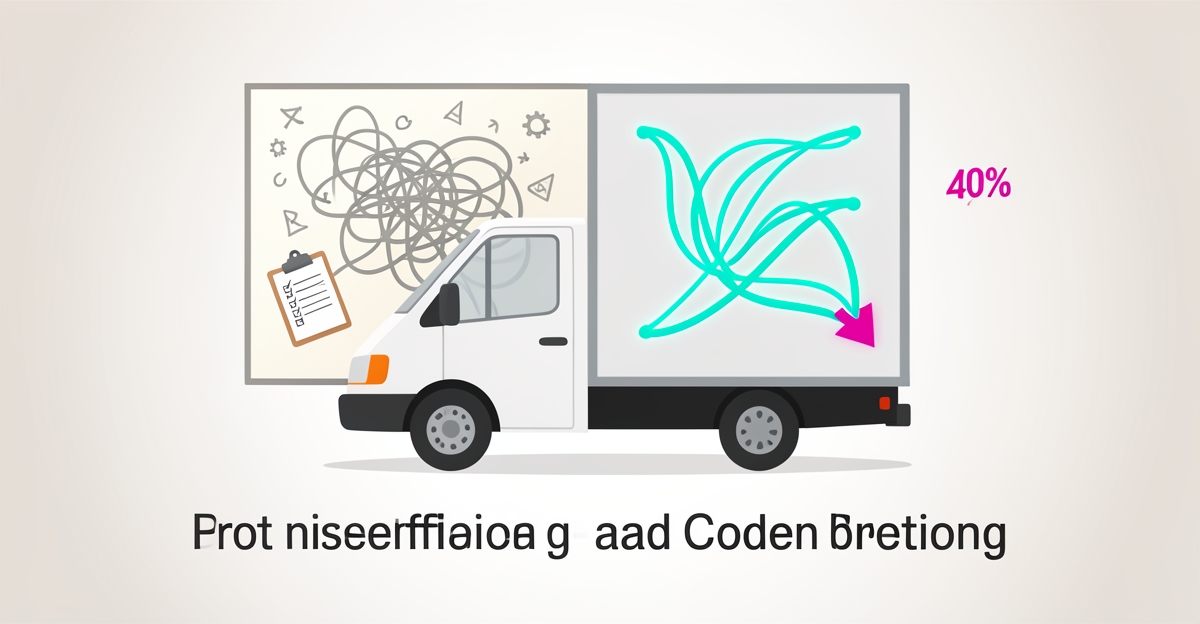
The Real Cost of Manual Propane Delivery Tracking: What You're Paying (and How AI Can Cut It)
Key Facts
- Manual tracking costs you twice: once in wages, and again in the mistakes those wages produce
- AI automation typically cuts delivery tracking operating costs substantially for propane providers, AIQ Labs clients commonly see reductions around 40%
- Automated data capture and real-time validation produce far fewer errors than manual entry in delivery logs, billing, and inventory
- Reliable, on-time delivery is often the only differentiator in a commodity business like propane
- AI washing, rebranding traditional software or basic analytics as AI, is common; a real solution automates the workflow end-to-end
- AIQ Labs builds systems you own outright: no vendor lock-in, no subscription sprawl
Hire a team member that works 24/7 — for less than a part-time wage.
AI receptionists, SDRs, dispatchers and 99+ roles. Trained on your business, fully managed.
Not sure where to start? Ask our AI planner
The Hidden Price of Manual Delivery Tracking
Every time a dispatcher squints at a spreadsheet or a driver double-checks a paper route log, your propane company is paying for it, twice. Once in wages, and again in the mistakes those wages produce. Manual delivery tracking looks free on the surface, but the real cost hides in labor hours, error correction, and customers quietly drifting to competitors.
Start with labor. Manual tracking demands constant human attention: logging deliveries, reconciling records, chasing down discrepancies. Automated systems, by contrast, handle those tasks continuously without adding headcount, meaning the same team covers more routes. That gap widens every year as wages rise and skilled dispatchers become harder to find.
Then there's the error tax. When tracking depends on human entry, mistakes compound, a mislogged tank reading becomes a missed delivery, which becomes an emergency fill, which becomes an overtime run. Automated data capture and real-time validation catch these problems at the source, at a consistency level no manual ledger can match.
The customer cost is the least visible and most damaging. Propane buyers expect reliable, on-time delivery; every missed or late drop erodes trust. In a commodity business like propane, satisfaction is often the only differentiator you have, and manual tracking is where it leaks away.
The trade-off analysis is stark:
- Manual tracking: lower upfront cost, but higher labor costs, more error scenarios, and frustrated customers
- AI-powered systems: consistent task completion, fewer errors, and better customer communication
- AI automation typically delivers a substantial reduction in operating costs, AIQ Labs clients commonly see figures around 40% once tracking runs without manual effort
- Automated teams also complete routine tracking tasks far faster, compressing delivery cycles and freeing staff for higher-value work
One caution before you shop for a fix: the market is crowded with what industry analysts call AI washing, traditional software or basic data analytics rebranded as artificial intelligence. A real solution should automate the workflow end-to-end, not just digitize your spreadsheets.
This is where the build approach matters. AIQ Labs constructs custom AI systems that propane operators own outright, dispatch, scheduling, and delivery tracking running without ongoing staff overhead, and without the subscription sprawl that plagues off-the-shelf tools. The hidden cost of manual tracking is real; the good news is that it's also measurable, and therefore fixable.
How AI Automation Cuts Propane Delivery Costs
AI automation transforms how propane companies manage delivery operations by addressing the root causes of inefficiency in manual tracking. Intelligent workflow orchestration ensures deliveries are scheduled, executed, and documented with greater consistency and speed, reducing the delays and bottlenecks inherent in paper-based or spreadsheet-driven processes.
Error rates drop significantly with AI integration. Automated data capture, real-time validation, and intelligent exception handling minimize mistakes in delivery logs, billing, and inventory updates, common pain points that lead to costly rework and customer disputes. The result is not only fewer mistakes but also greater reliability in the operational data you use for forecasting and compliance.
Customer satisfaction improves when propane companies deploy AI-powered tracking tools, reflecting faster response times, accurate delivery estimates, and transparent communication. Customers experience fewer missed appointments and billing discrepancies, while dispatchers and drivers benefit from interfaces that reduce cognitive load and manual effort. That satisfaction supports retention and referral growth in a competitive market.
Resource utilization improves markedly through AI automation, as labor, vehicles, and scheduling assets are allocated with precision. Predictive routing, dynamic load balancing, and automated dispatch ensure that every trip maximizes efficiency, reducing idle time, fuel waste, and unnecessary mileage. These gains directly lower operating costs without requiring additional headcount or equipment investment.
Automated classification of fuel usage, service fees, and regional cost variations also becomes practical with machine learning trained on your historical delivery data. That level of detail supports better budgeting, vendor negotiations, and margin analysis, critical for sustaining profitability in a volatile fuel market.
Collectively, these gains drive the cost reductions AIQ Labs sees across its propane implementations, commonly in the range of 40% of tracking-related operating costs. By replacing manual oversight with intelligent automation, companies eliminate recurring labor expenses, minimize error-related losses, and unlock scalable efficiency, all while maintaining full ownership of their AI systems.
From Spreadsheets to Owned AI Systems
Manual spreadsheets hide the real price of propane delivery tracking until the errors show up on the books. The shift from reactive data entry to owned automation changes both cost structure and control.
Manual tracking keeps labor costs high and accuracy low. Teams spend hours reconciling deliveries, invoices, and inventory while error scenarios compound. AIQ Labs' experience across 200+ deployed multi-agent systems shows that removing ongoing staff overhead from these workflows is where the savings live. Automated systems improve task completion and resource utilization, while manual processes trade lower upfront cost for higher labor and dissatisfaction over time.
The market is crowded with claims that obscure real capability. Industry analysis defines AI washing as the misrepresentation of traditional software or basic data analytics systems as artificial intelligence. Spotting it matters because propane operations need production-ready systems, not dashboards rebranded as AI.
Owned systems avoid that trap. Building with engineering excellence means custom code and advanced frameworks instead of no-code limitations, with production-ready, scalable applications built for long-term growth. True ownership means you receive full ownership of the custom-built system, with no vendor lock-in or platform dependencies.
AIQ Labs builds propane delivery automation through three entry points and payment models that match risk tolerance and scope:
- AI Employees (Start Monthly), managed AI staff like dispatchers and receptionists, at roughly 80% less cost than a human hire, with setup, training, integrations, monitoring, and improvements included
- AI Workflow Builds (Build in Milestones), rebuild the one workflow that costs you the most, at a fixed price, split into phases; approve and pay per phase, stop anytime and keep everything built so far
- AI Operating Systems (Own It Outright), one connected operating layer for the whole business, built in phases, with full ownership of code, agents, and data when complete
This approach replaces subscription chaos with unified, owned digital assets. Engineering excellence is prioritized over prototypes, and systems are designed to handle enterprise-level demands with deep two-way API integrations.
Cost discipline is built in from the start. Establishing baselines for both expenses and expected returns, optimizing resource allocation, and enforcing data management and governance practices are core to sustainable automation, the same principles cloud architecture guidance recommends for AI and machine learning workloads.
Careful prompt engineering and multi-agent orchestration underpin reliable performance. Structuring, testing, and customizing agent behavior for real-world needs is what separates owned, production systems from AI-washed tools.
The result is scalable, cost-effective automation that operates without ongoing staff overhead while remaining fully controllable by the business.
Implementation Roadmap for Propane Operators
Manual propane delivery tracking creates hidden costs that erode profitability, but a clear path forward exists. AIQ Labs' phased process gives propane operators a structured approach to transition from manual methods to AI-driven automation. This roadmap ensures every step aligns with measurable business outcomes, starting with a full understanding of current inefficiencies.
Begin by defining and measuring the true costs of manual tracking, labor hours spent on data entry, error correction, and customer service recovery. Cost optimization starts with establishing baselines for both expenses and expected returns, enabling data-driven decisions about where automation delivers the highest ROI. Next, optimize resource allocation by identifying which workflows, such as dispatch scheduling or delivery confirmation, consume the most time and are prone to mistakes. Automated systems excel precisely in these high-friction areas.
Enforce data governance early to ensure clean, consistent inputs for AI models. This includes standardizing delivery logs, tank sensor readings, and customer communication records across teams. With reliable data foundations, models can be deployed, monitored, and retrained continuously, critical in a dynamic environment like propane delivery where demand fluctuates seasonally.
Finally, align every technical choice with core business KPIs such as on-time delivery rate, cost per gallon delivered, and customer retention. AIQ Labs helps operators connect automation outcomes directly to these metrics through ROI modeling and performance dashboards. By following this phased approach, assess, build, integrate, govern, automate, and measure, propane companies can typically achieve substantial reductions in tracking-related costs, commonly around 40%, while building systems they own and control. To start mapping your specific opportunity, complete the two-minute Fit Check and book a free 30-minute strategy call.
Still paying for 10+ subscriptions that don’t talk to each other?
We build custom AI systems you own outright. No vendor lock-in. Full control.
Not sure where to start? Ask our AI planner
Frequently Asked Questions
How much can AI automation actually reduce propane delivery tracking costs?
What's the difference between real AI systems and AI-washed tools in propane delivery tracking?
How much faster do AI-powered systems complete delivery tracking tasks compared to manual methods?
Can AI really reduce errors in propane delivery logs and billing?
Will switching to AI tracking improve customer satisfaction in propane delivery?
What does it mean to 'own' an AI system for propane delivery tracking, and why does it matter?
Stop Paying Twice for Every Delivery
Manual propane delivery tracking looks cheap until you add up the wages spent logging routes, the overtime from missed fills, and the customers who quietly leave after a late drop. The real price is labor hours, compounding errors, and eroded trust, costs that grow as wages rise and dispatchers become harder to find. AI automation flips that equation by improving task completion, cutting error scenarios, boosting resource utilization, and lifting customer satisfaction, which together commonly drive reductions around 40% of tracking-related operating costs for propane operators who make the switch. The key is owning production-ready automation, not buying AI-washed dashboards that just digitize spreadsheets. If you want clarity on where your biggest hidden costs sit, start with the two-minute Fit Check to book a free 30-minute strategy call with AIQ Labs. You'll map your specific bottleneck and see if there's a clear, measurable win, no pitch, just a working session with an AI engineer.
Make AI your competitive advantage — not just another tool.
Strategy, implementation and ongoing optimization. One partner, end to end.
Not sure where to start? Ask our AI planner