The Real Cost of Manual Service Ticket Management in EV Repair Shops
Key Facts
- AI-powered ticketing systems can reduce cost per ticket by 30-50% in typical deployments, according to customer service implementation research.
- AI ticket deflection rates commonly exceed 50%, with top performers reaching 55-65% per AI ticket routing research.
- Fully automated AI replies can handle over 60% of routine inquiries around the clock industry analysis shows.
- AI can reduce average handling time to under four minutes per ticket according to industry benchmarks.
- AI-driven first contact resolution rates can climb above 80%, cutting costly rework and follow-up calls research finds.
- Deflected tickets can cost under $0.50 to resolve versus the labor tied up in a six-minute average call per industry data.
- AI-powered ticketing typically cuts administrative overhead by up to 30%, freeing technicians for core EV repairs.
Hire a team member that works 24/7 — for less than a part-time wage.
AI receptionists, SDRs, dispatchers and 99+ roles. Trained on your business, fully managed.
Not sure where to start? Ask our AI planner
The Hidden Financial Drain of Manual Ticket Entry in EV Service Operations
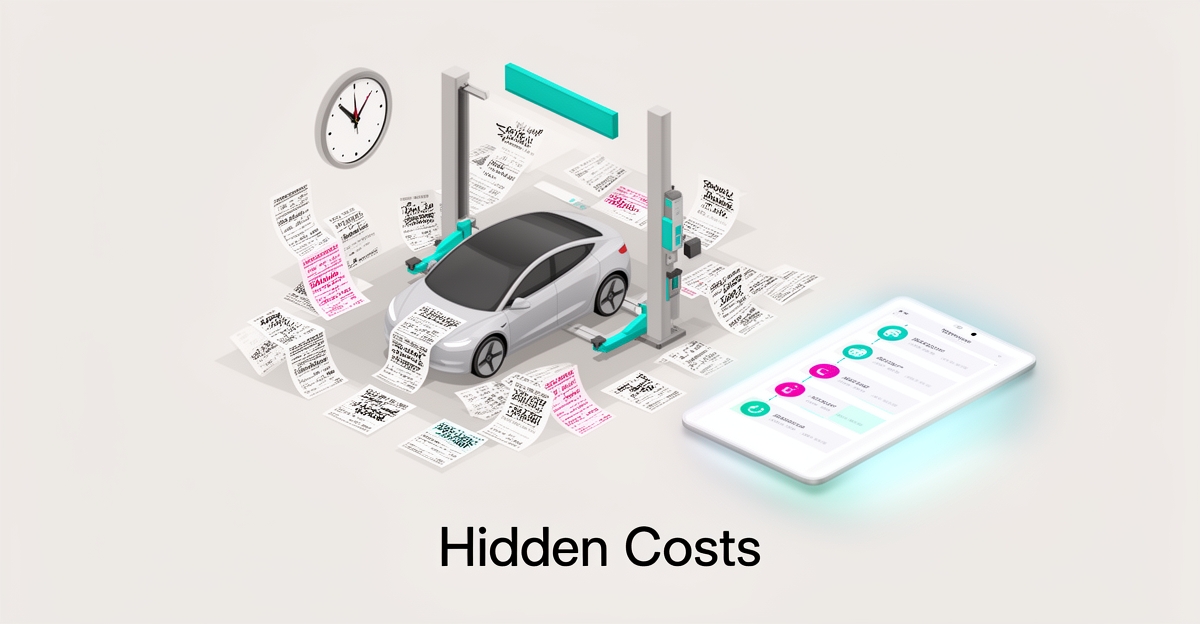
The hidden financial drain of manual ticket entry in EV service operations often goes unnoticed until it erodes profitability. Each time a technician or service advisor spends time typing ticket details into a system, labor costs accumulate without adding value to the repair process. This routine administrative burden siphons time that could otherwise be spent diagnosing complex EV systems or engaging with customers, directly reducing service throughput and increasing operational expenses.
Manual data entry in service environments contributes to significant inefficiencies, with error rates in ticket creation leading to rework, misrouted parts, and delayed repairs. When technicians must revisit tickets to correct inaccurate information—such as vehicle VINs, symptom descriptions, or warranty codes—it creates avoidable labor costs that compound across hundreds of monthly service interactions. These errors not only waste internal resources but also frustrate customers awaiting timely resolutions, potentially damaging long-term loyalty in a competitive EV repair market.
AI-powered ticketing systems can reduce administrative overhead by up to 30%, according to industry benchmarks on automation impact in customer service workflows. By eliminating repetitive data entry tasks through intelligent automation, EV repair shops reclaim valuable labor hours that can be redirected toward higher-value activities like technical diagnostics or customer consultation. This shift not only lowers operational costs but also improves first-contact resolution rates, as accurate ticket data ensures the right parts and expertise are applied from the start.
- Reduces time spent on manual ticket entry per service interaction
- Minimizes data entry errors that trigger costly rework
- Increases service throughput by freeing technician time for core repairs
- Lowers cost per ticket through streamlined workflow automation
- Enables 24/7 ticket processing without additional labor costs
The cumulative effect of these inefficiencies extends beyond immediate labor waste—it distorts capacity planning, skews performance metrics, and limits scalability. EV repair shops relying on manual ticketing often struggle to predict workload accurately, leading to either underutilized staff during slow periods or overtime costs during peak demand. By contrast, automated ticketing systems provide consistent, real-time visibility into service flow, enabling better resource allocation and more accurate forecasting. For shops aiming to scale operations without proportional increases in headcount, addressing the hidden cost of manual ticket entry is not just an operational improvement—it's a financial imperative. AIQ Labs supports this transformation through AI Workflow Builds that rebuild the ticketing workflow as a fixed-price, phased project, and AI Employees that handle intake and routing alongside your team, ensuring data accuracy while reducing administrative burden.
How AI Ticketing Assistants Cut Labor Costs Through Automation and Intelligence
The math behind manual ticket handling is brutal: every service request that lands in an EV repair shop's inbox costs staff time before a single wrench turns. That's why shops adopting AI-powered ticketing are typically seeing cost per ticket drop by 30–50%, according to customer service implementation research.
The savings come from three compounding mechanisms. First, AI systems capture ticket data automatically — extracting vehicle details, symptoms, and customer history from emails, calls, and web forms without anyone retyping them. Second, intelligent routing prioritizes issues based on urgency and complexity, so high-voltage battery concerns reach the right technician immediately while routine questions resolve themselves. Third, AI deflects tickets entirely before they reach a human: research on AI ticket routing shows deflection rates commonly exceeding 50%, with top-quartile performers reaching 55–65%.
That deflection translates directly into labor savings. When a deflected ticket can cost under $0.50 to resolve — versus the labor tied up in a six-minute average call — the economics shift dramatically. Shops reclaim technician and service-advisor hours that were previously consumed by administrative overhead.
The gains show up across the operation:
- Automated handling time can drop below four minutes per ticket, freeing advisors for in-bay coordination
- First-contact resolution rates can climb above 80%, cutting the rework and follow-up calls that quietly erode margins
- Fully automated replies can handle more than 60% of routine inquiries around the clock
- Customer satisfaction scores improve alongside efficiency, since faster, more accurate responses reduce friction
This is precisely the gap AIQ Labs targets: automating data capture, prioritizing issues, and integrating directly with the shop management tools repair shops already run. Rather than layering another disconnected subscription onto a crowded tech stack, the approach rebuilds the ticketing workflow as a unified system the shop owns outright — eliminating the repetitive manual entry that drives hidden labor costs.
The result isn't replacing service staff; it's redirecting them. As industry analysis puts it, AI is the lever that lets your team focus on what humans do best — complex, empathetic, individual consultation. For EV repair shops, that means advisors spending their day solving real vehicle problems instead of copying data between screens, and more service throughput without adding headcount.
From Manual Chaos to AI-Powered Throughput: A Practical Implementation Path for EV Shops
Manual ticket entry in EV repair shops hides labor in rework, lost service time, and missed parts ordering. The chaos compounds when technicians chase duplicate requests while customers wait for updates. A lean, phased path turns that friction into measurable throughput.
Start with a workflow audit before any automation. Map how tickets are created, triaged, routed, and closed, and where manual re-entry occurs. Analysis of past tickets identifies top topics, automation potential, and peak times. That baseline makes ROI modeling credible and prevents automating broken processes.
Pilot an AI assistant for ticket triage and routing on a single service lane. AI can deflect routine inquiries and route complex cases to the right technician with context. Industry research shows ticket deflection rates commonly above 50% with AI, and top-quartile performers reach 55-65%. Automation rates for fully automated replies can exceed 60% in mature deployments, freeing advisors for high-value work.
Measure handling time and rework reduction during the pilot. A recent study finds average handling time reductions to under four minutes per interaction and first contact resolution improvements above 80%. Cost per ticket typically drops 30-50% as routine work is handled without human touch, and cost per deflected ticket can stay under $0.50 versus a six-minute average call.
Scale integration once the pilot proves value. Connect the ticketing layer to calendars, parts inventory, and CRM systems so a single update propagates across operations. That eliminates duplicate entry and reduces the human errors that drive rework. The model aligns with AIQ Labs' payment options — Start Monthly, Build in Milestones, or Own It Outright — where a shop can begin with one AI employee and expand by phase.
A practical rollout follows a clear sequence:
- Audit and baseline current ticket flow, rework points, and labor cost per ticket
- Pilot AI triage and routing on one workflow with defined KPIs for deflection and AHT
- Measure reductions in handling time, rework, and labor cost before expanding
- Integrate with calendars, parts inventory, and CRM for end-to-end automation
- Scale department-wide with continuous monitoring and optimization
AIQ Labs supports this path through AI Workflow Builds and managed AI Employees that work alongside human teams. The focus is on owned systems that reduce administrative overhead and increase service throughput without subscription lock-in. Shops keep control of code, agents, and data as they scale.
With a structured audit, pilot, measure, and scale cycle, EV service teams replace manual chaos with predictable throughput and lower labor cost.
Still paying for 10+ subscriptions that don’t talk to each other?
We build custom AI systems you own outright. No vendor lock-in. Full control.
Not sure where to start? Ask our AI planner
Frequently Asked Questions
How much labor is really wasted on manual service ticket entry in EV repair shops?
Can AI actually cut labor costs for service tickets, or is that just marketing?
What is ticket deflection and why does it matter for my shop?
Will AI ticketing replace my technicians and service advisors?
How quickly can we see measurable results from a pilot?
What should we measure before scaling AI ticketing across the shop?
Stop Paying the Hidden Tax on Every Repair Ticket
Manual ticket entry quietly drains EV repair shops through wasted labor hours, costly rework, and distorted capacity planning — but the fix doesn't require replacing your team. As we've seen, AI-powered ticketing can cut cost per ticket by 30–50% in typical deployments, deflect more than half of routine inquiries, and push first-contact resolution above 80%, all while freeing technicians to focus on complex EV diagnostics instead of retyping VINs. The path forward is deliberately low-risk: audit your current ticket flow, pilot AI triage on a single service lane, measure the results, then scale with full integration into your calendars, inventory, and CRM. Because AIQ Labs builds systems you own outright — with no subscription lock-in — every hour reclaimed becomes a permanent gain in throughput and margin. If you're ready to see where manual entry is costing your shop the most, take the two-minute Fit Check at aiqlabs.ai/apply and book a free 30-minute strategy call. It's a working session with an AI engineer, not a sales pitch — and if there isn't a clear win for your shop, we'll tell you that too.
Make AI your competitive advantage — not just another tool.
Strategy, implementation and ongoing optimization. One partner, end to end.
Not sure where to start? Ask our AI planner